
What Is a Catch in the NFL?
Few things in football cause more arguments than the NFL catch rule. A receiver can appear to catch the ball cleanly, take two steps, and still have the play ruled incomplete. So what actually counts as a catch in the NFL?
The definition comes straight from Rule 8, Section 1, Article 3 of the official NFL rulebook. A forward pass is complete (or intercepted, since the same three steps apply to defenders picking off a pass) if a player who is inbounds:
- Secure control of the ball in his hands or arms before it touches the ground
- Touch the ground in bounds with both feet, or with any part of his body other than his hands
- Perform a football move: any act common to the game, such as tucking the ball away, turning upfield, or taking additional steps
Miss any one of these three, and the pass is incomplete. It sounds simple, but each step has caused its share of controversy. Let’s break them down.
Requirement 1: Control of the Ball
The receiver must secure control of the ball in his hands or arms before the ball touches the ground. If the ball hits the turf at any point before control is established, the pass is incomplete, even if the receiver scoops it up afterward.
Control also means the catch can’t be bobbled all the way to the ground. If a receiver is juggling the ball and never truly secures it before hitting the turf, that’s an incompletion, not a catch. The officials are looking for the moment the ball stops moving independently and is firmly in the receiver’s grasp.
Requirement 2: Two Feet (or a Body Part) In Bounds
In the NFL, the receiver must touch the ground in bounds with both feet, or with any part of the body other than the hands. A knee, an elbow, a hip, or even the backside counts, as long as it lands in bounds.
This is one of the biggest differences between the NFL and other levels of football. In college and high school, only one foot in bounds is required, which is why you see so many spectacular toe-tap catches on Saturdays that would be ruled incomplete on Sundays.
If a receiver catches the ball but only gets one foot down before going out of bounds, it’s incomplete in the NFL. No exceptions.
Requirement 3: Make a Football Move
After securing control and getting two feet down, the receiver must perform any act common to the game. The rulebook gives examples:
- Tucking the ball away to protect it
- Turning upfield toward the end zone
- Taking additional steps with the ball secured
- Reaching or extending for the goal line
There is also a second way to satisfy this step: the receiver can simply maintain control of the ball long enough to perform one of these acts, even if he is hit before he gets the chance. The rulebook phrases it as performing “any act common to the game” or maintaining “control of the ball long enough to do so.”
This is the step that replaced the old, widely hated “surviving the ground” language for upright catches. Under the current rule, once a receiver has control, two feet down, and makes a football move, the catch is complete, even if the ball comes loose afterward when he hits the ground. In that case, it’s a fumble, not an incompletion.
The Going-to-the-Ground Rule
Here’s where most of the famous controversies live. If a player goes to the ground in the act of catching the pass (diving, falling, or being tackled as he catches it), he must maintain control of the ball after touching the ground, whether in the field of play or the end zone.
If he loses control and the ball touches the ground before he regains it, the pass is incomplete. If he regains control before the ball touches the ground, the catch stands.
So the “football move” shortcut doesn’t apply to a diving receiver. A player who is falling throughout the catch has to survive the ground: hold onto the ball all the way through contact with the turf. This is also where defensive backs make their money: separating the receiver from the ball before control is ever established.
NFL vs College vs High School: Catch Rule Comparison
| Requirement | NFL | College (NCAA) | High School (NFHS) |
|---|---|---|---|
| Control before ball hits ground | Yes | Yes | Yes |
| Feet/body parts in bounds | Two feet (or one body part other than hands) | One foot | One foot |
| Football move required | Yes | No | No |
| Must survive the ground when falling | Yes | Yes | Yes |
The practical takeaway: catches that look identical can be ruled differently depending on the level. The one-foot toe-tap touchdown you see in college would be incomplete in the NFL. (The high school standard follows NFHS rules: possession plus one foot or body part down in bounds, as explained in the Michigan High School Athletic Association’s officials’ guide to the catch rule.)
Why the Rule Changed: A Short History of Controversy
The catch rule wasn’t always written this way. Years of outrage over overturned catches forced the NFL to simplify it in 2018, when owners approved a new standard for what constitutes a catch, passing by a unanimous 32-0 vote. Three plays drove the change:
- Calvin Johnson, 2010: Johnson caught a potential game-winning touchdown and got two feet down, but he was going to the ground as he made the catch. The ball came out when it hit the turf as he rolled over, so it was ruled incomplete under the old “process of the catch” language.
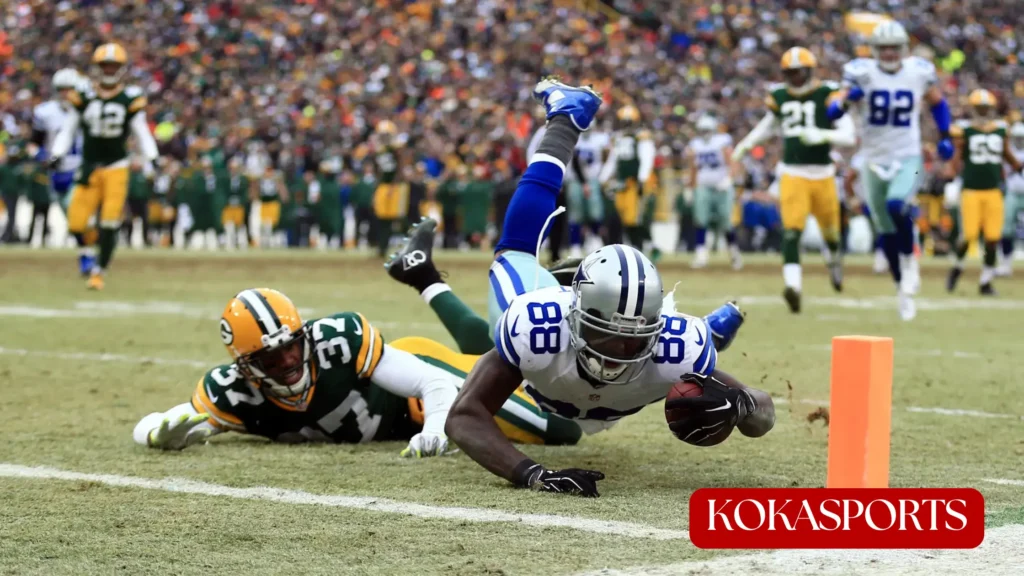
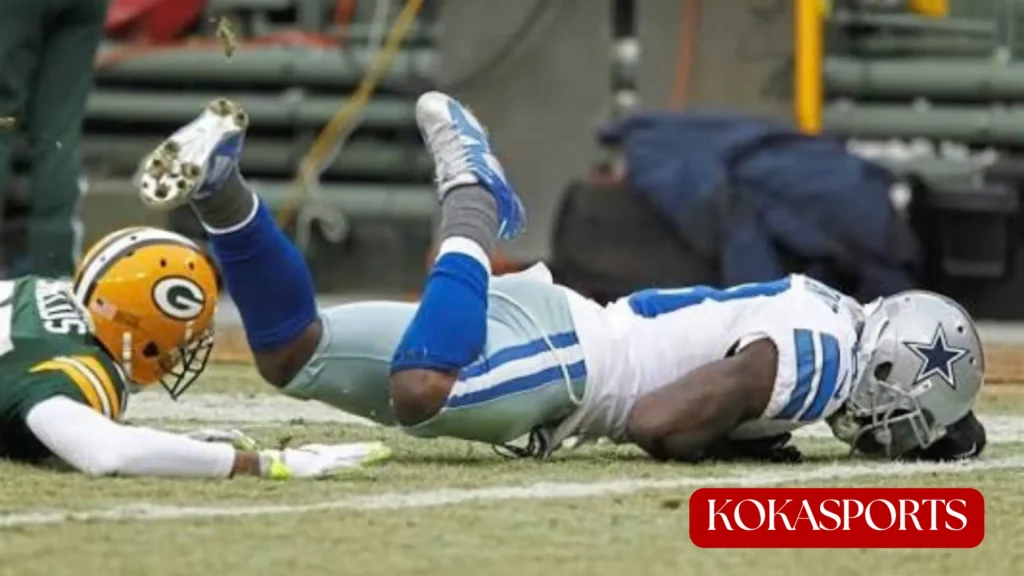
- Dez Bryant, 2014 playoffs: Bryant leapt for a pass against the Packers, came down with it, took steps, and lunged for the end zone but lost control when the ball hit the ground. The “Dez caught it” debate raged for years.
- Jesse James, 2017: The Steelers tight end caught the pass near the goal line and reached across it as he was going to the ground. The ball moved when it hit the turf, so the apparent go-ahead touchdown against the Patriots was overturned on review.
Under the current rule, plays like Bryant’s and James’s would be ruled complete catches. Once the catch is complete, the ground cannot take it away.
What Doesn’t Count as a Catch
Quick checklist of plays that are ruled incomplete:
- The ball touches the ground before the receiver secures control
- The receiver bobbles the ball all the way to the turf
- Only one foot lands in bounds (NFL)
- The receiver loses the ball when hitting the ground on a diving catch
- The pass is caught out of bounds, even with control
- A defender breaks up the pass before control is ever established
One more note: the same three requirements apply to interceptions. A defender who picks off a pass must also secure control, get two feet down, and make a football move. Otherwise it’s just an incomplete pass, not a turnover.
Catch vs Reception: Is There a Difference?
In everyday football language, “catch” and “reception” mean the same thing: a forward pass successfully caught by an eligible receiver. Statistically, every completed catch is recorded as a reception and credited with receiving yards. For the full breakdown of how receptions work, what counts and what doesn’t, see our guide to what a reception is in football.
Conclusion
The NFL catch rule comes down to three things: control the ball, get two feet down, and make a football move. Once you know that, even the most controversial replay reviews start to make sense.
FAQs
What is the NFL catch rule in simple terms?
A catch requires three things: control of the ball, two feet (or another body part) down in bounds, and a football move such as tucking the ball or turning upfield. If the receiver is going to the ground while catching, he must hold onto the ball through contact with the ground.
How many feet need to be in bounds for a catch in the NFL?
Two feet, or one body part other than the hands (a knee, elbow, or hip all count). College and high school football require only one foot in bounds.
What is a “football move”?
Any act common to the game after securing the catch: tucking the ball away, turning upfield, taking extra steps, or reaching for the goal line. The rule is also satisfied if the receiver keeps control of the ball long enough to perform one of these acts. It’s the final step that completes a catch under NFL rules.
Does the receiver have to survive the ground?
Only if he’s going to the ground in the act of catching the pass. A receiver who catches the ball upright, gets two feet down, and makes a football move has completed the catch. If the ball comes out afterward, it’s a fumble, not an incompletion.
Why was Dez Bryant’s catch overturned?
Under the pre-2018 rule, Bryant didn’t maintain control through the ground while lunging for the end zone. The 2018 simplification means similar plays today would be ruled complete catches.
Is a one-handed catch legal in the NFL?
Yes. The rule only requires control. It doesn’t matter whether it’s secured with one hand or two, as long as all three steps are met.