


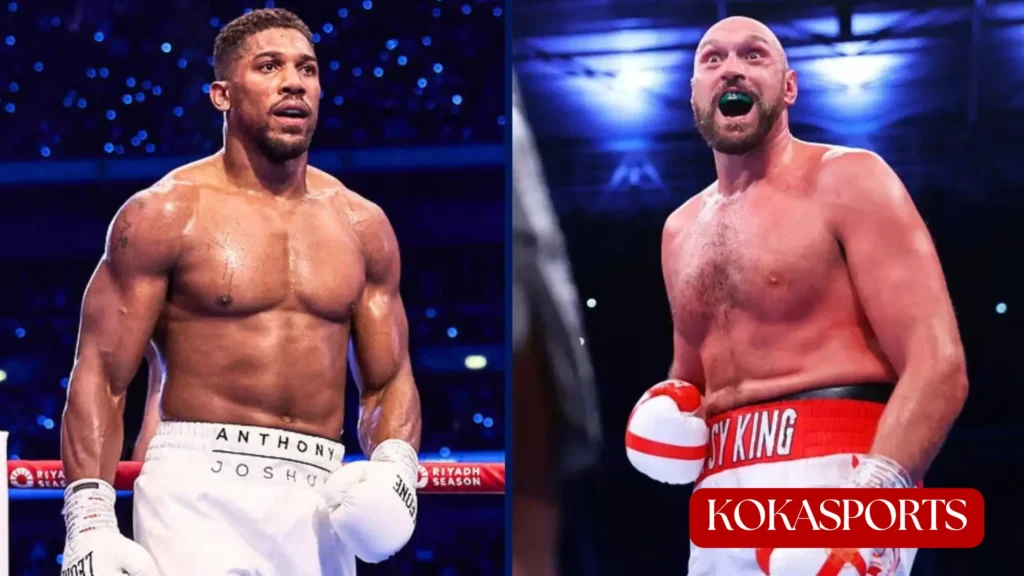
Tyson Fury and Anthony Joshua both reached the top of the heavyweight division, but they took very different routes to get there, and the gap between them is just as wide in the gym. Looking at how Fury and Joshua train for a fight shows two completely different approaches. One is a product of Britain’s elite amateur system, and the other learned the game in a boxing family and trusts his instincts. Anyone looking at the Fury v Joshua odds is really comparing two opposite ways of preparing for a fight. Here’s how each man trains, and how their camps have changed over the years.
Joshua and the Amateur System
Joshua’s habits were formed in the GB Boxing programme at the English Institute of Sport in Sheffield. That set-up, run by Rob McCracken, is built around sports science: planned strength and conditioning blocks, monitored nutrition and recovery, and sparring scheduled around measurable targets. It produced Olympic gold at London 2012, and McCracken stayed in Joshua’s corner as a professional until his first defeat to Oleksandr Usyk in 2021.
You could see the results in his physique. Joshua built one of the most muscular frames in heavyweight history, and his explosive power in the early rounds came straight from that work in the weights room.
Joshua Learning to Adapt
That structure has been adjusted after his setbacks. After losing to Andy Ruiz Jr in 2019, Joshua came in around 10 pounds lighter for the rematch. He cut muscle to improve his stamina and movement, boxed behind his jab for 12 rounds, and won the titles back.
Later defeats to Usyk pushed him to look outside his old camp. He worked with Robert Garcia and then Derrick James in the United States before linking up with Ben Davison. Under Davison, the focus has shifted to rhythm, feints and staying relaxed. It paid off with a two-round knockout of Francis Ngannou in 2024.
Fury and the Comeback Camp
Fury’s approach owes less to a sports science manual and more to instinct. He grew up in a boxing family and has often said he trains by feel, adjusting sessions to how his body responds rather than following a fixed plan.
The best-known example came after his break from the sport following his win over Wladimir Klitschko. Fury has said his weight rose close to 28 stone (around 390 lbs) during that period. With Davison, then a young coach, he spent months on long runs, gym circuits and steady dieting. He is reported to have lost around 10 stone (roughly 140 lbs) in little more than a year, returned to the ring in 2018, and fought Deontay Wilder for the world title that December.
Running is a constant theme. Fury has been filmed out on the seafront near his home in Morecambe, and he often talks about how much the routine helps his mental health as well as his fitness.
Fury and the Kronk Style
Before his 2020 rematch with Wilder, Fury switched to SugarHill Steward, a trainer from the famous Kronk gym in Detroit. Steward’s approach centred on sitting down on punches and pressing forward.
Fury also went the opposite way to Joshua on weight. He came in at 273 lbs, heavier than ever, to lean on Wilder and wear him down. It worked: he stopped the American in seven rounds.
Where the Two Methods Differ

The clearest contrast is structure against instinct. Joshua’s camps are planned in detail and measured as they go, a legacy of his amateur years. Fury’s are built around feel, and he has been willing to change his weight, style and corner at short notice if he thinks it will help.
There’s also a difference in what each man is building. Joshua has spent years trying to keep his power while gaining stamina. Fury goes for size and endurance, accepting a heavier frame so he can control a fight over 12 rounds.
What It Could Mean on the Night
Both approaches have produced world champions, and both men have changed course after defeat. Joshua will bring the explosive power and sharp jab built in a structured camp. Fury will bring the size, footwork and ring IQ that have carried him through 12-round wars. The fighter who arrives in better shape for the style he wants to box is likely to have the edge. For anyone following the fight odds, the work done in camp will say a great deal about which version of each man turns up.
FAQs For How Fury and Joshua Train for a Fight
Who trains Anthony Joshua now?
Joshua works with Ben Davison, the same coach who guided Tyson Fury through his 2018 comeback. Under Davison, Joshua has focused on rhythm, feints and staying relaxed, and that work led to his two-round knockout of Francis Ngannou in 2024.
Who was Anthony Joshua’s first professional trainer?
Rob McCracken, the head of the GB Boxing programme, trained Joshua from his amateur days through his professional career until his first loss to Oleksandr Usyk in 2021.
How much weight did Tyson Fury lose for his comeback?
Fury has said his weight rose close to 28 stone (around 390 lbs) during his time away from boxing. He is reported to have lost around 10 stone (roughly 140 lbs) in little more than a year before returning to the ring in 2018.
Why did Tyson Fury come in so heavy against Deontay Wilder?
For their 2020 rematch, Fury weighed 273 lbs, the heaviest of his career at that point. Under SugarHill Steward’s Kronk style, he used that size to press forward, lean on Wilder and wear him down, and he won by seventh-round stoppage.
Why did Joshua lose weight for the Andy Ruiz Jr rematch?
Joshua came in around 10 pounds lighter to improve his stamina and movement. He boxed behind his jab for 12 rounds and won his titles back.
What is the main difference between Fury and Joshua’s training styles?
Joshua’s camps are structured and measured, built on the sports science of his amateur days. Fury trains by feel and is willing to change his weight, style or coach at short notice if he thinks it will help.
Conclusion
Fury and Joshua show there’s more than one way to build a heavyweight champion, and a reminder of why combat sports produce such different kinds of athletes. Joshua is a product of a system, with planned camps, sports science and a frame built in the weights room. Fury is a product of instinct, trusting his body, changing his approach when he feels it’s needed, and using his size to control fights. Both men have been knocked down, both have lost, and both have come back by changing how they train. When they finally meet, the winner may well be decided long before the first bell, by whoever got the most out of their camp.