

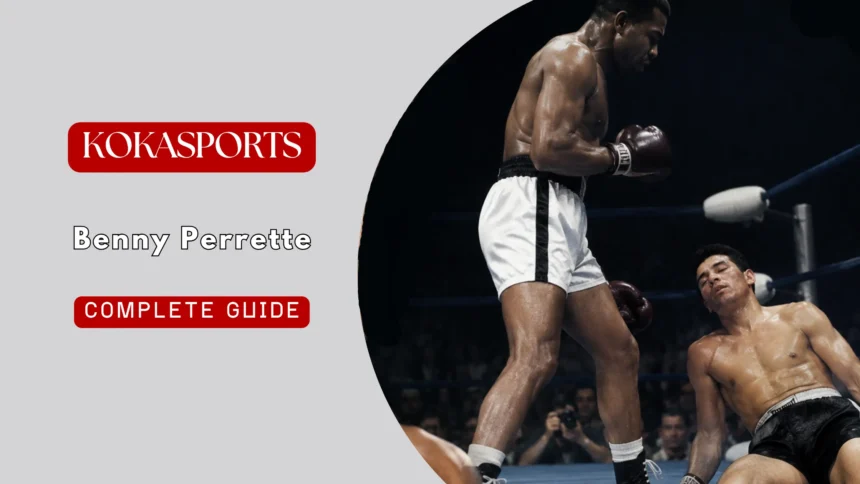
If you searched for Benny Perrette, you are likely looking for Benny “Kid” Paret, the Cuban welterweight boxer whose death inside the ring in 1962 became one of the most devastating moments in boxing history. “Benny Perrette” is a common misspelling of his name that has spread across the internet.
The real story behind the search is far more important than a typo.
I first watched the footage of Benny Paret’s final fight late at night on YouTube. I wasn’t ready for it. You see a man trapped against the ropes, taking punch after punch while the referee stands frozen. The crowd goes from cheering to screaming. And then silence.
Millions of people watched that exact moment live on national television in 1962. It changed boxing forever. It ended a career, haunted the man who threw those punches for the rest of his life, and forced an entire sport to ask itself whether it had gone too far.
This is the real story behind the name people are searching for.
| Detail | Info |
|---|---|
| Searched Name | Benny Perrette |
| Real Name | Bernardo “Benny Kid” Paret |
| Date of Birth | March 14, 1937 |
| Birthplace | Santa Clara, Cuba |
| Weight Class | Welterweight |
| Career Record | 35 wins, 12 losses, 3 draws |
| Championships | 2x World Welterweight Champion |
| Date of Death | April 3, 1962 (age 25) |
| Cause of Death | Brain hemorrhage from ring injuries |
Who Was Benny “Kid” Paret?
Early Life in Cuba
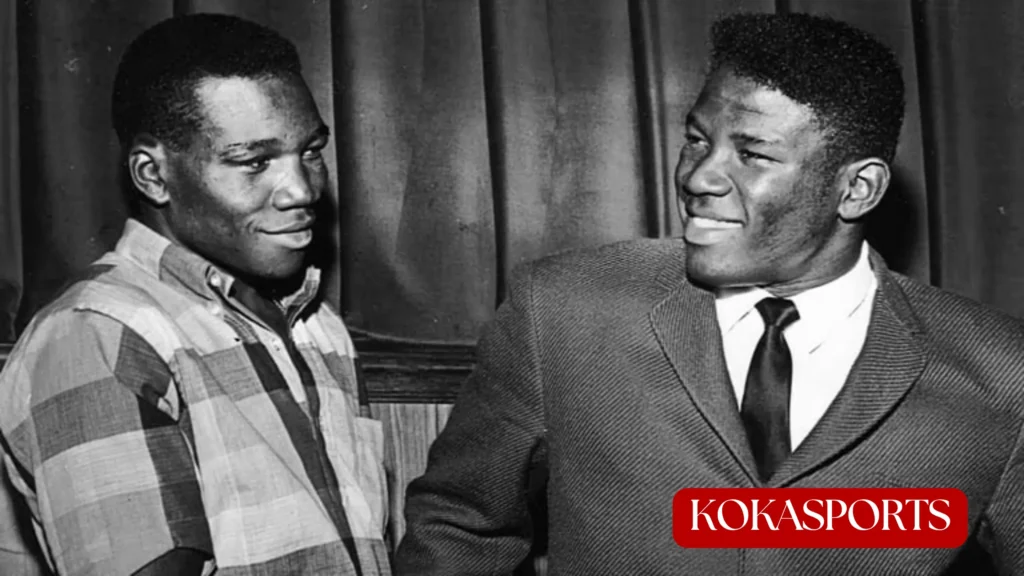
Bernardo Paret was born on March 14, 1937, in Santa Clara, Cuba. He grew up in poverty and turned to boxing as a way out. Like so many fighters from the Caribbean, the sport was his ticket to a different life.
He developed his skills as an amateur before making the move to professional boxing. His manager, Manuel Alfaro, brought him from Cuba to the United States, where Paret would build his career and eventually fight for world titles.
Moving Into Professional Boxing
Paret turned professional and quickly earned a reputation as a fearless, aggressive pressure fighter. He was not the most technically refined boxer. But he was tough, durable, and willing to take punishment to deliver his own.
He moved through the welterweight ranks with a relentless style that fans loved. He walked forward, threw volume, and never backed down from anyone. That toughness made him a champion. It also made him vulnerable.
Benny Paret’s Boxing Career
Rise to World Champion
Paret won the Undisputed World Welterweight Championship for the first time on May 27, 1960, by defeating Don Jordan. At just 23 years old, he was a world champion.
He would go on to win the title twice, becoming a two-time welterweight champion during one of boxing’s most competitive eras. He fought the best in the division and never ducked anyone.
Fighting Style and Strengths
Paret was a pressure fighter. He came forward constantly, threw combinations from close range, and wore opponents down with sheer volume and aggression.
His greatest strength was his durability. He could absorb punishment that would stop most fighters and keep coming forward. Fans admired his heart. But that same toughness would ultimately cost him everything.
Career Record and Achievements
Paret finished with a professional record of 35 wins, 12 losses, and 3 draws. He had 10 knockouts among those wins. He won the world welterweight title twice and defended it against some of the best fighters of the early 1960s.
His record tells the story of a fighter who was always in tough fights. He was never protected. He fought everyone.
The Rivalry Between Benny Paret and Emile Griffith
First Fight Between Paret and Griffith
The rivalry between Paret and Emile Griffith is one of the most intense in boxing history. Their first fight took place on April 1, 1961. Griffith knocked Paret out in the thirteenth round to take the welterweight title.
It was a statement win for Griffith. But Paret was not done.
The Heated Second Fight
Paret recaptured the crown on September 30, 1961, winning a split decision over Griffith. The second fight was close, controversial, and set the stage for a rubber match.
The tension between the two fighters had been building. What started as a sporting rivalry was becoming deeply personal.
Why Their Rivalry Became So Intense
The morning of their third fight on March 24, 1962, things boiled over at the weigh-in. Paret taunted Griffith by calling him “maricón,” a Spanish slur meaning “faggot.” Griffith, who had worked in a women’s hat factory and would later come out as bisexual, was enraged.
When asked to pose for photos with Paret afterward, Griffith responded, “I’d better not. I’m liable to swing right now.”
That moment set the tone for everything that followed.
The Fatal 1962 Fight
Build-Up to the Third Fight
The third fight was scheduled for Madison Square Garden on March 24, 1962. It was broadcast live on ABC’s Fight of the Week. Millions of Americans tuned in.
Griffith was the heavy favorite. Vegas oddsmakers had him at 2-to-7. But Paret was the champion, and champions always get a chance to defend.
What most people didn’t know was how much damage Paret had already absorbed. He had fought three brutal bouts in the previous twelve months, including a tenth-round knockout loss to middleweight champion Gene Fullmer just three months earlier. New York boxing authorities still cleared him to fight.
What Happened During the Fight
The fight was competitive through the first eleven rounds. In the sixth round, Paret nearly stopped Griffith with a multi-punch combination, but the bell saved him.
After that round, Griffith’s trainer Gil Clancy told him to keep punching until Paret held him or the referee broke them.
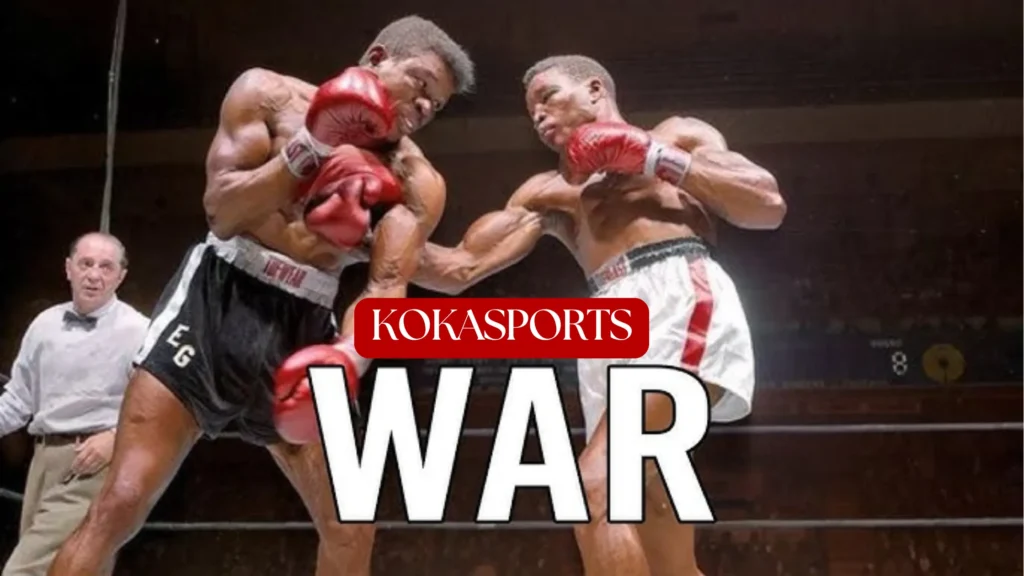
In the twelfth round, Griffith trapped Paret against the ropes and unleashed a barrage of punches. Estimates range from 17 to 29 clean shots, mostly uppercuts, in a span of roughly five to twenty seconds.
Paret slumped against the ropes. His head hung outside the ring. His arms dropped. Referee Ruby Goldstein finally stepped in, but it was too late.
Benny Paret’s Injuries
Paret collapsed in the corner after the stoppage. He never regained consciousness. He was rushed to Roosevelt Hospital in Manhattan with massive brain hemorrhaging.
The damage was catastrophic. The accumulated trauma from his previous fights, combined with the final barrage from Griffith, left injuries that no medical intervention could reverse.
Benny Paret’s Death
How Benny Paret Died
Benny “Kid” Paret spent ten days in a coma. He died on April 3, 1962, at Roosevelt Hospital. He was 25 years old.
He left behind a wife, Lucy, and an infant son, Benny Jr. His wife later said he had wanted his son to become a doctor or a lawyer. Not a boxer.
He was buried at St. Raymond’s New Cemetery in the Bronx, New York.
Impact on Emile Griffith
Griffith was haunted by Paret’s death for over forty years. He suffered nightmares about the fight. He later admitted to being gentler with opponents after that night because he was terrified of killing someone else in the ring.
From the Paret fight to his retirement in 1977, Griffith fought 80 more bouts but only scored twelve knockouts. Many believed he was never the same fighter again.
In a 2005 documentary called Ring of Fire, an aging Griffith met Paret’s son, Benny Jr., for the first time. The son embraced him and told him he was forgiven. It was one of the most powerful moments in sports documentary history.
How Benny Paret Changed Boxing
Safety Concerns Raised After His Death
Paret’s death sparked a national debate about whether boxing should be banned. New York Governor Nelson Rockefeller created a seven-man commission to investigate the incident and the sport itself.
Referee Ruby Goldstein was heavily criticized for not stopping the fight sooner. He defended his decision, saying Paret was a durable champion who always fought back. But Goldstein never refereed another major fight. His career was effectively over.
Changes in Boxing Rules and Medical Care
Paret’s death, combined with the death of featherweight Davey Moore the following year, pushed boxing toward major reforms. Improved ringside medical procedures, stricter pre-fight medical evaluations, and better awareness around stoppages all came from this era.
Boxing was also pulled from regular network television for nearly a decade. The sport wouldn’t return to mainstream TV until the 1970s. Paret’s death didn’t just change the rules. It changed the public’s relationship with boxing itself.
Benny Paret in Popular Culture
Documentaries and Films About the Fight
The 2005 documentary Ring of Fire: The Emile Griffith Story centered on the fight and its aftermath. The story was also adapted into Champion, a jazz opera by composer Terence Blanchard, which premiered at Opera Theatre of Saint Louis in 2013 and made its Metropolitan Opera debut in April 2023.
Folk singer Gil Turner wrote a protest song called “Benny ‘Kid’ Paret” in 1962. Australian ex-boxer Merv Lilley wrote a poem urging people to remember Paret “when they’re lacing leather on.”
Legacy in Boxing History
Paret’s final fight is still studied in boxing circles as a cautionary tale about fighter safety, referee responsibility, and the dangers of fighting too frequently without proper recovery time.
His death forced the sport to confront uncomfortable truths. And more than sixty years later, those conversations are still happening every time a fighter takes too much punishment in the ring.
Lesser-Known Facts About Benny Paret
Personal Life Outside Boxing
Paret was described by those who knew him as a devoted husband and an affectionate father. His wife Lucy never remarried because she didn’t want their son raised by anyone else.
He was an immigrant who came to America with nothing and became a two-time world champion. His story is one of ambition, sacrifice, and a sport that ultimately took everything from him.
Interesting Facts Fans May Not Know
Paret’s nickname “Kid” was given to him early in his career, following a long tradition in boxing of young fighters earning youthful monikers. His manager Manuel Alfaro brought him from Cuba and controlled much of his career. Many historians blame Alfaro for pushing Paret into too many fights too quickly, particularly the Griffith rematch so soon after the Fullmer knockout.
Frequently Asked Questions About Benny Paret
Who was Benny Paret?
Benny “Kid” Paret was a Cuban welterweight boxer who won the world welterweight championship twice in the early 1960s. He is often misspelled online as “Benny Perrette.”
How did Benny Paret die?
Paret died on April 3, 1962, ten days after sustaining massive brain injuries during a title fight against Emile Griffith at Madison Square Garden.
Who fought Benny Paret in his final fight?
Emile Griffith fought Paret in their third and final meeting on March 24, 1962. Griffith won by knockout in the twelfth round.
Was Benny Paret a world champion?
Yes. Paret won the world welterweight championship twice, first defeating Don Jordan in 1960 and then recapturing it from Griffith in 1961.
How old was Benny Paret when he died?
Paret was 25 years old when he died on April 3, 1962.
Why is Benny Paret’s death important in boxing history?
His death led to major reforms in boxing safety, including improved medical evaluations, stricter stoppage protocols, and the removal of boxing from regular network television for nearly a decade.
Conclusion
Benny “Kid” Paret was a two-time world champion, a devoted father, and a fighter who gave everything he had inside the ring. His death at 25 years old remains one of the most tragic moments in the history of professional sports.
The name people search for, “Benny Perrette,” is a misspelling. But the story behind it is very real. A young man from Cuba who fought his way to the top, was pushed into one fight too many, and paid for it with his life.
His death changed boxing forever. It forced the sport to reckon with the cost of entertainment built on human suffering. And it left behind a family, a rival consumed by guilt, and a legacy that still echoes every time a referee decides whether to stop a fight or let it continue.
Benny Paret deserves to be remembered correctly. By his real name. And for what his sacrifice meant to the sport he loved.