
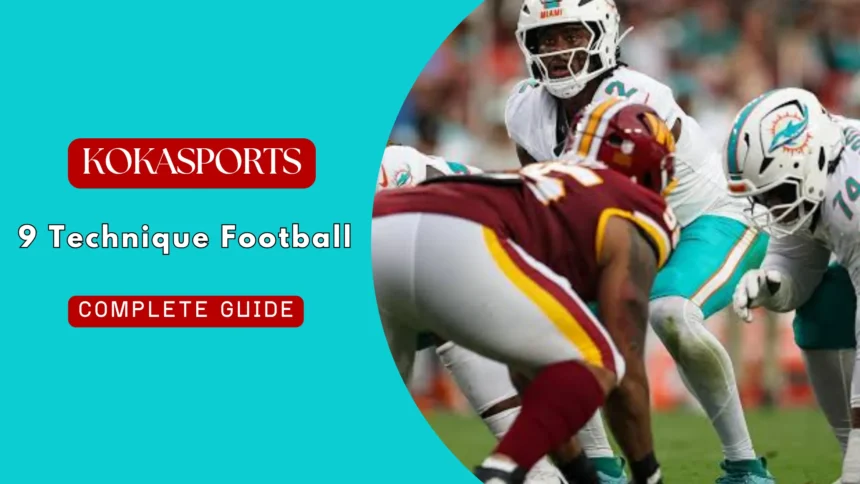
If you have ever watched a football broadcast and heard an analyst praise a defensive end for winning off the edge as a “9 technique,” you may have wondered what that number actually describes. It is not a jersey number and it is not a stat. In 9 technique football, that number tells you exactly where a defender lines up before the ball is snapped, and that alignment shapes everything he is asked to do on the play.
The 9 technique, often called the “wide 9,” is the widest alignment on the defensive line. It is the home of the pure speed rusher, the player whose first job is to get around the tackle and chase down the quarterback. In this guide we will break down what the 9 technique is, where it fits inside the full defensive line numbering system, how it works in different defenses, and why coaches love it on passing downs but think twice about it against the run.
What Is the 9 Technique in Football?
The 9 technique is a defensive line alignment in which a player lines up outside the shoulder of the last man on the line of scrimmage, usually the tight end, or the offensive tackle when there is no tight end to that side. Because it sits farther from the center than any other alignment, it gives a pass rusher the straightest and shortest path to the quarterback as he drops back.
A 9 technique player is typically a speed rusher. He is not asked to anchor against double teams or stuff runs up the middle. His value comes from his get-off, his bend around the corner, and his ability to turn that extra width into a running start before the tackle can slide out to meet him. Think of it as giving the rusher a head start in a footrace to the passer.
To really understand the wide 9, it helps to see where the number 9 comes from in the first place. That means looking at the full defensive line numbering system.
Understanding the Defensive Line Technique Numbering System
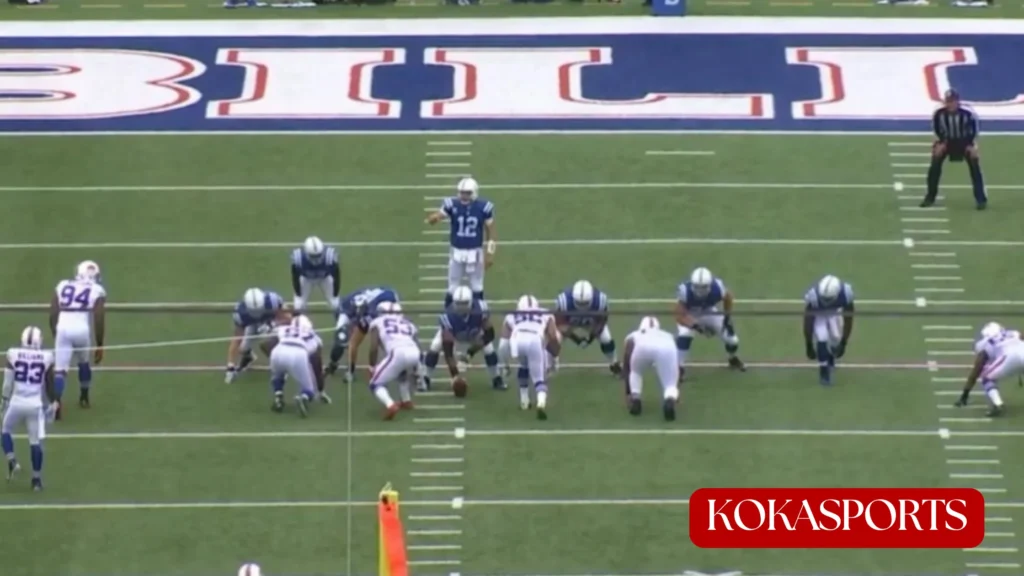
Defensive line techniques are numbered alignments that tell a defender where to line up relative to an offensive lineman or the tight end. The system exists so that coaches can communicate an entire front in a word or two instead of describing each player individually. Legend holds that the terminology was standardized by Bear Bryant during his time at Texas A&M, built so that a single number could define both where a defender aligns and what his responsibility is.
Every alignment is counted outward from the center in both directions. The nose of the defense starts at 0, directly over the center, and the numbers climb as you move toward the sideline.
How the Even, Odd, and Inside Numbers Work
Once you learn three simple rules, the whole chart falls into place:
- Even numbers mean the defender lines up head up, directly across from an offensive lineman. A 0, 2, 4, or 6 puts a defender nose to nose with a blocker.
- Odd numbers mean the defender lines up on the outside shoulder of a blocker. A 1, 3, 5, or 9 shades the defender to the outside.
- Even numbers with an “i” mean the defender lines up on the inside shoulder. A 2i or 4i tilts the defender toward the center.
Head up alignments traditionally came with two gap responsibilities, which is why even numbers are tied to bigger, stronger run stoppers. Odd and inside alignments usually come with a single gap to control, which frees a defender to attack rather than read and react.
The Full Defensive Line Technique Chart (0 to 9)
Here is the widely accepted chart, counting out from the center. If you want a deeper look at any single alignment, our breakdown of 1 technique football walks through the nose tackle spot in detail.
| Technique | Alignment |
|---|---|
| 0 | Head up on the center |
| 1 | Outside shoulder of the center |
| 2 | Head up on the guard |
| 2i | Inside shoulder of the guard |
| 3 | Outside shoulder of the guard |
| 4 | Head up on the tackle |
| 4i | Inside shoulder of the tackle |
| 5 | Outside shoulder of the tackle |
| 6 | Head up on the tight end |
| 7 | Inside shoulder of the tight end |
| 9 | Outside shoulder of the tight end (or the last man on the line) |
There is one quirk worth remembering. You might expect the inside shoulder of the tight end to be labeled “6i,” but football terminology calls it a 7 technique instead. It is the famous exception to the odd and even rule, and it is the kind of detail that separates a casual fan from someone who really knows the front. Our guide to 7 technique football covers that C gap defender in full.
Defensive Line Gaps Explained (A, B, C, and D)
Alignment only matters because of gaps. Gaps are the spaces between offensive linemen, and they are the lanes a running back wants to hit. Defenses assign every gap to a defender so that no running lane is left open.
The gaps are lettered outward from the center, just like the techniques are numbered:
- A gap: between the center and the guard
- B gap: between the guard and the tackle
- C gap: between the tackle and the tight end, or just outside the tackle when there is no tight end
- D gap: outside the tight end
A 9 technique is primarily responsible for setting the edge of the defense and, on passing downs, for getting up the field into the backfield. Because he lines up so wide, the area inside him can open up if the rest of the defense does not account for it. If you want the full picture of how these lanes work on both sides of the ball, our explainer on football gaps and holes ties the offensive and defensive views together.
Where the 9 Technique Lines Up
Picture a standard offensive line with a tight end attached to one side. The 9 technique sets up outside the tight end’s outside shoulder, angled slightly back toward the quarterback. When there is no tight end, the defender simply aligns well wide of the offensive tackle.
That width is the whole point. By starting so far outside, the rusher forces the offensive tackle to open his hips and turn toward the sideline just to stay in front. The moment a tackle has to turn and run, a fast edge defender can dip his shoulder, bend the corner, and attack the pocket before the blocker can recover. Against an offensive line that is already stretched, a wide 9 can look like a defender being shot out of a cannon.
The 9 Technique in a 4-3 Defense
The wide 9 is most often pictured as a 4-3 defensive end position. In a four man front, the defensive ends are the natural edge rushers, and sending one of them out to a 9 technique maximizes his speed rush.
That said, fewer four man line teams use the alignment on every down than you might think. The Detroit Lions leaned heavily on the wide 9 under defensive coordinator Jim Schwartz years ago, but around the league it has become more of a sub package look, deployed on obvious passing downs rather than as a base defense. On third and long, when everyone in the stadium knows a pass is coming, that is when you are most likely to see both ends widen out and pin their ears back. The analytics team at Pro Football Focus has tracked this shift, noting that the classic wide 9 has become largely a passing down weapon for four man line defenses.
The 9 Technique in a 3-4 Defense
Here is where many fans get surprised. In a 3-4 defense, the 9 technique is not a specialty look at all. It is essentially the base alignment for the stand up outside linebackers.
With three down linemen inside, a 3-4 front naturally positions its outside linebackers wider than a 4-3 would position its ends. Those outside linebackers often want the extra angle a wide alignment gives them, not only to rush the passer but also to attack the run and set a hard edge, forcing ball carriers back inside to where the rest of the defense is waiting. So while a four man line team saves the wide 9 for passing situations, a 3-4 team may live in it on nearly every snap.
Strengths of the Wide 9 Technique
The appeal of the 9 technique comes down to a few clear advantages:
- A faster path to the quarterback. The wide alignment gives a speed rusher a running start and the straightest line to the passer.
- Pressure that forces mistakes. Immediate edge pressure can force a quarterback to rush his throw, step up into waiting interior rushers, or take a sack.
- One on one matchups inside. When the edge rushers stretch the tackles out wide, interior defenders often get cleaner one on one matchups against guards.
- A hard edge against the run, in the right scheme. For 3-4 outside linebackers especially, the wide angle helps spill run plays back inside.
Weaknesses of the Wide 9 Technique
No alignment is free. The wide 9 trades run defense for pass rush, and offenses know it.
The biggest vulnerability is the off tackle run. Because the 9 technique rusher is flying up the field and sitting so far outside, the space inside him can become a highway if no one fills it. That is why teams running the wide 9 rely on their linebackers to be disciplined, to read the run quickly, and to fill the gap the end has vacated. Safeties also have to be ready to come down in run support. Spread offenses love to attack this with read option looks and runs aimed right at the lane the rusher leaves behind. Run the wide 9 without a plan to defend that inside lane, and a patient offense will make you pay.
Pass Rush Moves Used From the 9 Technique
Winning from a wide alignment is about more than raw speed. The best 9 technique players pair their get-off with a toolbox of hand and body moves to beat the tackle:
- Dip and rip: dropping the inside shoulder low and ripping the arm up and through to clear the blocker’s hands while bending the corner.
- Swim move: knocking the blocker’s hand down, then swinging the opposite arm over the top like a freestyle swimmer to get past.
- Bull rush: driving straight into the blocker with leverage and power to walk him back into the quarterback.
- Spin move: attacking up the field, then spinning back inside to leave the blocker grabbing air.
- Speed to power: selling the outside speed rush, then converting that momentum into a sudden power move when the tackle overcommits.
A rusher who can threaten a tackle with both speed and power is the hardest kind to block, because the blocker can never fully commit to stopping one without exposing himself to the other.
9 Technique vs Other Edge Alignments (5 and 7)
The 9 technique is easy to confuse with its neighbors on the edge, so here is how it differs.
A 5 technique lines up on the outside shoulder of the offensive tackle. It is a more balanced alignment, common for 3-4 defensive ends who need to play the run and rush the passer in roughly equal measure. A 5 technique is tighter to the formation and carries more two way responsibility than a 9.
A 7 technique lines up on the inside shoulder of the tight end and is focused on the C gap. It is a run first alignment designed to take away the inside, the opposite priority of the pass first wide 9.
The 9 technique sits farthest outside of the three. It sacrifices run responsibility for the cleanest possible rush angle, which is exactly why it is reserved for your best edge speed.
Who Plays the 9 Technique?
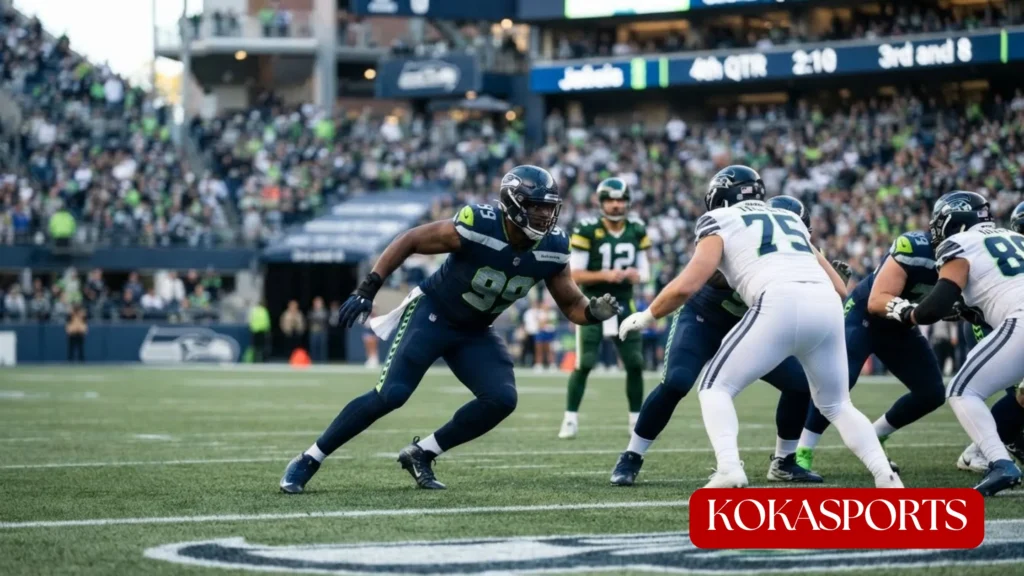
Players who thrive in the wide 9 are usually classified as edge rushers. As an umbrella term, “edge rusher” covers both 4-3 defensive ends and 3-4 outside linebackers, the two spots that most often find themselves aligned out wide. If you want the full rundown of the position group, our guide to what a defensive lineman does in football is a good starting point, and the broader definition of the role is covered well on Wikipedia’s edge rusher page.
Historically, the alignment has been home to some of the most feared pass rushers in the game. Dwight Freeney built a Hall of Fame career bending the corner from a wide alignment. Jared Allen terrorized tackles from the wide 9, and Cameron Wake was a prototype speed rusher off the edge. Among 3-4 outside linebackers, players like Jarrett Johnson made their living setting a hard edge from that same wide spot. More recently, teams have continued to feature the look on passing downs, deploying their best edge rushers out wide to pin their ears back and attack.
The common thread is simple. The wide 9 belongs to players who are fast off the snap, can bend around the corner without losing speed, and have the hand skills to finish once they beat the tackle.
FAQs For 9 Technique Football
What’s the difference between a 9 and a 10?
worth answering carefully, since the standard defensive system tops out at 9 and most schemes don’t use a “10 technique” at all, so the honest answer clears up a common mix-up
What is the 9 technique in football?
The 9 technique is a defensive line alignment where a player lines up outside the shoulder of the last man on the line of scrimmage, usually the tight end. It is the widest alignment in the standard numbering system and is used mainly by speed rushers to attack the quarterback from the edge.
Is the 9 technique the same as the wide 9?
Yes. The terms are used interchangeably. “Wide 9” simply emphasizes how far outside the defender aligns, and both names refer to the same outside shoulder alignment on the end of the line.
What is the difference between a 5 technique and a 9 technique?
A 5 technique lines up on the outside shoulder of the offensive tackle and usually carries balanced run and pass responsibilities. A 9 technique lines up much wider, outside the tight end, and is built almost entirely for rushing the passer with speed.
Who are some famous 9 technique players?
Edge rushers like Dwight Freeney, Jared Allen, and Cameron Wake are classic examples of players who excelled from a wide alignment, while many 3-4 outside linebackers play the 9 technique as their base spot.
Conclusion
The 9 technique is one of the clearest examples of how a single number in football can carry a whole story. Line up a fast defender out wide, give him the straightest path to the quarterback, and you have one of the most dangerous pass rush tools in the game. Ask that same player to hold up against a disciplined inside run, and you expose the trade off that makes the wide 9 a calculated gamble.
For four man line teams, it is a passing down weapon. For 3-4 teams, it is a way of life on the edge. Either way, understanding 9 technique football gives you a new appreciation for the chess match that plays out on the line of scrimmage before the ball is even snapped. Next time you want to see how these pieces fit into a full defense, take a look at our guide to youth football defensive formations and watch how alignment shapes the entire front.