
Your quarterback breaks the huddle, glances at the sideline, then looks down at his wrist. One number. One color. The play is in. That is the whole point of a well built qb wristband template: it turns a long, wordy play call into a single code your players can read in under a second.
Play calling is won and lost in the seconds between the whistle and the snap. A quarterback who has to decode a full sentence, repeat it to ten teammates, and still beat the play clock is a quarterback under pressure. A quarterback who reads one coded cell on his forearm is a quarterback in control. That single difference is why wristbands have moved from the NFL sideline all the way down to youth fields across the country.
Whether you coach youth tackle, varsity, or a 7-on-7 club, a printable qb wristband template keeps your offense organized and your tempo high. This guide covers what these templates are, how the system actually works, the main window layouts, how to fill one out, the mistakes to avoid, the rules at every level, and where to grab a free template you can print tonight.
What Is a QB Wristband Template?
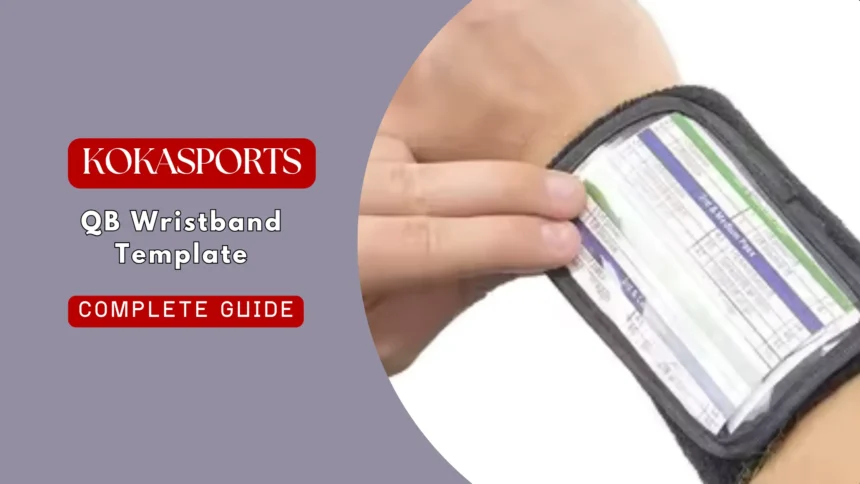
A qb wristband template is a printable play sheet insert that slides into a wrist coach, the padded band a quarterback wears on the non-throwing forearm. Each cell on the sheet holds a play, and each play is tied to a number, color, or code.
Instead of shouting a full call like “Trips Right, F Short, 358 X-Curl,” the coach signals a short code. The quarterback matches that code to the right cell and reads the play. The brain shifts from memory recall to simple recognition, which is faster and far less stressful under a running play clock. For a young quarterback, that shift is the difference between confidence and confusion.
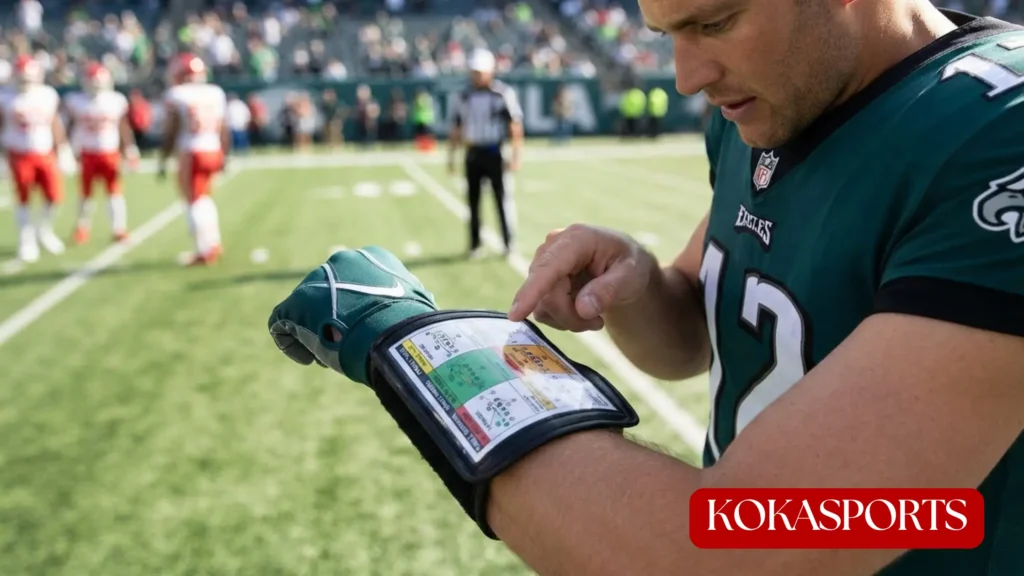
The first wristband play sheet traces back to 1965, when Baltimore Colts running back turned emergency quarterback Tom Matte taped a handwritten list of plays to his arm. Sixty years later, roughly twenty NFL starting quarterbacks still wear one. The tool is simple, proven, and it scales all the way down to your youngest players.
How a QB Wristband System Works
A wristband is only as good as the coding system behind it. The flow is the same at every level:
- The coach decides on a play and finds its code on the master call sheet.
- The coach signals the code to the field using a number, a color, a word, or a hand signal.
- The quarterback hears or sees the code and locates the matching cell on the wristband.
- The quarterback reads the play, relays it to the huddle, and the offense lines up.
Most programs use one of two coding methods. Number only systems keep it simple: the coach calls “14,” the quarterback reads cell 14. These are ideal for youth and beginner offenses. Color plus number systems add a layer: “Blue 7” points to the blue column, row 7, which lets you load far more plays onto one band without slowing the read. The method you pick should match the age and experience of your players, not the size of your playbook.
Why Quarterbacks Wear Play Call Wristbands
The wristband is not just a convenience. It is a timing tool. Here is what a clean template gives your offense:
- Speed. One code replaces a full sentence, so you snap faster and catch defenses before they set.
- Accuracy. Players read the exact call instead of mishearing it across a noisy sideline.
- Tempo control. Up-tempo, no-huddle, and two-minute drives all run smoother when the call is already on the wrist.
- Signal security. Coded numbers mean nothing to the other sideline, so your calls stay protected.
- Confidence. A quarterback who trusts the band plays faster and hesitates less, because the answer is always right there on his arm.
At the professional level, every quarterback’s helmet is also wired with a one-way speaker. But the audio feed cuts off with fifteen seconds left on the play clock, so the wristband stays on the arm as the reliable backup when the headset goes quiet. If you want to build the mechanics behind the call, pair your template work with quarterback training drills.
Single, Triple, and Five Window Templates
Wrist coaches come in different window counts, and your qb wristband template should match the model you own. The three most common layouts are:
- Single view. One window, best for youth teams and simple, single-formation offenses. Fewer plays, less to scan, and a cleaner read for first year quarterbacks.
- Triple view (triple window). Three panels for a mid-sized playbook. This is the most popular setup for high school offenses that carry run, pass, and special calls, since each panel can hold a category.
- Five view. Five panels for a full varsity or college style playbook, including formations, motions, checks, and situational calls. Best for experienced quarterbacks who can scan quickly.
Youth and adult sizes exist for each model, so print the version that fits both the band and the age group you coach. A template that is too dense for the player wearing it will slow the offense down no matter how good the plays are, so always match window count to reading ability first.
How to Fill Out Your QB Wristband Template
A template works only as well as the system behind it. Keep it clean and consistent:
- Number your plays. Assign every play a number, usually 1 to 20 for youth and more for older teams.
- Add color or grid logic. Pair numbers with colors or rows so one call (“Red 12”) points to one exact cell.
- Group by situation. Keep run, pass, red zone, and two point calls in their own columns so the quarterback’s eyes go straight to the right block.
- Keep the font readable. Print large enough to read at a glance under stadium lights, and do not crowd the cells.
- Print, cut, and slide it in. Drop the sheet into the wrist coach window, trim to size, and you are game ready.
- Rep it in practice. Install the same codes you will use on Friday so reading the band becomes automatic.
The goal is simple: your quarterback should find any play in one glance, with zero guessing. If the read takes longer than a second, the template is too busy and needs trimming.
Common Mistakes to Avoid
Even a great template can hurt your offense if you set it up wrong. Watch for these:
- Too many plays. A crowded band slows the read. Carry only what you will actually call this week.
- Inconsistent codes. If “14” means one play on Monday and another on Friday, your quarterback will freeze. Lock the system and keep it the same.
- No practice reps. The band only works when reading it is second nature. Install it in practice, not on game day.
- Ignoring the rules. Printing a template is not the same as being allowed to use electronic communication. Check your level before you rely on anything beyond paper.
From Practice Scripts to Friday Night
The same qb wristband template that runs your game plan can organize your whole week. Use it to script install days, 7-on-7 reps, and situational periods so practice mirrors the game. When every rep points back to the same numbered system, players stop memorizing and start reacting, and that carries straight onto the field on game day. Coaches building a broader system can tie the band into their full football play calling system.
QB Wristband Rules by Level
Before you print, know what is legal at your level. A paper play wristband is widely allowed, but electronic communication is a different question.
- Youth and flag. National bodies such as USA Football have not set a single wristband policy, so follow your league’s rules. For age-appropriate setup, see our youth football coaching guide.
- High school. The NFHS treats a play wristband as permitted non-electronic equipment worn on the wrist or forearm. In-helmet coach to player communication is not yet approved for high school football, which makes the paper wristband the primary legal tool for most programs.
- College. The NCAA approved one-way in-helmet communication for the 2024 season, using a single “green dot” player per team. Wristbands still back up the headset.
- NFL. Coach to quarterback helmet audio has been legal since 1994, and on defense since 2008, marked by the green dot on the helmet. The speaker still shuts off at fifteen seconds, so the band stays in play.
Always confirm the current rule with your state or league before game day, since communication rules change often and vary from one association to the next.
Get Your Free QB Wristband Template
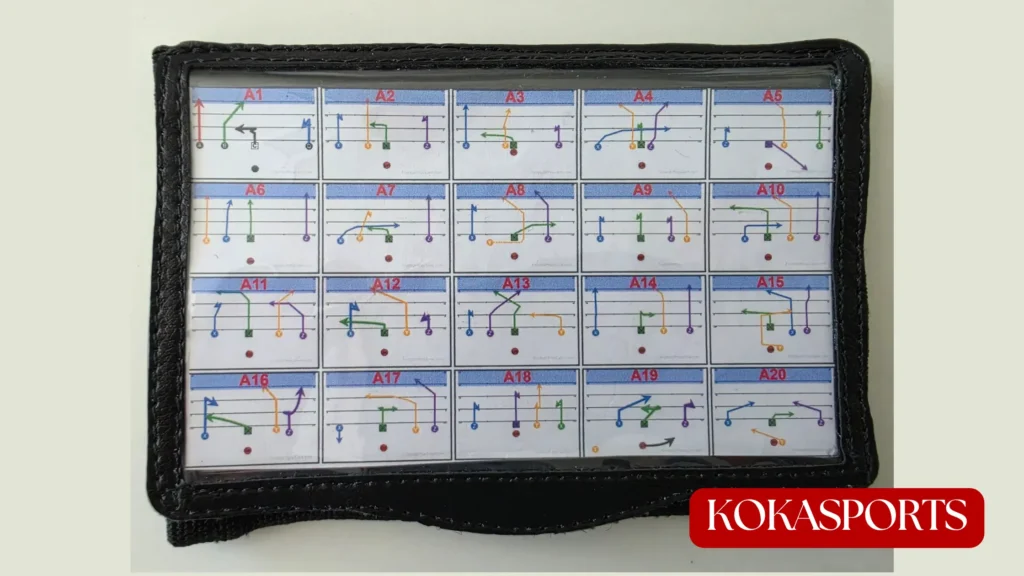
Ready to put your playbook on their wrist? Download a free printable qb wristband template, pick the single, triple, or five window layout that fits your wrist coach, drop in your numbered calls, and print. Less confusion, more execution, and a faster offense from the very first snap.
Frequently Asked Questions
How many plays should be on a youth qb wristband template?
Start small. Ten to twenty numbered plays is plenty for most youth teams, since too many options slow the read.
Which arm does the quarterback wear the wristband on?
The non-throwing forearm, so it never interferes with the throwing motion.
Do defensive players use wristbands too?
Yes. Linebackers and safeties often wear them to carry defensive calls and checks, using the same numbered system.
What is the difference between a single, triple, and five window template?
The number of panels. Single view holds the fewest plays and is best for youth, triple view fits most high school playbooks, and five view carries a full varsity or college style call sheet.
Can I use a qb wristband template in high school games?
Yes. A paper play wristband counts as permitted non-electronic equipment under NFHS rules. Only electronic in-helmet communication is restricted at the high school level, so always confirm your state association’s current rule.
Conclusion
A qb wristband template is one of the cheapest, highest impact tools you can add to your offense. It takes your play calls off the air and puts them on the arm, where they cannot be misheard, stolen, or forgotten. The band turns a long verbal call into a single glance, and that saved second shows up as faster snaps, cleaner execution, and a quarterback who plays with his head up instead of buried in the huddle.
The formula is straightforward. Match the window layout to your quarterback’s reading ability, build a numbering system you never change, rep it hard in practice, and stay inside the rules for your level. Do that, and the wristband stops being a piece of equipment and becomes part of how your offense thinks. Print your template, install your codes, and get your playbook on their wrist before the next snap.