
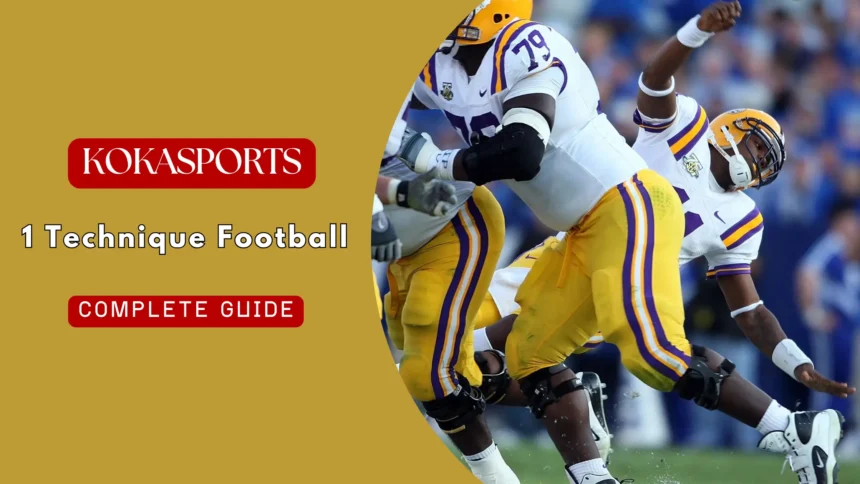
In football, the term “1 technique” gets used all the time by coaches, scouts, and broadcasters, but it often leaves fans confused. What does it actually mean? Where does the player line up? And why does it matter so much to a defense?
The 1 technique football alignment is one of the most important building blocks of defensive line play. It describes exactly where an interior defensive lineman positions himself before the snap, and it tells you a lot about that player’s job, body type, and role in the defense.
In this guide, we will break down what a 1 technique is, how it fits into the larger defensive line numbering system, and how it compares to the other techniques you hear about every Sunday.
Here is what we will cover:
- What a 1 technique is in football
- The defensive line technique numbers (0 through 9)
- Football defensive line gaps (A, B, C, and D)
- The 1 technique explained in full detail
- Other key techniques like the 3 and 5
- Gap control vs man control
- How the 1 technique fits into defensive fronts
What Is a 1 Technique in Football?
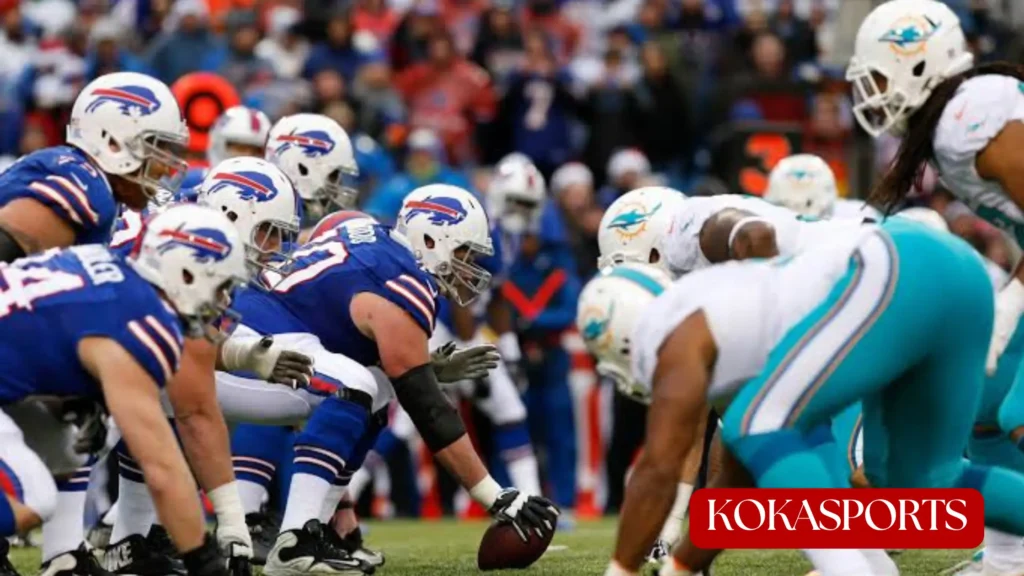
A 1 technique in football is an interior defensive lineman who lines up on the outside shoulder of the center, in the gap between the center and the guard. This spot is also called a “shade” on the center.
The player in this alignment is almost always a defensive tackle, and in many schemes he is referred to as the nose tackle. The 1 technique is most commonly used in a 4-3 defensive scheme, though modern defenses deploy it out of nearly every front.
The core job of the 1 technique is simple but demanding: eat up blockers. Because he lines up so close to the center, he regularly faces double teams from the center and guard. By occupying two blockers, the 1 technique frees up linebackers and other linemen to make plays. This is why the position is almost always filled by one of the biggest, strongest players on the roster.
Understanding Defensive Line Techniques
Before we go deeper into the 1 technique, it helps to understand the system it belongs to.
A “technique” in football refers to the physical spot where a defensive lineman lines up in relation to a specific offensive lineman before the ball is snapped. Instead of saying “the defensive tackle is standing a little to the right of the guard,” coaches use a simple number system that communicates the exact alignment in a single digit.
This numbering system has been around for decades and is used at every level of the game, from youth football to the NFL. While there are small variations between coaching systems, the core logic stays the same across the board, as confirmed by analysts at Pro Football Focus.
The numbers start in the middle of the offensive line, directly over the center, and count outward toward the sideline in both directions.
The Defensive Line Technique Numbers (0 Through 9)
Defensive linemen align in numbered techniques from 0 to 9 based on their position relative to the offensive linemen. Here is the full breakdown:
| Technique | Alignment |
|---|---|
| 0 | Head up on the center |
| 1 | Outside shoulder of the center |
| 2 | Head up on the guard |
| 2i | Inside shoulder of the guard |
| 3 | Outside shoulder of the guard |
| 4 | Head up on the tackle |
| 4i | Inside shoulder of the tackle |
| 5 | Outside shoulder of the tackle |
| 6 | Head up on the tight end |
| 7 | Inside shoulder of the tight end |
| 9 | Outside shoulder of the tight end |
How the Numbering System Works
Once you learn three simple rules, the entire system becomes easy to read:
- Even numbers are head-up alignments, meaning the defender lines up directly in front of an offensive lineman.
- Odd numbers are outside shades, meaning the defender lines up on the outside shoulder of an offensive lineman.
- An “i” after a number means an inside shade, placing the defender on the inside shoulder of that lineman.
So a 2 technique lines up head up on the guard, a 3 technique lines up on the guard’s outside shoulder, and a 2i lines up on the guard’s inside shoulder. This same logic was popularized in NFL coverage by outlets like Big Blue View, and it holds true all the way across the line.
One important note for accuracy: the outer techniques (7, 8, and 9) can vary slightly between coaching systems, so you will see small differences in how teams label alignments outside the tackle.
What Are the Defensive Line Gaps?
You cannot fully understand techniques without understanding gaps. Gaps are the open spaces between the offensive linemen, and defending them is the foundation of stopping the run.
Each gap is labeled with a letter, starting from the center and moving outward:
| Gap | Location |
|---|---|
| A Gap | Between the center and the guard |
| B Gap | Between the guard and the tackle |
| C Gap | Between the tackle and the tight end |
| D Gap | Outside the tight end |
Every gap exists on both sides of the ball. The A gaps are considered the most important to protect because they are the shortest path to the end zone. This is exactly where the 1 technique does his work.
The 1 Technique Explained in Detail
Now that we understand the system, let’s zoom back in on the 1 technique football alignment and what makes it unique.
Where the 1 Technique Lines Up
The 1 technique lines up on the outside shoulder of the center, shading into the A gap between the center and the guard. He is not directly over the center (that would be a 0 technique), and he is not over the guard (that would be a 2 technique). He sits in the space between them.
The 1 Technique’s Responsibilities
The primary responsibility of a 1 technique is to control the A gap and absorb blockers. Like the 0 technique, the 1 technique is expected to take on double teams from the center and guard. When he ties up two blockers, he creates one-on-one matchups for the rest of the defensive line, allowing his teammates to attack the backfield.
To do this job well, the 1 technique must be able to anchor at the point of attack without getting driven backward off the line of scrimmage. That starts with a powerful three-point or four-point stance and requires size, strength, and leverage more than it requires speed.
1 Technique vs 0 Technique
The 1 technique and the 0 technique are closely related, and the same player often plays both depending on the call. The difference is alignment. A 0 technique lines up head up on the center and, in many 3-4 schemes, is responsible for both A gaps. A 1 technique shades to one shoulder of the center and is typically responsible for just one A gap.
1 Technique vs 2i Technique
Here is where it gets interesting. A 1 technique sits on the center’s outside shoulder, while a 2i technique sits on the guard’s inside shoulder. Both end up playing inside the A gap area, but that small shift changes everything about how the offense can block them.
Some modern defenses prefer to move a traditional 1 technique out to a 2i against outside zone running teams. The extra space the 2i alignment creates can make it harder for the center to help double team, which frees up quicker interior linemen to shoot the gap. It is a subtle wrinkle, but it shows how much a single step of alignment can matter.
Other Key Defensive Line Techniques
To fully appreciate the 1 technique, it helps to see how it compares to its neighbors.
3 Technique
The 3 technique lines up on the outside shoulder of the guard and attacks the B gap. This is one of the most famous alignments in football and is usually filled by a quicker, more explosive interior pass rusher. In many defenses, the 1 technique and the 3 technique work as a pair, with the 1 technique eating blockers and the 3 technique penetrating.
5 Technique
The 5 technique lines up on the outside shoulder of the offensive tackle. This alignment is typically played by defensive ends, especially in 3-4 defenses, and it is used to set the edge against the run and rush the passer from the outside.
The 6, 7, and 9 Techniques
Moving outside toward the tight end, a 6 technique lines up head up on the tight end, a 7 technique lines up on the tight end’s inside shoulder, and a 9 technique lines up on the tight end’s outside shoulder. As noted earlier, these outer numbers can differ slightly depending on the coaching system.
The Wide-9
You may also hear the term “wide-9.” This describes a defensive end who lines up well outside the end man on the line of scrimmage. The wide-9 is primarily a pass-rush alignment, designed to let an edge rusher get upfield and pressure the quarterback with speed.
Gap Control vs Man Control
Defensive line techniques connect directly to two core defensive philosophies: gap control and man control.
Gap Control (One-Gap)
Gap control, also called one-gap defense, means each defender is responsible for a single gap. Players align in shades like the 1, 3, and 5 techniques and attack their assigned gap aggressively. This is the most common approach in modern football because it lets athletic linemen penetrate and disrupt plays.
Man Control (Two-Gap)
Man control, also called two-gapping, means a defender lines up head up on a blocker and is responsible for the gaps on both sides of that blocker. This requires the lineman to control the offensive lineman, read the play, shed the block, and make the tackle. Two-gapping is common in 3-4 defenses and even fronts, and it leans on head-up alignments like the 0, 2, 4, and 6 techniques.
How the 1 Technique Fits Into Defensive Fronts
The 1 technique is a key piece of several common defensive fronts and defensive formations. The three main fronts coaches use are the over front, the under front, and the tite front.
Over and Under Fronts
Both the over and under fronts pair a 3 technique on one side with a 1 technique on the other. The difference is which side each one plays. In an over front, the 3 technique is set toward the strength of the formation (often the tight end). In an under front, the 3 technique is set away from the strength. The 1 technique balances the interior on the opposite side.
Bear (Double Eagle) Front
The bear front, made famous by the Chicago Bears, uses three interior linemen to cover the center and both guards. The nose lines up over the center in a 0 or 1 technique, while the other two linemen cover the guards. This crowds the middle and frees the linebackers to run to the ball.
Tite Front
The tite front is a three-man front where the defensive ends align in 4i techniques (inside shoulder of the tackle) and the nose tackle plays head up on the center. The tite front has become popular against spread offenses because it clogs the interior and protects the linebackers.
Why the 1 Technique Matters
The 1 technique may not fill up the stat sheet, but it is one of the most valuable roles on a defense. By anchoring the A gap and absorbing double teams, the 1 technique lets the players around him make plays.
In today’s pass-heavy game, the demands on the position have grown. A classic 1 technique was a pure run-stuffer, but modern defenses increasingly want a player who can also push the pocket on passing downs. The best 1 techniques combine the size to hold the point of attack with enough quickness to be a threat as a rusher.
Understanding this role gives you a much deeper appreciation for what is happening in the trenches on every snap.
Frequently Asked Questions
What is a 1 technique in football?
A 1 technique is a defensive lineman who lines up on the outside shoulder of the center, in the A gap between the center and the guard. His main job is to control that gap and absorb blockers, often taking on double teams.
Is a 1 technique the same as a nose tackle?
In most 4-3 systems, yes. The 1 technique is usually called the nose tackle. In a 3-4 defense, the nose tackle more often lines up as a 0 technique (head up on the center) and is responsible for both A gaps.
What is the difference between a 1 technique and a 3 technique?
A 1 technique lines up on the center’s outside shoulder and controls the A gap, usually taking on double teams. A 3 technique lines up on the guard’s outside shoulder and attacks the B gap, usually as a quicker penetrating pass rusher. The two often play side by side.
What body type fits a 1 technique?
A 1 technique is typically one of the largest and strongest players on the defense. Because he faces constant double teams, he needs the size and leverage to hold his ground at the line of scrimmage rather than get driven backward.
Concluion
The 1 technique football alignment is a perfect example of how a single number can tell you a player’s position, responsibility, and role all at once. Once you understand that a 1 technique shades the center, controls the A gap, and eats up blockers, you will start to see the game in a whole new way.
The next time you watch a game and hear a broadcaster mention a 1 technique, a 3 technique, or a wide-9, you will know exactly what they mean and why it matters. And if you coach or train, the best way to master these alignments is through dedicated defensive tackle drills that build stance, leverage, and gap control one rep at a time.