
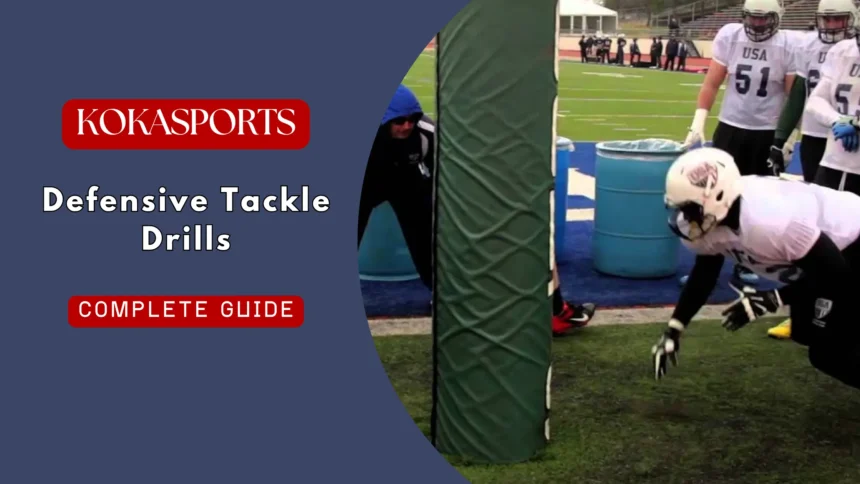
The defensive tackle is the engine room of your defense. He lines up over the center or the guard, takes on the biggest, strongest blockers on the field, and still has to shed, pursue, and finish. When the interior wins, everything behind it works. Linebackers run free, the edge rushers get one-on-ones, and the offense never finds a rhythm.
But that kind of interior dominance does not happen by accident. It is built rep by rep. The right defensive tackle drills turn raw size into controlled power, and controlled power into plays in the backfield. In this guide we break the work into three buckets: fundamentals, run stopping, and pass rush, with step-by-step drills you can run at practice tomorrow.
The short version: Defensive tackle drills fall into three groups. Fundamental drills lock in stance, get-off, hands, and pad level. Run-stopping drills teach anchoring against double teams and reading blocks. Pass-rush drills sharpen the moves that turn a one-on-one into a sack. Train all three and you build a tackle that offenses have to game plan around.
What Makes Defensive Tackle Play Different
Before the drills, understand the job. A defensive tackle is not a smaller defensive end. He plays in a phone booth, with a blocker a yard away and often a second one coming to help.
How he is used depends on the scheme. In a one-gap system, the tackle attacks a single assigned gap and gets up the field. In a two-gap system, he controls the lineman in front of him and is responsible for the gaps on both sides. Alignment is described by technique numbers: a nose tackle plays a 0 or 1 technique over or just off the center, while the quicker penetrating tackle usually plays a 3 technique off the guard’s outside shoulder. If the alignment language is new to your players, the breakdown in our guide to football formations and defensive fronts is a good primer, and USA Football’s notes on defeating one-on-one blocks cover the technique side from the sport’s governing body. For a full reference on gap and technique terminology, see the gap naming overview.
The takeaway for your drill work: everything a tackle does starts low, starts fast, and runs through his hands.
Fundamental Defensive Tackle Drills
Fundamentals win the interior. A tackle who fires off low with violent hands beats a bigger, slower blocker every time. Start here and come back to these drills all season.
Stance and Get-Off
The get-off is the first fundamental. If the tackle beats the blocker off the ball, the rep is half won before contact. A good interior stance is balanced and loaded: feet slightly wider than the shoulders, weight forward on the down hand, hips coiled, eyes up and keyed on the ball. Reading the ball rather than the snap count is critical, which is also why savvy offenses use rhythm tricks like a hard count to bait the interior into jumping early.
Ball-Key Get-Off Drill
- Line the tackle in a three-point stance across from a coach holding the ball.
- The tackle keys the ball, not the voice.
- On any twitch of the ball, he explodes forward, driving the first step six to eight inches into the ground.
- Sprint five yards at full speed, then reset.
- Run eight to ten reps with full recovery so every rep is explosive.
Hand Placement and Strike
Your hands are the weapon. Superior hand technique lets a tackle control the blocker, stay clean, and create the separation needed to disengage and find the ball.
Hand Strike and Lockout Drill
- Tackle starts in a good stance facing a blocking shield or a partner.
- On the key, he fires out and strikes both hands inside the blocker’s chest plate, thumbs up.
- He locks the elbows and extends, creating space while keeping his eyes in the backfield.
- On command, he sheds to one side with a violent rip or pull and takes a pursuit angle.
- Stress accuracy first, then speed.
Pad Level and Leverage
The low man wins in the trenches. A tackle who plays high gets washed out, no matter how strong he is. Pad level is what turns strength into leverage.
Chute or Low-Hat Drill
- Set a chute or a high bar the tackle must stay under as he fires off.
- He explodes from his stance and drives forward for three to five yards without standing up.
- Coach checks for a flat back, bent knees, and hands inside.
- Add a shield at the end so he finishes the rep with a strike at the proper pad level.
Run-Stopping Defensive Tackle Drills
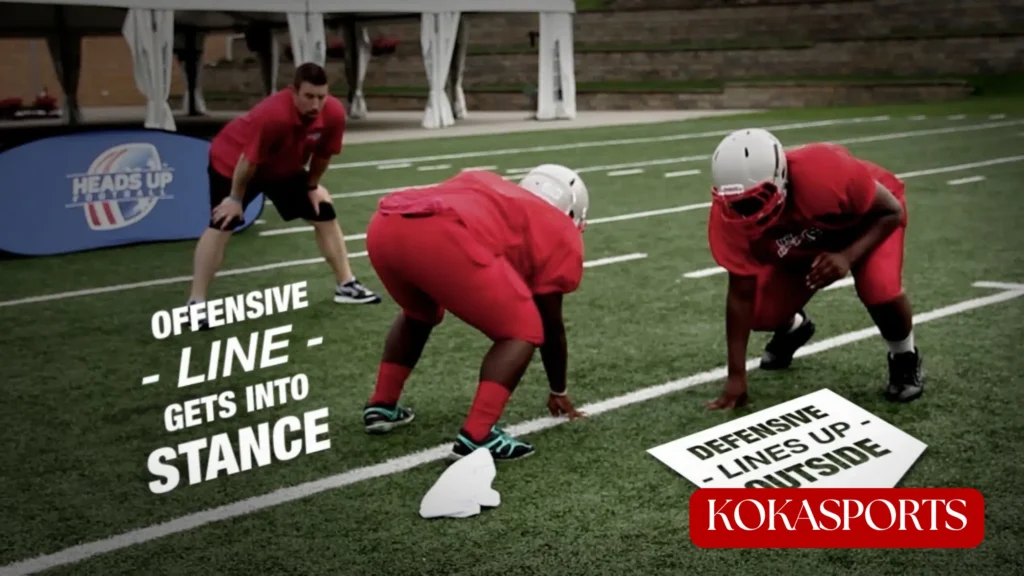
Stopping the run is the tackle’s first job. He has to hold his ground against one blocker, survive two, and still make the play. These defensive tackle drills build the anchor and the eyes.
Double-Team Anchor
Handling the double team separates good tackles from great ones. The key is a low base, a strong anchor, and the ability to split or at least hold so a linebacker runs clean.
Double-Team Anchor Drill
- Set one tackle against two offensive players working a combination block.
- On the snap, the tackle fires off low and hard and gets his hands on the primary blocker.
- He drops his hips, widens his base, and anchors as the second blocker arrives.
- The goal is to hold the point or split the two, never to get moved off the ball.
- Progress from holding the line to splitting the double as the player develops.
Read and React
Two-gap and gap-control tackles have to read the blocker’s first movement and react correctly. The lineman’s hat and hands tell you base, down, or reach before the ball carrier shows.
Read-the-Block Drill
- Line three tackles facing a coach who signals the block type to the offensive linemen.
- The tackle reacts to the lineman’s first movement: squeeze a down block, fight pressure on a reach, anchor on a base block.
- Keep feet moving the whole time and never cross them.
- Finish each rep by locating the ball and taking a proper pursuit angle.
Trap and Combo Recognition
A trap leaves the tackle unblocked for a beat, then a puller tries to kick him out. A tackle who freezes gets erased. The study of these interior blocks pairs well with understanding the offensive line positions your tackle lines up against.
Trap Recognition Drill
- Set the offensive line to run a trap, leaving the tackle momentarily free.
- On the snap, the tackle reads the uncovered look as a trap, squeezes down, and gets small.
- He meets the puller with the proper pad level and leverage, keeping his outside arm free.
- Coach the cue: an unblocked lineman is a warning, not an invitation.
Pass-Rushing Defensive Tackle Drills
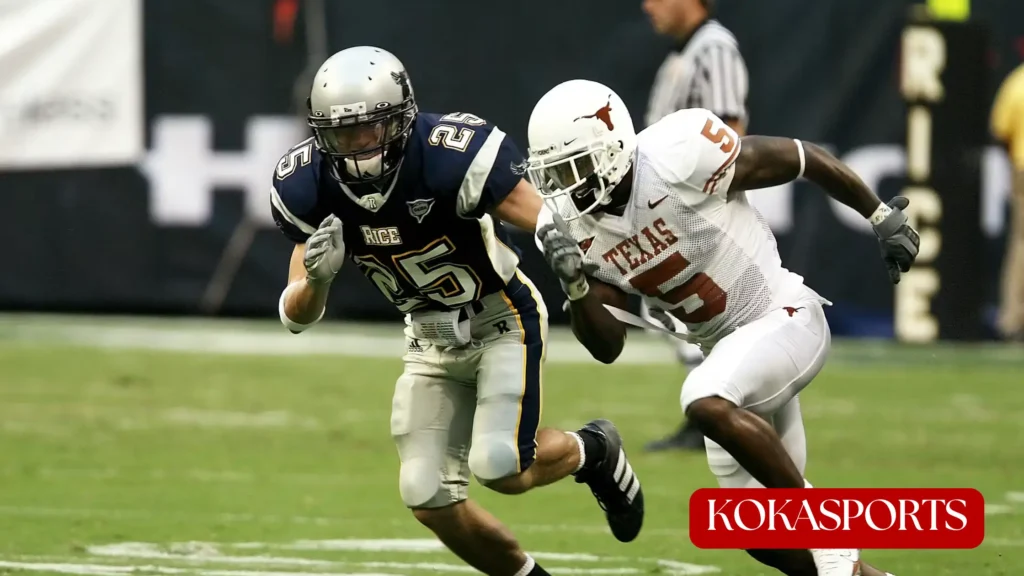
Interior pressure wrecks a quarterback’s platform faster than anything off the edge. A tackle does not need a dozen moves. He needs two he trusts and a counter off each. For a fuller breakdown of the moves themselves, our step-by-step pass rush moves guide walks through each one.
Bull Rush
The bull rush is the interior rusher’s bread and butter. Get the hands up under the blocker’s armpits, extend, and drive him back into the quarterback’s lap with pumping legs.
Bull Rush Drill
- Tackle lines up over a blocker with a shield.
- On the key, he explodes low, lands both hands inside and under, and extends.
- He drives his feet and walks the blocker straight back five yards.
- Coach the finish: once the blocker is on his heels, rip or pull off to one side to clear to the quarterback.
Rip and Swim
When the blocker overcommits, the tackle gets skinny. The rip drives the inside arm up and through to clear the hip. The swim brings the hand over the top to clear the shoulder.
Rip and Swim Progression
- Start on the knees against a shield, drilling the rip motion arm up and through.
- Move to a two-point stance and add a step with the same-side foot.
- Add the swim as the counter when the blocker leans to stop the rip.
- Chain them: strike, feel the blocker’s weight, then choose rip or swim.
Club and Counter
Great interior rushers win with a plan and a counter. The club knocks the blocker’s hands down to open a lane. The counter punishes the blocker who overreacts to it.
Club-and-Counter Drill
- Tackle executes a hard club or chop to knock the blocker’s hands off his frame.
- He rushes through the opening created, keeping his eyes on the passer.
- On the next rep, when the blocker oversets to stop the club, he counters back inside with a swim or spin.
- Keep reps short, five good ones, and finish every rep flat to the quarterback.
Putting the Drills Into Your Practice
A great drill run at the wrong time is wasted. Build these into your week with a clear plan: fundamentals every day as part of the individual period, run-stopping work on your run-emphasis days, and pass-rush circuits on your pass days. Keep reps short and explosive so quality never drops, and always finish to the ball. If you need a framework to slot these into, start from a football practice plan template and build your defensive line station from there.
Frequently Asked Questions
What is the most important defensive tackle drill?
The get-off. Beating the blocker off the ball wins the leverage battle before contact, so start every session with stance and get-off work.
How can a defensive tackle train alone or at home?
Stance holds, ball-key reaction reps, and hand strikes on a bag all work solo. Add squats and box jumps for explosive power.
Which drills help a defensive tackle shed blocks faster?
The hand strike and lockout drill, paired with the rip and swim progression. Clean, fast inside hands beat strong hands in the trenches.
What is the difference between a one-gap and two-gap defensive tackle?
A one-gap tackle attacks a single gap and penetrates; a two-gap tackle controls the blocker in front of him and guards both gaps. Match your drills to your scheme.
How often should defensive tackles run these drills?
Fundamentals every practice, run-stopping on run days, pass-rush on pass days. Keep reps short and explosive rather than long and tired.
Are these defensive tackle drills safe for youth players?
Yes, with proper coaching. Teach pad level, head placement, and shoulder-led contact against bags before any live work.
Conclsuion
Defensive tackle play is won in the small spaces, and it is built through reps. Train the fundamentals until stance, get-off, and hands are automatic. Harden the run defense until a double team cannot move your tackle off the ball. Sharpen two pass-rush moves and a counter until the interior becomes a threat on every down. Run these defensive tackle drills with purpose and your interior will stop being a hole for offenses to attack and start being the reason their game plan falls apart.