

If you have ever watched a team pull away in the fourth quarter while their opponents stood hunched over and gasping, you have seen conditioning decide a game. Talent and skill win plays, but conditioning is what lets a player repeat those plays with the same power in the final minutes as in the first. So what is football conditioning, really, and how do you build it the right way?
This guide breaks it down from the ground up: what football conditioning means, the science behind it, the components that matter, the drills that build it, and how to train safely. Every claim here is grounded in guidance from recognized authorities in sports science, so you can trust what you put into practice.
What Is Football Conditioning?
Football conditioning is the process of preparing the body and mind to meet the repeated physical demands of the game through structured, sport-specific training. In practical terms, it is how well your energy systems can produce the power you need, on demand, play after play, without your performance falling apart.
Conditioning develops a combination of strength, power, speed, agility, and endurance, all tuned to the way football is actually played. It is both a team activity and an individual pursuit. Coaches build conditioning blocks into practice, and committed players keep working on their own in the off-season.
It is worth being precise about the sport. In the United States, “football conditioning” usually refers to American football, a stop-and-start game of short, maximal efforts. The principles below apply across levels, from youth leagues to the professional ranks, but the examples lean toward the gridiron.
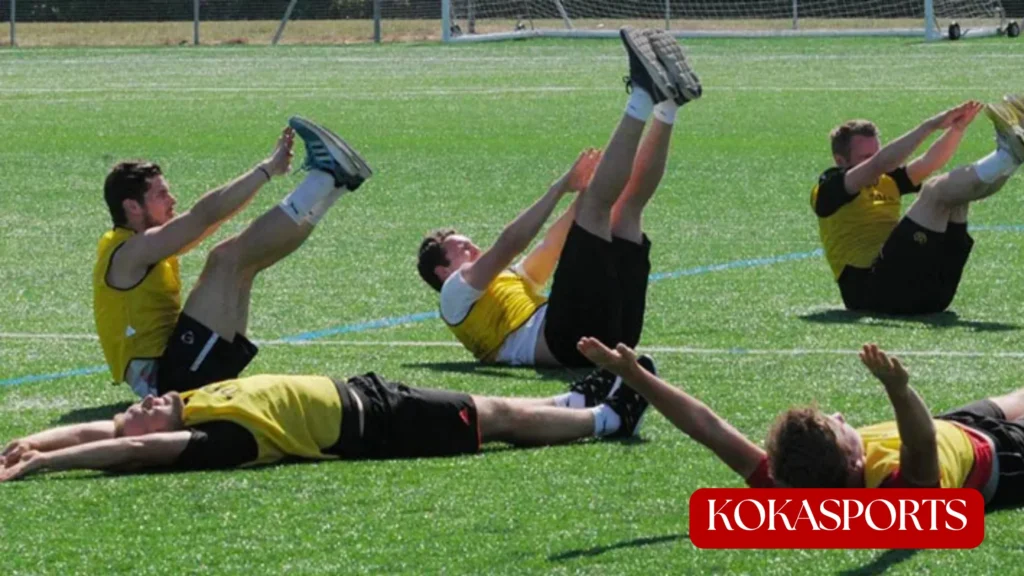
Conditioning vs Fitness vs Strength Training
These three terms get used as if they mean the same thing. They do not.
Fitness is your general physical capacity: your aerobic base, your resting heart rate, your overall work capacity. It creates the potential for performance.
Strength training is resistance work that builds muscle and force production. It is one input into conditioning, not the whole picture.
Conditioning is the broader process of preparing your body to express that fitness and strength under the specific stresses of competition, and to recover quickly between efforts. A player can be “fit” in a gym sense and still be poorly conditioned for the collisions, sprints, and short rest periods of a real game.
The takeaway: strength training feeds conditioning, but conditioning is what carries the whole package onto the field.
Why Football Conditioning Matters
Conditioning is not a side project. It is one of the biggest separators between players who look the part and players who perform when it counts. Here is what well-built conditioning delivers.
Better on-field performance. When your body is conditioned to the movements of your sport, you accelerate faster, change direction more sharply, and sustain output longer. Strength, speed, and endurance all feed directly into tackling, blocking, running, and quick decision-making.
Repeatable power. Football is not one big effort. It is dozens of short, maximal efforts with limited recovery. Conditioning is what lets you produce near-maximal power on the first snap and the fiftieth.
Late-game edge. Close games are often won by the better-conditioned team. When fatigue sets in, technique and focus slip. The side that can still execute in the final minutes usually comes out ahead.
Injury resistance. Stronger, better-prepared tissue tolerates the demands of the game more safely. The key word is “resistance,” not “prevention,” since no program removes risk entirely, but good conditioning meaningfully lowers it.
There are also softer benefits that coaches consistently observe, even if they are harder to measure: discipline, mental toughness, and team camaraderie built through shared hard work. Treat these as real and valuable, just understand they are coaching experience rather than laboratory findings.
The Energy Systems Behind Football Conditioning
To condition intelligently, you need to understand how the body fuels movement. Exercise physiology recognizes three energy systems, and they all run at once, with the balance shifting based on the effort.
- The phosphagen system (ATP-PCr): immediate, explosive energy for very short, all-out efforts of roughly a few seconds. This is the engine behind a lineman’s first-step explosion or a short, violent collision.
- The glycolytic system: the primary fuel for high-intensity efforts lasting several seconds up to a couple of minutes.
- The oxidative system (aerobic): the long-duration system that also does the quiet, essential work of replenishing the other two between plays.
Here is the crucial point for football. According to the Gatorade Sports Science Institute, the predominant energy systems during play for all football players, regardless of position, are the anaerobic systems, and the game is intermittent rather than continuous, with the rest interval between plays ranging from a few seconds up to around 25 seconds.
That intermittent, anaerobic-dominant profile is why football conditioning is not the same as distance running. You are training the ability to produce short bursts of maximal effort and then recover fast enough to do it again, over and over. A solid aerobic base still matters, because it drives that recovery between plays, but the headline quality is repeat explosive power.
The Core Components of Football Conditioning
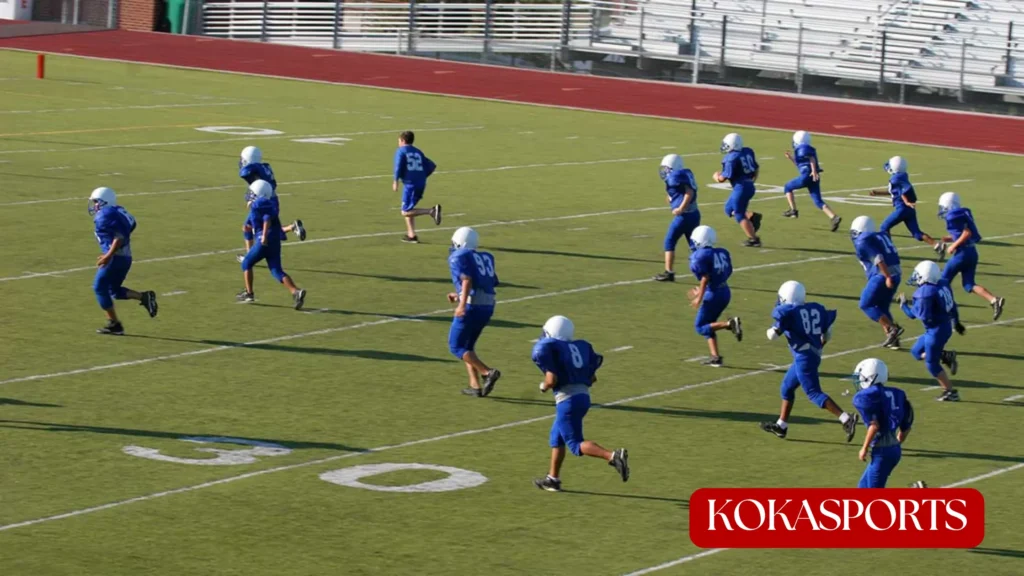
Conditioning for football breaks down into three pillars. A complete program develops all three.
Strength and Power
Strength is your ability to produce force. Power is your ability to produce it quickly. Both are built mainly through resistance training: squats, deadlifts, presses, rows, and explosive work such as plyometrics, medicine-ball throws, and loaded jumps.
On the field, this is what lets you hold your ground, drive an opponent off the line, and deliver force through contact. Power training that targets fast-twitch muscle fibers translates directly into acceleration and explosiveness.
Speed and Agility
Speed is top-end running velocity. Agility is the ability to change direction, decelerate, and re-accelerate under control. These qualities are trained with sprint mechanics work, resisted sprints, agility-ladder drills, cone patterns, and shuttle runs.
Modern football rewards players who can accelerate and cut on a moment’s notice, so this pillar has grown more important as the game has gotten faster. For a ready-to-run set of movement patterns, see our guide to youth football agility drills.
Endurance and Cardiovascular Conditioning
Endurance is what keeps the first two pillars available deep into a game. Cardiovascular conditioning, built through interval runs, tempo work, and shuttle-based drills, improves your capacity to recover between plays and resist fatigue across four quarters.
The goal is not marathon endurance. It is the specific work capacity that matches the stop-and-start rhythm of football.
Key Training Principles That Make Conditioning Work
Drills are only as good as the principles behind them. Two concepts do most of the heavy lifting.
The SAID principle. SAID stands for Specific Adaptations to Imposed Demands, a foundational idea in exercise science. The body adapts specifically to the stress you place on it. If you train slow, continuous running, you get better at slow, continuous running, which is not what football asks of you. To be conditioned for the sport, your training has to mirror the sport’s actual demands: short, intense, repeated efforts with planned recovery.
Periodization. This is the planned manipulation of training variables, such as volume and intensity, across phases of the year to maximize adaptation and reduce the risk of overtraining. The National Strength and Conditioning Association frames periodization around distinct periods, including a preparatory (off-season) period that builds a broad base, followed by phases that progressively sharpen strength, power, and sport-specific fitness as the season approaches.
A simple way to think about the football year:
- Off-season: build the base. Higher training volume, general strength, broad conditioning.
- Pre-season: sharpen. Volume comes down, intensity and sport-specific work go up.
- In-season: maintain and recover. Just enough high-quality work to hold your gains, with recovery prioritized around games.
Football Conditioning Drills
Here are proven drill categories that develop the three pillars. Rotate through them rather than hammering one quality.
- Interval sprints and HIIT: short maximal sprints (for example 20 to 40 yards) with structured rest, repeated for several rounds. Builds repeat-sprint ability and anaerobic capacity.
- Plyometrics: box jumps, bounds, and tuck jumps for explosive power and reactive strength.
- Agility ladder drills: quick-feet patterns for footwork, coordination, and change-of-direction speed.
- Hill or resisted sprints: incline sprints and sled pushes or pulls for leg power and acceleration.
- Shuttle runs: back-and-forth sprints that train deceleration, re-acceleration, and conditioning at once.
- Circuit training: sport-specific movements chained together to build work capacity under fatigue.
Keep technique first and speed second, especially with younger athletes. Sloppy, fatigued reps teach bad movement and raise injury risk.
Position-Specific Conditioning
Football is really many games inside one. The demands on a lineman working in a tight space are very different from a defensive back covering large distances. Research using player-tracking technology on collegiate players confirms that position groups show distinct workload responses, which is exactly why conditioning should be tailored by role.
A practical framework:
- Linemen need short-burst power, strength through contact, and the ability to recover between repeated collisions.
- Skill players (receivers, backs, defensive backs) need top-end speed, sharp change of direction, and repeat-sprint endurance over longer distances.
- Hybrid and second-level players (linebackers, tight ends) need a blend of both.
Build a shared team base, then layer position-specific work on top so each player trains for the job they actually do. Interior defenders, for example, can pair their conditioning with targeted defensive tackle drills, while pass-catching roles should match their work to the demands of their spot, as our breakdown of the tight end position explains.
Warm-Up and Preparation
A good warm-up prepares the body for intense work. Start with several minutes of light aerobic activity to raise body temperature and blood flow, then move into dynamic movements such as high knees, butt kicks, leg swings, and build-up sprints that rehearse the patterns you are about to train.
One honest clarification that most articles get wrong: a dynamic warm-up reliably improves short-term performance (power, sprint speed, mobility), but a brief generic warm-up by itself is not strongly proven to prevent injuries. The injury-reduction benefit in the research comes from structured, multi-component neuromuscular programs performed consistently over time, not from a quick pre-practice routine. So warm up to perform, and commit to an ongoing neuromuscular program if injury reduction is your goal.
Recovery and Nutrition
Conditioning gains are made during recovery, not during the session itself. Three levers matter most.
Nutrition. Carbohydrates refuel the glycogen your energy systems burn, and protein supports muscle repair. Guidance from the International Society of Sports Nutrition indicates that consuming high-quality protein in the period from immediately after exercise up to about two hours later supports muscle protein synthesis, and that combining carbohydrate with protein aids recovery and training adaptation. Note the window is a couple of hours, not the old “30-minute” rule you may have heard.
Hydration. Replace fluids before, during, and after training to maintain performance and manage body temperature. This matters even more in hot conditions, which brings us to the most overlooked part of conditioning.
Sleep and rest. Adaptation happens during rest. Chronic under-recovery stalls progress and raises injury risk, so build easy days and full rest into the plan.
Conditioning Safely: Heat Acclimatization
If there is one safety topic every football program should understand, it is heat. Preseason practices often land in the hottest weeks of the year, and exertional heat stroke is a serious, preventable danger.
The good news is that the fix is well established. The Korey Stringer Institute at the University of Connecticut, working alongside the National Athletic Trainers’ Association and organizations such as USA Football and the National Federation of State High School Associations, supports a gradual preseason heat-acclimatization protocol, typically a 14-day ramp-up that eases players into full equipment and full intensity.
The evidence for it is striking: in states that adopted these heat-acclimatization guidelines, there have been no reported preseason heat-stroke deaths among high school football players, and the guidelines were created in response to a long record of preventable preseason heat deaths. Any serious conditioning program should build heat acclimatization in from day one. It is the clearest example of conditioning that protects players, not just prepares them.
How to Build a Football Conditioning Program
Pulling it together, a sound program follows the periodized year and respects the three pillars.
- Assess first. Know each athlete’s current strength, speed, and endurance so you can target real weaknesses rather than guessing.
- Build the base in the off-season. Prioritize general strength and broad conditioning at higher volume.
- Sharpen in pre-season. Shift toward power, speed, and sport-specific, position-tailored work. Layer in heat acclimatization.
- Maintain in-season. Keep quality high but volume controlled, and let recovery drive the schedule around games.
- Monitor and adjust. Track progress with simple, consistent testing and raise the challenge as players adapt.
- Supervise young athletes closely. For youth players, a properly designed and supervised program is both safe and beneficial, which is the position of the NSCA and is echoed by the American Academy of Pediatrics. Supervision and good technique are non-negotiable.
To organize all of this into a repeatable weekly structure, build your conditioning into a written session plan. Our football practice plan template is a simple way to slot conditioning blocks around skill and team work, and if you coach a younger team, pair it with the right scheme using our guide to youth football defensive formations.
Frequently Asked Questions
How do you train for football conditioning?
Combine resistance training for strength and power, sprint and agility work for speed and change of direction, and interval-based cardio for repeat-effort endurance. Match the work to the intermittent, anaerobic-dominant demands of the game, and periodize it across the off-season, pre-season, and in-season.
What is the difference between conditioning and strength training in football?
Strength training builds force through resistance exercises. Conditioning is the broader process of preparing the body to apply that strength repeatedly under game conditions and recover between efforts. Strength training is one component of conditioning.
Is football conditioning aerobic or anaerobic?
Primarily anaerobic. Play consists of short, maximal bursts with brief rest. A strong aerobic base still matters because it fuels recovery between those bursts, but the defining quality is repeat explosive power.
When should young athletes start conditioning?
Age-appropriate, well-supervised training can begin early, with a focus on technique and movement quality rather than heavy loading. Recognized guidelines support this approach, provided qualified supervision is in place.
How important is recovery in conditioning?
Essential. Adaptation happens during rest, fueled by good nutrition, hydration, and sleep. Skipping recovery stalls progress and increases injury risk.
Conclusion
So, what is football conditioning? It is the structured, science-backed process of building repeatable power, speed, and endurance that match the real demands of the game, then protecting that work with smart recovery and heat-safety practices. Strength feeds it, periodization organizes it, and the SAID principle keeps it specific to football.
Get those fundamentals right, train each pillar deliberately, and condition safely, and you build the kind of athlete who is still dominating when everyone else is running on empty. That is the whole point of conditioning, and it is what separates good teams from the ones left standing at the final whistle.