
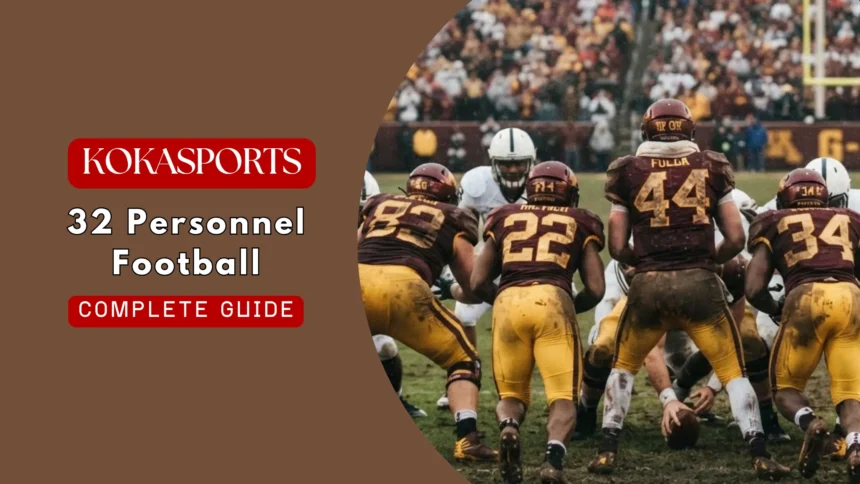
32 personnel football is an offensive grouping made up of three running backs, two tight ends, and zero wide receivers. It is one of the heaviest packages in the sport, built almost entirely for power running and short-yardage situations.
Personnel groupings are the simple code coaches and broadcasters use to describe which skill players are on the field. Once you understand the two-digit system, every grouping from the pass-happy 10 personnel to the goal-line 32 personnel starts to make sense. This guide explains what 32 personnel means, how it is used, and how the full personnel grouping system works.
What Is 32 Personnel in Football?
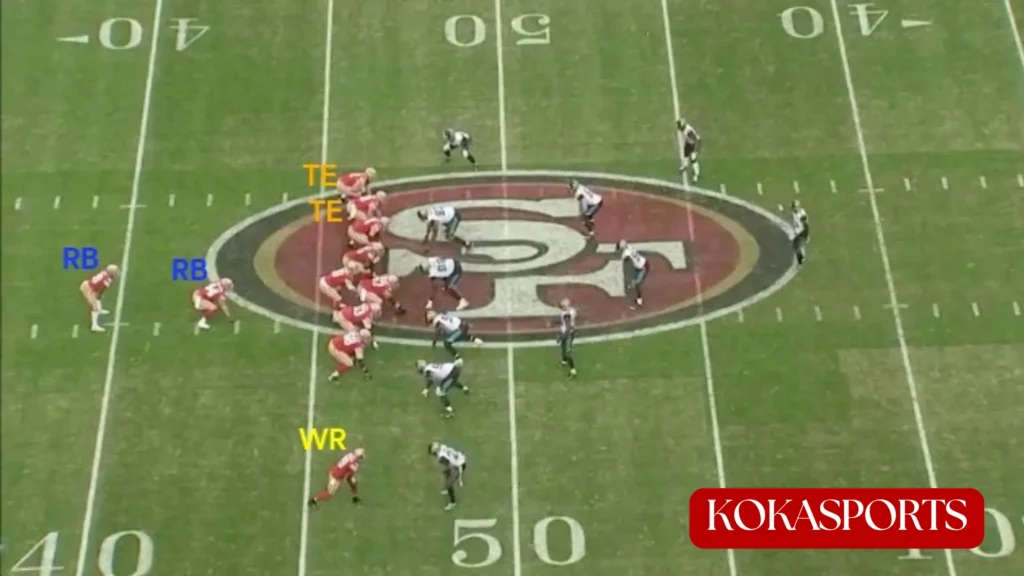
32 personnel means three running backs and two tight ends are on the field, which leaves no wide receivers in the formation. The first digit (3) is the number of running backs, and the second digit (2) is the number of tight ends. Add the five offensive linemen and the quarterback, and all eleven offensive spots are filled by blockers and runners.
This is a true “jumbo” package. With eight of the eleven players being linemen, tight ends, and running backs, the offense is loaded to move bodies at the line of scrimmage. You will rarely, if ever, see 32 personnel in the NFL, where tracked data covers lighter groupings like 11, 12, 13, 21, and 22. Three running backs on the field is almost unheard of at the professional level.
Where 32 personnel does appear is in option offenses such as the flexbone, the wishbone, and the Power-I, along with goal-line and short-yardage packages at the high school and college levels. If a team wants to pound the ball forward and overwhelm the defense with blockers, this is the kind of grouping that does it.
How to Use 32 Personnel
The whole point of 32 personnel is force at the point of attack. Here are the common ways coaches put it to work:
- Short-yardage and goal-line runs. With no wide receivers to account for, the offense can commit every eligible player to blocking or carrying the ball. On third and short or first and goal, that extra mass is hard to stop.
- Option football. Triple-option and flexbone attacks use multiple backs to create mesh points, pitch relationships, and misdirection. Three backs give the quarterback several ball-carrier options on a single play.
- Play action out of a heavy look. Because defenses expect a run, a well-timed play-action pass to a tight end can catch an overcommitted front off guard. The one or two eligible receivers left are usually tight ends working against slower defenders.
What Are Football Personnel Groupings?
Football personnel groupings are set combinations of skill players that an offense sends onto the field, named by the number of running backs and tight ends in the package. They are also called personnel packages, and the two terms mean the same thing.
Coaches use them to build their game plan, create favorable matchups, and get players on and off the field quickly between plays. For the defense, reading the offense’s personnel is the first clue about whether a run or a pass is coming, which is why identifying groupings is a core football skill. For a deeper look at the players involved, see our guide to football positions explained.
How Are Personnel Groupings Named?
Every common grouping starts from the same math. An offense must field eleven players. Five of those are offensive linemen and one is the quarterback, which accounts for six spots. That leaves five open spots to be filled by some mix of running backs, tight ends, and wide receivers. This is the same two-digit system that official NFL teams use to describe their offense.
The grouping is written as two numbers:
- The first digit is the number of running backs on the field.
- The second digit is the number of tight ends on the field.
- The number of wide receivers is not written down. You find it by subtracting the running backs and tight ends from five.
One detail that trips people up: fullbacks count as running backs in this system, and an extra offensive lineman who reports as eligible is usually counted as a tight end. So a two-back, one-tight-end look with a fullback is still 21 personnel.
How to Name a Personnel Grouping
The formula is short:
Personnel number = (number of running backs)(number of tight ends)
For example, 12 personnel is one running back and two tight ends. Subtract those three players from five and you get two wide receivers. Apply the same math to 32 personnel: three running backs plus two tight ends is five skill players, which leaves zero wide receivers.
Full Chart of Football Personnel Groupings
Here is every offensive personnel grouping, broken down by position. Remember that the wide receiver number is always five minus the running backs and tight ends.
| Personnel | Running Backs | Tight Ends | Wide Receivers |
|---|---|---|---|
| 00 | 0 | 0 | 5 |
| 01 | 0 | 1 | 4 |
| 02 | 0 | 2 | 3 |
| 03 | 0 | 3 | 2 |
| 04 | 0 | 4 | 1 |
| 10 | 1 | 0 | 4 |
| 11 | 1 | 1 | 3 |
| 12 | 1 | 2 | 2 |
| 13 | 1 | 3 | 1 |
| 14 | 1 | 4 | 0 |
| 20 | 2 | 0 | 3 |
| 21 | 2 | 1 | 2 |
| 22 | 2 | 2 | 1 |
| 23 | 2 | 3 | 0 |
| 30 | 3 | 0 | 2 |
| 31 | 3 | 1 | 1 |
| 32 | 3 | 2 | 0 |
| 40 | 4 | 0 | 1 |
| 41 | 4 | 1 | 0 |
Common Offensive Personnel Groupings
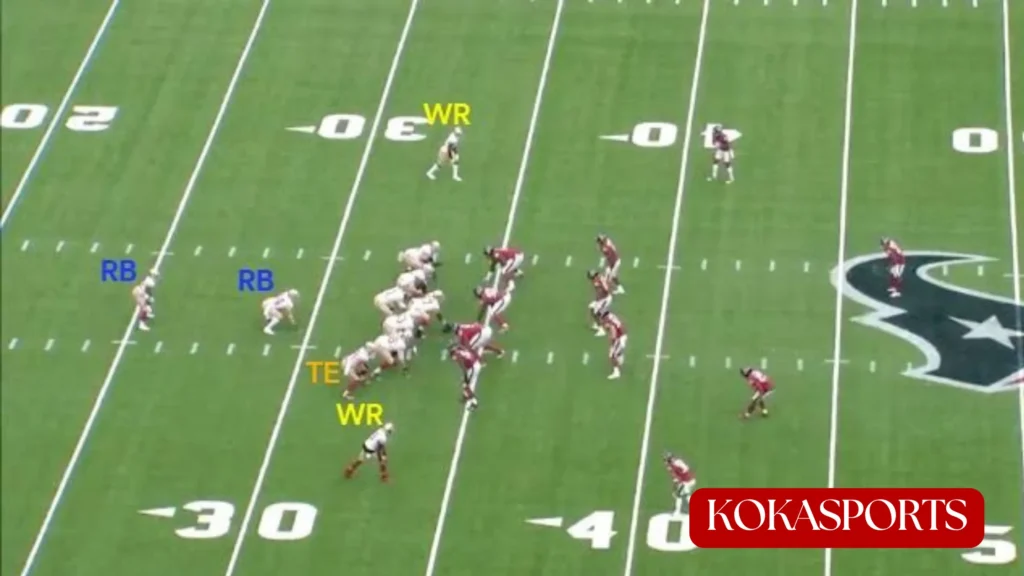
Most offenses live in a handful of groupings. Here is a closer look at the ones you will see most often, from the lightest to the heaviest.
11 Personnel
11 personnel is one running back, one tight end, and three wide receivers. It is the most common grouping in football and the base package for nearly every NFL offense. It balances the run and the pass and lets a team show many different looks without substituting, which is why pass-heavy offenses lean on it so heavily.
12 Personnel
12 personnel is one running back, two tight ends, and two wide receivers. It is one of the most popular groupings in football and has grown as teams stack their rosters with versatile tight ends. Two tight ends add blocking for the run while still threatening the defense through the air, which makes play action especially effective.
21 Personnel
21 personnel is two running backs, one tight end, and two wide receivers. It is the classic Pro Style grouping, often built around a halfback and a fullback. It gives an offense a balanced attack with extra run blocking and creative route options out of the backfield.
13 Personnel
13 personnel is one running back, three tight ends, and one wide receiver. It is a run-heavy package that loads the formation with big bodies and is common in short-yardage spots. Teams with a deep tight end room can also throw out of it to create size mismatches.
10 Personnel
10 personnel is one running back, no tight ends, and four wide receivers. It spreads the field and pushes the pace of the passing game, and it is a favorite of Air Raid and spread attacks. The lone running back has to handle extra responsibility in protection and on the ground. Learn more about the position in our running back guide.
22 Personnel
22 personnel is two running backs, two tight ends, and one wide receiver. It is a jumbo set used mostly for short-yardage and goal-line running, with three extra blockers to win at the line of scrimmage. A single receiver still gives the offense one quick way to attack through the air.
23 Personnel
23 personnel is two running backs, three tight ends, and no wide receivers. It is a traditional goal-line and short-yardage grouping, often lined up in an I-formation. The package condenses the defense and is almost always a power run, though it can set up a sneaky play-action throw to a tight end.
20 Personnel
20 personnel is two running backs, no tight ends, and three wide receivers. It mixes a spread passing look with two backs, which gives an offense flexibility and forces the defense to respect both the run and the pass. Without a tight end, the offense trades some blocking for speed and space.
Heavy Personnel and the 32 Personnel Family
Groupings with three running backs, such as 30, 31, and 32 personnel, belong to the heaviest end of the spectrum. They show up mainly in option-based schemes like the flexbone and wishbone and in old-school power systems. 32 personnel sits at the extreme of this family: three backs, two tight ends, and no receivers, built purely to run.
Across football as a whole, the trend has actually moved the other way, toward lighter and more pass-friendly groupings. Still, heavier personnel has had a small comeback at the top level, with some NFL teams using multiple tight ends more often in recent seasons. Groupings as heavy as 32 personnel, though, remain a tool for option and goal-line football rather than a staple of the modern pro game.
How Personnel Groupings Affect the Defense
Offenses do not pick a grouping in a vacuum. Every package forces the defense to answer, and that back-and-forth is a big part of football strategy. You can read more in our guide to defensive formations.
- Light personnel (10, 11) pulls the defense into coverage. When an offense shows three or more wide receivers, defenses usually answer with nickel personnel, adding a fifth defensive back to match the speed on the field.
- Base personnel answers balanced looks (12, 21). A one or two tight end grouping often draws a base defense with three linebackers, since the offense can run or pass.
- Heavy personnel (13, 22, 23, 32) brings bigger bodies. When an offense loads up with tight ends and running backs, defenses counter with extra linemen and linebackers to hold up against the run.
The best offenses stay flexible, running and passing out of the same grouping so the defense cannot key on a tendency.
Why Wide Receivers Are Not in the Number
A common question is why the system only counts running backs and tight ends. The answer is that those two positions tell the defense the most about whether a run is coming. Once you know the number of backs and tight ends, the number of wide receivers is automatic, so there is no need for a third digit. Counting the two positions tied most closely to the run game is simply the fastest way for a defense to set its matchups.
FAQs For 32 Personnel Football
What is 32 personnel in football?
32 personnel is an offensive grouping with three running backs, two tight ends, and no wide receivers. It is a heavy, run-first package used mostly in option offenses and goal-line situations.
Is 32 personnel used in the NFL?
Almost never. NFL personnel tracking focuses on lighter groupings like 11, 12, 13, 21, and 22, and three-running-back sets are extremely rare at the pro level. 32 personnel lives mainly in flexbone, wishbone, and short-yardage football at the high school and college levels.
What is the most common personnel grouping in football?
11 personnel, which is one running back, one tight end, and three wide receivers. It is the base look for nearly every NFL offense and a staple of spread and Air Raid systems.
Do fullbacks count as running backs in personnel groupings?
Yes. In this system a fullback is counted as a running back, so a halfback-and-fullback backfield with one tight end is still 21 personnel.
How many wide receivers are in 32 personnel?
Zero. Three running backs plus two tight ends uses all five skill spots, so there are no wide receivers on the field.
Conclusion
Personnel groupings turn a crowded field into a simple two-digit code, and 32 personnel sits at the extreme heavy end of that scale with three running backs, two tight ends, and no wide receivers. You will not find it on an NFL stat sheet, but in option and goal-line football it is a powerful way to overwhelm a defense with blockers. Learn the naming system once, and you will be able to read any grouping the moment the offense breaks the huddle. For more football basics, explore our football terminology hub.