
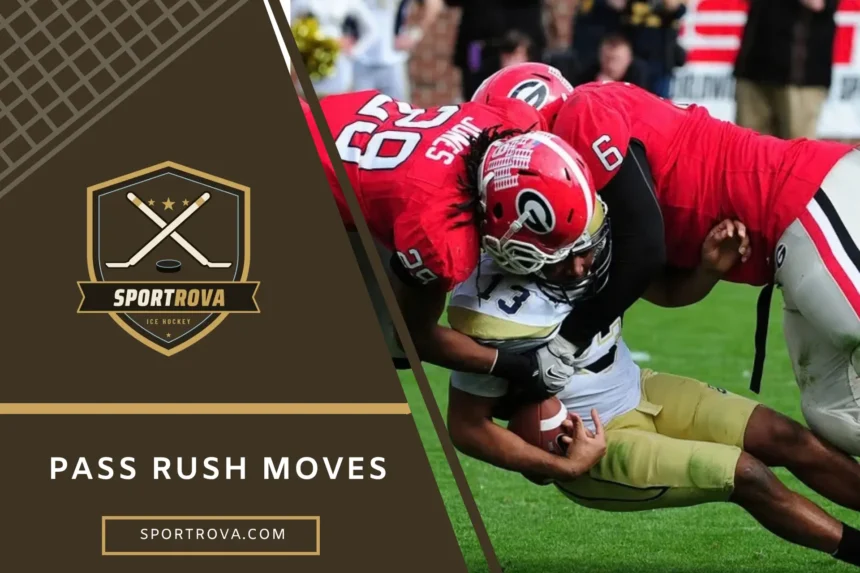
Pass rush moves are tools. The more tools you can use well, the harder you are to block.
Every sack starts with a plan and a move that fits the blocker in front of you. Von Miller, Dwight Freeney and Khalil Mack each won with a signature move, but they all set it up first. Speed sets up power. Power sets up the counter.
This guide covers the pass rush moves that matter most for a defensive end, an EDGE rusher, or an interior lineman. Each move has clear steps, a “when to use” note, and a counter.
What Are Pass Rush Moves?
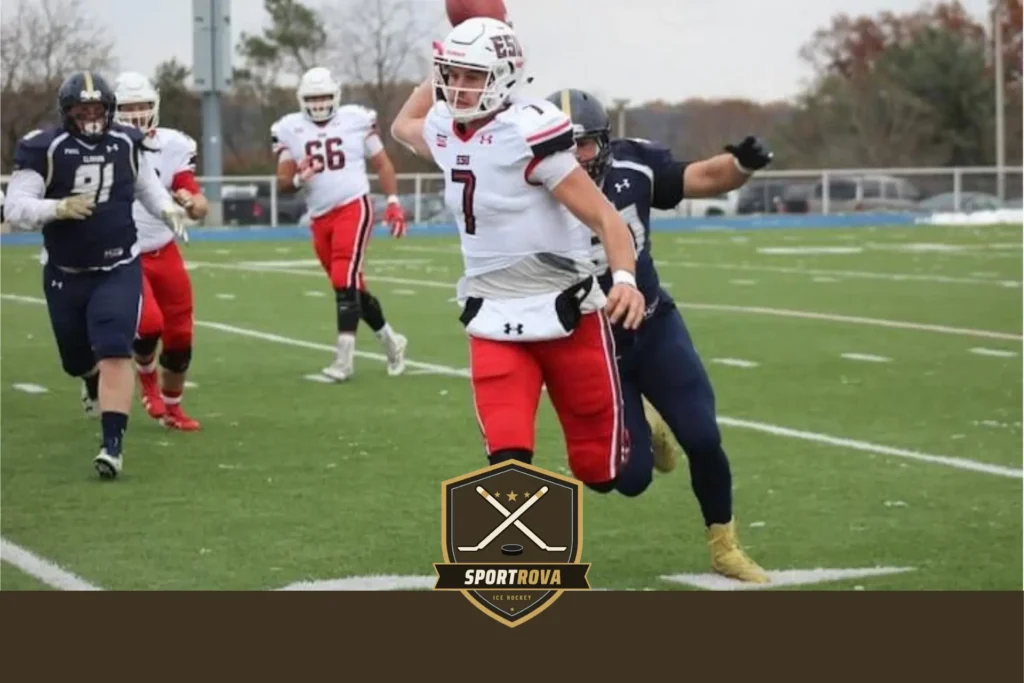
A pass rush is when defenders charge across the line of scrimmage at the quarterback to sack him or force a bad throw. Pass rush moves are the hand and foot techniques a rusher uses to beat the blocker in front of him.
You don’t always need a sack. Pressure that forces an early throw can lead to an incompletion or interception.
Start With a Plan
USA Football teaches that most protections create four to five rush lanes: outside each tackle, outside each guard, and down the middle over the center. Stay in your lane, attack half of the blocker, and work to get your hips past his hips.
Your plan should have three parts:
- A primary move you win with most often
- A counter for when the blocker overplays your primary move
- A finish that gets your hips turned to the quarterback
How Pass Rush Moves Are Grouped
NFL charting services such as PFF sort rush wins into three main buckets:
- Power moves: bull rush, long arm, speed-to-power
- Outside moves: rip, cross chop, speed rush
- Inside moves: swim, club, spin, inside counters
A wide defensive end has more space for speed and bend. An interior lineman has less space, so power matters more. If you’re still learning alignments, read our guide to the 5 technique in football.
Power Moves
Bull Rush
The bull rush is the foundation. It’s the most used move in the NFL.
Steps
- Explode out of your stance: Close the space fast.
- Strike the chest: Drive both palms into the blocker’s chest plate with your elbows tight.
- Lock out and drive: Extend your arms fully and keep your pad level low. Push him back into the quarterback.
- Shed if needed: If he anchors, transition to a rip or swim to get off the block.
When to use
- Against blockers who set deep or sit back on their heels
- After you’ve shown speed, so the tackle is leaning back
Counter: Push-pull. When he leans forward to stop your power, pull him past you and swim over.
Long Arm
The long arm is a one-arm bull rush. It uses the full length of your body, so the blocker can’t reset.
Steps
- Get your fit: Outside hand on the tip of the blocker’s shoulder pad, inside hand on his sternum.
- Keep elbows tight: Bend your knees and stay low.
- Explode from the hips: Drive his shoulder high and back.
- Go from two hands to one: Release the outside hand and lock out the inside arm.
The American Football Coaches Association published a full long arm teaching progression from Furman’s defensive line coach that follows this same fit.
When to use
- Against tackles who take a deep set and get off balance
Counter: The ghost move. Once he expects the long arm, he’ll punch early.
Outside Moves
Rip Move
The rip move is an arm under move. It shrinks the surface area the blocker can hit.
Steps
- Attack the outside half: Get upfield fast so the tackle has to kick back.
- Swat the hands: Knock his hands down with your outside hand.
- Rip through: Drive your inside arm up under his armpit like an uppercut.
- Point the toe and finish: Dip your inside shoulder, point your inside foot at the quarterback, and run the arc.
When to use
- Against slower tackles who reach with their hands
Counter: Spin or club back inside once he oversets to stop the rip.
Cross Chop
The cross chop is now a staple in the NFL. Pass rush coach Chuck Smith helped popularize a version of it around 2007 with Osi Umenyiora, adding a euro step to set it up.
Steps
- Threaten the blocker: Start like a speed rush or a speed-to-power rush so he has to set.
- Watch the wrist: Wait for his outside hand to strike.
- Cross and chop: Swing your opposite arm across your body and chop his striking arm down.
- Step through: Step past him while his arm is pinned and keep rushing at the quarterback.
When to use
- Against aggressive blockers who shoot their hands early
Counter: Bull rush, once he holds his hands back to avoid the chop.
Inside and Counter Moves
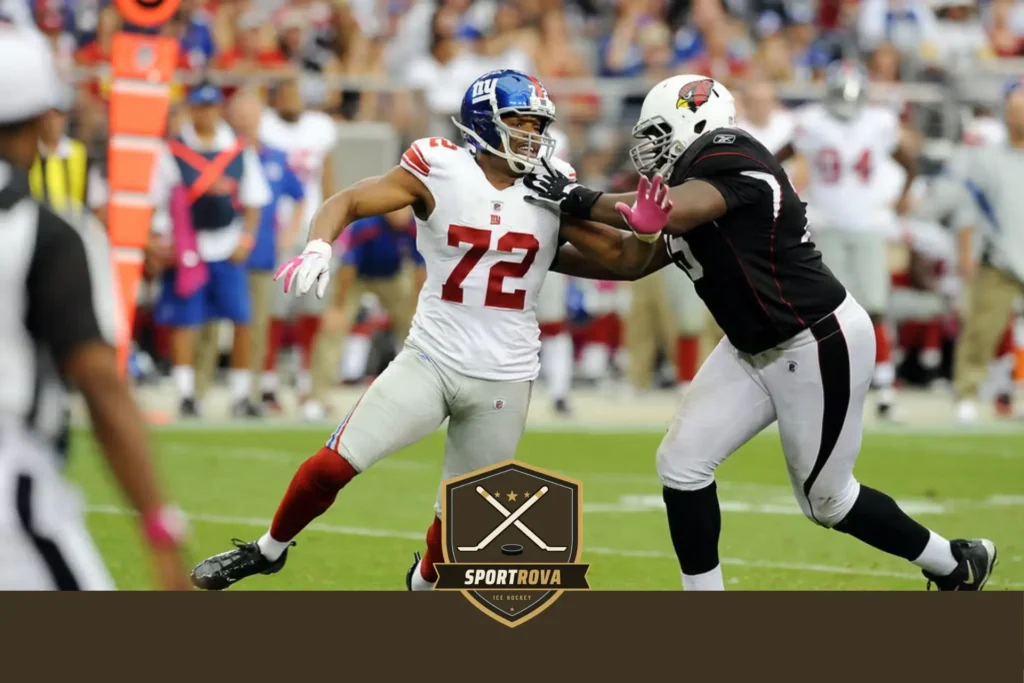
Swim Move
The swim is the arm over partner to the rip. It works best when you have a height advantage on the blocker.
Steps
- Explode and engage: Get off the ball with your arms extended.
- Swat the hands: Clear his arms with your outside hand.
- Swim over: Bring your inside arm quickly over his shoulder pad, not over his head.
- Get your hips past his: Step through and accelerate to the quarterback.
When to use
- After a bull rush, when the blocker leans into you
Counter: Rip under him if he stands tall.
Club Move
The club is a strike, not a push. You swing your arm into the blocker’s arm or shoulder to knock him off balance. Reggie White made a club based move famous, now called the hump move.
Steps
- Sell the outside: Win with speed a few times first so the tackle overplays the edge.
- Plant hard: Stick your outside foot in the ground.
- Club: Strike his outside arm or shoulder with your inside arm as his weight shifts.
- Finish: Rip or swim underneath and cross his face to the quarterback.
When to use
- Against tackles who overset to stop speed
Counter: Club-rip or club-swim, depending on how he recovers.
Spin Move
Dwight Freeney’s spin move helped put him in the Pro Football Hall of Fame in 2024. But Freeney said his main weapon was the outside speed rush.
Steps
- Sell speed: Grab grass with your first steps and attack the outside shoulder.
- Feel the overset: When the tackle overcommits outside, plant your outside foot.
- Spin tight: Use your outside arm as leverage and whip your body back inside. Stay close to the blocker so there’s no space to recover.
- Ice pick: Drive your arm into the blocker’s back to clear him and finish.
When to use
- Against tackles who overset or overextend their hands
Counter: Fake spin back outside once he starts sitting on your spin.
Ghost Move
The ghost move is a counter off the long arm. Steelers Now reports that Von Miller created it in 2014 while working with Chuck Smith.
Steps
- Threaten the long arm: Close the distance so the blocker expects power.
- Make him punch: Let him shoot his hands at your long arm.
- Dip under: Drop your shoulder and slide under the punch.
- Bend the corner: Point your toe and turn your hips to the quarterback.
When to use
- Only after you’ve used the long arm several times in the game
Pass Rush Moves and Their Counters
| Primary move | Counter | Use the counter when |
|---|---|---|
| Bull rush | Push-pull swim | Blocker leans forward to anchor |
| Long arm | Ghost move | Blocker punches early |
| Rip | Spin or club | Blocker oversets outside |
| Cross chop | Bull rush | Blocker holds his hands back |
| Swim | Rip | Blocker stays tall |
| Speed rush | Club or hump | Blocker overplays the edge |
Most Used Pass Rush Moves in the NFL
Sports Info Solutions charts every pass rush in the NFL. Here’s how often first moves were used in their data since 2023:
| Move | Interior | Edge |
|---|---|---|
| Bull rush | 53% | 27% |
| Speed-to-power | 0% | 12% |
| Swipe | 10% | 8% |
| Rip | 6% | 6% |
| Long arm | 3% | 5% |
| Cross chop | 2% | 4% |
| Swim | 5% | 2% |
| Spin | 1% | 2% |
Frequently Asked Questions
What is the best pass rush move?
The bull rush is the most used move in the NFL and the best one to learn first. The best move for you depends on your size, length, and speed.
How many pass rush moves should a defensive end know?
Start with one primary move and one counter. Add more as you master them. Many coaches keep it to about three moves you can win with.
What is the difference between the rip and swim?
The rip goes under the blocker’s arm. The swim goes over his shoulder. Shorter rushers usually prefer the rip, and taller rushers often prefer the swim.
Conclusion
Pass rush moves win when they’re set up. Show speed, then power, then the counter.
Start with the bull rush and one finesse move like the rip or swim. Drill them until they’re automatic, then add a counter that fits your body type. Study the blocker on film, learn how he sets, and pick the move that attacks his weakness. Not every rush ends in a sack, but a rusher with a plan gets there more often.