
What Is a Defensive Back in Football?
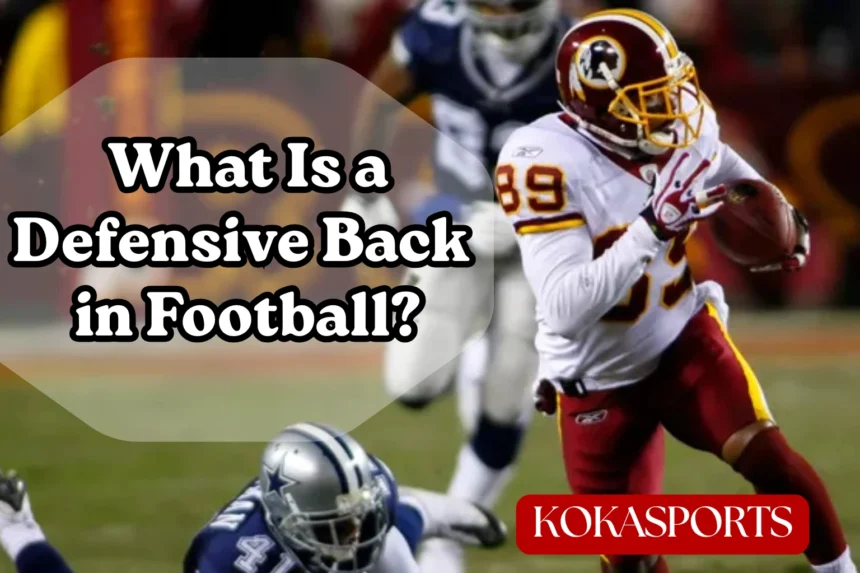
A defensive back (DB) is a defensive player who lines up in the secondary, the area behind the defensive line and linebackers. Defensive backs cover wide receivers and tight ends, break up or intercept passes, and make tackles when a runner gets past the front seven. Because they are the last players between the offense and the end zone, they are often called the last line of defense.
There are two main types of defensive backs: cornerbacks and safeties. Most defenses use 4 defensive backs (2 cornerbacks and 2 safeties). Against passing offenses, teams add a fifth DB (the nickel back) or even a sixth (the dime back).
The biggest difference between defensive backs and other defenders is where they play. Defensive linemen battle at the line of scrimmage, and linebackers cover the middle of the field. Defensive backs play deeper, in open space, and must be fast enough to run with receivers and strong enough to tackle in the open field.
Read Also: Defensive Line Positions in Football: American Football Positions Explained
Types of Defensive Backs in American Football
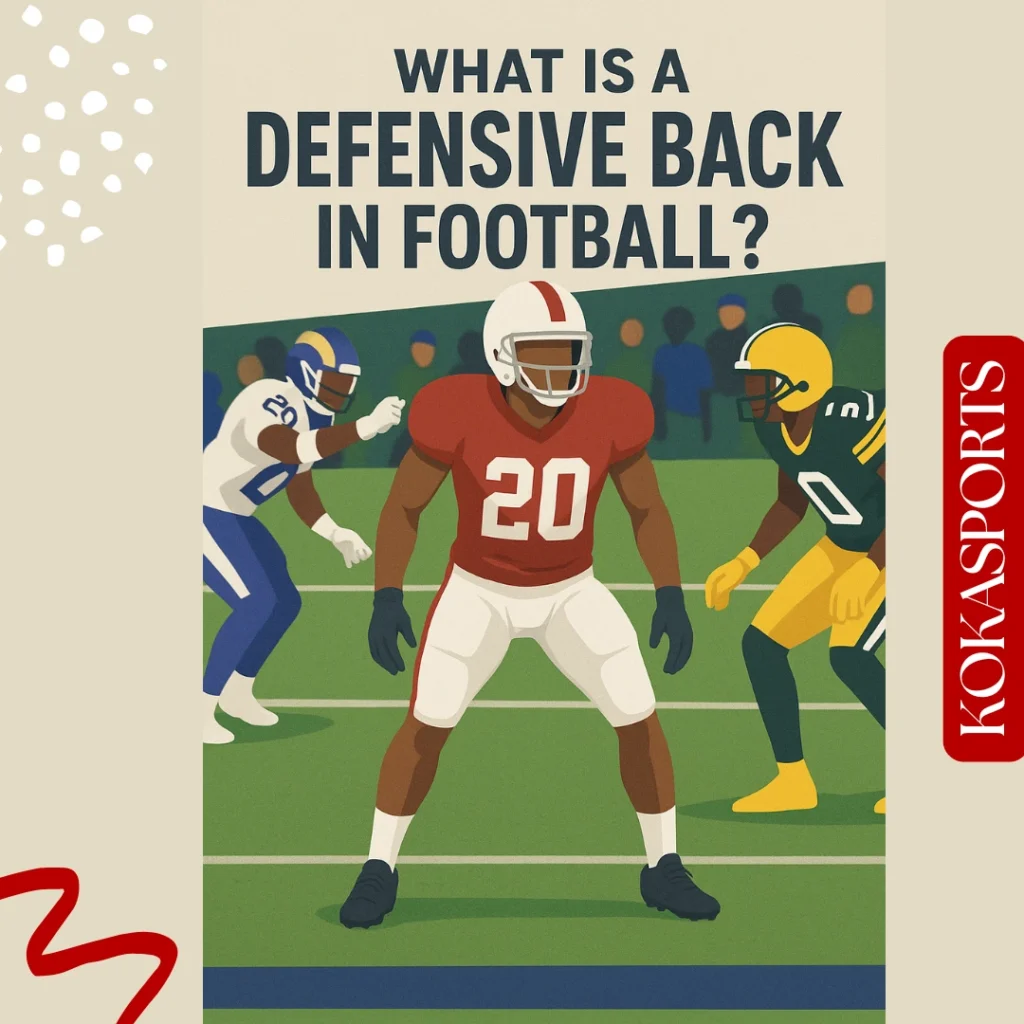
There are three types of defensive backs: cornerbacks, safeties, and nickel or dime backs. Each one lines up in a different spot and has a different job in pass coverage and run support.
Cornerback
A cornerback lines up on the outside, across from a wide receiver. His main job is to stop that receiver from catching the ball. Cornerbacks are usually the fastest players on the defense.
Cornerbacks play two main types of coverage. In man-to-man coverage, they follow one receiver wherever he goes. In zone coverage, they guard an area of the field and cover any receiver who enters it. Some cornerbacks also play press coverage, lining up right at the line of scrimmage to jam the receiver and throw off his timing.
Key skills for cornerbacks include:
- Speed to keep up with fast wide receivers
- Ball skills to knock down or catch passes
- Footwork to change direction quickly
- Tackling to stop receivers after the catch
Safety
A safety lines up deeper than the cornerbacks, often 10 to 15 yards off the ball. There are two types: the free safety and the strong safety.
The free safety is the “center fielder” of the defense. He plays deep in the middle, reads the quarterback, and helps any defender who gets beaten on a deep pass.
The strong safety plays closer to the line of scrimmage, usually on the same side as the tight end (the “strong side”). He helps stop the run, covers tight ends, and is often bigger and more physical than the free safety.
Nickel and Dime Backs
A nickel back is a fifth defensive back who replaces a linebacker when the offense uses three or more wide receivers. He usually covers the slot receiver, the receiver who lines up between the outside receiver and the offensive line.
A dime back is a sixth defensive back, used in obvious passing situations like 3rd and long. The names come from coins: a nickel is worth 5 cents, and a dime is worth 10 cents, or “two nickels.”
Cornerback vs Safety: What’s the Difference?
Cornerbacks and safeties are both defensive backs, but they play different roles.
| Label | Cornerback | Safety |
|---|---|---|
| Where he lines up | Outside, across from a wide receiver | Deeper, in the middle of the field |
| Main job | Cover one receiver or an outside zone | Help deep and support the run |
| Body type | Usually smaller and quicker | Usually bigger and more physical |
| Run support | Less | More |
Essential Skills Every Defensive Back Must Master
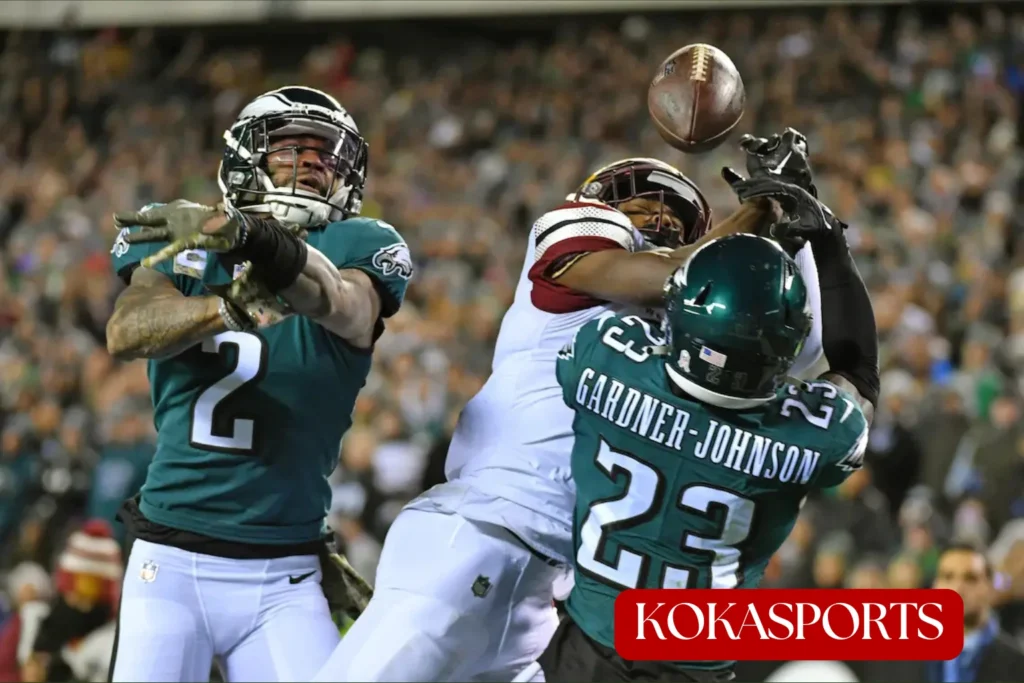
Great defensive backs need two kinds of skills: physical tools to stay with receivers, and the football IQ to know where the ball is going before it’s thrown.
Physical Skills for the Defensive Back Position
| Skill | Why It Matters |
|---|---|
| Speed | Stays with receivers on deep routes |
| Agility | Changes direction when a receiver cuts |
| Backpedal and hip turn | Moves backward while watching the QB, then turns to run without losing a step |
| Tackling in space | Brings down runners in the open field, with no help nearby |
| Ball skills | Times jumps and turns pass breakups into interceptions |
Of these, tackling in open space is the most underrated. Defensive backs are often the last player between a runner and the end zone, so a missed tackle can turn a short gain into a touchdown.
Mental Skills and Football IQ
The best defensive backs win before the ball is snapped. Three mental skills matter most:
- Reading the quarterback: watching the QB’s eyes and shoulders to see where he plans to throw.
- Recognizing formations: spotting the offense’s alignment and guessing the likely route or play before the snap.
- Communication: calling out routes, motion and coverage changes so every DB knows his job. One missed call can leave a receiver wide open.
Defensive backs build this football IQ by studying film of opposing quarterbacks and receivers during the week.
How Defensive Backs Work in Different Formations
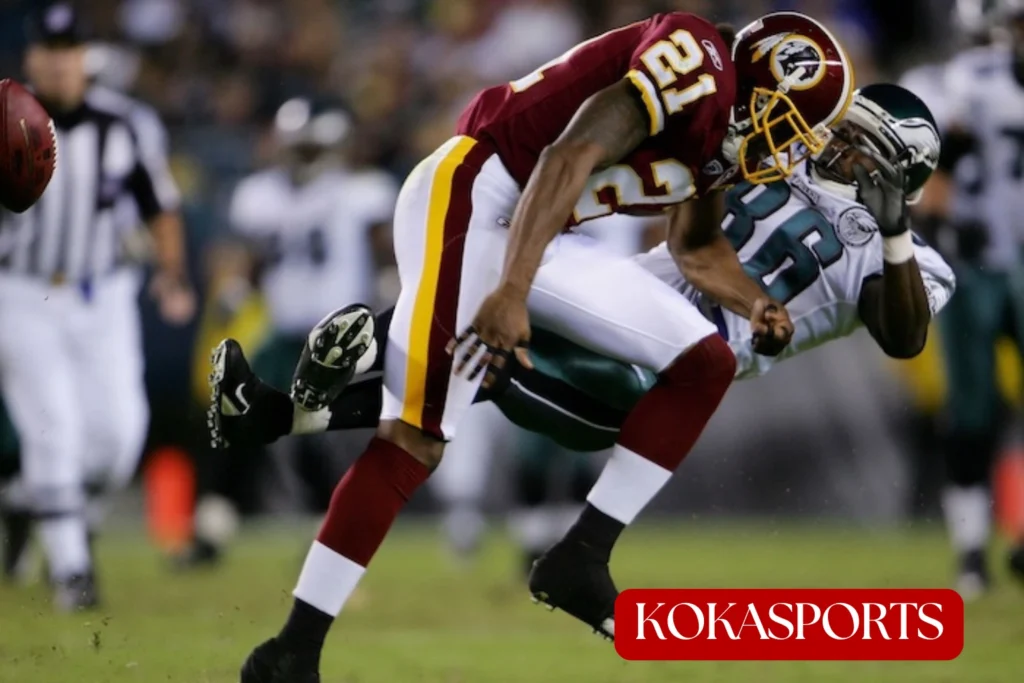
The number of defensive backs on the field changes based on the offense’s personnel. More receivers on offense usually means more DBs on defense.
| Package | Defensive Backs | When It’s Used |
|---|---|---|
| Base | 4 (2 CB, 2 S) | Against run-heavy personnel with 2 tight ends or a fullback |
| Nickel | 5 | Against 3 wide receivers (11 personnel) |
| Dime | 6 | Obvious passing downs, like 3rd and long |
| Quarter / Prevent | 7 | End of a half, when the offense needs a long pass |
In today’s NFL, nickel is used more than base defense, because most offenses line up with three wide receivers on most plays. That’s why the nickel back is now treated almost like a starting position.
Common Coverages Defensive Backs Play
| Coverage | How It Works |
|---|---|
| Cover 1 | Man-to-man coverage, with one deep safety helping over the top |
| Cover 2 | Two safeties each guard half of the deep field; cornerbacks cover the short outside areas |
| Cover 3 | Two cornerbacks and one safety each guard a deep third of the field |
| Cover 4 (Quarters) | Four DBs each guard a deep quarter of the field |
Each coverage asks different things from defensive backs. In Cover 1, cornerbacks must win one-on-one. In Cover 2 and Cover 3, they need to read routes and pass receivers off to teammates. For a less common variation, see our guide to Cover 5 defense.
Training and Development for Defensive Backs
Defensive back skills are built through specific drills that train footwork, hip movement and ball skills. Here are the drills coaches use most, and how DBs develop from youth football to the NFL.
Best Drills for Defensive Backs
| Drill | What It Trains |
|---|---|
| Backpedal drill | Moving backward fast while keeping eyes on the QB |
| W drill | Backpedal, break forward at an angle, and repeat, in a W shape |
| Hip turn (open the gate) drill | Turning the hips to run with a receiver without losing speed |
| Tip drill | Catching deflected passes, which turns breakups into interceptions |
| Press / jam drill | Using hands at the line to disrupt a receiver’s release |
| Open-field tackling drill | Breaking down and tackling a runner in space |
Youth and High School Defensive Backs
Young defensive backs should master the basics first: a good stance, a smooth backpedal, and safe tackling form. Coverage schemes can wait until players can move backward and change direction under control. For safe tackling technique, see our guide to youth tackling drills.
In high school, players start learning man and zone coverage, reading the quarterback, and working with the safeties on communication.
From College to the NFL
In college, defensive backs study film every week and learn complex coverages. The best then get tested at the NFL Scouting Combine, where scouts measure:
- 40-yard dash: top speed. Cornerbacks drafted early often run in the 4.3 to 4.5 second range.
- Vertical jump and broad jump: explosiveness for contested catches.
- 3-cone drill and 20-yard shuttle: change of direction, which shows how well a DB can stay with route breaks.
Scouts also value versatility. A DB who can play cornerback, nickel and safety is more valuable on draft day.
Best Defensive Backs of All Time
Some of the greatest players in NFL history have been defensive backs. All six players below are in the Pro Football Hall of Fame.
| Player | Position | Career INTs | Known For |
|---|---|---|---|
| Rod Woodson | CB / S | 71 | 3rd in NFL history in interceptions |
| Charles Woodson | CB / S | 65 | First player with 50+ interceptions and 20+ sacks |
| Ed Reed | Safety | 64 | NFL record 1,590 interception return yards; 2004 Defensive Player of the Year |
| Ronnie Lott | CB / S | 63 | Hard-hitting leader of the 1980s 49ers |
| Deion Sanders | Cornerback | 53 | 9 interception return TDs and 2 Super Bowl wins |
| Champ Bailey | Cornerback | 52 | 203 passes defended over 15 seasons |
Ed Reed showed how a free safety can take over a game. Quarterbacks had to know where he was on every snap. Deion Sanders was so good in coverage that teams often stopped throwing to his side of the field, which changed how offenses planned against him.
These great defensive backs shared common traits:
- Exceptional speed and athleticism
- Great instincts for reading plays
- The ability to make clutch plays in big moments
- Leadership that helped their teammates
Modern Challenges for Defensive Backs
Modern NFL offenses make the defensive back position harder than ever:
- Spread offenses: more receivers on the field force defenses to play 5 or 6 DBs on most snaps.
- Pre-snap motion: receivers move before the snap, so DBs must communicate quickly and switch assignments without confusion.
- Mobile quarterbacks: when the QB can scramble, DBs must stay in coverage longer instead of expecting a quick throw.
- RPOs (run-pass options): the QB decides after the snap whether to hand off or throw, so DBs must read run or pass in a split second.
Because of this, teams now value versatile DBs who can play cornerback, nickel and safety, and even cover tight ends like a linebacker.
Conclusion
A defensive back is a player in the secondary who covers receivers, breaks up passes and makes open-field tackles. The main types are cornerbacks, safeties, and nickel and dime backs, and most defenses play 4 to 6 of them depending on the offense. To be a great DB, a player needs speed, a strong backpedal and hip turn, sure tackling, and the football IQ to read the quarterback before the ball is thrown.
FAQs
What’s the difference between a linebacker and a defensive back?
A linebacker plays closer to the line of scrimmage and focuses on stopping the run. A defensive back plays deeper and focuses on covering receivers.
Is a defensive back the same as a safety?
No. A safety is one type of defensive back. Cornerbacks, nickel backs and dime backs are defensive backs too.
How many defensive backs are on the field?
Usually 4 in a base defense (2 cornerbacks and 2 safeties), 5 in nickel, and 6 in dime.
Is a nickel back a defensive back?
Yes. The nickel back is the fifth defensive back, usually covering the slot receiver.
Can players switch between defensive back positions?
Yes. Many players move between cornerback, safety and nickel during their careers, and versatile DBs are highly valued.
What makes a good defensive back?
Speed, a smooth backpedal and hip turn, sure tackling in open space, ball skills, and a high football IQ.