
Tackling is the most important skill a defense has to master, and for young players it is also the one that has to be taught most carefully. Good youth tackling drills do two things at once. They build the confidence and technique that lead to game-winning stops, and they teach that technique in a way that keeps the head out of contact and protects developing athletes.
This guide walks through the fundamentals of a safe tackle, a progression of youth tackling drills that build from no contact to full technique, and the safety rules every youth coach should follow. Every drill here is designed to reinforce proper form, not to reward the biggest hit.
Why Proper Tackling Technique Matters in Youth Football
Before any drill, players need to understand why technique comes first. Tackling with the head down or leading with the helmet is both less effective and far more dangerous. The goal of modern youth coaching is to take the head completely out of the tackle and teach players to strike with the shoulder while keeping their eyes up.
The safety case is not opinion, it is data. According to the CDC’s HEADS UP program, 63 percent of concussions in high school football result from tackling, and the CDC recommends that programs reduce full-speed, head-on blocking or tackling drills where players line up more than three yards apart. In other words, the way you run your drills matters as much as the drills themselves. Teaching technique at controlled speeds is not a compromise, it is the standard.
The Fundamentals of a Safe Tackle
Every good tackling drill reinforces the same core mechanics. USA Football’s shoulder tackling system, developed with the Seattle Seahawks, breaks the tackle into a repeatable set of steps. Teach these before you add speed.
- Track. Close the distance to the ball-carrier under control, breaking down the feet as you arrive rather than lunging.
- Buzz and prepare. Sink the hips, keep a flat back, and get into a good power position with the head up and eyes on the near hip or midsection.
- Connect. Strike up and through the ball-carrier with the near shoulder, keeping the head to the side and out of contact.
- Accelerate. Drive the legs on contact with short, choppy steps. A tackle that stops on impact fails.
- Finish. Wrap, grab cloth, and squeeze, then run the feet to bring the ball-carrier to the ground under control.
If a player can perform those five steps slowly and correctly, they are ready to rep them in the drills below. You can pair this progression with a full walkthrough of the mechanics in this guide to how to tackle in American football.
Non-Contact Youth Tackling Drills (Start Here)
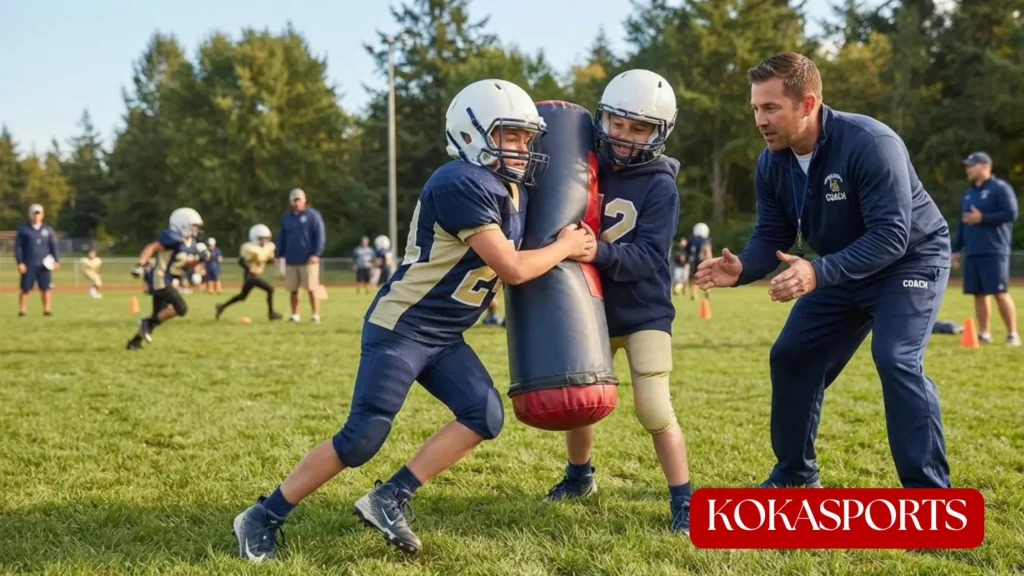
Always build technique before you add a live opponent. These drills isolate one piece of the tackle at a time and can be run at walking or jogging speed.
Fit and Freeze
Two players start already in the fit position, one with his shoulder placed on the other’s midsection, head to the side, arms wrapped. On the whistle they hold the position for a two-count while the coach checks head placement, back angle, and wrap. This teaches what a finished tackle should feel like before any movement is added.
Form Tackle Progression
From a knee, then from a squat, then from a standing position, the defender practices striking a partner or a bag, wrapping, and lifting slightly without taking anyone to the ground. Progress one level only after the previous one is clean.
Angle Break-Down
The defender approaches a stationary partner from an angle, breaks down under control a yard away, and fits up on the near shoulder. This drill teaches players to take a proper pursuit angle and arrive balanced instead of overrunning the ball-carrier.
Near-Shoulder Strike
Working against a hand shield, the player practices the dip-and-rise strike with the near shoulder, punching up and through the target while keeping the eyes up. Reps here build the muscle memory that keeps the head out of contact.
Live Youth Tackling Drills (Add Contact Carefully)
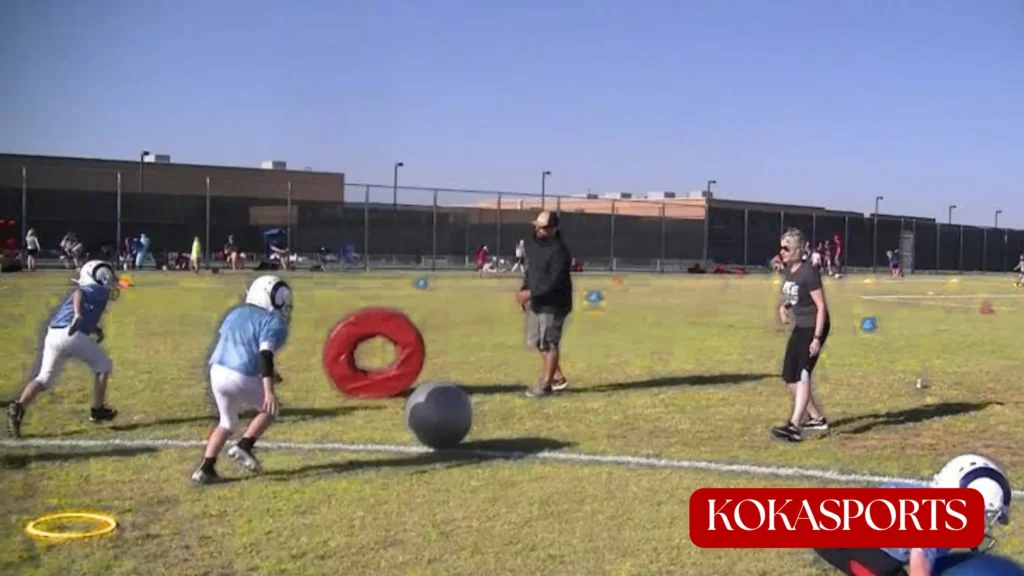
Once technique holds up at speed, you can introduce a moving ball-carrier. Keep the space short, keep the reps controlled, and stop any rep where a player drops his head.
Angle Tackle Drill
The ball-carrier runs a fixed path while the defender approaches from an angle, breaks down, and completes a shoulder tackle to the side. This is the most game-realistic youth tackling drill because most tackles in a game happen on the move at an angle, not head-on.
Sideline Tackle Drill
Using the sideline as an extra defender, the tackler practices forcing the ball-carrier out of bounds while maintaining leverage. It teaches players to use the boundary and to keep outside leverage rather than diving.
Hawk Roll (Tackle and Roll)
The defender fits up, wraps, and rolls through the tackle so both players go to the ground safely, with the defender’s momentum carrying the ball-carrier down. This is a staple of the shoulder tackling system and teaches a safe finish.
Drive for Five
After contact, the defender drives the ball-carrier back five yards with short, powerful steps. This isolates the accelerate-and-finish phase and cures the habit of stopping on contact.
Open-Field Tackle Drill
In a confined box, one defender squares up one ball-carrier who has room to move. It teaches the hardest tackle in football, the one-on-one in space, while keeping the collision controlled because the area is small and the speed is limited.
How to Run Youth Tackling Drills Safely
The drills only work if the environment is right. Follow these rules to keep practice both productive and safe.
- Keep line-up distance short. Per CDC guidance, avoid drills where players line up more than three yards apart at full speed. Short distances mean lower speeds and safer collisions.
- Progress slowly. Master every drill at walking speed before jogging, and jogging before full speed. Never skip a level to save time.
- Teach the head out of contact. Eyes up, head to the side, strike with the shoulder. Stop and reset any rep where a player leads with the helmet.
- Prioritize technique time over live hitting. The CDC recommends spending more time demonstrating minimal-contact technique and less time in full scrimmages. Most improvement comes from clean reps, not big hits.
- Consider certification. Programs enrolled in USA Football’s Heads Up Football and coaches trained through the CDC’s HEADS UP course teach a consistent, safety-first method across the whole staff.
Conclusion
The best youth tackling drills are the ones that make safe technique automatic. Start with the fundamentals of track, prepare, connect, accelerate, and finish. Build from no-contact fit-and-freeze and form work up through angle and open-field tackling, and keep every rep controlled with short line-up distances and eyes up. Coached this way, tackling drills give young players the confidence to make stops on game day while protecting them from the injuries that come with poor technique. Teach the technique first, add speed last, and the results take care of themselves.
Frequently Asked Questions About Youth Tackling Drills
What are the best youth tackling drills for beginners?
Start with non-contact drills that isolate one skill, such as fit and freeze, the form tackle progression from a knee, and angle break-down. These teach proper head placement, wrap, and body position before any live contact is introduced.
How do you teach kids to tackle safely?
Take the head out of the tackle. Teach players to keep their eyes up, place the head to the side, and strike with the near shoulder, then wrap and drive the feet. Master each step slowly before adding speed, and follow the CDC guidance of keeping full-speed drills within three yards of line-up distance.
At what age should youth players start tackling drills?
Many organizations recommend flag or non-contact football for children 14 and younger, and the CDC specifically suggests offering those options at that age. When contact tackling is introduced, it should always begin with non-contact technique drills before any live work, regardless of age.
How often should a youth team practice tackling drills?
Tackling technique should be reinforced in most practices, but the majority of that time should be spent on controlled, minimal-contact technique work rather than full-speed hitting. Short, frequent, high-quality reps build better and safer tacklers than occasional live scrimmages.