

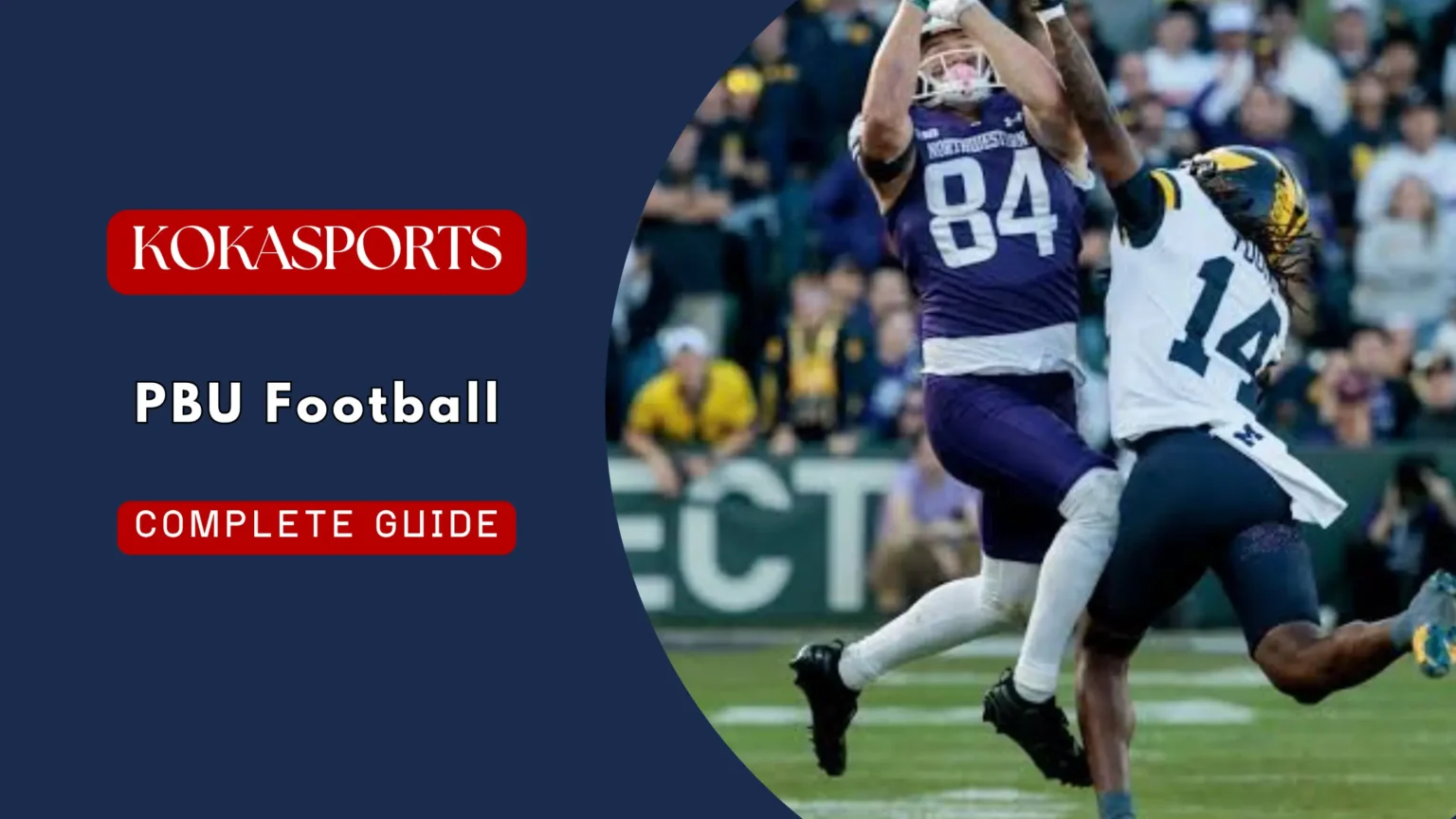
If you have ever watched a game and seen a stat sheet full of short letters, you have probably asked yourself one thing: what does PBU football really mean? Here is the simple answer. In football, PBU stands for Pass Breakup (also written as Passes Broken Up). It is a defensive statistic. A defender earns a PBU when he knocks the ball away, tips it, or disrupts a throw so the receiver cannot catch it. Cornerbacks and safeties record most of them, but any defender can get one. In this guide, you will learn how a PBU works, who earns them, why they matter, and how a PBU is different from an interception and a pass deflection.
What Does PBU Mean in Football?

PBU Football Definition
A PBU is a defensive play, plain and simple. It happens when a defender stops a forward pass from being caught. Picture the play in your head. The quarterback throws the ball. The receiver reaches out to catch it. Then, at the last second, a defender gets a hand in and knocks the ball away. The pass falls incomplete. That defender just earned a PBU.
The key word here is disrupt. The defender does not need to catch the ball. He only needs to break up the play. No catch for the offense, no yards gained, and a proud defender walking back to the huddle.
What Is a Pass Breakup?
The full phrase behind PBU is “Pass Breakup” or “Passes Broken Up.” You will also hear it called a few other names, depending on who is talking. Some announcers say “pass defended.” Some say “pass deflection.” A stat website might use “PD.” They all point to the same basic idea: a defender got in the way and the pass fell to the ground.
How Does a PBU Work in Football?
When Is a Defender Credited With a PBU?
So when exactly does a defender get the credit? A PBU is usually recorded when a defender does one of these things: knocks the ball away from the receiver’s hands, gets a hand on the football in the air, disrupts a catch attempt at the last moment, breaks up a tightly contested pass, or simply prevents a reception that looked like it was going to be complete.
There is one important rule, though. The defender must actually make a play on the ball. Standing near a receiver is not enough. A PBU is earned by reading the play, getting in position, and making contact with the football at the right time. Timing is everything. Arrive too early and you might draw a flag. Arrive too late and the receiver catches it. Get there at the exact right moment, and you break up the pass.
Example of a PBU
Let’s use a real-game picture. A quarterback drops back and throws a deep pass down the sideline toward his wide receiver. The ball hangs in the air. The receiver slows down and reaches up to grab it. Just as the ball arrives, the cornerback reaches across the receiver’s body and slaps the ball away. The pass falls incomplete.
That is a textbook PBU. The corner did not catch the ball, so it is not an interception. But he stopped the completion cold, so he earns the pass breakup on the stat sheet.
Who Gets PBUs in Football?

Cornerbacks
Cornerbacks lead the way here, and it makes sense. They line up right across from wide receivers on nearly every play. More coverage means more chances to break up passes. When a quarterback throws toward a receiver, the corner is usually the closest defender. That is why the best cover corners often finish a season with the most PBUs on their team.
There is a funny twist, too. Sometimes a young or struggling corner gets tested over and over. If he is skilled enough to fight back, all those extra targets can turn into extra PBUs.
Safeties
Safeties earn plenty of PBUs as well, just in a different way. They usually play deeper in the field and help on long throws. When a quarterback launches a deep ball, a safety racing over to knock it down is a common sight. Safeties also break up passes over the middle when they read the play fast and close in on the receiver.
Linebackers and Other Defenders
Do not forget the rest of the defense. Linebackers can record PBUs when they cover tight ends, running backs, or receivers crossing the middle. Even a defensive lineman can earn one by jumping up and tipping a pass at the line of scrimmage. If you want a quick refresher on where each player lines up, this guide to the 11 positions in football breaks it down clearly. The point is simple: any defender who breaks up a pass gets the credit, no matter his position.
PBU vs Interception: What’s the Difference?
This is where a lot of fans get confused, so let’s clear it up. Both plays stop the offense. Both are great for the defense. But they are not the same. The difference comes down to one thing: did the defender catch the ball or not?
| Statistic | What Happens |
|---|---|
| PBU | The defender prevents the completion but does not catch the ball |
| Interception | The defender catches the pass and takes possession |
| Completion | The receiver catches the pass |
Can a Defender Get a PBU and an Interception on the Same Play?
Generally, no. If a defender catches the ball, the play goes down as an interception, not a pass breakup. An interception is its own defensive pass play, and it is not usually counted as a separate PBU for that same throw. Think of it like this: you break it up, or you take it away. One play, one main outcome.
Which Is Better: PBU or Interception?
An interception is usually the bigger play. It ends the drive right there and hands the ball to your offense. That is a game-changer. A PBU does not flip possession, so it does not carry the same instant reward.
But here is the honest truth. PBUs still matter a lot. A defender can be an elite cover man and not have many interceptions. Why? Because breaking up passes safely, again and again, shows steady coverage skill. Reaching for a risky pick can backfire and give up a big catch. A clean pass breakup guarantees an incompletion with no risk at all. Smart, steady, and safe.
PBU vs Pass Deflection
Are PBU and Pass Deflection the Same Thing?
Most of the time, yes. In everyday football talk, “pass breakup,” “pass deflection,” and “pass defended” all describe the same basic result: a defender knocked a pass away and it fell incomplete. Fans and announcers often swap these words freely.
But there is a small catch worth knowing. There is also an official stat called PD, which stands for Passes Defended. And here is the important part: the official Passes Defended number usually combines both pass breakups and interceptions into one total. So PBU is one piece, and PD is the bigger bucket that holds it. That is the detail many websites get wrong.
Why Different Websites Use Different Terms
Terms change depending on where you look. The NFL and its official scorers may list the stat one way, while college football and the NCAA use their own guidelines. Fantasy football sites and player databases sometimes label it differently again. So if you see “PBU” on one site and “PD” on another, do not panic. They are usually pointing at the same skill: stopping the pass. This is exactly why searches like “PBU vs pass deflection” and “PBU vs PD football” pop up so often.
How Is PBU Recorded as a Football Stat?

Example Defensive Stat Line
PBUs show up right next to a defender’s other numbers. Here is a sample stat line for a made-up cornerback so you can see how it looks:
CB John Smith Tackles: 5, Interceptions: 1, PBUs: 7, Forced Fumbles: 0.
Each number tells a small story. The tackles show he was in on plays. The single interception shows he took the ball away once. The seven PBUs? That is the eye-catcher. It tells you this corner was around the ball a lot and knocked away plenty of throws.
What Does a High PBU Total Mean?
A high PBU number usually points to a few good things. It often means the defender was frequently involved in pass coverage, could disrupt throws, and had strong positioning and timing. It also means he simply got the chance to make plays on the ball. Good defensive backs turn those chances into breakups.
Does a High PBU Total Always Mean a Player Is an Elite Cornerback?
Not always, and this is a key point. More targets can lead to more PBU chances. A corner who gets thrown at often has more shots to break up passes. On the flip side, a shutdown corner might be so respected that quarterbacks avoid him completely, which means fewer PBUs. So a low number is not always a bad sign. Always read PBUs next to other coverage stats before you judge a player.
Why Are PBUs Important in Football?
Preventing First Downs
Breaking up a third-down pass is huge. It can force the offense to punt and hand the ball right back. One well-timed swat can end a whole drive.
Stopping Big Plays
A deep pass broken up is a touchdown erased. PBUs stop explosive plays before they happen, and in a close game, that can be the difference between a win and a loss.
Creating Turnover Opportunities
Here is a bonus. A tipped or deflected pass can float in the air and land in another defender’s hands. That means a pass breakup can turn into an interception for a teammate. One play can spark another.
Measuring Coverage Performance
PBUs also help coaches and scouts judge defenders beyond just tackles and interceptions. They give a fuller picture of how well someone covers receivers. Numbers tell stories, and PBUs tell a coverage story.
What Is a Good Number of PBUs in Football?
There is no single magic number, and anyone who gives you one is oversimplifying. It depends on a lot. A single-game PBU or two is solid. Over a full season, a starting cornerback who records double-digit pass breakups is usually having a strong year. But you have to weigh the details: How many snaps did he play? How often was he targeted? What defense does his team run?
A rotational player who sees fewer snaps will naturally have fewer PBUs than a full-time starter. So look at the whole picture. A PBU total means much more when you know the context around it.
PBU Football Statistics and Defensive Back Evaluation
Smart analysts never look at PBUs alone. They mix them with other numbers to truly rate a defensive back. That includes interceptions, completion percentage allowed, targets, passer rating allowed, tackles, defensive snaps, and forced incompletions. Sites like Pro Football Reference track many of these numbers, which makes it easier to compare players fairly.
Why Context Matters
Let’s prove the point with two players. One defender has 10 PBUs on 80 targets. Another has 10 PBUs on just 35 targets. Same PBU total, right? But the second player broke up a far higher share of the passes thrown his way. Same number, very different story. That is why context beats raw totals every single time.
Frequently Asked Questions About PBU Football
What does PBU stand for in football?
PBU stands for Pass Breakup, sometimes written as Passes Broken Up. It is a defensive statistic.
What is a PBU in football?
A PBU is when a defender knocks away or disrupts a forward pass so the receiver cannot catch it. Example: a cornerback slaps the ball away just before a receiver catches it.
Is a PBU the same as an interception?
No. On a PBU, the defender breaks up the pass but does not catch it. On an interception, the defender actually catches the ball and takes possession.
Is PBU the same as pass deflection?
In casual talk, yes, they usually mean the same thing. Just remember that the official stat “PD” (Passes Defended) often combines both PBUs and interceptions.
Who gets the most PBUs in football?
Defensive backs, especially cornerbacks, usually pile up the most PBUs because they cover receivers on almost every play.
Does an interception count as a PBU?
Not usually. If the defender catches the ball, it is recorded as an interception, not a separate pass breakup.
What does PD mean in football?
PD stands for Passes Defended. It is a broader stat that most often adds up a player’s pass breakups and interceptions together.
Why are PBUs important?
PBUs stop completions, kill drives, prevent big plays, and show how well a defender covers his man. They are one of the best ways to measure coverage skill.
Conclusion
So let’s tie it all together. PBU football simply means a pass breakup, sometimes called a pass defended. It is the defensive stat that measures how well a player can stop a pass from being caught. Remember the main difference: a PBU is not the same as an interception, because the defender breaks up the throw without catching the ball. Pass breakups shine brightest when you use them alongside other numbers, especially for judging cornerbacks and safeties. Next time you watch a game and see a defender knock a ball away, you will know exactly what just happened, and why it counts.