
10 personnel football is an offensive grouping with 1 running back, 0 tight ends and 4 wide receivers. It is a pass-first package that spreads the defense across the whole field.
American football features many complex strategies that casual fans might find confusing. One of the most important concepts involves offensive personnel packages – the specific combinations of players teams put on the field for different situations. Among these groupings, 10 personnel stands out as a pass-heavy formation that has gained popularity in modern NFL offenses.
Learning about personnel group strategies helps fans appreciate the chess match happening between coaches on every play. As offenses keep evolving, these formations matter more than ever as teams adapt to new defensive schemes and rule changes.
Read Also: 21 Personnel Football: Guide to NFL’s Most Versatile Offensive Formation
What is 10 Personnel in Football?
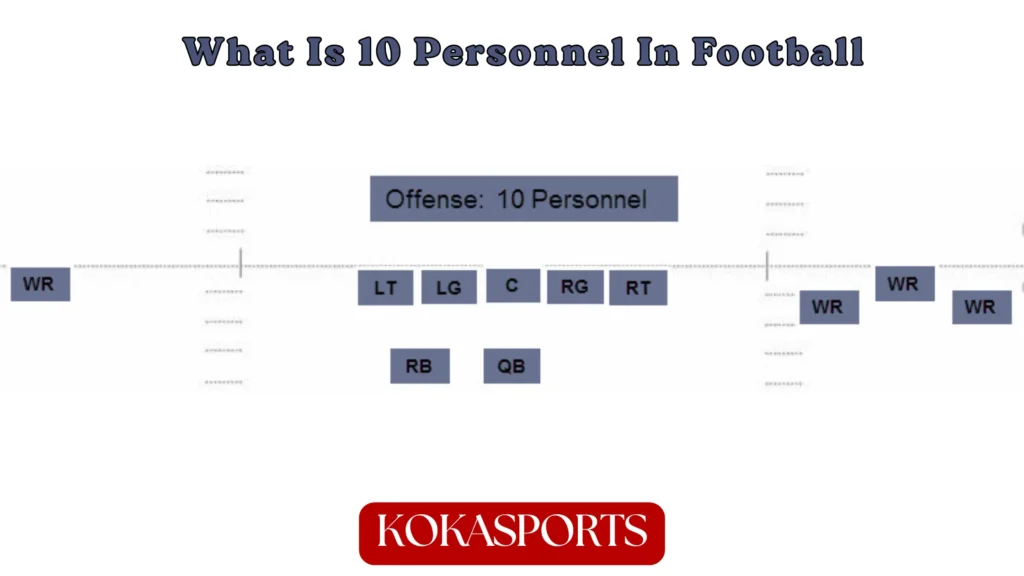
10 personnel represents a specific offensive personnel groupings system where teams deploy 1 running back and zero tight end players, leaving room for four wide receiver positions on the field. The numbering system works simply: the first number indicates how many running backs are present, while the second number shows the number of tight ends.
This formation creates a spread look that forces defenses to cover more ground horizontally. With wide receivers on the field spread across the formation, defensive coordinators must decide whether to match personnel or stick with their base defense. The absence of tight ends on the field means less traditional blocking support but creates more speed and route-running options.
10 personnel differs dramatically from more traditional personnel sets because it prioritizes the passing game over running opportunities. Teams using this package typically have five offensive linemen, one running back, a quarterback, and four receivers spread across various alignments. This setup forces defenses into nickel defense packages to match the additional receivers.
Breaking Down Offensive Personnel Groupings in Football
Football 101 teaches us that offensive personnel naming follows a two-digit system that makes quick identification possible during games. Football coaches use this shorthand to communicate complex formations quickly and efficiently. The system covers all offensive players except the quarterback and five offensive linemen, who remain constant in every personnel package.
Common personnel usage in the NFL includes several standard packages:
- 11 personnel: Most popular with 1 RB, 1 TE, 3 WRs
- 12 personnel: Balanced approach with 1 RB, 2 TEs, 2 WRs
- 21 personnel: Classic power running with 2 RBs, 1 TE, 2 WRs
- 22 personnel: Heavy package with 2 RBs, 2 TEs, 1 WR
NFL personnel groupings strategy revolves around creating favorable matchups. When offense and defense clash, personnel decisions often determine which side gains the advantage before the ball is even snapped.
For a full list of every grouping, from 10 to 23 personnel, see football personnel groupings explained.
Comparing 10 Personnel to Other Offensive Personnel Packages
11 Personnel – The Most Common NFL Formation
11 personnel dominates modern NFL games because it offers perfect balance between running and passing options. With three wide receivers, one tight end, and one running back in the backfield, this formation gives offensive play callers maximum flexibility. The tight end position provides blocking support while remaining an eligible receivers option.
Most NFL teams built their entire offense around 11 personnel because it doesn’t tip off defensive intentions. The passing game stays strong with multiple receiver options, while the run game benefits from tight end blocking and traditional running back carries. Expect this trend to continue as teams value versatility.
12 Personnel – Balanced Offense with Tight Ends
12 personnel features two tight ends alongside one running back, creating a more traditional look that emphasizes run game strength. This package works exceptionally well in short-yardage situations where teams need reliable blocking from multiple tight ends on the line. The 2 tight ends provide excellent pass protection while creating mismatches against linebackers in coverage.
Compared to 10 personnel, this package sacrifices speed for power. Teams using 12 personnel typically plan more conservative offensive approaches, though modern tight end athletes can still create explosive plays in the passing game.
21 Personnel – Classic Formation in Football History
21 personnel brings back memories of traditional American football with two backs in the backfield alongside one tight end. This package often includes a fullback who serves as a lead blocker for the primary running back. The personnel is one of the most recognizable in high school football where power running games remain popular.
This formation contrasts sharply with 10 personnel because it prioritizes ground game dominance over aerial attacks. While 21 personnel might seem outdated, some NFL teams still use it effectively in specific situations.
22 Personnel – Goal Line and Power Package
22 personnel represents maximum power with two tight ends and two wide receivers creating a heavy blocking scheme. This package appears most often near the goal line where short-yardage situations demand reliable run game execution. The many running backs and extra blockers make this ideal for situations requiring guaranteed yardage.
NFL teams rarely use 22 personnel in today’s pass-heavy league, making it a stark contrast to the spread nature of 10 personnel.
13 Personnel – Heavy Tight End Usage
13 personnel features three tight end players alongside one running back, creating an extremely rare but powerful blocking scheme. This personnel group appears almost exclusively in goal-line situations where teams need maximum blocking power. The single wide receiver typically runs a predetermined route while the offensive line and tight ends on the line create massive blocking advantages.
| Personnel Package | Running Backs | Tight Ends | Wide Receivers | Primary Use |
|---|---|---|---|---|
| 10 Personnel | 1 | 0 | 4 | Pass-heavy spread |
| 11 Personnel | 1 | 1 | 3 | Balanced offense |
| 12 Personnel | 1 | 2 | 2 | Run-heavy balance |
| 21 Personnel | 2 | 1 | 2 | Power running |
| 22 Personnel | 2 | 2 | 1 | Short yardage |
| 13 Personnel | 1 | 3 | 1 | Goal line |
Why Do Teams Use 10 Personnel in Football?
Teams choose 10 personnel because it creates specific advantages that other offensive personnel packages cannot match. The four receivers on the field force defenses to make difficult personnel decisions. Defensive linemen and linebackers struggle to cover speedy receivers in space, while defensive back players might get overwhelmed by the sheer number of receiving threats.
Spread offense principles drive 10 personnel success. By spreading receivers across the formation, offensive players create natural spacing that makes defense more challenging. The quarterback gets clearer reads because defensive intentions become more obvious when defenders must cover more ground.
However, 10 personnel comes with significant disadvantages. Without tight end blocking support, pass protection becomes more challenging for offensive linemen. The run game suffers because traditional blocking schemes require tight end support, leaving running backs and tight ends with fewer options for creating lanes.
The Roles of Every Player in 10 Personnel
The Quarterback
The quarterback is the decision-maker who makes this whole system work. The QB must be able to process information quickly identifying coverages pre-snap, going through reads efficiently post-snap, and knowing when to check the ball down versus pushing it downfield. In spread offenses built around this personnel group, the QB often operates from the shotgun to get a better view of the whole field before the snap.
The Running Back
The one running back in this grouping carries enormous responsibility. Unlike in heavy packages where a running back is primarily a runner and blocker, in 10 personnel this player must do all of the following:
- Catch passes out of the backfield as a legitimate receiving weapon
- Serve as the primary blocker in pass protection against blitzing linebackers
- Run the ball effectively despite having no tight end to help seal the edge
- Read the defense and make protection adjustments at the line of scrimmage
Teams that run this package at a high level invest heavily in finding a running back who can do all of these things. Christian McCaffrey, Austin Ekeler, and Alvin Kamara are examples of the kind of versatile back this system demands.
The Wide Receivers
With four wide receivers on the field, alignment and role assignment matters enormously:
- X Receiver (outside, strong side) physical, can win contested catches, handles press coverage
- Z Receiver (outside, weak side) often the team’s fastest player, attacks the deep middle and sideline
- Slot Receivers (two inside) the real weapons in this system, attacking the middle of the field where linebackers and safeties struggle most
The slot positions are where this offense does its most dangerous work. A quick, shifty receiver lined up in the slot against a linebacker in man coverage is one of the best matchups an offense can manufacture.
The Offensive Line
The offensive linemen face unique challenges in this grouping. With zero tight ends on the field, there is no extra help on the edge for the tackles. Each lineman must win their one-on-one battle independently. This is why teams that run heavy 10 personnel usage invest significant resources in building a strong offensive line the tackles especially are completely exposed against elite edge rushers.
10 Personnel in the NFL: Past, Present and Future
Historically, 10 personnel appeared rarely in traditional NFL games because coaches preferred balanced approaches. The rise of college spread offense systems changed this perspective as football personnel experts recognized the matchup advantages created by four-receiver sets.
Modern NFL teams began incorporating 10 personnel more frequently as quarterback skills improved and receivers became more athletic. Teams realized that forcing defenses into nickel defense packages created natural advantages for skilled offensive players.
Expect 10 personnel to stay an important tool as offenses keep spreading the field. The NFL draft consistently produces talented wide receiver prospects, while rule changes favor passing games. Teams building around young quarterbacks often emphasize 10 personnel because it simplifies reads and creates clear matchup indicators.
The Air Raid Offense and 10 Personnel
No system in football history is more closely linked to this personnel package than the air raid offense. Built by coaches Hal Mumme and Mike Leach, the Air Raid offense was designed entirely around spreading four receivers across the field and attacking every zone of the defense simultaneously.
The core concepts of the Air Raid run from 10 personnel include:
- Mesh two crossing receivers creating natural pick situations underneath
- Four Verticals all four receivers attacking straight downfield, stressing every safety
- Y-Cross a deep crossing route that attacks the middle of the field against zone coverage
- Spacing short horizontal routes that flood zones and give the QB high-percentage throws
These concepts require four receivers on the field to work at full effectiveness. Two wide receivers or even three wide receivers simply cannot generate the same level of stress across the field. The Air Raid proved that this personnel group was not just viable it was potentially unstoppable when executed well.
How 10 Personnel Fits Into Offensive Strategy and Formations
Football coaches design specific plays that maximize 10 personnel strengths while minimizing its weaknesses. Quick-passing concepts work exceptionally well because they get the ball out fast, reducing pass protection concerns. Route combinations become more complex with four receivers, creating natural picks and crossing patterns.
The line of scrimmage becomes less predictable with 10 personnel because defenses cannot determine run versus pass intentions based on personnel usage alone. Safety players must choose between run support and pass coverage, creating opportunities for explosive plays.
Common personnel decisions involve specific down-and-distance situations. 10 personnel works best on obvious passing downs where teams need to gain significant yardage quickly. Different personnel groupings serve different purposes, but 10 personnel excels at creating big-play opportunities.
How Defenses Stop 10 Personnel
When defensive personnel coaches see four receivers walking onto the field, the response is immediate and predictable:
- The nickel defense substitutes in a fifth defensive back replaces a linebacker
- Safeties adjust their depth to protect against the deep ball while staying alert for the run
- Man coverage becomes risky one missed tackle or blown assignment leads to big gains
- Zone coverage has gaps four receivers can flood any zone and find the open window
- Blitzing is dangerous bringing extra rushers means leaving receivers in one-on-one coverage
The best defenses against this personnel package are those with athletic linebackers who can cover,
Key Differences Between 10 Personnel and Other Personnel Groupings in Football
The most significant difference between 10 personnel and other different personnel packages lies in philosophical approach. While 11 personnel maintains balance and 12 personnel emphasizes power, 10 personnel commits fully to aerial attacks.
Players on the field vary dramatically between packages. 10 personnel maximizes speed and route-running ability, while packages like 20 personnel (though rarely used) or 00 personnel (theoretical package with no RBs or TEs) represent different strategic extremes.
Football offensive personnel decisions impact every aspect of play design. 10 personnel forces specific offensive play calling that emphasizes timing, precision, and matchup exploitation. Running backs in 10 personnel often serve more as receiving threats than traditional ground game options.
Expect offenses to keep finding new ways to use different personnel groupings each season. Smart teams will develop multiple packages while keeping their 10 personnel execution sharp for crucial situations.
Strengths and Weaknesses of 10 Personnel Offense
Strengths:
- Maximizes speed and receiving talent across the roster
- Forces defensive personnel into unfavorable substitutions
- Creates explosive big plays through the passing game
- Supports the run game by thinning out the box
- Enables fast tempo and no-huddle offensive plays
- Perfect for spread offenses at every level of football
Weaknesses:
- Struggles in short-yardage situations and at the goal line
- The number of running backs (just one) limits physical running options
- No tight ends on the field means reduced blocking on the edge
- Pass protection is harder without a fullback or extra blocker
- Can become predictable if used exclusively without mixing in heavier personnel group options
Conclusion
10 personnel in football represents a pass-heavy approach that maximizes receiving threats while sacrificing traditional blocking support. This personnel package forces defenses into difficult decisions while creating opportunities for explosive offensive plays.
Compared to other offensive personnel groupings, 10 personnel stands apart for its commitment to aerial attacks. While 11 personnel remains the NFL’s most popular package, 10 personnel serves crucial roles in modern offensive systems.
Paying attention to personnel packages is one of the easiest ways to understand what an offense is trying to do. When teams deploy 10 personnel, expect quick passes, spread formations, and attempts to create mismatches against defensive personnel.
The modern NFL offense continues evolving, but 10 personnel will remain an important tool for teams seeking to stress defenses horizontally and create big-play opportunities through superior personnel usage.
FAQs
Is 10 personnel used often in the NFL?
10 personnel is used on only a small share of NFL plays, far less than 11 personnel, and mostly on obvious passing downs and in two-minute drills.
Can teams run the ball effectively out of 10 personnel?
Running is challenging without tight end blocking, but draws and screens work with good offensive line play.
What makes 10 personnel different from 11 personnel?
10 personnel has four wide receivers and zero tight ends, while 11 personnel has three receivers and one tight end.
Which NFL teams use 10 personnel the most?
Pass-heavy offenses with strong quarterbacks and deep receiver groups use 10 personnel most, especially on third downs and in hurry-up situations.
How do defenses adjust to 10 personnel groupings?
Defenses usually go to nickel (five defensive backs) or dime (six defensive backs) to match four receivers, which leaves fewer defenders in the box to stop the run.
What is 10 personnel football?
10 personnel football is an offensive grouping with 1 running back, 0 tight ends and 4 wide receivers. It is built to spread the defense out and attack through the air.
What is the difference between 10 personnel and an empty backfield?
10 personnel describes which players are on the field: 1 running back and 4 receivers. An empty backfield is a formation where no player lines up behind the quarterback. Offenses often create an empty look from 10 personnel by splitting the running back out wide.
Can high school teams run 10 personnel?
Yes. Many high school and college spread offenses use 10 personnel because it gets more receivers into space and is simple to build a passing game around.