
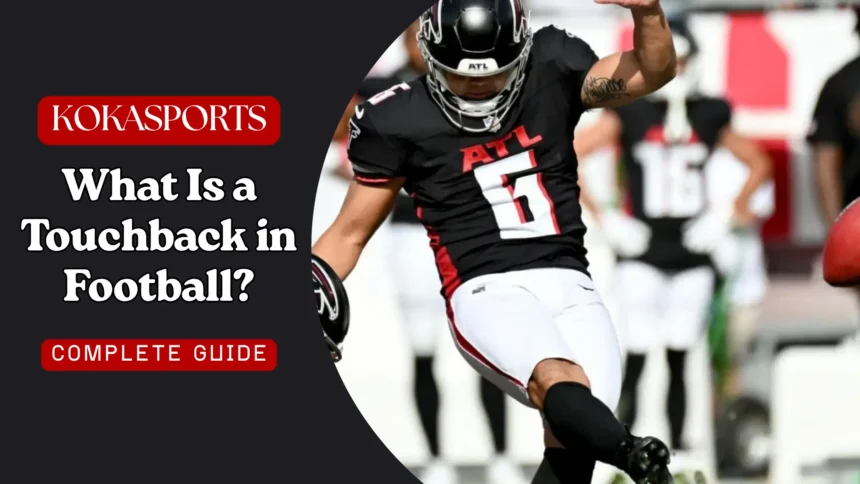
A touchback in football happens when the ball becomes dead in or behind the end zone, and the team defending that end zone gets the ball with no points scored. A touchback is worth 0 points. In the NFL, a kickoff touchback puts the ball at the 35-yard line, while touchbacks on punts, fumbles and interceptions put it at the 20. In college football, kickoff touchbacks go to the 25, and other touchbacks go to the 20.
What Is a Touchback in Football?

A touchback occurs when the ball becomes dead on or behind a team’s own goal line, provided that the opposing team was responsible for sending it there. When this happens, no points are scored, and the team gaining possession gets to start their drive from a predetermined yard line typically the 20 or 25-yard line depending on the league and situation.
Think of it this way: when a kicker sends the ball deep into the endzone and the returner decides not to run it out, the ball is considered dead. The defensive team that just kicked gets no advantage, and the offensive team starts fresh from a favorable position. This type of play exists primarily to keep the game moving smoothly and to improve player safety by reducing dangerous returns from deep in the end zone.
The touchback rule applies across all levels from the National Football League (NFL) to college football and high school football. While the basic concept remains the same, each league has slight variations that affect strategy and gameplay.
Read More: What Is a Post Route in Football? Complete Guide to the Football Route Tree
The Touchback Football Rule Explained Step-by-Step
Here’s how referees determine when a touchback occurs:
- The ball must enter or cross into the end zone
- The ball must be declared dead while in or beyond the end zone
- The opposing team (not the team defending that end zone) must have caused the ball to enter that area
- No player from the receiving team attempts to advance the ball into the field of play
When these conditions are met, officials blow the whistle, signal a touchback, and the ball is spotted at either the 20 or 25-yard line depending on how the touchback occurred.
Touchback vs Safety Key Differences
Many fans confuse touchbacks with safeties because both involve the end zone. Here’s the critical difference:
- Touchback: The opposing team sent the ball into your end zone, you maintain possession of the ball, and no points are scored
- Safety: Your own team caused the ball to become dead in your own end zone, the other team gets 2 points AND gets the ball back
Possession is everything here. A touchback keeps the ball with the same team, while a safety gives the ball and points to the opponent. For a full side-by-side breakdown, read our guide to safety vs touchback in football.
Situations When a Touchback Happens (All Scenarios Under Football Rules)
Touchback on Kickoffs (Most Common Scenario)
Kickoffs produce the most touchbacks. In the NFL, if a kickoff lands in the end zone or goes through it, and the returner downs the ball or it goes out the back, the receiving team starts at its own 35-yard line. If the kick lands in the “landing zone” (between the 20-yard line and the goal line) and then rolls into the end zone, a touchback puts the ball at the 20. In college football, a kickoff touchback puts the ball at the 25-yard line. In high school, it goes to the 20.
A player on the receiving team can also choose to take a knee in the end zone after catching the kickoff or punt, which immediately results in a touchback. This prevents the risk of fumbling or getting tackled deep in their own territory.
Touchback in Football After a Punt
When a punt enters the end zone, the situation becomes more strategic. The punting team wants to pin the defensive unit deep without giving up a touchback. That’s why you’ll often see players trying to down the ball before it crosses the goal line.
If a player from the punting team touches or downs the ball before it reaches the end zone, the play is over and the receiving team takes over at that spot. If the punting player’s momentum carries him into the end zone while touching the ball, it is a touchback and the ball goes to the 20.
However, if the ball enters the end zone untouched and becomes dead on or behind the goal line whether it ball lands there or rolls through it’s a touchback, and the offense starts at the 20-yard line in most cases.
The punting team walks a fine line: kick it too far and you give away a touchback; kick it too short and you give the opponent better field position. That’s why precision punting near the opponent’s end zone is considered one of the most valuable skills in football.
Touchback on Fumbles
This is perhaps the most controversial touchback scenario. If a ball carrier fumbles the ball and it goes out of bounds through the end zone or touches the pylon, the result is a touchback and the defensive team gains possession.
Yes, you read that correctly. If an offensive player fumbles the ball near the goal line and it rolls into the opponent’s end zone, the defensive player gains possession and gets the ball at the 20-yard line. The fumbling team loses the ball entirely, even if they were inches from scoring.
Example: A running back stretches toward the goal line, loses control, and the ball out of the end zone goes out of bounds. Instead of keeping the ball or getting a touchdown, his team loses possession completely. This rule has sparked heated debates among fans, players, and analysts who argue it’s too harsh a penalty for a small mistake.
Touchback on Interceptions
When a defensive player catches the ball on an interception in their own end zone, they have options. They can:
- Take a knee immediately for a touchback
- Attempt to return the ball
- Let momentum carries them into the end zone, which may result in the ball is downed behind the goal line for a touchback
According to the NFL rulebook, if a defender intercepts the ball in the field of play and his momentum carries him into the end zone where he’s tackled, the ball is downed behind the goal line, resulting in a touchback rather than a safety. This “momentum rule” protects defenders from being penalized for making a play.
Touchback on Missed Field Goals
When a field goal attempt falls short and goes into the end zone, different leagues handle it differently:
- NFL: The ball goes to the defensive team at the spot of the kick (or the 20-yard line if kicked from inside the 20)
- NCAA: Results in a touchback, with the ball placed at the 20-yard line
This creates strategic considerations, especially in the college game where teams may opt to punt instead of attempting long field goals.
The American Football Touchback Rule by League
Touchback Rule in the NFL
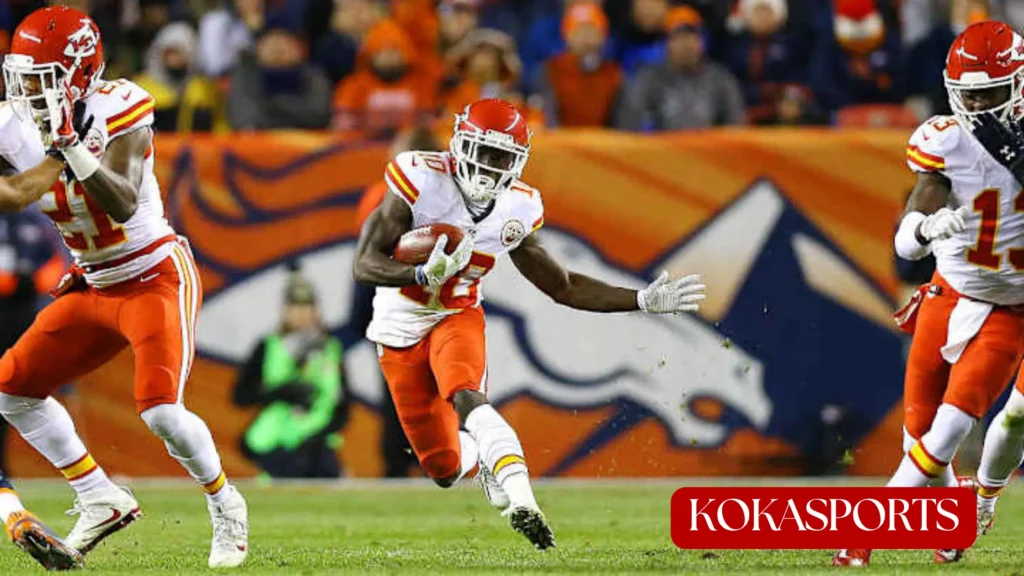
The NFL has changed its touchback spot several times to make kickoffs safer and bring back more returns. For years a kickoff touchback went to the 20, and in 2016 it moved to the 25. In 2024 the league introduced the new “dynamic kickoff” format and moved the touchback to the 30. In 2025 it moved again, to the 35-yard line, to encourage more returns. The 2026 rules kept the 35, with one exception: if a team kicks off from the 50-yard line after a penalty and it results in a touchback, the ball goes to the 20.
Touchbacks on punts, fumbles out of the end zone, interceptions in the end zone and missed field goals that go into the end zone still put the ball at the 20-yard line.
Touchback Rule in College Football
In college football, if a returner signals for a fair catch on a kickoff inside his own 25-yard line, the ball is placed at the 25, just like a touchback. This guide to football rules shows how college prioritizes safety even more aggressively than the pros.
Touchback Rules in High School Football
High school football typically places touchbacks at the 20-yard line, following National Federation of State High School Associations (NFHS) guidelines. The rules are simpler here, with fewer exceptions and special cases than in professional leagues.
The Fair Catch Touchback Rule
In college football, if a returner signals for a fair catch on a kickoff inside his own 25-yard line, the ball is placed at the 25, just like a touchback. The NCAA added this rule in 2018 to cut down on high-speed collisions.
The NFL tried a similar rule in 2023, but it was replaced by the new kickoff format in 2024. Under the current NFL rules, fair catches are not allowed on kickoffs. Fair catches are still allowed on punts at every level.
Strategic Impact of the Touchback in Football
Why Field Position After a Touchback Matters
Every yard of starting field position matters. An NFL offense starting at its own 35 needs only about 30 to 35 yards to get into field goal range, while a drive that starts at the 20 needs about 15 more yards to get the same chance. That is why the NFL’s move to the 35-yard line makes kickers think twice before booming the ball into the end zone, and why many teams now kick into the landing zone instead.
Influence on Special Teams Strategy
Kicking team coaches face constant decisions:
- Should we kick deep for a touchback and guarantee the 25?
- Should we try a “pooch” kick to force a return from a worse position?
- Should we try directional kicks toward worse returners?
Meanwhile, returner coaches must decide: take the guaranteed 25 on a touchback, or risk a return hoping to get past the 25? Most analytics now suggest that unless the kickoff is short of the goal line, taking the touchback is the smarter play.
Controversies & Debates Around the Touchback in Football
The End-Zone Fumble Touchback Debate
The fumble touchback remains deeply controversial. Critics argue that a fumble anywhere else on the field simply goes out of bounds and returns to the fumbling team, so why should a fumble occurs near the end zone result in a complete change of possession?
Defenders of the rule argue it adds strategic importance to ball security near the goal line and creates dramatic moments. The debate continues, with no consensus in sight.
Is the New Fair Catch Touchback Rule Good for the Game?
The college fair catch rule has made kickoffs safer, but critics say it takes away one of the most exciting plays in football. The NFL went the other way with its 2024 kickoff redesign: it banned fair catches on kickoffs and made touchbacks costly at the 35, so teams return more kicks. Early results showed many more returns than under the old rules, and the league has kept adjusting the format each year.
Touchbacks: What Every Fan Should Know
A touchback is a fundamental part of modern football that appears in nearly every game. Whether it’s a kickoff sailing through the end zone, a punt rolling dead, or a defensive player taking a knee after an interception, understanding touchbacks helps fans appreciate the strategic decisions happening on every play.
The next time you watch a game and see the kicking team recovers position after a kick, or a player lets the ball is live until it becomes dead on or behind the line, you’ll know exactly what’s happening and why it matters. The touchback might seem simple, but it shapes field position, influences coaching decisions, and ultimately impacts who wins and loses games at every level of this great sport.
Summary of the Touchback in Football Rule
After exploring the complexities of touchbacks across different situations and leagues, here’s what every football fan needs to remember about this important rule.
Quick Recap of Every Situation
| Situation | NFL | College | High school |
|---|---|---|---|
| Kickoff into or through the end zone | 35-yard line | 25-yard line | 20-yard line |
| Kickoff lands in landing zone, then goes into end zone | 20-yard line | n/a | n/a |
| Fair catch on a kickoff inside the 25 | Not allowed | 25-yard line | n/a |
| Punt into the end zone | 20-yard line | 20-yard line | 20-yard line |
| Fumble out of the end zone | 20-yard line | 20-yard line | 20-yard line |
| Interception downed in the end zone | 20-yard line | 20-yard line | 20-yard line |
| Points scored | 0 | 0 | 0 |
Importance in Modern Football Rules
The touchback shapes modern football in significant ways. It influences field position, determines possession, and affects strategic decisions on every kickoff or punt. Teams now build entire game plans around whether to encourage or avoid touchbacks, making it far more than just a procedural rule.
How Rule Changes Prioritize Safety and Strategy
Recent changes to the touchback rule like moving the NFL kickoff spot to the 25-yard line and introducing the fair catch touchback in college football prioritize player safety while maintaining competitive balance. These modifications have successfully reduced dangerous high-speed collisions without eliminating the excitement of special teams play.
Why Every Fan Should Understand the Touchback Football Rule
Knowing when and why a touchback occurs enhances your viewing experience. You’ll recognize why a returner takes a knee, why the punting team desperately tries to down the ball before the goal line, and why a fumble through the end zone causes such dramatic possession changes. The touchback appears in nearly every game understanding touchbacks means understanding a fundamental part of what makes football strategic, exciting, and constantly evolving.
FAQs
What’s the difference between a touchback and a fair catch?
A fair catch happens when a returner waves his hand while a punt is in the air, catches the ball and gives up the chance to run with it. His team starts where he caught the ball. A touchback happens when the ball becomes dead in or behind the end zone, and the team starts at a fixed spot: the 20-yard line on punts, or the 35-yard line on NFL kickoffs.
What happens if a returner fumbles the ball out of his own end zone?
If the receiving team fumbles in its own end zone and the ball goes out of bounds through the end zone, it is a safety, worth 2 points to the kicking team. A touchback happens when the ball goes out of the defending team’s end zone and the opponent last had possession or provided the force that put it there.
How many points is a touchback worth?
A touchback is worth 0 points. It simply determines field position. For comparison, see how much a touchdown is worth.
What’s the difference between a touchback and a safety?
A touchback gives the defense the ball at their 20- or 25-yard line.
A safety gives the defense 2 points and they receive the ball on a free kick.
Is a touchback good or bad?
It depends on the situation usually it’s good for the receiving team (better field position) and neutral or slightly bad for the kicking team.
What is a 2-point safety in football?
A 2-point safety is simply a safety, which awards the defense 2 points when the offense is downed or commits a foul in their own end zone.