

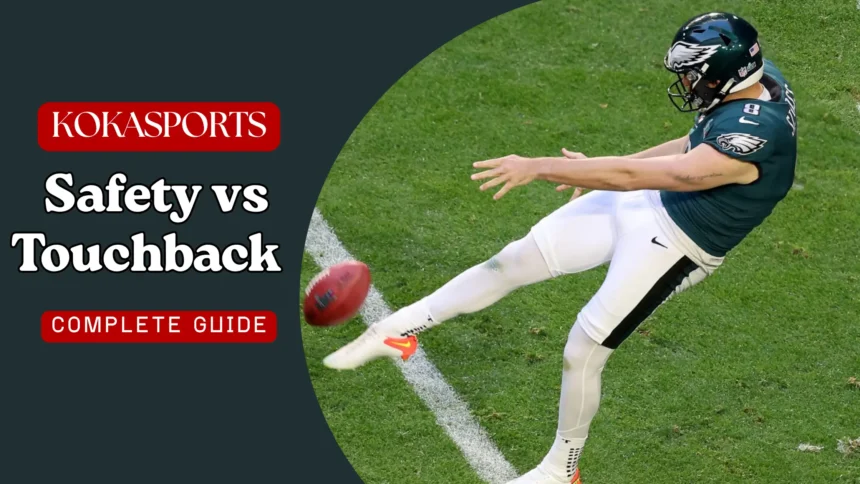
When watching american football, few plays confuse fans more than when the ball ends up in the end zone. Both safeties and touchbacks happen in this area, but they create completely different results. One awards 2 points and changes possession dramatically, while the other simply resets the game with no scoring. The safety vs touchback distinction is crucial for any football fan. Let’s break down these important concepts in simple terms.
What Is a Touchback in Football?
Definition of a Touchback
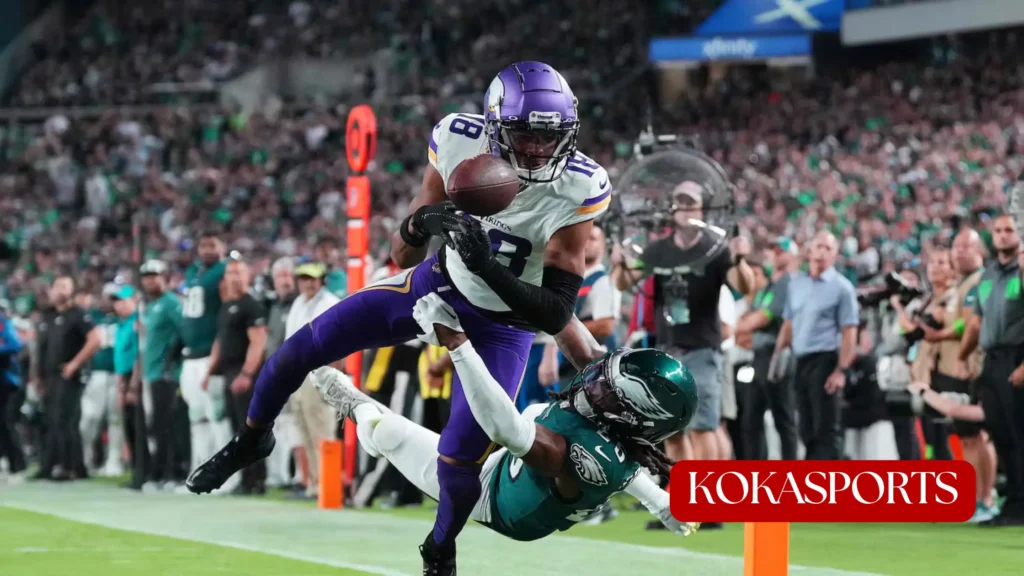
A touchback in football happens when the ball becomes dead on or behind the goal line that a team is defending, and the opposing team caused it to go there. When a touchback occurs, no points are scored. Instead, the receiving team gets possession at a specific yard line. Think of it as a reset button that helps the defense by giving them the ball without any penalty.
When Touchbacks Happen
Several common situations result in a touchback:
Kickoff Situations: During a kickoff, when the ball goes into the end zone and the receiving team doesn’t return it, a touchback results. The player can take a knee or let it bounce through the back of the endzone.
Punt Scenarios: When a punt sails into the end zone and isn’t returned, it’s ruled a touchback. The kicking team can’t advance the ball themselves.
Ball Rolling: If a kickoff or punt bounces and rolls into the end zone without anyone touching it and then goes out of bounds, officials call it a touchback.
Fair Catch: In the NFL, signaling a fair catch on kickoffs between the goal line and 25-yard line results in the ball being placed at the 25.
NFL and College Football Rules
In the NFL, kickoff touchbacks now start at the 35-yard line, a change made in 2025. This rule change came about to reduce dangerous collisions and promote player safety. For punts that result in a touchback, teams get the ball at their own 20-yard line.
College football follows similar rules, with most touchbacks placing the ball at the 25-yard line. High school football typically follows NCAA guidelines.
Read More: What Is a Safety in Football? NFL Safety Position, Tackles & Rules
Touchback After a Fumble
Fumble situations create confusing touchback scenarios. When an offensive ball carrier fumbled the ball forward into the opponent’s end zone, and it goes out of bounds without being recovered, a touchback happens. The defensive team gets possession at their 20 or 25-yard line.
For example, if a ball carrier reaches for the goal line but loses control and the ball rolls out of the end zone, it’s a touchback. The offense loses both possession and field position.
What Is a Safety in Football?
Definition of a Safety
A safety in football occurs when the offensive team becomes dead with possession of the ball behind the goal line they are defending. Unlike a touchback, a safety awards the defensive team 2 points and forces the team that gave up the safety to kick the ball back. This is one of the rarest but most impactful plays in the National Football League.
How a Safety Happens
Tackling in Own End Zone: The most common safety occurs when a defensive player tackles an offensive ball carrier in their own end zone. If a quarterback is sacked behind the goal line, the defense earns 2 points.
Penalties: When the offensive team commits holding or blocking penalties in their own team’s end zone, officials can call a safety.
Fumble Resulting in a Safety: If an offensive player fumbles in their own end zone and the ball goes out of the end zone, or if they recover it there but can’t escape, it’s a safety.
Going Out of Bounds: When an offensive player with the ball steps outside the end zone boundaries in their own endzone, officials call a safety.
Why a Safety Is Worth 2 Points
A safety awards 2 points because it shows complete defensive dominance. Beyond the points, the team that gave up the safety must then perform a free kick from their own 20, giving opponents excellent field position.
Free Kick After a Safety
After conceding a safety, the team must perform a free kick from the 20-yard line. The defensive team that earned the safety becomes the receiving team. This double benefit – scoring points and getting the ball back – makes safeties game-changing plays.
Safety vs Touchback – Key Differences
Difference Between a Safety and a Touchback
| Aspect | Touchback | Safety |
|---|---|---|
| Points Scored | 0 | 2 |
| Possession After | Defending team | Team that scored |
| Ball Placement | 20 or 25-yard line | Free kick from 20 |
| Who Benefits | Team defending end zone | Defensive team |
Scoring: The biggest difference between a safety and a touchback is scoring. A safety awards 2 points, while a touchback produces no points.
Possession: After a touchback, the team defending gets the ball. After a safety, the team that scored takes possession of the ball following a free kick.
Field Position: Touchbacks place the ball at the 20 or 25-yard line. After a safety, the team that gave up points must kick from their 20, often giving opponents better field position.
Touchback vs Safety – How Officials Decide
Officials examine several factors when a play in football ends in the end zone:
- Which team had possession? If the defense had control, it’s likely a touchback. If the offense had control, it’s likely a safety.
- Who provided momentum? If the offensive team caused the ball to enter the end zone, it’s a safety. If the opposing team caused it, it’s a touchback.
- Was it a kick or regular play? Kicks almost always result in a touchback when they enter the end zone, while regular plays can produce either outcome.
Why Fans Confuse Them
Both plays end with the ball dead in the end zone, creating visual similarity. New viewers see action end in the same area and assume the same outcome. The difference between a touchback and a safety lies in who had possession and which direction the play was moving.
Common Game Scenarios
Kickoff and Punt Plays
During a kickoff, the kicker aims for distance. When the ball lands in the opponent’s end zone, the receiving team can attempt a return or accept the touchback. Most modern NFL returners kneel when catching kicks deep because the guaranteed 25-yard start beats average returns. The touchback happens when the player kneels or when the ball goes out of the back untouched.
A punt that enters the end zone creates similar outcomes. According to NFL Football Operations, elite punters aim for the corner near the goal line, hoping the ball stops inside the 10 rather than rolling through for a touchback.
Fumble Situations
Fumble Out of End Zone → Touchback: When an offensive player fumbles forward into the opponent’s end zone and the ball goes out of bounds there, the defense gets a touchback. This rule frustrates offenses because reaching for a touchdown and losing control results in losing possession entirely. The spot of the fumble and momentum matter here.
Fumble in Own End Zone → Safety: When an offensive player fumbles in their own team’s end zone and the ball out of the end zone goes out of bounds, it’s a safety. If they recover it in the end zone but can’t escape, it’s also a safety.
End Zone Positioning
Officials watch precisely where the ball is when it becomes dead in the end. A ball on the goal line is still in the field of play. But once the ball breaks into the end zone, different rules apply.
A special “momentum” exception exists where if a defender makes an interception outside the end zone but momentum carries them in, and they’re immediately tackled, it’s not a safety – the ball in their own end zone gets moved out.
Strategic Impact
Why Coaches Take Intentional Safeties
When backed up against their own goal line on 4th down, teams occasionally accept intentional safeties. Giving up 2 points hurts, but if a punt from the end zone might get blocked for a touchdown, the safety becomes the lesser evil.
Touchback Strategy
Modern kickers prioritize consistency. Booming the ball through the back of the endzone for a guaranteed touchback prevents explosive returns.
Famous Examples
NFL Safety Plays
Super Bowl XLVIII started with a safety just 12 seconds into the game. Denver’s center snapped the ball over Peyton Manning’s head, and running back Knowshon Moreno recovered it in his own end zone, where he was downed for a safety. It was the fastest score in Super Bowl history and gave Seattle early momentum.
Controversial Calls
Cleveland felt this in the January 2021 playoffs, when wide receiver Rashard Higgins fumbled while reaching for the pylon against Kansas City. The ball went out of the back of the end zone, Kansas City got a touchback, and the Browns lost the game 22-17.
Canadian Football Differences
Canadian football operates differently. The CFL’s 20-yard end zone is deeper than the NFL‘s 10-yard zone. In Canada, when the ball becomes dead in the end zone off a kick, the kicking team scores one point (called a “single”) rather than creating a touchback. This makes Canadian strategy quite different.
Rule Changes Over Time
NFL Changes
The NFL moved kickoff touchbacks from the 20 to the 25-yard line in 2016, then to the 30 in 2024 and the 35 in 2025. This rule change incentivized returners to accept touchbacks rather than attempting dangerous returns. The data showed fewer injuries when returners knelt in the end zone.
According to Football Zebras, who track NFL rules, the nfl rule changes focus on player safety. The NFL and NCAA both prioritize reducing catastrophic injuries while maintaining competitive balance.
Conclusion
Remember these core distinctions:
- Touchbacks score no points; safeties award 2 points
- Touchbacks give possession to the defending team; safeties give possession to the scoring team
- Touchbacks place the ball at the 20 or 25; safeties lead to free kicks from the 20
- The difference between a safety vs a touchback depends on which team had possession
Whether you’re watching casually or studying seriously, recognizing when the ball in the end zone creates a touchback versus a safety enhances your appreciation of the game. The next time you see a play where the ball goes into the end zone and you’re unsure what happened, think about possession and direction.
The football rule system evolved over decades to address specific situations fairly while promoting player safety. Both touchbacks and safeties serve important purposes in maintaining game balance. As the football league continues evolving rules, particularly around kickoffs and returns, these fundamental concepts remain central to how football operates. Next time you watch a game and see the ball enter the end zone, you’ll know exactly what call to expect and why it matters for both teams on the field goal line.
FAQs
What is the difference between safety and touchback?
A safety scores 2 points for the defense, while a touchback scores nothing and gives the ball to the defending team.
Do you get two points for a safety?
Yes.
What is safety in football?
When the offense is tackled or penalized in their own end zone, giving the defense 2 points.
What is a football touchback?
When the ball dies in the end zone on a kick, giving possession at the 20 or 25-yard line with no points scored.