

For a real estate agent, learning how to attract seller leads with SEO is less about chasing clicks and more about becoming the useful local answer before a homeowner decides to move. Someone considering a sale may search for a home valuation, compare agents, or look for advice on preparing a property. A clear, locally focused website can meet those needs and make it easy to take the next step.
SEO rarely delivers a reliable pipeline overnight. It works more like a season-long training plan: consistent effort, close attention to performance and adjustments when the results call for them. These steps help turn that work into a practical seller-lead strategy.
Start with the questions sellers actually ask
Begin by listing the decisions homeowners face before and during a sale. They might want to know what their home could sell for, how long a sale may take, which repairs are worthwhile, or what happens after accepting an offer. Use those questions to guide your website pages and articles.
Research local searches as well as broad topics. A phrase such as “selling a house in [neighborhood]” is more specific than “sell my home,” and it can connect your advice to the area where you work. Search suggestions, conversations with clients, and questions received by phone can all reveal useful topics.
Keep each page focused on one purpose. A detailed guide to preparing a home for sale should not try to serve as a property valuation page, an agent biography and a market report all at once. Clear pages are easier for visitors to use and for search engines to understand.
Make local expertise visible
Seller prospects often choose an agent who understands their neighborhood, not simply one with a polished website. Create useful pages around the communities you serve, but make each one distinct. Include local housing trends, typical property types, nearby amenities and practical selling considerations. Avoid publishing dozens of nearly identical pages that swap only the neighborhood name.
Keep your business name, address and phone number consistent wherever they appear online. Complete your Google Business Profile, select accurate service areas and categories, and add recent photos. Ask past clients for honest reviews, then respond thoughtfully. Reviews can help people assess your service, while accurate local information makes it easier to find and contact you.
For a broader view of how local visibility, useful content, property pages and off-site authority work together, this guide to real estate SEO outlines the main pieces of a strategy.
Build property pages that answer questions
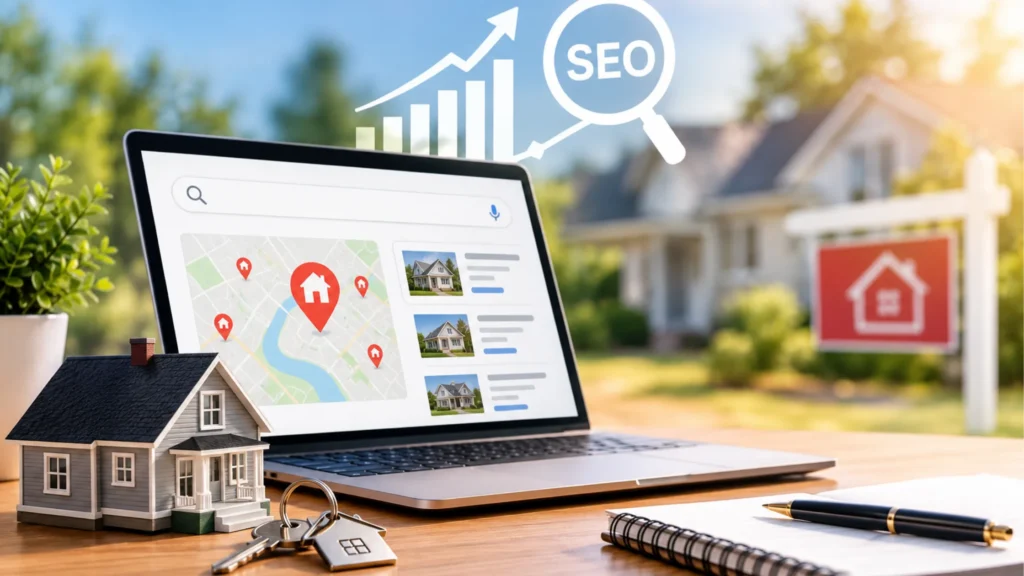
Listing pages can attract buyers, but they can also demonstrate how you present and market homes to potential sellers. Use original descriptions, accurate details and quality images. Explain the features that matter to local buyers rather than relying on generic phrases. When a property is no longer available, update the page with its status and, where appropriate, direct visitors to similar listings or relevant selling advice.
Make the next step obvious. A visitor who wants an estimate should be able to request one without hunting through menus. Explain what information you need and what happens after they submit the form. A short, reassuring process is more inviting than a vague “contact us” button.
Earn trust beyond your website
Useful local coverage can strengthen your reputation and bring qualified visitors to your site. Consider contributing practical advice to neighborhood publications, local business groups or housing-related websites. A market update, a guide to preparing a home for photography, or an explanation of common transaction steps can offer value to readers while introducing your expertise to a new audience.
Quality matters more than the number of links. Seek relevant publications with real readership, and make sure any contribution is accurate and genuinely helpful. Digital PR can also create opportunities: share original local market data, offer informed commentary, or explain a change that affects homeowners. These efforts take time, but they can build recognition as well as search visibility.
Use technology without losing your voice
AI tools can help organize research, draft outlines and speed up routine tasks, but they cannot replace firsthand knowledge of a neighborhood or a careful review of the facts. A useful article still needs specific local insight, a clear point of view and advice that reflects real client questions. Agents who want to explore combining storytelling skills with AI tools can see how creative professionals are pairing automation with human judgment. Osdire, for example, connects businesses with freelancers across creative and marketing services, which may help when a team needs specialist support for content or design.
Measure progress over 90 days
- Days 1–30: Check your website on mobile, update contact details and local profiles, and identify the main seller questions and neighborhoods you want to reach.
- Days 31–60: Improve key service and property pages. Publish a few focused guides based on real homeowner questions, with clear calls to action.
- Days 61–90: Seek relevant local coverage, review search and website data, and improve pages that attract visitors but do not generate enquiries.
Track more than rankings. Monitor organic visits to seller-focused pages, valuation requests, calls and completed consultations. Ask new contacts how they found you, too. That feedback helps distinguish visibility from results.
SEO is not a shortcut to a guaranteed listing. It is a way to make useful expertise easier to discover and easier to trust. When local information, practical content and a straightforward contact process work together, more homeowners can find the right reason to start a conversation.
Conclusion Seller Leads With SEO
Attracting seller leads with real estate SEO takes time, but it can become one of the most reliable ways to reach homeowners who are already searching for help. By targeting local keywords, creating useful content, optimizing your Google Business Profile, and building trust through your website, you can put your real estate business in front of the right people at the right time.
The goal is not simply to get more website visitors. It is to turn local search visibility into genuine conversations with homeowners who may be ready to sell. Stay consistent, track what works, and keep improving your local SEO strategy as your market changes.