


PAT stands for Point After Touchdown. It is the bonus play a team gets right after scoring a touchdown. The team can kick the ball through the uprights for 1 point, called an extra point, or run or pass it into the end zone for 2 points, called a two-point conversion. In the NFL, the extra point kick is snapped from the 15-yard line, making it about a 33-yard kick.
What is a PAT in Football Stand For?
PAT in football stands for Point After Touchdown. This is the official name for the play that happens immediately following a touchdown. You might hear announcers and fans use different terms like “extra point,” “conversion,” or simply “the kick after,” but they’re all referring to the same opportunity to score additional points.
The PAT in football meaning is straightforward: it’s your chance to add either one or two points to the six points you just earned from the touchdown. Every time a team scores a touchdown, they automatically get this chance to boost their total. Think of it as a bonus round that comes with every touchdown play.
Many people ask “what’s a pat in football?” or “whats pat in football?” when they first start watching games. The simple answer is that it’s a required attempt after each touchdown. The scoring team must choose between two options: kick the ball through the uprights for 1 point, or run or pass the ball into the end zone for two points.
Read Also: What Is a Crackback Block in Football? Complete Explanation
How the PAT in Football Works

After a team scores a touchdown, the officials place the ball at a specific spot on the field. In the NFL, the ball is placed at the 15-yard line for a kick attempt, but teams can choose the 2-yard line if they want to attempt a two-point conversion. The clock stops, and special teams units take the field.
For a standard kick attempt, three key players are essential: the kicker, who strikes the ball; the holder, who catches the snap and positions the ball on the ground; and the long snapper, who delivers the ball from the line of scrimmage to the holder. This entire sequence must happen in less than two seconds to avoid a blocked kick.
The defense lines up trying to block the kick or disrupt the timing. If the kick goes through the uprights and above the crossbar, the scoring team earns 1 point. If the kick misses or gets blocked, no points are awarded. The opposing team cannot return a missed PAT for points in the NFL, though the defense takes possession of the ball if the kick is blocked and they recover it.
When a team chooses to go for two instead of kicking, the entire offense comes onto the field. They line up at the 2-yard line and have one play to get the ball into the opponent’s end zone. This can be done through a running play or a passing play. If successful, they score 2 points. If they fail, they get nothing.
How Many Points Is a PAT in Football?
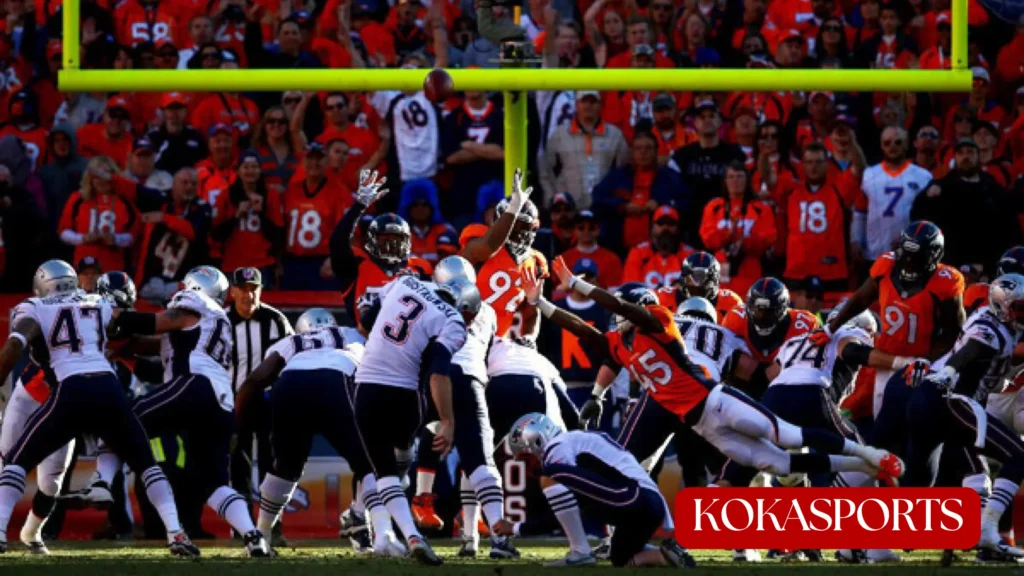
Here’s the scoring breakdown:
- Kicked extra point: 1 point
- Two-point conversion: 2 points
- Missed attempt: 0 points
The point value of each option creates interesting strategic decisions. A PAT in football is worth how many points? Well, it depends on which method you choose. The safer option (the kick) gives you one-point, while the riskier play (the 2-point conversion) doubles your reward but comes with a much lower success rate.
In college football, the rules are slightly different. The ball is placed at the 3-yard line for both kicks and two-point attempts, making the kick easier and the two-point conversion harder compared to NFL rules. High school and college football also allow the defense to return a failed conversion attempt all the way back for points, which adds another layer of excitement.
The PAT Rule in Football Explained
The PAT rule has evolved significantly over the years. Originally, the extra-point attempt was considered almost automatic because the ball was so close to the goal line. Kickers were making over 99% of their attempts, which made this play boring for fans to watch.
In 2015, the NFL adopted a major rule change. The league moved the kick attempt back from the 2-yard line to the 15-yard line. This means kickers now attempt a 33-yard field goal (15 yards from the line of scrimmage, plus 10 yards for the end zone, plus approximately 8 yards for the snap distance). This change made PAT attempts much more challenging and brought drama back to what was once a formality.
The NFL moved the kick back specifically to increase the difficulty and add more strategy to the game. Before the rule change, PATs were successful about 99.3% of the time. After the change, the success rate dropped to around 94%, which might not sound like much, but in close games, that 5% difference is massive.
College rules kept the ball at the 3-yard line for kicks, making them easier than in the National Football League. However, college and high school football rules also allow the defense to return a blocked kick or fumbled snap to their own end zone for two points, which never happens in the NFL.
PAT vs. Two-Point Conversion: Strategic Differences
The choice between kicking for one point or attempting a two-point conversion creates fascinating strategic moments. Analytics experts have studied conversion attempts extensively, and the data shows some clear patterns:
| Option | Success Rate | Expected Points | When to Use |
|---|---|---|---|
| Kick (extra point) | ~94% | 0.94 points | Most situations |
| Two-point conversion | ~48% | 0.96 points | Specific game situations |
| Two-point attempt (college) | ~43% | 0.86 points | Less frequent |
Looking at these numbers, you might think teams should always attempt a two-point conversion since the expected point value is actually slightly higher. However, most coaches still kick because they prefer the certainty of 1 point over the volatility of going for 2 points.
Teams typically go for two in these situations:
- Late in the game when math dictates it: If you’re down by 8 points and score a touchdown, converting the two-point conversion ties the game
- When building a specific lead: Sometimes a coach wants to be up by exactly 3 or 7 points based on what scoring options remain
- Weather conditions: Strong winds or rain can make field goal attempts unreliable
- Momentum situations: After a big touchdown play, the offense might have confidence to continue attacking
The Green Bay Packers and other NFL teams have increasingly used analytics to guide these decisions. The math suggests that attempting a two-point conversion about 10-15% of the time is optimal over a full NFL season.
What Happens on a Missed PAT in Football?

A missed PAT can occur in several ways: the kicker misses wide or hits the upright, the kick gets blocked by the defense, or there’s a bad snap from the long snapper that disrupts the timing. When any of these happen, the scoring team simply doesn’t get the extra point. The game continues with a kickoff to the opposing team.
What many fans don’t know is that the defense can actually score on a failed PAT attempt, though it’s extremely rare. If the defense blocks the kick and returns it all the way to the other end zone, they score 2 points in college football (though this doesn’t apply in NFL games under current rules).
There’s also something called a one-point safety, which is the rarest play in football. This would occur if the scoring team somehow gets tackled in their own end zone during a PAT attempt. The defense would score 1 point. This has never happened in an NFL game but has occurred a few times in college football.
A missed extra point can dramatically change game strategy for the rest of the game. If a team misses early, they might find themselves in a situation late in the game where they need to score a field goal instead of just needing a touchdown. In close games, every point matters.
Can the Defense Score on a PAT?
Yes, in the NFL and college football. If the defense blocks the kick, intercepts a pass or recovers a fumble during the try, it can return the ball all the way to the other end zone for 2 points. The NFL added this rule in 2015, and college football has used it since 1988. In most high school games, the try ends as soon as the defense gets the ball, so the defense cannot score.
The Role of Special Teams During a PAT
Special teams units are specialists who focus on kicking plays. During a PAT attempt, eleven players from each team take the field. The kicking team’s formation includes:
- The kicker, who must strike the ball cleanly and with proper trajectory
- The holder, usually a backup quarterback or punter, who must catch the snap and position it perfectly
- The long snapper, who delivers a precise snap from behind the line of scrimmage
- Nine blockers who protect against the rush and try to prevent a blocked kick
The defense also has a specific strategy. They place their tallest, most athletic players on the line to try and get their hands up to block the kick. Some teams put a player deep in the middle of the field to catch any short kicks, though this is rare on PAT attempts since the ball usually goes much higher than on a field goal attempt.
Consistency is everything for PAT units. These players practice hundreds of kicks together to develop perfect timing. Even a half-second delay can mean the difference between success and failure. This is why teams invest significant practice time on PATs despite them being “only” worth one point.
PAT Distance and Mechanics
How long is a pat in football? In the NFL, the actual distance of a PAT kick is 33 yards. This calculation includes the 15 yards from the spot where the ball is placed to the goal line, plus the 10 yards of the end zone, plus approximately 8 yards behind the line of scrimmage where the holder sets up the ball. So while the ball starts at the 15-yard line, the kicker is actually attempting what amounts to a 33-yard successful field goal.
In college football, kickers attempt from the 3-yard line, making it a much shorter kick of about 20 yards total. This is why college kickers have a higher success rate on extra point attempts compared to their NFL counterparts.
The mechanics of kicking a PAT are identical to any other place kick. The kicker approaches from an angle (usually about 45 degrees), plants their non-kicking foot beside the ball, and swings their kicking leg through. The goal is to kick the ball high enough that defenders can’t block it, while also keeping it accurate enough to split the uprights.
Where Is the Ball Spotted for a PAT?
| Level | Extra point kick (1 point) | Two-point try (2 points) |
|---|---|---|
| NFL | 15-yard line (about a 33-yard kick) | 2-yard line |
| College | 3-yard line (about a 20-yard kick) | 3-yard line |
| High school | 3-yard line (about a 20-yard kick) | 3-yard line |
The NFL moved its extra point kick back from the 2-yard line to the 15-yard line in 2015 to make the kick less automatic. College and high school still snap every try from the 3-yard line.
Strategic Decisions: When Coaches Choose Risk Over Safety
Coaches face pressure every time they decide whether to kick or attempt a two-point conversion. The analytics say one thing, but game situations often require different thinking. A team down by 14 points might score a touchdown and face this decision: kick the extra point to be down by 7, or go for two to potentially be down by only 6?
Some famous examples show how these decisions can change outcomes:
Case Study: Two-Point Gambles
In a recent nfl game, a team trailing by 8 points late in the game scored a touchdown. Instead of kicking to be down by 2 and hoping for another opportunity to score, the coach decided to attempt a two-point conversion to tie immediately. The play failed, and they lost. Critics argued he should have taken the guaranteed point, while supporters noted his team had momentum and a hot offense.
The successful two-point conversion rate of roughly 48% means these plays fail more often than they succeed. Yet in specific situations, the math absolutely supports going for 2. Modern coaches increasingly rely on analytics teams who calculate win probability in real-time, telling them exactly when the numbers favor being aggressive.
Comparing Scoring Methods in Football
Let’s look at how different scoring plays compare:
| Play Type | Points | Ball Placement | Success Rate | Frequency |
|---|---|---|---|---|
| Touchdown | Six points | Goal line | Varies | 8-12 per game |
| PAT (Kick) | Worth one point | 15-yard line (NFL) | ~94% | After every touchdown |
| 2-Point Conversion | 2 points | 2-yard line | ~48% | 2-3 per game |
| Field Goal | Three points | Anywhere | ~85% | 4-6 per game |
Each scoring method serves a different strategic purpose. Touchdowns are obviously the goal, but field goals provide a safety net when you can’t reach the end zone. PATs are the most reliable source of points after you’ve already done the hard work of scoring. Two field goals equal one touchdown, but a touchdown plus extra point gives you 7 points total, which is a more valuable number in football scoring.
A touchdown itself is worth 6 points. See how much a touchdown is worth and how teams turn it into 7 or 8.
Historical Context and Rule Evolution
The football rules around PATs have changed dramatically across different leagues and eras. The American Football League, which later merged with the NFL, originally had different PAT rules. The World Football League experimented with even more radical ideas, including mandatory two-point conversion attempts.
The 2015 rule change in the NFL represented the biggest shift in modern football history for this play. The NFL moved the kick back because PATs had become too automatic. Commissioner Roger Goodell and the competition committee wanted to inject more drama into games without fundamentally changing football itself.
Before this change, kickers were so reliable from close range that the PAT was essentially just a formality. Fans would often use this time to grab snacks or check their phones. Now, especially in tense moments, a missed pat can swing momentum and change the entire complexion of a game.
Canadian football has its own unique rules, placing conversion attempts at the 5-yard line and allowing teams to choose between a kick for 1 point or a run/pass into the end zone for two points, similar to American football but with different field dimensions.
The Mental Game for Kickers
Kickers face enormous pressure during PAT attempts. While these kicks might seem routine, missing one can haunt a kicker for years. The job requires incredible mental toughness because you’re expected to make every single kick, and when you miss, everyone remembers.
Since the NFL adopted the longer distance for PAT attempts, kickers have missed more kicks, but coaches have also become more forgiving. Missing a 33-yard attempt is more understandable than missing from the old 20-yard distance. Still, kickers know that in a close game, a missed extra point could be the difference between winning and losing.
High school football players aspiring to play at higher levels need to master PATs early. College rules make the kick easier, but the pressure remains intense. Scouts evaluate kickers heavily on their consistency on these attempts because they’re the most common kicks in any game.
Why Every Point Matters
In the National Football League, where games are often decided by a field goal or less, PATs take on enormous importance. A team might score four touchdowns in a game. If they make all four PAT attempts, that’s 28 points. If they miss even one, they have 27, which could be the difference in a tight contest.
The possession of the ball following a touchdown gives teams this automatic opportunity to score, but nothing in football is truly automatic anymore. The 15-yard line distance has proven challenging enough that roughly 1 in every 17 attempts fails. Over the course of a full NFL season, that adds up to dozens of missed points that can affect playoff positioning.
Looking at the bigger picture, PATs allow the defense to play differently. Since scoring a touchdown doesn’t automatically guarantee 7 points anymore, defenses have slightly more margin for error. The rule change subtly shifted the balance of power in the game.
Conclusion: The Continuing Evolution of the PAT
The PAT has evolved from an automatic play into a genuine strategic decision that can swing games. Since the rule change, what was once a formality now creates dramatic moments that keep fans engaged.
Every touchdown brings a choice: take the safe 1 point or risk it for 2 points? Coaches weigh the score, game clock, weather, and analytics to make these crucial calls. As teams embrace data-driven decisions, we’re seeing more aggressive approaches to scoring following a touchdown.
From high school football to the NFL, the PAT remains essential to the sport. Though it seems like just one or two points, those points can determine winners and losers. Next time you watch a team line up for a PAT attempt, remember all the strategy and pressure behind that single kick.
FAQs
Is a PAT the same as an extra point?
Mostly, yes. People often use “PAT” to mean the extra point kick, which is worth 1 point. Technically, the PAT (or “try”) is the whole play after a touchdown, and the team can choose either a 1-point kick or a 2-point conversion.
Can a PAT be worth 2 points?
Yes. If the team runs or passes the ball into the end zone instead of kicking, the try is a two-point conversion and is worth 2 points.
What does PAT mean in football?
PAT stands for Point After Touchdown, the scoring attempt that follows each touchdown.
What does PAT made mean in football?
A PAT made means the kicker successfully kicked the extra point through the uprights for 1 point.
Where is a PAT from?
In the NFL, a PAT kick is attempted from the 15-yard line, while college football uses the 3-yard line.
How far is a PAT in football?
An NFL PAT is a 33-yard kick (15-yard line plus 10-yard end zone plus 8-yard snap distance).
What’s the difference between an extra point and a two-point conversion?
An extra point is a kick worth 1 point, while a two-point conversion is a run or pass play worth 2 points.
Who kicks the PAT in football?
The team’s placekicker kicks the PAT, with help from a holder and long snapper on special teams.