
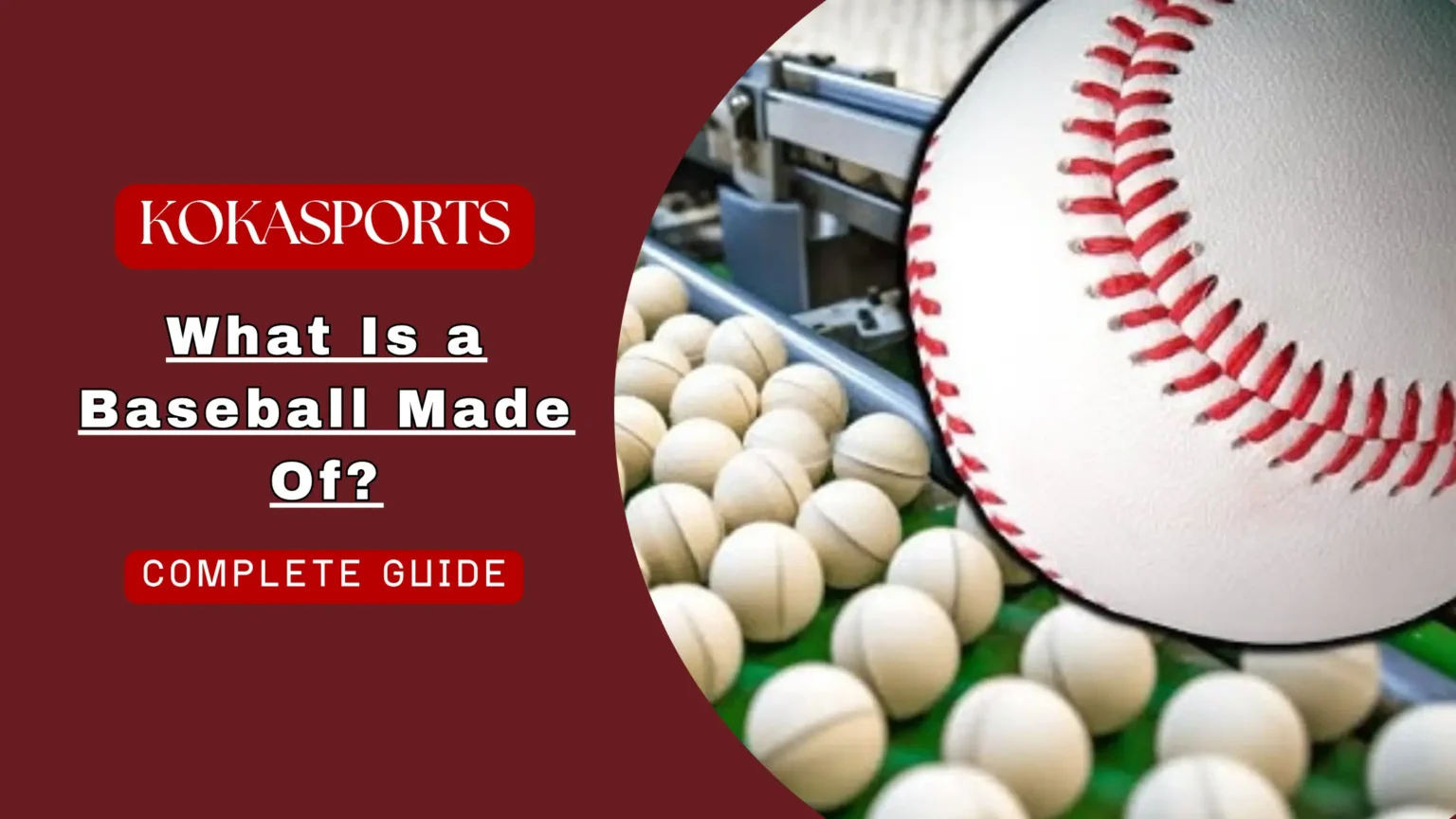
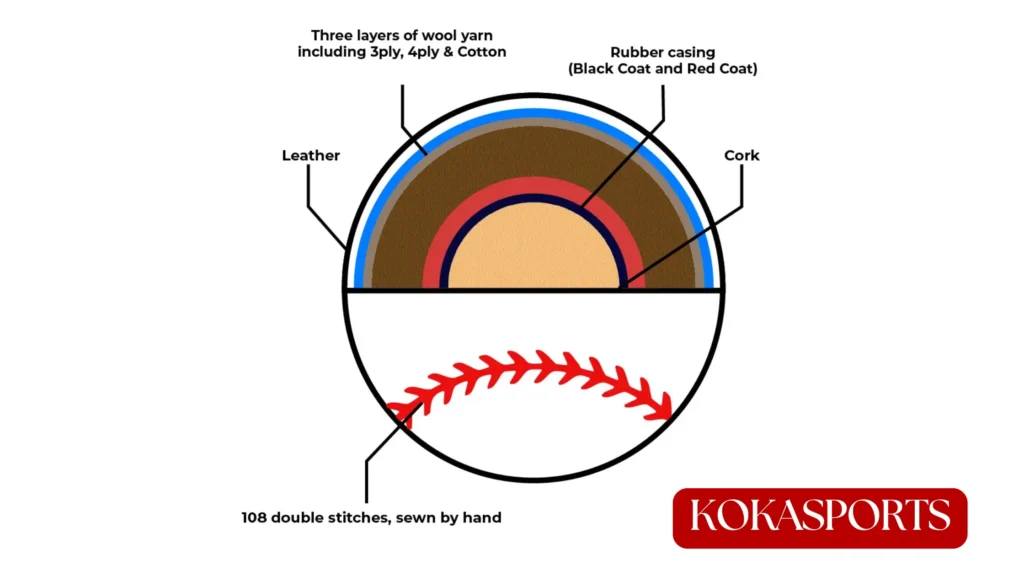
A baseball looks simple from the outside. White leather, red stitching, fits in one hand. But what is a baseball made of on the inside is a different story. It starts with a cork core wrapped in rubber, wound tightly in wool yarn, and finished with a cowhide leather cover.
Each layer has a job and together they decide how far the ball travels, how a pitcher controls it, and how long it survives during a game. Here is exactly what is inside.
What is a baseball made of : Complete Layer-by-Layer Breakdown
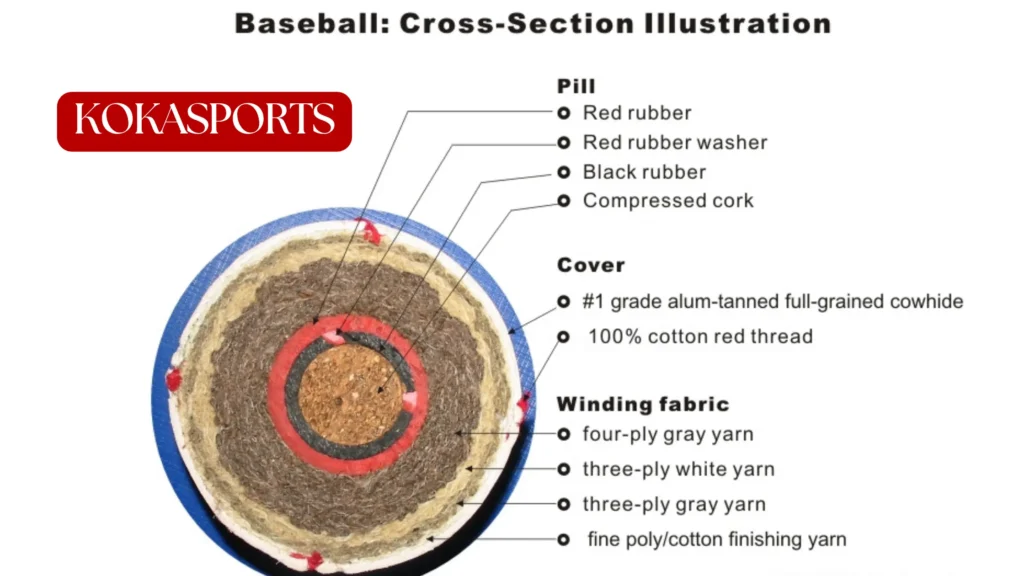
how baseball is made starts from the inside out. There are three main sections: the core, the yarn windings, and the leather outer cover. Each layer has a specific job, and changing any one of them changes how the ball performs on the field.
Here is what each part does and why it matters.
The Cork Core at the Center of Every Baseball
At the very center of every baseball sits a small, dense sphere called the “pill.” The core made of cork measures about 13/16 of an inch in diameter. Cork was not always the standard early versions used solid rubber at the center. That changed around 1910 when manufacturers discovered that a cork-centered ball produced a more consistent bounce and better durability.
The cork center is what gives the ball its lightweight but firm foundation. Without it, the ball would either be too soft to travel at speed or too heavy to control.
The first baseball to use a cushion cork center appeared in the early 20th century and quickly became the standard across professional and amateur play. Today, every official major league baseball still starts with this same cork-centered design.
The Two Layers of Rubber That Wrap the Cork
Once the cork pill is formed, it gets covered in two layers of rubber. First comes a layer of black rubber a semi-hardened shell that holds the cork firmly in place. On top of that sits a layer of red rubber, which acts as a cushion between the hard black shell and the yarn windings that come next.
These two layers of rubber are what give the ball its spring. When a ball is hit, the rubber core compresses on impact and quickly returns to its original shape. That snap is part of what sends the ball flying. The rubber or cork combination has remained largely unchanged for over a century because it works so well.
How Yarn Is Wrapped Tightly Around the Baseball Core
After the rubber layers are in place, the pill gets wrapped in yarn and covered in multiple tight windings. This is where the ball builds most of its size, weight, and shape.
A baseball contains four distinct winding layers. The first is four-ply gray wool yarn. The second is three-ply white wool yarn. The third goes back to gray wool yarn. The fourth and final layer is a white poly-cotton blend. Together, these windings can contain hundreds of yards of material, all wound around the core using machines designed to keep the tension precise and even.
Wool yarn is the material of choice for a simple reason: it has natural memory. When compressed under pressure, wool springs back to its original shape. That is exactly what you need in a ball that is going to be hit repeatedly during a baseball game. The poly-cotton outer layer adds extra strength and reduces the risk of tears when the leather cover is applied.
The tighter the ball is wrapped in yarn and covered, the harder and livelier the ball becomes. This is why a major league baseball travels further than a Little League ball the winding tension is significantly higher in professional play.
The Leather Cover of Major League Baseballs
The outer cover of a baseball is made from cowhide specifically, full-grain, alum-tanned leather sourced from Holstein dairy cattle. Holsteins are preferred because their hides are thinner, smoother, and more consistent than other breeds, which makes them ideal for the precise shaping the cover requires.
Before 1974, the cover was made from horsehide. A shortage of supply forced a switch to cowhide, and the change stuck. Most players and officials found that the cowhide cover performed just as well and was far easier to source consistently.
The leather cover is cut into two figure-eight-shaped pieces. These are placed over the yarn windings and stitched together by hand using waxed red thread. Before the leather is applied, the wound ball gets a thin coat of rubber cement to help the cowhide bond to the yarn surface and stay in place during play.
Leather baseballs are the standard at the professional level. Youth leagues and recreational play sometimes allow synthetic covers, which are cheaper and more durable under rough conditions.
The Stitch That Holds Every Baseball Together
The stitch is one of the most recognizable things about a baseball those raised red seams that wrap around the white leather in a figure-eight pattern.
Each ball has exactly 108 stitches, sewn by hand using about 88 inches of waxed red cotton thread. The 108 stitches are not just decorative. They hold the two leather panels together tightly and create the seam that pitchers use to control spin, movement, and grip.
Attempts to automate the stitching process have never fully worked. Machines struggle to replicate the variable tension that a human hand naturally applies as it moves around the curve of the ball. If the tension is uneven, the seams sit unevenly, which affects how the ball behaves in flight. So every single baseball including every ball used in major league baseball games is still stitched together by hand.
Seam height also matters. A raised seam creates more air resistance, which gives a pitcher more grip but causes the ball to slow down and drop faster. MLB uses flat seams on league baseballs because they allow for more consistent flight and are preferred in professional play. College teams shifted to flat-seamed balls after research showed they balanced pitching and offense more evenly.
Official MLB Baseball: Size, Weight, and Circumference Requirements
Not just any ball can be used on an MLB field. The official baseball must meet strict weight and size requirements before it is approved for play.
Here is what every official MLB ball must meet:
- Weight: Between 5 and 5.25 ounces
- Circumference: Between 9 and 9.25 inches
- Cover: White cowhide leather
- Stitching: 108 hand-sewn red stitches
If a ball falls outside these ranges, it cannot be used in an official game. These rules apply across both the American League and the National League. Every ball is checked before it reaches the dugout.
Who Makes the Official MLB Baseball : Rawlings
The official baseball used in MLB has been made by Rawlings since 1976, when MLB ended its relationship with Spalding. Before that switch, Spalding had supplied balls to the league for nearly a century.
Today, every ball used in major league baseball is made by Rawlings at a factory in Costa Rica. The raw baseball materials leather, cork, rubber, and yarn are imported from the United States, assembled into finished balls, and shipped back for inspection and use. Rawlings produces around 2.4 million baseballs every year to meet demand from the league, practice sessions, and game-used baseballs that get taken out of play.
The official MLB stamp on each ball confirms it has passed inspection. Only balls that meet every measurement and quality standard make it to the field.
For a closer look at how Rawlings and other equipment manufacturers have shaped the game, MLB’s official history page covers the full story.
Modern Baseball vs Earlier Versions: How the Build Has Changed
The modern baseball looks almost identical to balls used 100 years ago but the materials and construction have gone through several notable shifts.
During World War II, natural rubber was restricted for military use. In 1943, the dead ball era briefly returned when manufacturers replaced rubber with balata, a natural latex substitute from tropical trees. The balata ball was far less bouncy, hitting declined sharply, and offense across the league dropped noticeably. Rubber returned in 1944 with the introduction of synthetic alternatives.
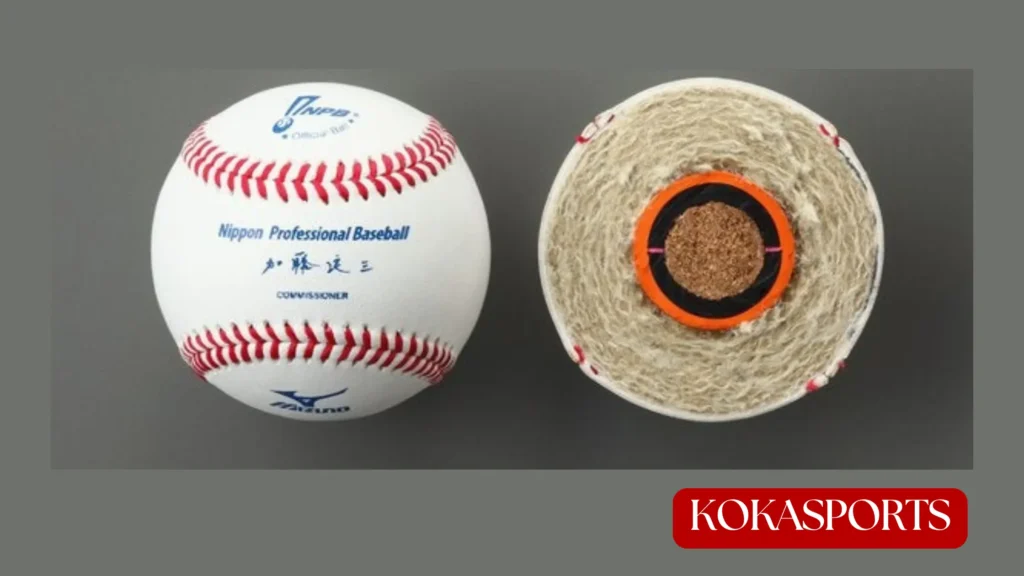
In recent years, some manufacturers have added an elastomer barrier layer between the yarn and the leather cover. This layer makes the ball less sensitive to humidity, which helps produce more consistent performance across different weather conditions and stadiums. Nippon Professional Baseball and college leagues have adopted similar refinements, though MLB has been slower to make changes.
The cushion cork design introduced over a century ago remains the foundation of every ball used today. While materials used in the outer layers have been refined, the core formula of cork and rubber has proven durable enough to outlast nearly every other baseball innovation.
You can also explore how baseball equipment standards are managed through the Rawlings official site, which explains their MLB manufacturing process in detail.
Why Baseball Materials Affect the Home Run Count
Here is something most casual fans do not realize: the way a baseball is built directly affects how many home runs get hit in a season.
A tighter winding means a harder, springier ball. A harder ball leaves the bat faster and travels further on a well-hit fly ball. Small changes in the core density, yarn tension, or seam height can quietly shift offensive statistics across an entire baseball season without a single rule change.
This is the heart of the “juiced ball” debate that has followed MLB for years. Players, coaches, and analysts have long suspected that subtle changes in how league baseballs are manufactured particularly tighter windings or lower-drag covers have contributed to spikes in home run rates. MLB has commissioned independent studies in response. The research has generally found that small inconsistencies in manufacturing, particularly in the pill and winding tension, do create measurable differences in how far a single baseball travels.
No deliberate tampering has ever been confirmed. But the debate makes clear just how much the materials inside a baseball shape what happens during a baseball league game.
How Baseball Is Made Differently Across Leagues
Not every baseball is built the same way. Construction varies depending on the level of play.
Major League and AAA: Full cowhide cover, flat seams, tightest winding, made by Rawlings to official MLB specs.
High school baseball: Cork core with wool windings and leather or high-quality synthetic cover. Slightly lighter density than professional baseballs. Raised seams for easier grip with developing pitchers.
Little League: Cork core, looser winding, often a synthetic or lower-grade leather cover. Raised seams. Less hard than a professional ball, which is intentional for player safety.
Practice and training: Can use synthetic materials, weighted variations, or machine-specific designs built for durability over performance.
The key difference across all these forms of baseball is winding tightness. A loosely wound ball is softer, travels shorter distances, and is safer for younger players. A tightly wound professional ball is harder, faster, and built for the demands of elite play.
Frequently Asked Questions About Baseball Materials
Is a baseball made with rubber or cork?
Both. The core uses a cork center surrounded by rubber or cork composite layers a black rubber inner shell and a red rubber outer layer before the yarn windings begin.
What leather is used in a major league baseball?
Full-grain cowhide, alum-tanned, sourced from Holstein dairy cattle. The cowhide cover is cut into two figure-eight pieces and hand-stitched.
How many stitches does an MLB baseball have?
Every ball has 108 stitches, sewn with 88 inches of waxed red thread.
Why does MLB still use hand stitching?
Machines cannot replicate the variable tension a human hand applies. Uneven stitching affects flight and grip, so hand-stitching remains the only reliable method.
Conclusion
A baseball is a lot more complex than it looks. What is a baseball made of comes down to four key layers a cork core, two layers of rubber, wool yarn windings, and a cowhide leather cover held together by 108 hand-sewn stitches. Every single layer has a purpose, and changing any one of them changes how the ball performs on the field.
Whether you are watching an MLB game, coaching Little League, or just curious about the sport, knowing what goes into every ball gives you a better understanding of the game of baseball itself.