

What position is EDGE in football? The EDGE position in football is a hybrid defensive role where a player lines up on the outside edge of the defensive formation. His primary responsibilities include rushing the quarterback, generating pressure off the edge, and containing outside runs. Depending on the defensive scheme, an EDGE player may be listed as a defensive end in a 4-3 defense or an outside linebacker in a 3-4 defense. The position title changes but the job does not. It is widely considered one of the most impactful and highest paid roles in modern professional football.
Now that definition reads clean. But if you are anything like my cousin, it probably raises more questions than it answers.
I was watching the NFL draft with him last year when the announcer said “this kid is the best EDGE prospect in the draft.” My cousin looked at me and said “what even is an EDGE?”
I started explaining and realized halfway through that I was doing a terrible job. I knew what an EDGE player looked like on the field but I could not break it down in a way that made sense to someone hearing the term for the first time. So I went down a rabbit hole, studied defensive schemes, rewatched film, and came out the other side with a full understanding of what the position really is.
This is everything I learned, explained the way I wish someone had explained it to me that night.
What Does EDGE Mean in Football?
The “edge” refers to the outer boundary of the offensive line. The defender whose job is to attack that area gets called the edge defender. He lives on the outside, pressures the quarterback from the perimeter, and makes sure running backs do not escape to the sideline.
The NFL did not always use this term. For decades you had defensive ends and linebackers and that was enough. But then players started showing up who did not fit into either box. A guy who rushes like a defensive end but drops into coverage like a linebacker is hard to categorize. So the scouting world created the EDGE label to group all of these hybrid pass rushers under one umbrella.
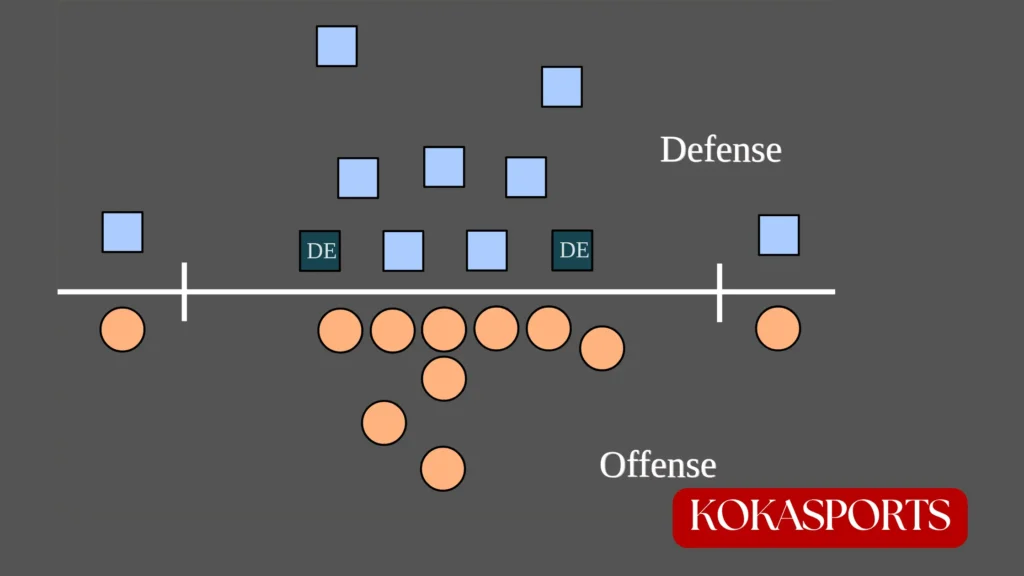
It is worth noting that EDGE is not an official roster position. You will not find it listed on any NFL depth chart. It is a role description that coaches, scouts, and analysts use because it describes the job better than the traditional labels do. Defensive end tells you where someone lines up in one specific scheme. EDGE tells you what their actual job is regardless of the scheme.
What Position Is EDGE in Football Exactly?
This is the part that confused me at first. The answer changes depending on the defensive scheme.
In a 4-3 defense the EDGE player is usually the defensive end. In a 3-4 defense the EDGE player is usually the outside linebacker. In hybrid defenses it can be either one. But the constant is always the same. The EDGE player is the guy whose primary job is to get after the quarterback from the outside.
EDGE players line up on the outside shoulder of the offensive tackle. Some put their hand in the dirt in a three point stance. Others stand up in a two point stance like a linebacker. Standing up gives more flexibility to read the play. Hand in the dirt gives a better launch for the pass rush. Both work depending on what the defense needs.
The main responsibilities come down to two things. First, rush the quarterback. Win one on one matchups against offensive tackles, use pass rush moves, and create pressure on every passing down. Second, set the edge against the run. Hold your ground and force the ball carrier back inside where help is waiting. You need to be fast enough for the first job and strong enough for the second. That combination is rare and that is why great EDGE players earn massive contracts.
Difference Between EDGE and Defensive End
My cousin thought these were the same thing. They are close but not quite.
A traditional defensive end in a 4-3 defense lines up with his hand on the ground at the end of the defensive line. He is usually bigger and heavier, built to stop the run first and rush the passer second.
The EDGE label is more flexible. A player labeled as an EDGE can play defensive end in a 4-3 and switch to outside linebacker if the team runs a 3-4. Some EDGE players also drop into coverage on certain plays. A traditional defensive end almost never does that.
The way I keep it straight is simple. A defensive end has a fixed alignment in one scheme. An EDGE player can move around. A defensive end is a run stopper first. An EDGE player is a pass rusher first. There is real overlap between the two but the flexibility is what separates them.
Difference Between EDGE and Outside Linebacker
Traditional outside linebackers have coverage duties. They drop into zones, cover tight ends and running backs, and react to the quarterback’s reads. Coverage is a core part of their job.
But in a 3-4 defense the outside linebacker becomes the primary pass rusher. That is a completely different job than what most people picture when they hear the word linebacker. These pass rushing outside linebackers are the ones who get the EDGE label. T.J. Watt and Micah Parsons are listed as linebackers on their rosters but everyone in football calls them EDGE players because that is what they actually do.
The best EDGE players can rush the passer on first down and drop into coverage on second down. That versatility is a nightmare for offensive coordinators to game plan against and it is exactly what makes them so valuable.
What Does an EDGE Player Do on the Field?
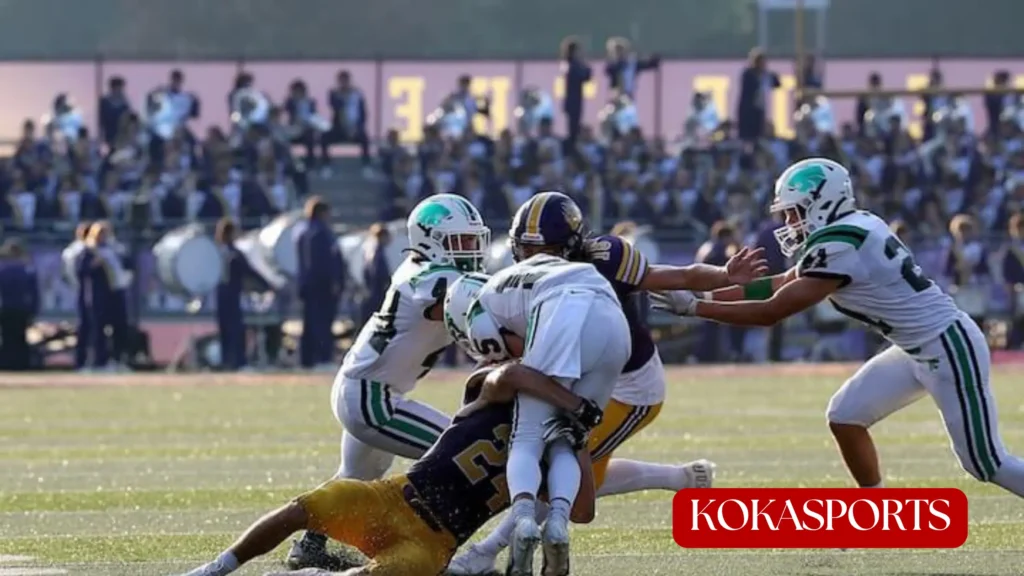
Pass rushing is the main event. A good EDGE player generates sacks, pressures, and hurries on a consistent basis. Even when he does not reach the quarterback, the pressure forces bad throws and rushed decisions. He does not have to get a sack every play to be effective. He just has to make the quarterback uncomfortable.
Setting the edge against the run does not show up on highlight reels but it matters just as much. When the offense runs outside, the EDGE player holds his position and forces the runner back inside. If he gets washed out of the play, the running back hits the corner and that is usually a big gain.
Some EDGE players also drop into zone coverage a few times per game. The purpose is to disguise the defense. If the EDGE player always rushes, the quarterback knows exactly what is coming. But if that same player occasionally drops into coverage, the quarterback has to hesitate. That hesitation is everything.
EDGE players are also responsible for a huge percentage of strip sacks in football. When they get to the quarterback they are not just bringing him down. They are trying to knock the ball loose. A single strip sack can flip the momentum of an entire game.
Skills and Types of EDGE Players
The most important physical trait is first step quickness. If you are slow off the snap the offensive tackle sets up and you are stuck fighting a 320 pound lineman. If you are fast off the snap you get to the corner before he is out of his stance. You can teach technique. You cannot teach speed.
Strength matters too because offensive tackles are massive and you have to shed their blocks every play. Football IQ separates the good from the great. The best EDGE players study film obsessively, recognize formations before the snap, and adjust their rush plan on the fly.
Every great EDGE player has a toolbox of pass rush moves. The swim move goes over the top of the blocker. The spin move cuts to the inside. The bull rush drives the blocker straight back. The rip move goes underneath. Most have one or two go to moves and a counter for when those get taken away.
In terms of player types, speed rushers win with quickness and fly around the corner. Power rushers win with strength and wear tackles down over four quarters. Hybrid EDGE defenders can rush, stop the run, and cover. They are the most valuable type and the hardest to find. These are the guys who go top five in the draft.
Best EDGE Players in NFL History
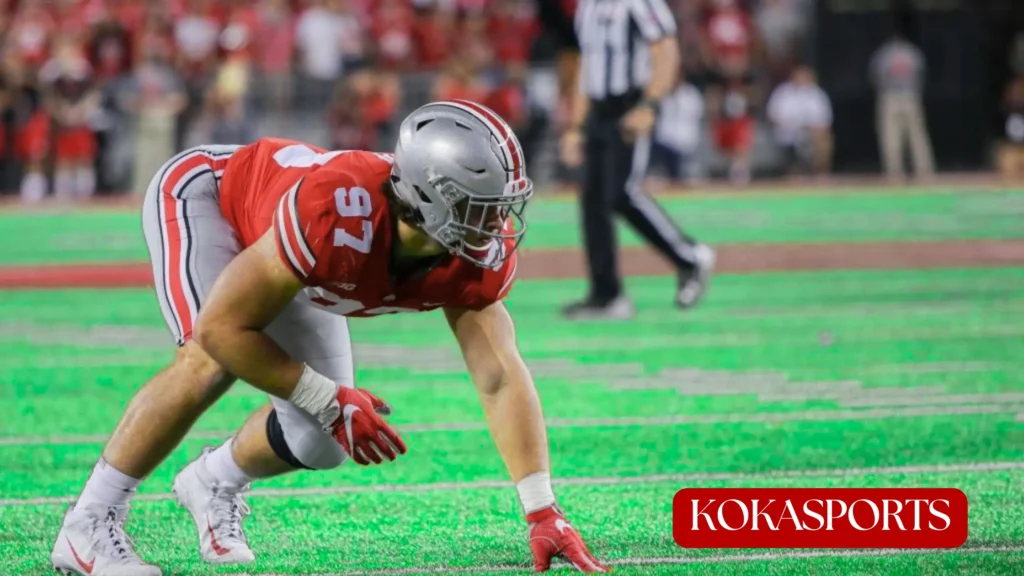
Lawrence Taylor changed the game completely. Before LT the outside linebacker was a coverage position. He turned it into a wrecking ball role and forced offensive coordinators to rethink pass protection entirely. I honestly believe he is the reason the EDGE position exists today.
Reggie White was the ultimate power rusher. He finished with 198 sacks and made you feel sorry for whoever had to block him. T.J. Watt tied the single season sack record with 22.5 while playing a role that asked him to do far more than just rush the passer. Myles Garrett might be the most physically gifted EDGE player ever. His combination of size, speed, and power should not exist in one person.
Micah Parsons represents where the position is headed. He played middle linebacker in college, moved to EDGE in the NFL, and dominated immediately. The fact that you cannot put a single position label on him is exactly why the EDGE term exists.
Why EDGE Players Are So Valuable Today
The NFL is a passing league now. Every team throws more than ever and the fastest way to stop a passing attack is to pressure the quarterback. You can have the best secondary in the league but if your pass rush cannot get home, receivers will eventually get open.
That is why teams spend top draft picks and massive contracts on EDGE players. A dominant EDGE rusher is a defensive cornerstone the same way a franchise quarterback is on offense. Look at any first round of the draft and count how many EDGE players get selected. It is usually three or four at minimum.
How Coaches Use EDGE Players in Different Schemes
In a 4-3 the EDGE player is the defensive end with his hand in the dirt. Straightforward alignment, focused on pass rush and edge containment. In a 3-4 he is the outside linebacker standing up with a wider range of responsibilities including occasional coverage.
Most modern defenses run hybrid schemes that shift from play to play. The EDGE player might be a defensive end on one snap, an outside linebacker on the next, and slide inside on a passing down. This versatility is why the best EDGE players are the hardest defenders to find in the sport.
Common Questions About the EDGE Position
Is EDGE a linebacker or defensive end?
It can be either depending on the scheme. The label describes the role, not the roster title.
What is the difference between EDGE and pass rusher?
All EDGE players are pass rushers but not all pass rushers are EDGE players. A defensive tackle who rushes from the inside is a pass rusher but not an EDGE player.
Can EDGE players cover receivers?
Some can. The best ones handle zone coverage but it is not their primary job.
Who is the best EDGE player in the NFL today?
Micah Parsons, Myles Garrett, and T.J. Watt are consistently in that conversation.
Conclusion
That draft night conversation with my cousin ended up teaching me more about football than I expected.
The EDGE position is not really a position at all. It is a role that describes what a player does rather than where he sits on a depth chart. He might be a defensive end. He might be an outside linebacker. He might be something in between. What matters is what he does on the field.
If you have been confused about what EDGE means every time draft season rolls around, I hope this cleared it up. The term is not going anywhere. As defenses keep evolving and players keep getting more versatile, the EDGE label is only going to become more common. Understanding it now puts you ahead of most fans who still think every pass rusher is just a defensive end.