
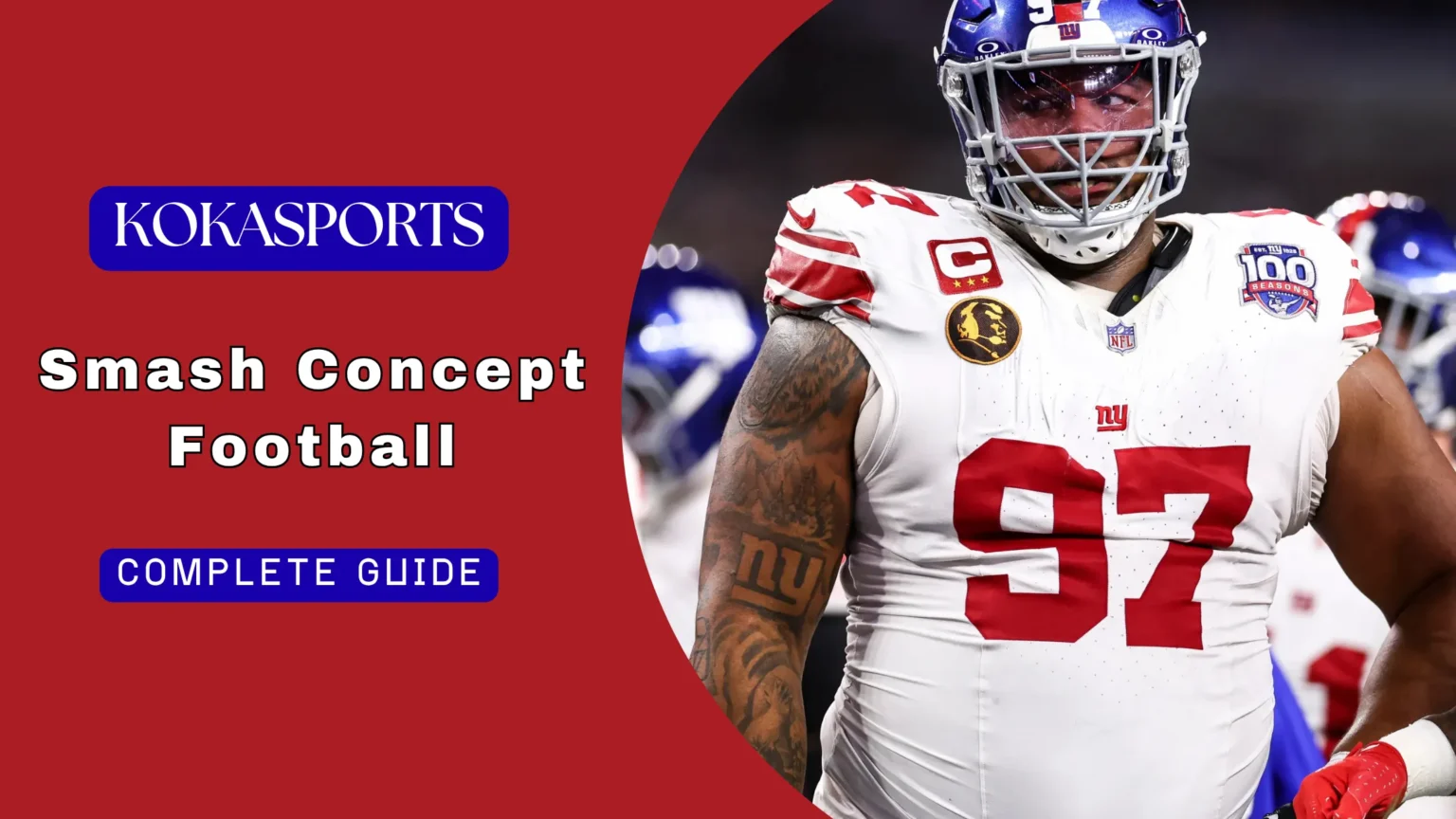
If you watch enough football, you will start to notice the same play working over and over again. A receiver runs a short route near the line of scrimmage. Another receiver takes off deep toward the sideline. The quarterback reads the cornerback and fires the ball. That is the smash concept football in action. The smash concept is a two-receiver route combination that pairs a short hitch with a deep corner route to create a high-low read on the cornerback making it one of the most reliable, simple, and deadly passing plays in football at every level of the game.
This guide breaks down everything you need to know about smash concept football. Whether you are a coach, a quarterback, or just a fan who wants to learn the game at a deeper level, this article gives you all the detail you need.
What Is the Smash Concept Football?
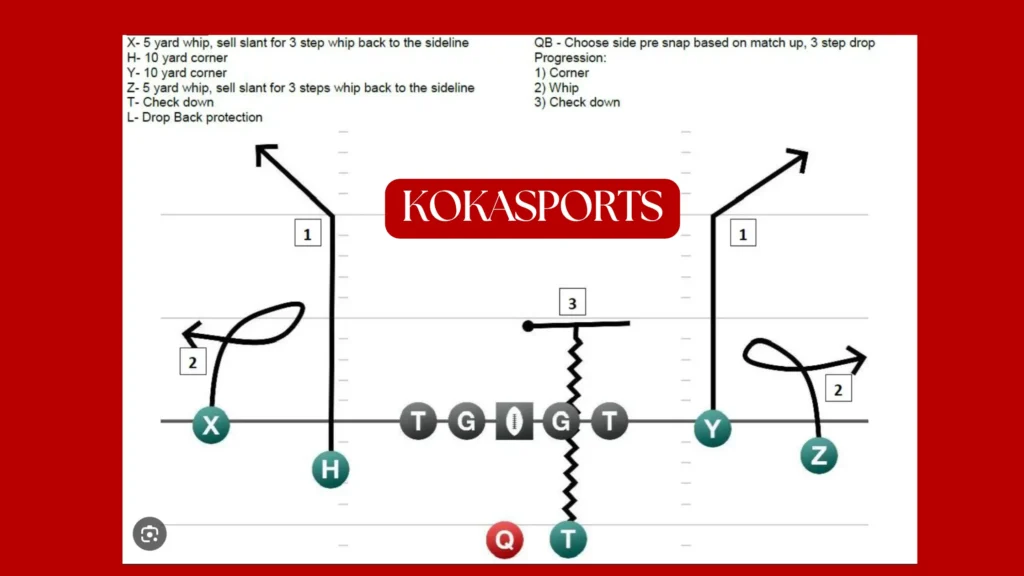
The smash concept is a two-man route combination that puts a defender in an impossible situation. It pairs a short hitch route run by the outside receiver with a deep corner route run by the inside receiver. These two routes work together to create what coaches call a high-low read one route attacks the low zone, one attacks the high zone, and the defender in between cannot cover both.
Here is how the basic routes are divided:
| Route | Who Runs It | Depth | Purpose |
|---|---|---|---|
| Hitch | Outside receiver (WR1) | 5–6 yards | Sits underneath, attacks the flat |
| Corner Route | Inside receiver or TE | 10–14 yards | Attacks the deep outside zone |
| Flat/Checkdown | Running back or TE | 0–3 yards | Third read, safety valve |
The outside receiver runs the hitch and sits in the soft spot of the zone. The inside receiver runs the corner route, pushing vertically before bending at a 45-degree angle toward the sideline. The flat defender is put in a bind he cannot sink to cover the corner route and also stay flat to cover the hitch. One of the two is always open.
“Smash is not complicated. It is simple, clean, and it works. That is why every team from Pop Warner to the NFL runs some version of it.” Anonymous Offensive Coordinator
Why the Smash Concept Football Is So Effective Against Cover 2
The smash concept was built to attack Cover 2 coverage. In Cover 2, each cornerback is responsible for the flat zone on his side of the field. The two safeties split the deep field. The corner in Cover 2 must decide: do I stay flat and cover the underneath route, or do I sink and take away the corner route?
He cannot do both.
When the cornerback sinks to defend the deep route, the hitch is wide open underneath. When he stays flat, the corner route flies over his head into open grass. The cover 2 safety cannot get there in time because the route is designed to land in the cover 2 hole the window between the cornerback and the safety.
This is why the concept is effective against this particular shell. It does not rely on athleticism or trick plays. It relies on geometry and logic.
Cover 2 vs. Other Coverages : Smash Results
| Coverage | Smash Threat Level | Primary Read |
|---|---|---|
| Cover 2 | 🔴 Very High | Corner route first, hitch second |
| Cover 3 | 🟡 Medium | Hitch or adjusted route |
| Cover 4 | 🟠 Medium-Low | Needs adjustment |
| Tampa 2 | 🔴 High | Corner route into vacated space |
| Man Coverage | 🟡 Medium | Switch release creates separation |
The Quarterback’s Read and Progression
The quarterback is the engine of this play. His job is simple in theory but requires real discipline in practice. Here is the step-by-step progression:
- Pre-snap : Read the cornerback. Is he playing off? Is there a single-high or two-high safety look? A two-high shell almost always means Cover 2 or cover 2 or cover 4.
- Post-snap : Watch the CB. Does he sink or stay?
- First read : If the corner route is open, throw the corner route early, before the cover 2 safety rotates.
- Second read : If the CB sinks, throw the hitch to the number one receiver sitting open underneath.
- Third read : If neither is open, dump to the flat or backside route.
The most common mistake a QB makes is holding the ball too long. The corner route must be thrown on time usually on the fifth step of the drop. A late throw gives the safety time to close. The depth of the route matters here. The corner route must gain depth past 10 yards before bending, or the window closes.
Key QB Tips for Running the Smash Concept:
- Keep your eyes in the middle of the field early to hold the safety
- Do not stare at the corner route it telegraphs the throw
- Trust the progression and let the route develop
- Use a speed cut on the corner route when you need a quick decision
Ways to Run the Smash Concept Football

One of the biggest strengths of smash is how flexible it is. There are many ways to run it depending on your personnel, formation, and game plan. Here are the most common versions:
1. Classic Smash from 2×2
The standard version. You align in a 2×2 formation with two receivers on each side. You run smash to one side and pair it with another concept on the backside — usually a curl/flat or a shallow cross. The QB reads the smash side first and comes backside if the coverage takes it away.
2. Smash from 3×1 (Trips)
In a 3×1 trips formation, the smash concept overloads one side of the field. The number two receiver runs the corner route while the number one receiver runs the hitch. The third receiver in the bunch can run a seam to stress the middle of the field or work as a backside alert. This version is popular in the spread offense because it creates natural conflict for zone defenders.
3. Play-Action Smash
One of the most explosive versions. The offense fakes a run, and the quarterback boots or drops back while the corner route comes open over a frozen linebacker. When a linebacker bites on the run fake, the deep corner opens up fast. The play-action also helps freeze the free safety, giving the corner route more room to operate in MOFO (middle of the field open) situations.
4. Switch Release Smash
The switch release is used primarily against man coverage. Instead of a normal split, the two receivers cross behind the line before releasing into their routes. The WR running the corner route gets a clean release because of the natural rub created by the cross. The QR and WR timing must be precise the quarterback must anticipate the route coming open a half-second later than usual.
5. Smash with a Seam Tag
Add a seam route from the tight end or number two receiver to turn smash into a three-level concept. The seam attacks the deep middle and forces the cover 2 safety to choose between the seam and the corner route. Now the quarterback has a legitimate vertical threat to hold the safety, making the corner route even more open.
Running the Smash Concept Against Different Coverages
Against Cover 3
Cover 3 presents a different challenge. The cornerback is playing a deep third instead of the flat, so he does not fit the same high-low as Cover 2. Here, the outside linebacker in cover 3 or OLB becomes the key defender. The OLB is responsible for the flat zone. If he widens to take the hitch, the corner route bends into the middle of the field closed gap behind him. If he stays inside, the hitch is open near the numbers.
The adjustment for the QB is to read the OLB instead of the cornerback. Some teams also convert the hitch to a quick hitch or fade against a pressed-off cornerback in Cover 3 to keep the concept works principle intact.
Against Cover 4
Cover 4 (quarters) is designed to take away exactly this kind of concept. The cornerback pattern-matches the corner route with safety help over the top. Against cover 4, the smash route becomes harder to hit. The offense must adjust by tagging a different route sometimes converting the corner to a post route or running a burst corner technique where the receiver uses a speed cut to beat the cornerback before he can sink into his zone.
The burst corner is a modified version of the standard corner route where the receiver attacks the cornerback’s leverage aggressively before making his break. The speed cut makes it harder for a rotating safety to reach the route in time.
How Defenses Attack the Smash Concept
Defenses are not helpless against smash. Here is how they try to stop it:
- Play Cover 4 or quarters Pattern-matching takes away the corner route and eliminates the high-low
- Bracket the corner route Safety rotates early to double the deep route
- Send a blitz Disrupt the quarterback’s timing before the routes can develop
- Use press man with a bracket Jam the receiver at the line and rotate coverage over the top
- Zone coverage disguise Show Cover 2, rotate to Cover 3 post-snap to confuse the QB’s pre-snap read
The best defenses do not just pick one answer. They rotate through coverages throughout a game to make the quarterback guess. When the CB disguises his depth, the QB cannot confirm the coverage until the snap which tightens the window on every throw.
Case Study: How the Kansas City Chiefs Use the Smash Concept
The Kansas City Chiefs, under Andy Reid, have long used smash as a foundational passing concept. Here is how they work the smash into their system:
- Formation: They often run it from empty or 3×1 looks, forcing the defense to declare its coverage
- Switch Release: Against aggressive man teams, the Chiefs use the switch release with their slot receivers to create clean releases
- Play-Action Tag: Paired with their heavy run-game tendencies, smash off play-action has produced several big plays down the field
- Concept to the field: They typically run the concept to the field (wider side) to give the corner route more room to develop
- QB Processing: Patrick Mahomes reads the safety rotation pre-snap and decides whether to attack the one side of the field or come backside
This is a great example of how a simple concept, installed correctly, becomes a major piece of a championship-level offense.
Key Facts About the Smash Concept
- The smash concept dates back to West Coast Offense principles from the 1980s
- It is one of the most commonly taught passing concepts in high school and college football
- The route combination works at every level of football from youth leagues to the NFL
- The inside receiver on the corner route should reach at least 10 yards downfield before breaking
- The hitch should be caught inside the numbers to avoid boundary pressure
- The flat defender in zone coverage is always the key read his movement tells the QB everything
- The deep defender (safety) is the threat the corner route is designed to beat
FAQs
What is smash football?
The smash concept is a two-receiver route combination pairing a short hitch with a deep corner route to create a high-low read on the cornerback.
When to run Smash Concept?
Run it on early downs, third-and-medium, and in the red zone against soft zone coverage and two-high safety looks.
What is the rarest rule in football?
The fair catch kick after a fair catch, the receiving team can attempt a free kick field goal from that spot with no defenders rushing.
Is Smash Concept good against Cover 2?
Yes. It was built to beat Cover 2 by putting the flat cornerback in an impossible position — he cannot cover both the hitch underneath and the corner route deep.
Conclusion
The smash concept is a timeless, simple, and devastatingly effective passing play. Its power comes from the high-low stress it puts on one cornerback, forcing him to be wrong no matter what he does. The hitch route and corner route combination gives the quarterback a clear, fast read, and when executed well, the ball gets out quickly and the receiver gets the ball in space.
Whether you are a coach looking to get the ball to your playmakers, a quarterback improving your progression, or a fan who wants to see football differently learning the smash concept gives you a window into how the passing game really works.
Master the read, trust the route, and the smash concept will reward you every single time.