
Imagine you’re watching a hockey game. A player shoots the puck from behind the center red line, and it slides all the way to the other end of the ice, crosses the opposing goal line and suddenly the referee’s whistle blows. Play stops. But no one scored. So what is icing in hockey?
Simply put, icing is when a player shoots or passes the puck from their own half of the ice all the way past the opposing goal line without another player touching it first. The moment this happens, the referee stops play, and a faceoff is held deep in the defensive zone of the team that sent the puck down. It is one of the most common and most misunderstood calls in all of sports.
Whether you’re a brand-new fan, a parent whose kid just joined a youth league, or a fantasy hockey player trying to decode the rulebook, this guide breaks everything down in plain, simple English. No jargon. No confusion. Just the full picture of how the icing rule works, why it exists, and why it matters so much to the gam
What Is Icing in Hockey? A Simple Definition
Icing is when a player shoots the puck from their own half behind the red line and the puck travels all the way down the ice and crosses the opposing goal line without anyone touching it. The moment icing is called, play stops, and a faceoff is held in the defensive zone of the team that iced the puck.
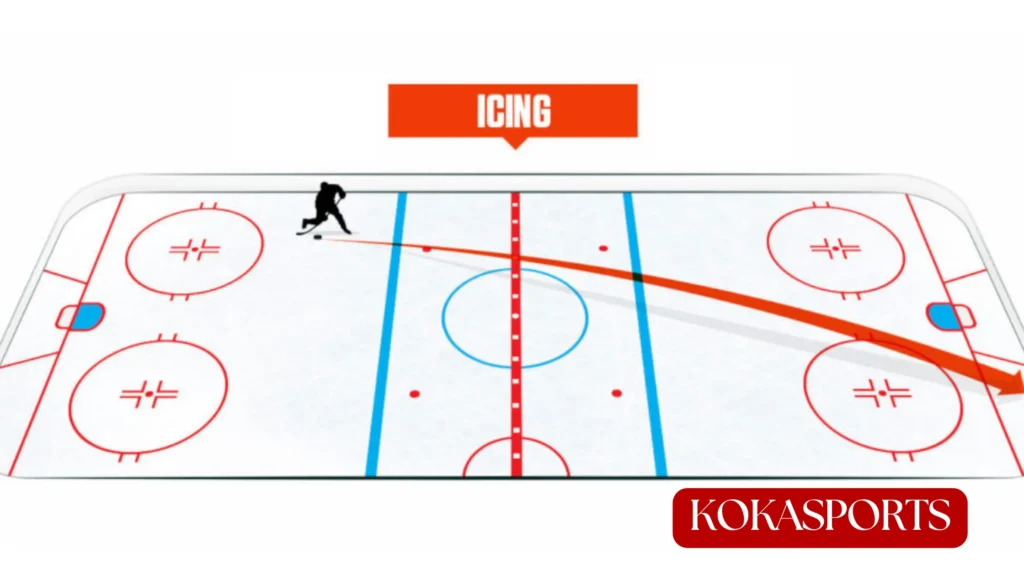
Here’s the simplest way to picture it: if your team launches the puck from your own side of center ice all the way to the other end without anyone touching it first, that’s icing. It is not a penalty in the traditional sense nobody goes to the penalty box but it absolutely carries real consequences that hurt your team.
The rule exists because without it, teams could simply keep firing the puck the full length of the rink every time they faced pressure. That would make the game slow, boring, and completely one-sided.
“Icing is one of those calls that looks simple on the surface but has deep layers of strategy underneath it.” A common observation among hockey analysts and broadcasters.
Read More: How Many Periods in Ice Hockey? NHL Game Structure, Overtime & Shootout Guide
The History of the Icing Rule in Hockey
The National Hockey League introduced the icing rule back in 1937, and it permanently changed how ice hockey was played. Before that year, teams were literally flinging the puck all the way down the ice to waste time or dodge opponents with zero consequences. Games were slow, lopsided, and painful to watch.
The rule fixed that problem overnight. But as the game grew faster and players became more athletic, debates about how the rule should actually work never stopped.
Key milestones in the icing rule’s history:
| Year | Change |
|---|---|
| 1937 | NHL introduced the icing rule |
| 1951 | Shorthanded teams were allowed to ice the puck freely |
| 2005 | NHL banned line changes after an icing call |
| 2013–14 | NHL adopted the hybrid icing rule |
The IIHF which governs international and Olympic hockey took a different path, adopting automatic icing (also called no-touch icing) instead of the hybrid version the NHL uses today. More on that shortly.
How Does the Icing Rule Work? A Step-by-Step Breakdown
To really grasp how icing works, you need to know two key lines on the hockey rink:
- The center red line the line that splits the rink in half
- The opposing goal line the line that runs across the ice in front of the opposing team’s net
Icing occurs when a player shoots or passes the puck from their own side of the red line, and the puck crosses the opponent’s goal line without being touched. Both conditions must be true. If only one is met, it’s not icing.
Here’s what happens once icing is called:
- The linesman blows the whistle and stops play
- The puck is brought back to the defensive zone of the team that iced the puck
- A faceoff takes place near the net of the team that committed the icing
- That team cannot make any line changes their tired players must stay on the ice
That last point is enormous. The no-line-change rule is what makes icing genuinely punishing. If your forwards have been grinding through a long shift and one of them panics and fires the puck all the way down the ice, those same exhausted players are stuck out there for the next faceoff. Smart opposing coaches will exploit that immediately.
Is Icing in Hockey a Penalty?
This is one of the most common questions new fans ask, and the answer is: no, not exactly.
Icing is officially classified as an icing infraction, not a penalty. That means:
- No player goes to the penalty box
- The opposing team does not get a power play
- There is no time added to a player’s discipline record
The real punishment is strategic: a faceoff deep in your own defensive zone plus no line changes. That combination can drain your team’s energy and momentum fast, especially late in a game or during a tight playoff series.
How icing differs from a true penalty:
| Factor | Icing | Traditional Penalty |
|---|---|---|
| Player sent to penalty box | No | Yes |
| Power play awarded | No | Yes |
| Play resumes with faceoff | Yes (defensive zone) | Yes (varies) |
| Line changes allowed | No | Yes |
You can, however, receive both an icing call and a penalty on the same play. For example, if a player deliberately delays the game by shooting the puck out of play while also committing a foul, the referee can assess both. But icing alone? No penalty box. No power play. Just a very bad faceoff situation.
The Three Types of Icing in Hockey Explained
Not all icing works the same way. There are three main versions used across different leagues, and each one handles the moment the puck crosses the goal line very differently.
1. Touch Icing (Classic/Traditional)
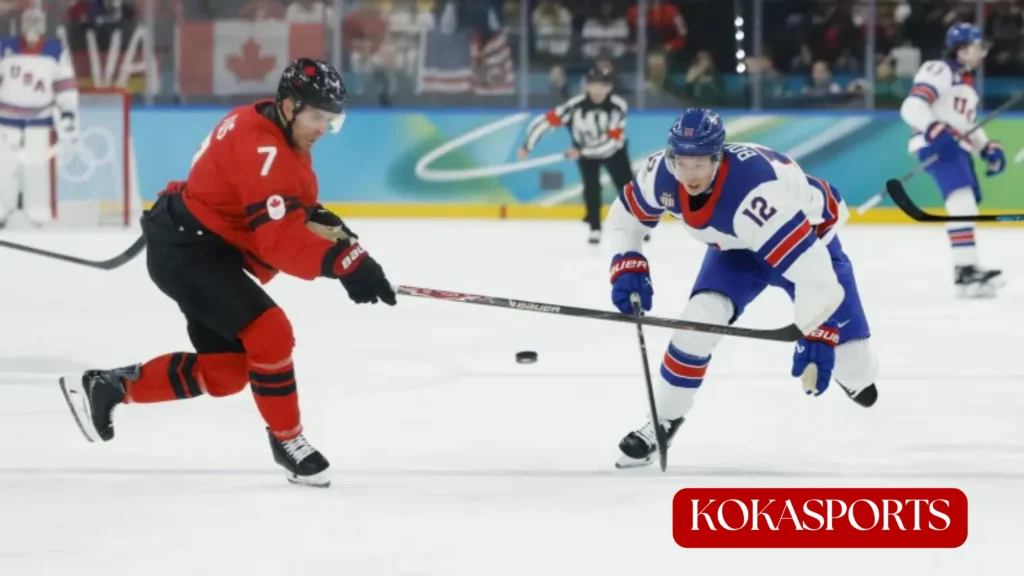
The original version. Under the touch icing rule, the play only stops if a defending player touches the puck first after it crosses the goal line. That created a full-speed race both teams would sprint toward the puck the moment it was shot down the ice. It was exciting, but also genuinely dangerous. Players were crashing into boards at top speed, leading to serious injuries. Most professional leagues have since moved away from touch icing entirely.
2. No-Touch Icing (Automatic Icing)
Under no-touch icing, also called automatic icing, the whistle blows the moment the puck crosses the goal line no race required, no player needs to touch the puck. It is the safest version of the rule, and it’s what the IIHF uses in international competitions including the Olympics and World Championships. USA Hockey also uses no-touch icing at the youth and amateur level for the same safety reasons. The downside? Critics say it removes some competitive excitement from the game.
3. Hybrid Icing (What the NHL Uses Today)
Hybrid icing is the middle ground. When a potential icing call is developing, linesmen watch a specific race: can the defending player reach the faceoff dot in the defensive zone before the attacking player? If yes, icing is called immediately no contact needed. If the attacking player is winning that race and could reasonably touch the puck before it crossed the goal line, the icing is waved off and play continues.
The NHL adopted the hybrid icing rule in the 2013–14 season after years of pressure from the NHLPA over player safety. It preserves some competitive racing while dramatically cutting down on the brutal end-board collisions that touch icing produced.
Quick comparison of all three types:
| Type | Race Required | Whistle Timing | Safety Level | Used By |
|---|---|---|---|---|
| Touch icing | Yes | After touch | Low | Mostly retired |
| No-touch icing | No | Immediately | High | IIHF, NCAA, USA Hockey |
| Hybrid icing | Partial | At faceoff dot | Medium-High | NHL, AHL |
When Is Icing NOT Called? The Key Exceptions
The icing rule has several important exceptions that every fan should know. Missing these is what causes the most confusion during a live game.
Icing is not called in these situations:
- Penalty kill: A team that is shorthanded killing a penalty is allowed to ice the puck freely with no call. This is one of the most important exceptions in all of hockey rules. It gives the outnumbered team a fighting chance to survive the power play without giving up a scoring chance.
- Goalie movement: If the opposing goaltender moves toward the puck or plays it, the icing call is waved off immediately.
- Puck through the crease: If the puck passes through the crease area before crossing the goal line, linesmen may wave off the call.
- Opponent could have played the puck: If a linesman judges that an opposing player could have played the puck before it crossed the goal line but chose not to, icing is waved off.
- Faceoff location: If the faceoff that started the play was in the neutral zone or offensive zone, different rules may apply depending on the league.
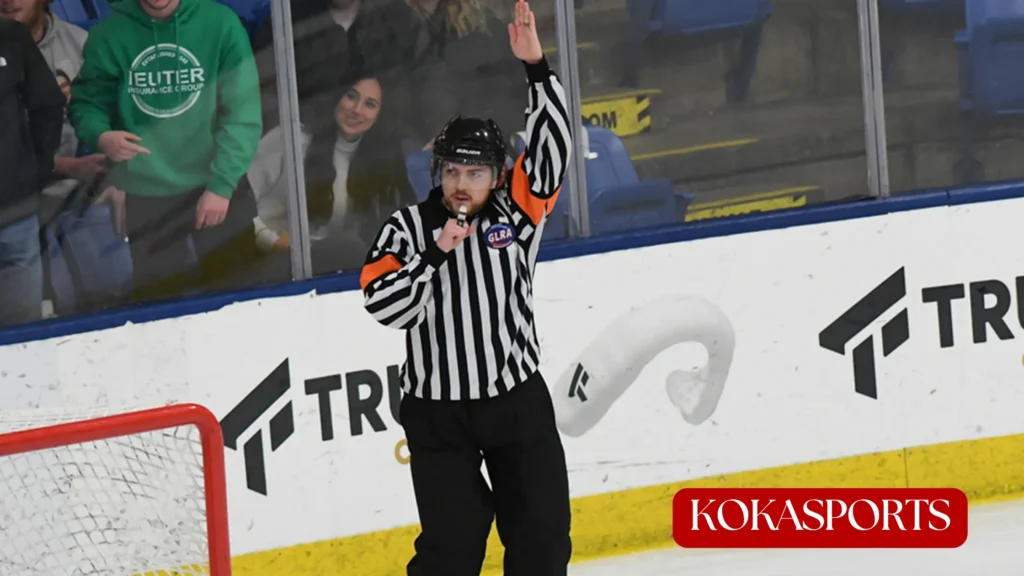
The delayed icing signal is also worth knowing. When a linesman suspects icing but hasn’t confirmed it yet, they raise their arm as a signal. Play continues momentarily. If the puck is touched by the right player or the goalie moves, the signal is dropped and play goes on. If not, the whistle blows.
Icing vs Offside in Hockey : What’s the Difference?
New fans often mix up icing and offside in hockey. They’re both stoppages of play, but they are completely different calls.
Offside happens when an attacking player enters the offensive zone crossing the blue line before the puck does. It’s about player positioning relative to the puck at a specific line.
Icing is about the puck traveling too far down the ice without being touched.
| Icing | Offside | |
|---|---|---|
| What triggers it | Puck crosses the goal line untouched | Player enters zone before puck |
| Key line involved | Red line + goal line | Blue line |
| Who commits it | Defending team | Attacking team |
| Result | Faceoff in defensive zone | Faceoff at blue line |
They can’t really happen on the same play since they involve opposite teams moving in opposite directions, but both are critical to how teams build and defend plays throughout a game.
Icing Strategy : How Teams Use It on Purpose
Here’s something that surprises casual fans: teams sometimes ice the puck on purpose. It’s not always a mistake.
Reasons a team might deliberately ice the puck:
- Clearing the zone under heavy pressure when the opposing team is camped in your defensive zone and you just need to get the puck out
- Protecting a lead late in the game giving your tired defenders a moment to reset, even at the cost of a faceoff
- Relieving pressure during a breakout sometimes dumping the puck is the only safe option when passing lanes are all covered
That said, smart teams avoid icing when possible because of the no-line-change rule. Sending the puck all the way to the other end when your line is already exhausted is one of the costliest mistakes in hockey. Your opponents will come in fresh against your tired players, set up shop in your zone, and create real scoring pressure.
Penalty kill units, however, are allowed to ice the puck freely, and they use that constantly. When you’re a man down and defending for two minutes, being able to clear the puck the full length of the rink without a whistle is a lifeline.
Common Questions About Icing
Can a goalie ice the puck?
Yes. If a goalie shoots the puck from behind the red line and it crosses the opposing goal line untouched, it is icing just like any other player’s shot. However, goalies rarely find themselves in that position.
Does icing stop the clock?
Yes. Once the whistle blows on an icing call, the clock stops. This is why teams protecting a lead late in the game sometimes use icing deliberately even though they give up ice position, they do stop the clock and force a reset.
Is icing called the same way in overtime?
In NHL regular-season 3-on-3 overtime, icing rules still apply. In playoff overtime, a potential icing call can be absolutely game-deciding one bad clear at the wrong moment can set up the opponent for a series-winning goal.
How many times can a team be called for icing in a game?
There is no limit. A team can be called for icing 20 times in a game if they keep doing it. The cumulative effect on player fatigue and momentum, though, is severe.
Icing Rules Across Different Leagues
| League | Type of Icing | Line Changes Allowed After Icing? |
|---|---|---|
| NHL | Hybrid icing | No |
| IIHF (International) | No-touch icing | Varies |
| NCAA (College) | No-touch icing | No |
| AHL (Minor Pro) | Hybrid icing | No |
| USA Hockey (Youth) | No-touch icing | Varies by age group |
Youth leagues often modify the icing rule for younger players, focusing on teaching the concept gradually rather than enforcing it strictly. The goal is to build hockey sense early so players instinctively know where they are on the ice at all times.
Quick Reference : Icing Rules at a Glance
- What it is: Shooting the puck from your own side of the red line all the way past the opponent’s goal line untouched
- When icing is called: When both conditions are met and no exceptions apply
- When it is NOT called: During a penalty kill, if the goalie moves, if an opponent could have played the puck
- Consequences: Faceoff in the defensive zone, no line changes for the offending team
- Types: Touch icing (old), no-touch icing (international), hybrid icing (NHL)
- Is it a penalty? No it’s an icing infraction with no power play awarded
Final Thoughts
The icing rule in hockey is one of those calls that looks simple the first time you see it, but reveals more depth every time you watch a game. It shapes defensive strategy, affects player fatigue, drives penalty kill tactics, and can swing the momentum of an entire period with one whistle. Once you start watching for it, you’ll notice just how often teams are fighting to avoid it and how costly it is when they don’t.
Next time you’re watching a game and the whistle blows after a long puck slide, you’ll know exactly what happened, why it was called, and what it means for both teams going forward. That’s the kind of knowledge that makes hockey genuinely thrilling to follow.