


What’s a touchback in football? A touchback in football happens when the ball becomes dead in the end zone, and the receiving team gets possession either at the 25-yard line (on kickoffs) or the 20-yard line (on punts, fumbles, and missed field goals) in the NFL. No points are scored. The play is simply dead, and the offense takes over. It’s one of the most common plays in the game, yet one of the most misunderstood by new fans.
If you’ve ever asked what is a touchback while watching a game, you’re not alone it’s one of the most searched football rules online. Whether it happens on a kickoff, a punt, or even a fumble, the touchback rule NFL fans need to know always does the same thing it stops the play dead and resets field position. This guide covers the full touchback meaning, every scenario it happens, and the strategy behind it all in plain, simple English.
Touchback in 10 Seconds
- No points are scored
- Ball is dead in the end zone
- Offense starts at the 25-yard line (kickoff touchback)
- Offense starts at the 20-yard line (punt, fumble, missed field goal)
- The receiving team always gets possession
What Is a Touchback in Football? (The Basic Definition)
The touchback meaning is straightforward once you break it down. A touchback occurs when the ball enters a team’s own end zone and the play is stopped with no points awarded to either side. The ball is dead the moment it happens.
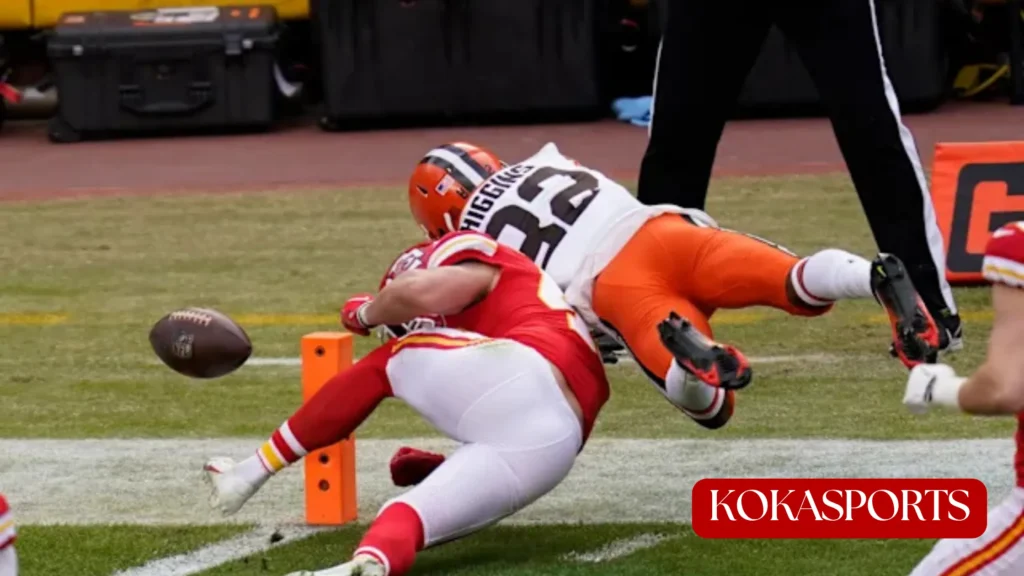
Here’s what makes it a touchback:
- The ball goes into the end zone and is downed in the end zone by the receiving team
- The ball goes out of bounds through the back of the end zone
- A returner catches the ball in the end zone and takes a knee
- The ball touches the ground in the end zone untouched
Touchback Meaning in Simple Terms: Think of it as the game hitting a reset button. No harm, no score just a fresh start from the yard line.
Quick Comparison Table:
| Play | Location | Result |
|---|---|---|
| Touchdown | Opponent’s end zone | 6 points scored |
| Touchback | Own end zone | Ball at 25 or 20-yard line |
| Safety | Own end zone (tackled) | Defense scores 2 points |
What’s a Touchback in Football : All the Ways It Happens
Touchback on a Kickoff in American Football
The most common scenario every fan sees is a touchback on a kickoff. When the kicker sends the ball deep and it lands in or sails through the end zone on a kickoff, the ball becomes dead instantly. The receiving team takes over at their own 25-yard line no return needed.
The NFL moved the kickoff touchback placement from the 20-yard line to the 25-yard line in 2016 specifically to encourage more touchbacks and reduce dangerous high-speed collisions on return plays.

When a kickoff touchback is called:
- The kicked ball lands and stays in the end zone
- The ball goes out of bounds through the back of the end zone
- A player on the receiving team catches it in the end zone and kneels
- The ball touches the goal line area and stops dead
Touchback on a Punt : What the Touchback Rule NFL Fans Should Know
A punt results in a touchback when the punter kicks the ball and it goes into the end zone or goes out of bounds behind the goal line. In this case unlike a kickoff touchback the ball will be placed at the 20-yard line, not the 25. This is one of the most important rule details that even experienced fans get wrong.
⚠️ Rule Correction: The 25-yard line only applies to kickoff touchbacks in the NFL. Touchbacks from punts, fumbles, and missed field goals place the ball at the 20-yard line. This distinction matters for both strategy and accuracy.
Punt touchback situations:
- Ball lands in the end zone untouched and stays there
- Ball goes out of bounds at or behind the receiving team’s goal line
- Ball bounces through the back of the end zone
- Receiving team’s player catches it in the endzone and downs it
Touchback After a Fumble : Football’s Most Confusing Rule
A fumble leading to a touchback is one of the most misunderstood plays in American football. Here’s the simple breakdown:
If the offense fumbles the ball: When a player loses possession of the ball and it rolls into the opponent’s end zone and goes out of bounds, the defensive team is awarded possession at their own 20-yard line. The offense loses possession completely a massive momentum shift.
If the defense fumbles: If the defensive team loses control after a turnover and the ball rolls into their own end zone and out of bounds, the opposing team gets the ball at the 20-yard line.
⚠️ Key Rule: When a fumble occurs and the ball goes out of bounds in any end zone, the team that last had possession before the fumble loses possession of the ball it becomes a touchback for the other team.
Read More : What Is a Touchback in Football? Complete Guide to the Touchback Rule
Famous Real-Life Touchback Fumble : Super Bowl XLVII (2013)
Game: Baltimore Ravens vs. San Francisco 49ers Super Bowl XLVII What happened: During a critical drive, the 49ers were pushing hard toward the end zone. A fumble near the goal line rolled through the team’s end zone and out of bounds. Instead of a potential touchdown or recovery, it was ruled a touchback giving the Ravens possession at their own 20-yard line. The Ravens held on to win 34–31.
This single play showed exactly how devastating a fumble near the end zone can be, and why ball security near the goal line is drilled into every NFL player from day one.
NFL Touchback Rules : The Correct Yard Line Placement
This is where many articles get it wrong. Here is the accurate NFL touchback placement by situation:
| Touchback Situation | Ball Placed At |
|---|---|
| Kickoff into end zone | 25-yard line |
| Punt into end zone | 20-yard line |
| Fumble into end zone | 20-yard line |
| Missed field goal through end zone | 20-yard line |
| Interception defender downed in own end zone | 20-yard line |
✅ Correct Rule: Only kickoff touchbacks in the NFL place the ball at the 25-yard line. All other touchbacks use the 20-yard line as the starting spot.
The 2024 NFL Kickoff Rule Change
The NFL completely redesigned its kickoff format for the 2024 season. The kicking team now lines up at the 35-yard line, and a special formation is used by both teams. Any kick that goes short of the designated landing zone gives the receiving team the ball at the 30-yard line even better field position than a standard touchback. This change was made to reduce injuries while keeping the excitement of a live return possible.
Touchback vs Safety : The Most Common Mix-Up in Football
Both plays happen in the end zone, but the results could not be more different.
| Touchback | Safety | |
|---|---|---|
| Points scored? | ❌ No | ✅ Yes 2 points for defense |
| Who gets ball? | Receiving team | Scoring team kicks off |
| Caused by? | Ball dead in end zone | Ball carrier tackled behind the goal line |
| Ball placement | 25 or 20-yard line | Free kick from own 20-yard line |
Simple memory trick:
- Kneel in your end zone on a kick = Touchback ✅
- Get tackled in your own end zone = Safety ❌ (costs you 2 points)
The key is who caused the ball to cross the goal line and whether a live player was tackled in the process. If a defender intercepts a pass and is downed in the end zone without being tackled, it’s a touchback. If a ball carrier tries to attempt to advance and gets brought down behind the line of scrimmage in their own end zone, that is a safety.
Touchback Strategy : When to Take It and When to Return

Take the Touchback When:
- Ball is caught 5+ yards deep in the end zone
- The kicking team has fast coverage closing in
- You’re protecting a lead late in the game
- Your return unit has been struggling with penalties
Return the Ball When:
- Ball is caught near or outside the end zone
- You have an elite returner who sees an open lane
- You desperately need field position
- The field of play setup favors a big gain
Average Starting Field Position:
| Decision | Starting Field Position |
|---|---|
| Kickoff Touchback | Own 25-yard line |
| Average Kickoff Return | Own 21–23-yard line |
| Punt Touchback | Own 20-yard line |
| Average Punt Return | Varies widely |
The numbers show that on kickoffs, taking the touchback at the 25 yards mark is almost always the smarter play unless your returner is truly elite.
FAQs : What Is a Touchback?
Does a touchback count as a score?
No. A touchback never results in any points for either team. The ball is dead, and the offense simply takes over at the yard line.
What happens if the returner fumbles in the end zone?
If the ball is fumbled in the receiving team’s end zone and ball touches the ground or goes out of bounds, the opposing team may gain possession turning it into a touchback or even a touchdown recovery.
What is a missed field goal touchback?
A missed field goal that reaches or passes through the end zone is automatically a touchback. The defensive team takes possession of the ball at their own 20-yard line they do not need to attempt to advance the ball.
How often do touchbacks happen in the NFL?
In recent NFL seasons, over 60–65% of all kickoffs result in a touchback. Rule changes since 2016 have made this the norm rather than the exception in the football league.
What’s the difference between a touchback and a fair catch?
A fair catch happens when the receiving team’s returner signals they will not run after catching the ball it happens outside the end zone on the field of play. A touchback happens when the ball goes dead inside the end zone. Two very different plays.
Final Thoughts
So what’s a touchback in football? It’s a play where the ball enters the end zone, the ball is dead, no points are scored, and the receiving team starts their drive from either the 25-yard line (on a kickoff) or the 20-yard line (on a punt, fumble, or missed field goal). It’s all about field position, player safety, and smart strategy. The next time you see those referee hands go up overhead, you’ll know exactly what happened and why it matters more than most fans realize.