
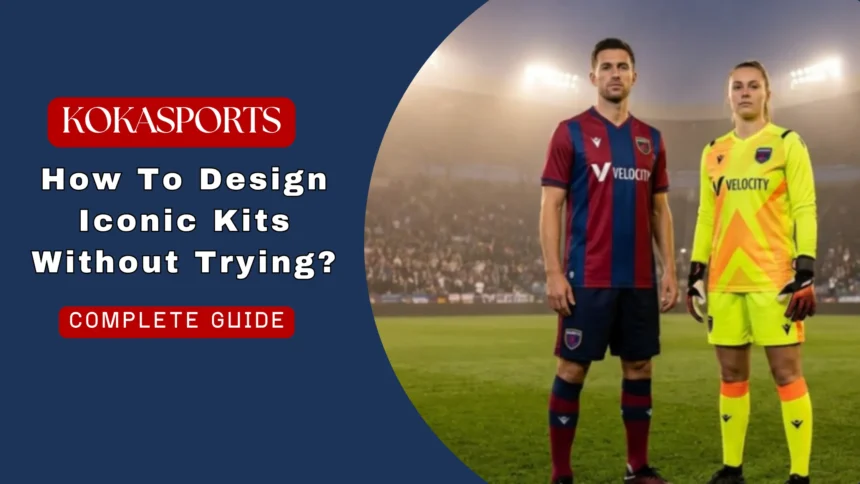
Designing iconic kits without trying requires balancing exactly two dominant colors with one accent, anchoring the layout with a proportionately sized crest, selecting purposeful typography, and utilizing fully sublimated performance fabrics.
When teams master these foundational visual storytelling elements, the resulting design instantly communicates community identity and history before the first whistle blows.
A great football kit does something no amount of pre-match preparation can fully replicate by announcing your unified identity immediately. This visual unity is crucial because research shows college athletes often develop strong sport-related identities.
In this article, we are going to unpack exactly what makes those legendary kits so unforgettable.
Whether you are a youth coach, a school athletic director, or an adult league organizer who has never opened a design tool in your life, these steps apply directly.
The Culture Of Iconic Kits
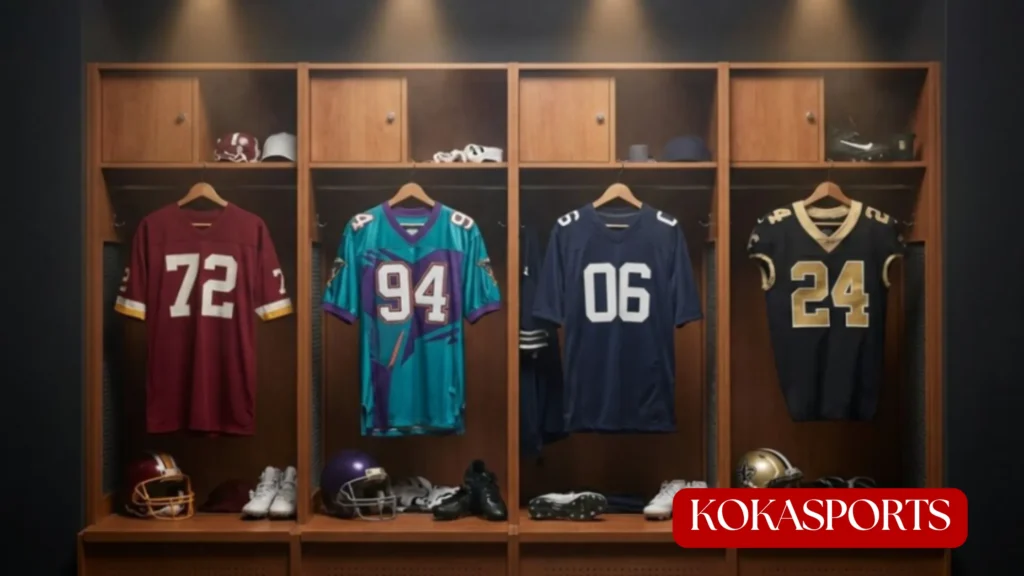
Across more than a century of the game, football kits have evolved into one of the most potent expressions of collective identity in all of human culture. They carry national pride where entire countries are compressed into two colors and a crest.
A unified look becomes even more vital considering that cultural diversity actively enhances on-field performance alongside shared team tenure.
This evolution has allowed specialized providers like Sports Gear Swag to help local leagues forge their own generational memory through the intentional design of custom football uniforms, ensuring that even grassroots teams can carry the same psychological weight as the pros.
Strip away the nostalgia and the cultural weight, and you find that the greatest football kits share a set of identifiable design principles. Master these specific foundational elements, and you have the framework for something genuinely memorable.
Color Hierarchy
Your primary color carries your identity and lets someone know immediately who they are watching from across the stadium. Your secondary color creates contrast, defines edges, separates panels, and gives the design visual structure.
Your accent color adds personality with a flash of something unexpected that catches the eye. It adds distinction without disrupting the whole garment.
Color also carries psychological weight that operates below conscious awareness. Warm tones project energy and aggression while cool tones project composure and authority.
Bright contrasting combinations demand attention, and tonal combinations communicate sophistication. Choose your two dominant colors with the intention of reflecting what they represent for your specific community.
Badge Placement, Crest as Crown
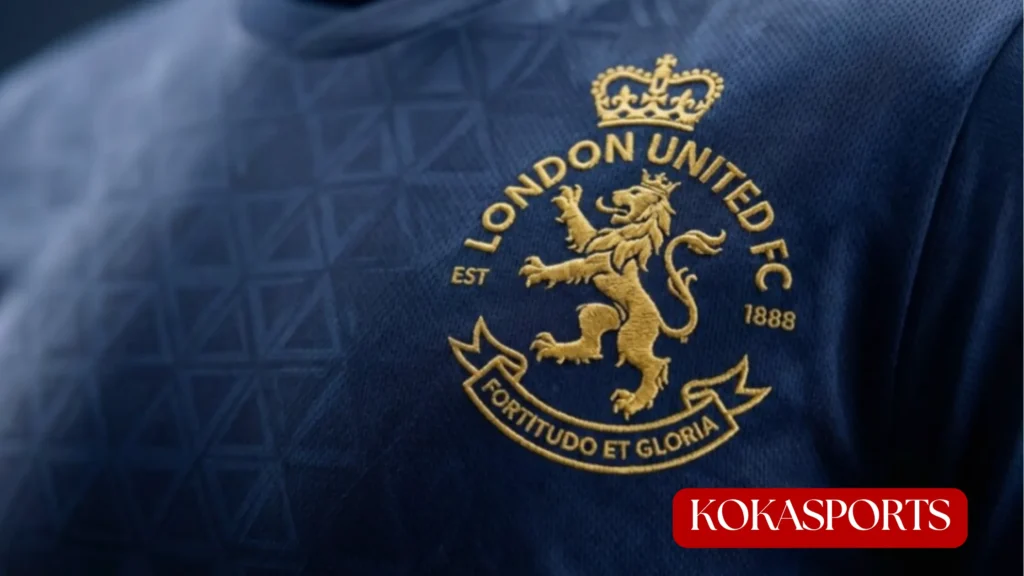
The badge is the most emotionally loaded element of any football kit. It is the singular point of identity and the visual anchor around which everything else is organized.
Classic placement traditions position the badge on the left chest, roughly where a heartbeat is felt. This placement communicates belonging, ownership, and pride in a way that is almost primal.
What matters most is proportion when applying the crest. A badge that is too small gets lost in the overall design.
A badge that is too large overwhelms the shirt and competes with every other visual element. The golden rule dictates that the badge should lead the design rather than compete with it.
Typography and Numbering
The numbers and lettering on a football kit are technically functional elements. They exist to help officials, broadcasters, and spectators identify players on the pitch.
But in the hands of a thoughtful designer, they become one of the most expressive components of the entire kit. Font personality communicates team character distinctly.
Thick and bold serif letterforms project tradition and heritage as the visual language of clubs with deep history.
Heavy condensed sans-serif fonts project power and modernity. Narrow, technical-looking, condensed typefaces signal speed and a forward-facing mentality.
The practical requirement remains non-negotiable as numbers must be readable from thirty meters away.
Pattern and Layout Stripes Hoops and Everything Between
Pattern creates team personality at the most instinctive level. Before a spectator reads a badge or registers a color name, they read the overall pattern.
- Vertical stripes communicate power and forward momentum to lengthen the visual silhouette and project confidence.
- Horizontal hoops carry tradition and community as the visual language of working-class solidarity.
Modern sublimation printing has transformed what is possible in this space. Panel seaming and all-over sublimation allow for patterns of extraordinary complexity without adding weight.
Fabric Innovation Performance Beneath the Design
The greatest-looking kit in history means nothing if it traps heat or loses shape after three washes. It must also hold its colors through a season of hard use. Modern performance fabrics have transformed what is possible in football kit design.
The shift from heavy woven cotton to engineered Poly Mesh and Poly Knit fabrics was a design revolution.
- Poly Mesh breathes exceptionally well, manages moisture efficiently, and provides the lightweight structure that allows sublimated colors to appear with remarkable vibrancy.
- Poly Knit offers greater structural definition, excellent color retention, and a slightly more formal visual finish. Both fabrics hold sublimated designs far more faithfully than older materials.
The color is literally embedded in the fibers rather than sitting on top of them, meaning it does not crack or peel.
| Key Insight: Iconic kit design is built on visual restraint. By balancing two dominant colors with a single accent, you create a focused hierarchy that allows the team crest to stand out as the primary anchor. |
How To Design Your Own Iconic Kit
Here is the truth about those five design pillars. None of them is a proprietary secret belonging to professional clubs with massive design budgets.
They are completely learnable principles. Every single one of them translates directly into decisions any team manager, coach, or athletic director can make.
- Color hierarchy dictates that you choose your two dominant team colors with intentionality and build everything else around them.
- Treat your crest or club logo as the visual anchor of the entire kit for proper badge design.
- Choose letterforms that match your team’s personality and pass the legibility test from a distance for clear typography.
- Decide what your team layout says about who you are before anyone reads a name or badge pattern.
- Choose materials that perform as well as they look, like Poly Mesh for maximum breathability.
Choosing the Right Printing Method
Once the design concept is clear, the printing method determines how faithfully that vision arrives on the physical garment. Not all methods are equal in the manufacturing process.
The right choice depends on the design complexity, the fabric type, and how the kit will be used.
Full Sublimation Printing
This is the method of choice for complex and color-rich designs. Dye is transferred directly into the fabric fibers under heat and pressure, so the color becomes part of the garment itself.
This means zero fading, zero peeling, and the ability to reproduce gradients with remarkable fidelity. For bold designs with multiple colors, full sublimation is the absolute standard.
Embroidery
Embroidery is the correct choice for crests, badge elements, and cap logos where texture signals craftsmanship and prestige. A sublimated badge can look clean and precise in digital mockups.
An embroidered badge communicates heritage and quality in a way that no flat print can replicate.
Heat Press Vinyl and Screen Printing
This serves specific applications well for straightforward applications. The practical rule of thumb is to match the printing method to the design complexity and real-world durability needs.
Having an experienced design partner helps you understand what holds up beautifully across two seasons of washing.
Step by Step From Blank Page to Full Kit
The design process feels intimidating until you break it into its parts. Start with what already exists in your team’s identity assets.
Your club colors, existing logos, or heritage elements like a geographic reference are your raw materials. The best kit designs distill and clarify an identity that already exists rather than inventing it from nothing.
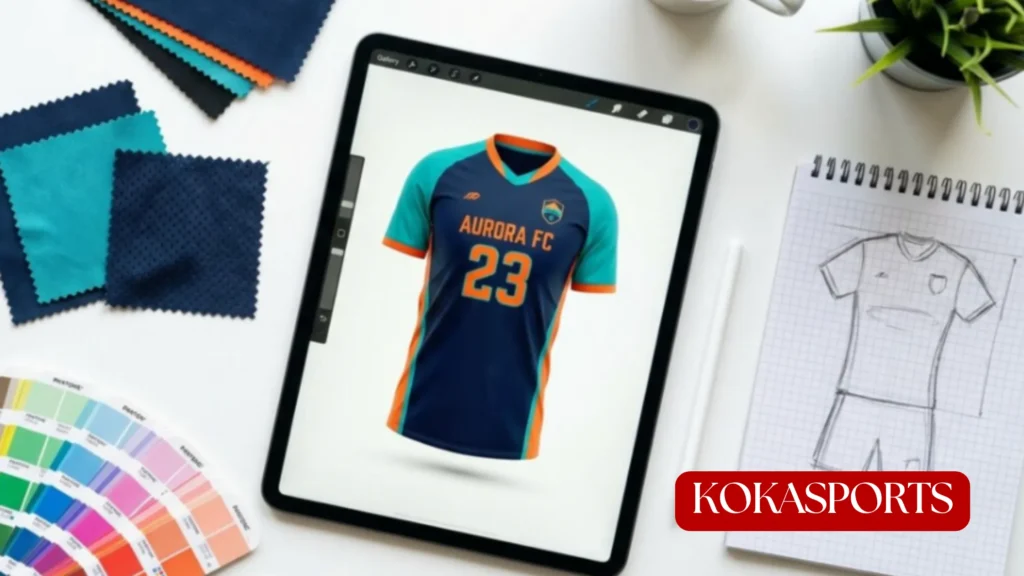
Before touching any digital tool, rough out your thinking on paper. Determine where the badge sits and what the primary color blocking entails. A ten-minute sketch aligns everyone’s expectations before any digital design work begins.
It clarifies whether the design uses a specific pattern or a solid layout. Requesting a digital mockup is one of the most important steps in the entire process.
Never approve a kit you have not seen fully rendered on a screen.
Colors that look bold on a swatch can appear washed out on a full jersey. A digital mockup across front, back, and sleeves eliminates these surprises.
Validate sizing and fit carefully by considering the range of players wearing the kit. Confirm sizing charts carefully to decide whether a slim performance cut or a relaxed cut better serves your squad.
Once the mockup is right, production can finally begin. At this stage, factor your production timeline into your season schedule with a realistic buffer built in.
Rush delivery options exist for unavoidable situations. Building adequate lead time into the planning process is always preferable. Completing the full kit ensures your goalkeeper has a clearly differentiated colorway while maintaining uniform alignment.
Common Kit Design Mistakes
Even well-intentioned designs fall apart at specific, predictable points. Recognizing these mistakes in advance is far easier than correcting them after production. Overcomplicating the design is a frequent error.
Treat it as part of the full kit system rather than an afterthought. Skipping the mockup stage is incredibly risky because what looks right flat will behave differently on a three-dimensional jersey.
Choosing fabric by price alone often leads to regret. Performance fabrics designed for sublimation deliver substantially better color retention and athletic performance than generic alternatives.
The difference is visible in photographs and felt across an entire season of use. Fabric quality is the foundation on which every other design decision rests.
Underestimating production timelines can ruin an otherwise perfect launch. Build buffer time into your ordering schedule because season openers have fixed dates.
Rush delivery options exist for genuine emergencies, but the design process benefits from time and patience at every stage. Avoiding these common traps ensures a smooth delivery process.
| Warning/Important: Never approve a design without reviewing a full digital mockup. Colors and proportions that look correct on a flat screen often shift once applied to the three-dimensional curves of a performance athletic jersey. |
The Bottom Line
The greatest football kits in history succeeded because their designers understood something fundamental. Every element of the kit functions as part of a single unified system. Change one element carelessly, and the whole thing shifts dramatically.
Align all of them with intention, and you create something that becomes part of a community story. None of these principles belongs exclusively to professional clubs with decade-long visual identity programs.
They are learnable, accessible, and available to any team. Approaching the design process with intentionality mimics how the best kits in history were built. Your team kit is the first statement you make before the match begins.