

If you are wondering what is sign stealing in football, here is the simple answer. Sign stealing is when a team decodes the hand signals and signs an opponent uses to call plays, so it can predict what is coming before the ball is snapped. Watching and decoding those signals during a live game is generally legal. The trouble starts when a team breaks the rules to gather that information, which is exactly what turned this into a national story.
I got pulled into this topic the day the Michigan scandal broke. My group chat lit up instantly, and within minutes everyone was arguing. Half the group called it blatant cheating, the other half insisted it was just smart football that every team does. The argument went in circles for an hour.
What struck me was that almost none of us actually knew where the line was between legal and illegal. We were all confident, and most of us were wrong. So I went and learned how sign stealing really works, what the rules actually say, and why one version of it is fine while another can get a program fined millions. This guide lays all of that out, from how teams signal plays to the famous scandals and how teams protect their signs.
What Is Sign Stealing in Football?
Definition of Sign Stealing
Sign stealing is the practice of figuring out the signals an opposing team uses to communicate plays. Coaches on the sideline send in plays using a coded play-calling system of hand signals, signboards, and code words, and sign stealing is the effort to crack that code. If a defense can read the offense’s signals, it can line up to stop the play before it even begins.
Why Teams Use Signals Instead of Verbal Communication
Teams rely on visual signals for a few practical reasons. Stadiums are deafeningly loud, so shouting a play across the field is impossible. The modern game is also fast, with many offenses running no-huddle attacks that need plays relayed in seconds. On top of that, secrecy matters, and a coded signal is much harder for an opponent to understand than a spoken command. Understanding how a football team is organized helps explain why so many players need the call at once.
The Purpose of Sign Stealing
The goal of sign stealing is a strategic edge. If you know the opponent’s play in advance, you can predict whether it will be a run or a pass, adjust your alignment, and put your players in the best position to win the down. It turns guesswork into informed decision-making, and over a full game those small edges add up.
How Sign Stealing Works in Football
Identifying Sideline Signals
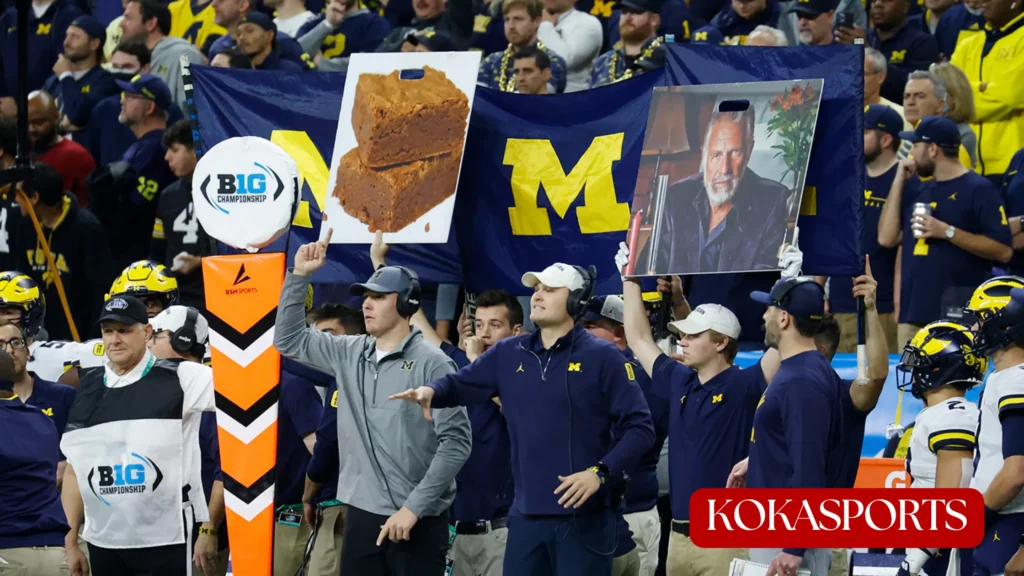
The first step is simply watching. Teams study the coaches and assistants on the opposing sideline, looking for the people sending in signals and the gestures they use. Over time, repetitive patterns start to emerge, and analysts work to match each signal to what happens on the next play.
Translating Signals Into Play Calls
Once patterns appear, the work becomes translation. A particular sign might consistently line up with a certain formation, a specific personnel package, or a known situational tendency. By connecting the dots between signals and results, a team can build a rough key to the opponent’s play calls.
Communicating Stolen Information to Players
The final step is getting that information to the players quickly. Coaches relay adjustments from the sideline so the defense can shift its alignment, or so the offense can audible into a better play. The whole process has to happen in the seconds before the snap, which is why it takes serious preparation to use effectively.
Is Sign Stealing Legal in Football?
NCAA Rules on Sign Stealing
In college football, decoding signals during a game is legal. A team is free to watch the opposing sideline and try to read signs in real time. What the NCAA prohibits is off-campus, in-person scouting of future opponents, and using that kind of scouting to record signals. The line is between live, in-game observation and prohibited advance scouting.
NFL Rules on Sign Stealing
The NFL takes a similar stance with its own twist. Reading signals during a game is allowed, but the league bans using video or electronic recording equipment to capture an opponent’s signals. This rule led to one of the most famous enforcement actions in league history, which I will get to shortly.
Legal vs Illegal Sign Stealing
The distinction comes down to method. Watching from the sideline and decoding signs with your own eyes is legal. Pointing a camera at an opposing sideline to record and break down signals, or sending people to scout future opponents in person, crosses into illegal territory. Same goal, very different rules depending on how you go about it.
Why Is Sign Stealing Such a Big Deal?
Competitive Advantage
The reason sign stealing matters is the advantage it creates. Knowing a play before the snap lets a defense jump the route or stuff the run, and that can swing the outcome of a game. In a sport decided by inches, advance knowledge is powerful.
Fair Play and Sportsmanship Concerns
It also raises real questions about fairness. Even the legal version sparks debate about sportsmanship, and the illegal version strikes at competitive balance. Fans and coaches argue endlessly about where clever preparation ends and unfair advantage begins.
Potential Impact on Championships
The stakes climb in big games. When a title or a playoff spot is on the line, the suggestion that one team had illegal information can taint the result and follow a program for years. That is why these stories generate so much heat.
Famous Sign-Stealing Controversies in Football
The Michigan Football Sign-Stealing Scandal
The biggest recent case involved Michigan. A staffer named Connor Stalions was found to have organized an off-campus, in-person scouting scheme across the 2021, 2022, and 2023 seasons, sending people to film future opponents’ sidelines to decode their signals. The story broke in October 2023 and dominated the sport for months.
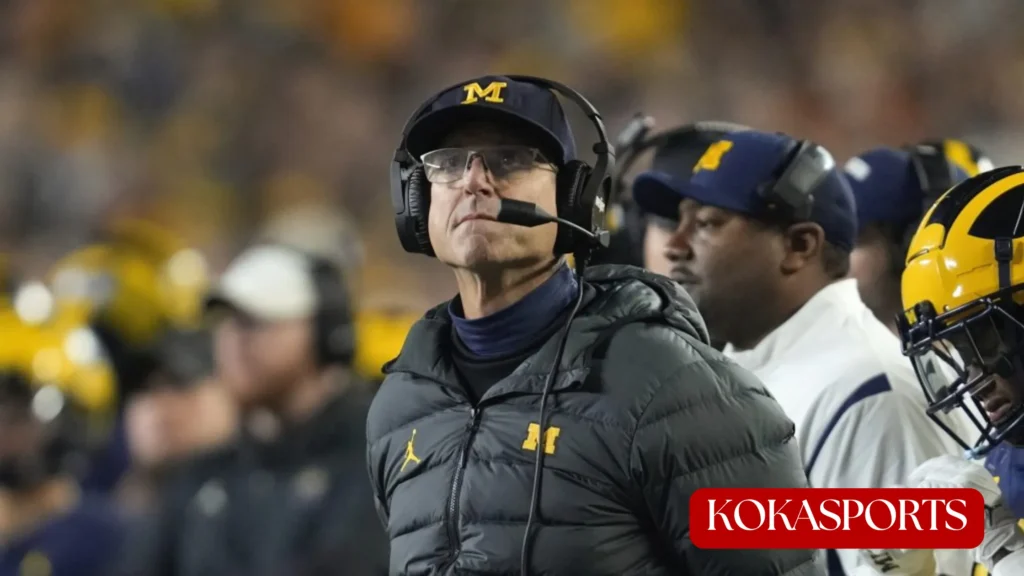
The fallout was enormous. The Big Ten suspended head coach Jim Harbaugh for the final three regular-season games of 2023, though Michigan still went on to win the national title. After a long investigation, the NCAA handed down its penalties in August 2025, including a fine reported at more than 20 million dollars, years of probation, and a lengthy show-cause order for Harbaugh, with the school choosing to appeal.
Other Notable College Football Cases
Michigan is far from the only program ever accused of sign stealing. Across college football history, teams have regularly suspected opponents of reading their signs, but most of those cases fell within the legal, in-game version. The lesson programs took away is to guard their signals carefully and assume someone is always watching.
NFL-Related Signal Controversies
The NFL had its own landmark case known as Spygate. In 2007, the New England Patriots were caught illegally videotaping an opponent’s defensive signals. The league responded firmly, fining head coach Bill Belichick the maximum amount, fining the team, and stripping a first-round draft pick. It remains the benchmark for NFL signal violations.
How Teams Protect Their Signals
Multiple Signal Callers
Because sign stealing is always a threat, teams work hard to protect their signs. One common tactic is using several signal callers at once, with only one giving the real call and the others acting as decoys. This makes it far harder for an opponent to know which signal actually matters.
Wristbands and Play Cards
Many teams also use wristbands and play cards with number-based systems. A coach simply calls a number, and players look up the matching play on their wristband. This coded approach keeps the actual play hidden even if someone is watching closely.
Rotating Signals Throughout the Season
Smart teams change their signals regularly. By rotating their system through the season, or even within a game, they prevent opponents from building a reliable key. A signal that meant one thing last week might mean nothing this week.
Helmet Communication Technology
Technology has become the strongest defense of all. The NFL has long used helmet communication that pipes the play directly from a coach to a player, and college football added coach-to-player helmet communication and sideline tablets in 2024, partly in response to the sign-stealing issue. Talking straight into a player’s helmet removes the need for visible signs altogether, though only a limited number of players can have that device.
Can Sign Stealing Actually Change a Game?
Advantages for Defenses
Sign stealing can absolutely tilt a game, especially for a defense. Knowing whether a run or pass is coming, or which formation the offense will use, lets defenders anticipate and react faster. That head start can be the difference between a stop and a big play.
Advantages for Offenses
Offenses benefit too. Reading a defense’s signals can reveal a coming blitz or coverage, letting the quarterback audible into a play that exploits the weakness. Anticipating what the defense will do makes the offense far more dangerous.
Real-World Examples
That said, the impact is real but not magical. There have been moments where recognizing a signal clearly helped a team make a key stop or a big gain, and coaches widely respect the value of the information. Still, players have to execute, so even perfect information does not guarantee the result.
Sign Stealing vs Advanced Scouting
What Is Advanced Scouting?
Advanced scouting means studying a future opponent ahead of time to learn their tendencies. Done through game film, it is a normal, legal part of preparation that every team does. The problem arises only with the method.
Key Differences Between the Two
The core difference is when and how the information is gathered. Sign stealing happens during a game, using what is visible on the field, and that is generally legal. Advanced scouting becomes a problem when it involves prohibited tactics, like traveling in person to scout future opponents or recording their signals, which is what the rules forbid.
Why the Distinction Matters
This distinction is the whole ballgame for enforcement. The NCAA does not punish a team for decoding signs during a game, but it comes down hard on illegal in-person scouting. Knowing the difference is the key to understanding why some cases lead to penalties and others do not.
How Technology Has Changed Sign Stealing
Video Analysis
Technology has reshaped both sides of this battle. Teams pour over game footage to identify patterns in an opponent’s signals, making the decoding process far more sophisticated than it once was. Film study is now a science.
Digital Communication Systems
At the same time, digital systems have made signals easier to protect. Coach-to-player communication through helmets reduces a team’s exposure, since fewer plays need to be flashed across the field for anyone to see. Less visible signaling means less to steal.
Future of Football Signals
Looking ahead, expect more technology and tighter rules. As communication tools improve and leagues respond to controversies, the way plays are relayed will keep evolving, and the rules around scouting will likely keep tightening too.
Common Myths About Sign Stealing in Football
Myth #1: All Sign Stealing Is Illegal
This is the most common misunderstanding. Decoding an opponent’s signals during a game with your own eyes is legal at every level. Only certain methods, like illegal recording or in-person advance scouting, break the rules.
Myth #2: Teams Always Know Opponent Signals
Sign stealing is hard and unreliable. Teams change their signals, use decoys, and disguise their systems, so cracking the code is never guaranteed. Most of the time, defenses are not sitting on a perfect key.
Myth #3: Sign Stealing Guarantees Victory
Even when a team reads a signal correctly, it still has to make the play. Knowing what is coming helps, but players must execute, and plenty of games are lost despite good information.
Myth #4: Only College Teams Do It
Sign stealing happens at every level, including the NFL, as Spygate proved. It is woven into the strategy of football wherever the game is played.
Frequently Asked Questions About Sign Stealing in Football
What is sign stealing in football?
It is the practice of decoding an opponent’s play signals so a team can anticipate the upcoming play and adjust before the snap.
Is sign stealing legal in college football?
Decoding signals during a live game is legal. What the NCAA bans is off-campus, in-person scouting of future opponents and recording their signals that way.
Is sign stealing legal in the NFL?
Reading signals in a game is allowed, but using video or electronic equipment to record an opponent’s signals is against the rules.
How do teams hide their signals?
They use multiple signal callers and decoys, wristbands with coded numbers, frequently rotating signals, and helmet communication that bypasses visible signs.
What was the Michigan sign-stealing scandal?
It was a case where a Michigan staffer ran an illegal in-person scouting operation to film future opponents’ signals, leading to major NCAA penalties announced in 2025.
Conclusion : Sign Stealing in Football
So, what is sign stealing in football? It is the art of cracking an opponent’s play signals to gain an edge, and as my group chat eventually learned, the legality depends entirely on how it is done.
Decoding signs with your own eyes during a game is a legal, accepted part of football. Crossing into illegal recording or in-person advance scouting is what triggers investigations and penalties, as Michigan and the Patriots both discovered.
The topic stays controversial because it sits right on the line between clever preparation and unfair advantage. As helmet communication and other technology spread through the game, visible signals may slowly fade, but the cat-and-mouse battle over information, and the debate about competitive integrity, will be part of football for a long time to come.