
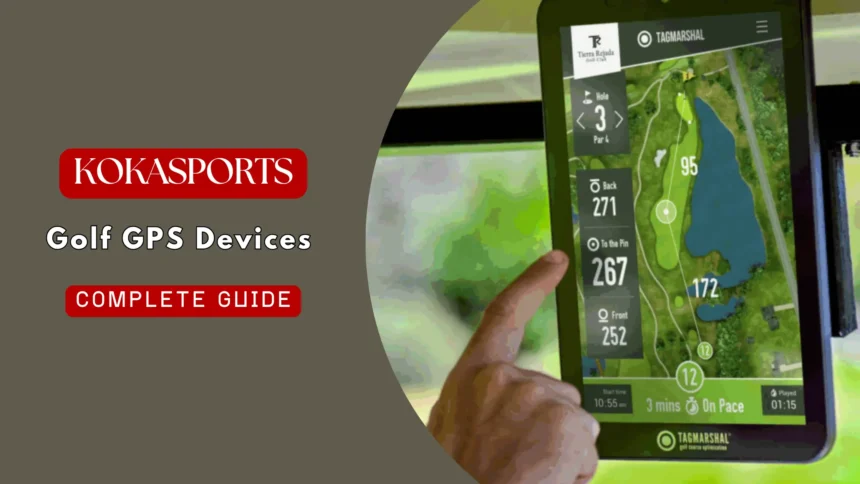
Golf is a game of decisions as much as execution. Golf GPS devices can help golfers make smarter choices by providing reliable distance information, helping them choose the right target and club instead of relying on guesswork.
That is where GPS technology has become increasingly useful.
Modern devices can give players fast access to distances around the course, helping them understand not only how far they are from the green but also where hazards, lay-up areas and other important features are positioned. For golfers who prefer a dedicated device rather than relying on a phone, golf GPS handhelds can provide course information in a compact and practical format.
The biggest benefit is not simply knowing a number. It is using accurate distance information to make more sensible decisions.
Course Management Starts Before the Swing
Amateur golfers often focus heavily on technique while overlooking strategy.
Yet many dropped shots have little to do with the quality of the swing itself.
A player may choose driver on a hole where a fairway bunker sits directly in their normal landing area. They may aim at a flag tucked behind a hazard when the centre of the green offers a much safer target. They may also take on a carry that requires an unusually good strike rather than playing to a more comfortable part of the hole.
GPS information gives golfers a clearer picture before they commit to the shot.
That extra knowledge can encourage better decisions and, importantly, remove some of the uncertainty that often leads to hesitation.
Accurate Distances Can Change Club Selection
Golfers are not always good at judging distance with the naked eye.
A target can appear closer or further away depending on elevation, background, lighting and the overall design of the hole.
Even experienced players can misjudge how much green sits beyond a front pin or how far a bunker actually is from the tee.
GPS devices help remove some of that visual uncertainty.
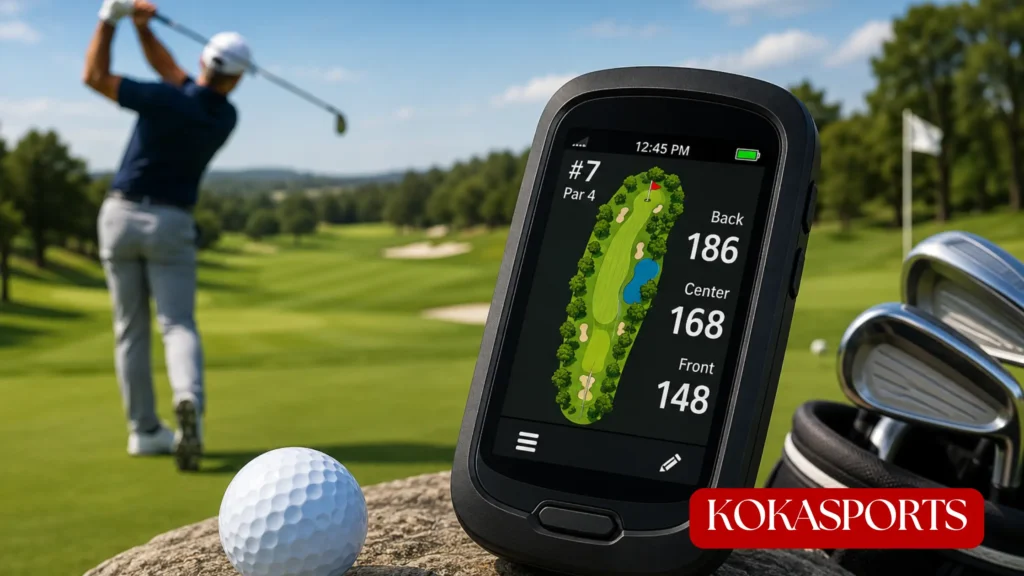
If the front, middle and back of the green are shown separately, players gain a much better idea of how deep the target is.
For example, a golfer may see that the front edge is 142 yards away while the middle is 154 and the back 166. That can lead to a very different club choice than simply seeing a flag that appears to be roughly 145 yards away.
Choosing the club that gives enough distance to reach the main part of the green can often be a better percentage play than trying to hit the exact flag yardage.
Handheld GPS Devices Offer a Different Kind of Convenience
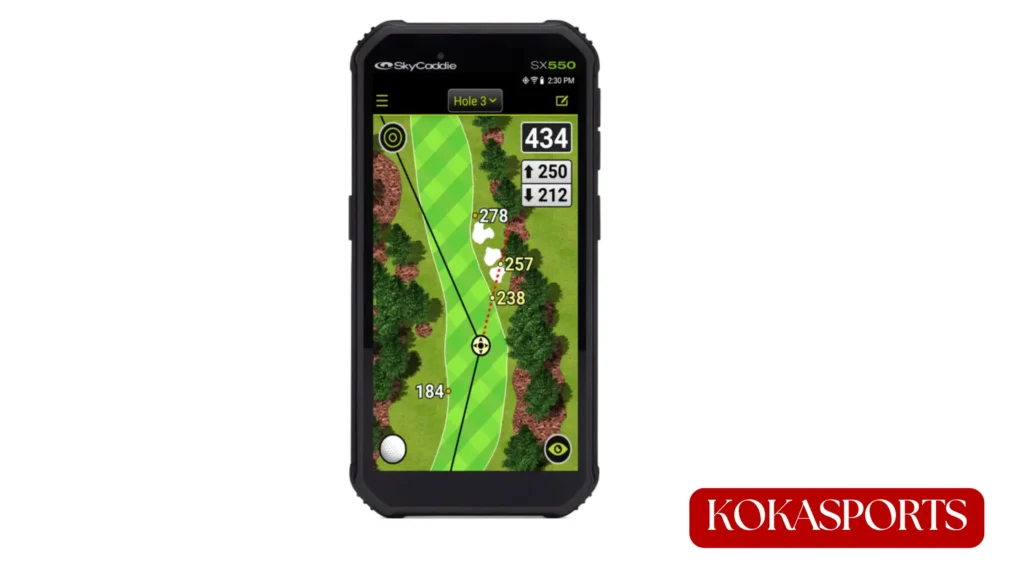
There are several ways golfers can access GPS information, including phones, watches and dedicated handheld units.
Handheld devices can be especially useful for golfers who want a larger display or prefer not to wear a watch while playing.
Depending on the model, a handheld can provide course maps, hole layouts, hazard distances and other useful information in an easy-to-read format.
That can be valuable on unfamiliar courses where the layout is not immediately obvious from the tee.
A golfer may be able to identify a hidden bunker, see how the fairway bends around a dogleg or understand whether the safer miss is to the left or right of the green.
This broader view can be particularly helpful when planning a hole rather than simply checking one distance.
Watches Keep Information Close at Hand
For players who value speed and simplicity, golf GPS watches offer another convenient approach.
Because the device is already on the wrist, there is little interruption to the normal rhythm of play.
A golfer can walk to the ball, glance at the distance and begin preparing for the shot without reaching into a pocket or golf bag.
That ease of access can make watches particularly useful for golfers who mainly want straightforward yardages.
Many devices also include additional functions such as score tracking, hazard information and shot measurement, although the exact features vary by model.
The most useful technology is often the technology that fits naturally into a golfer’s routine.
GPS Can Make Unfamiliar Courses Easier to Navigate
Playing a new course can be challenging because golfers do not have the local knowledge they build over repeated rounds.
A bunker that looks distant from the tee may actually sit directly at driver distance. A dogleg may narrow significantly beyond a certain point, or a green may extend much further backwards than it appears from the fairway.
GPS technology can help bridge that knowledge gap.
Instead of discovering the layout through mistakes, golfers can gather useful information before each shot.
That does not mean the course becomes easy. Players still need to select the correct club and execute the shot.
However, they are less likely to be punished simply because they were unaware of a feature that could not be seen clearly.
For golfers who travel regularly or enjoy playing different courses, this can make GPS particularly worthwhile.
Better Lay-Ups Can Save Shots
One of the least glamorous but most effective ways to lower scores is to improve lay-up decisions.
Many players approach a par five by simply hitting the longest possible club until they are close to the green.
That is not always the best strategy.
A golfer who knows their preferred wedge distance is 90 yards can use GPS information to leave that exact range rather than finishing 40 or 50 yards away with an awkward partial shot.
The same principle applies when playing short of a hazard.
If a stream crosses the fairway at 230 yards, the sensible option may be to choose a club that finishes comfortably short rather than taking on unnecessary risk.
Accurate distances allow golfers to play towards positions rather than simply towards the hole.
Knowing Your Own Yardages Is Just as Important
Course information only becomes truly valuable when golfers also know how far they hit each club.
A device can show that the front bunker requires a 155-yard carry, but the player still needs to know whether their 7-iron, 6-iron or hybrid is capable of covering that distance reliably.
This is where realistic club knowledge matters.
Golfers should base decisions on normal carry distances rather than exceptional shots.
If a 6-iron usually carries 160 yards but occasionally reaches 170, then 160 is the more useful number when planning a shot over trouble.
Combining accurate personal yardages with accurate course information can lead to much better club selection.
GPS Can Encourage More Conservative Targets
Many golfers lose shots by aiming too aggressively.
A flag positioned close to water or a deep bunker may be tempting, particularly after a good drive.
But attacking every pin is rarely the best strategy for an amateur player.
GPS can help golfers understand how much safe space exists elsewhere on the green.
If the middle of the putting surface is significantly away from the hazard, aiming there may offer a much better chance of making par or bogey rather than bringing a large number into play.
The same thinking applies from the tee.
Knowing the exact distance to trouble can make it easier to choose a safer club and accept a slightly longer approach.
Over 18 holes, avoiding just two or three major mistakes can have a meaningful effect on the scorecard.
Technology Can Also Speed Up Decision-Making
Although technology can sometimes slow down play, GPS is most effective when it does the opposite.
Instead of pacing out distances, searching for sprinkler-head markers or spending too long estimating yardage, golfers can get the information quickly.
That can make the pre-shot routine more efficient.
Check the number, identify the main danger, choose the club and commit.
The aim should not be to analyse every possible detail before every swing. Too much information can become distracting.
For most recreational golfers, a small number of useful distances is enough to make a confident decision.
Using GPS Without Becoming Dependent on It
Golf GPS technology should support judgement rather than replace it.
Distances do not account for every variable.
Wind, elevation, temperature, lie and ground conditions can all influence how a shot plays.
A 150-yard approach into a strong headwind may require a very different club from the same distance on a warm, calm day.
Golfers still need to interpret the conditions.
The GPS provides a reliable starting point, but the final decision remains with the player.
That balance is important because learning how to adapt is part of becoming a better golfer.
Smarter Decisions Can Lead to Lower Scores
Golfers often assume improvement must come from swing changes, greater distance or new equipment.
Sometimes the quickest gains are simpler.
Choosing a better target, understanding the true distance to trouble and playing to realistic club yardages can all reduce unnecessary mistakes.
GPS technology can support those decisions by giving golfers clearer information at the right moment.
Whether a player prefers a handheld unit with a larger course view or a watch that provides quick information from the wrist, the principle remains the same.
Better knowledge can lead to better choices.
Golf will always involve uncertainty, judgement and execution, but removing avoidable guesswork can make the game more manageable. For golfers looking to improve their course strategy without changing their swing, GPS technology can be one of the most practical tools available.
FAQs For Golf GPS Devices
Does GPS help improve golf?
Yes. GPS can provide accurate distances to the green, hazards and lay-up areas, helping golfers make better club and target decisions.
Are golf GPS watches useful?
Yes. Golf GPS watches provide quick yardages from the wrist and can be useful for players who want simple information without using a phone or handheld device.
Can GPS help lower your golf score?
GPS cannot improve your swing, but it can reduce guesswork. Better decisions on club selection, lay-ups and targets can help avoid unnecessary mistakes.
Conclusion
Golf GPS technology can make course management easier by giving players reliable distance information before they hit each shot. Instead of guessing at hazards, green depth or lay-up areas, golfers can use accurate numbers to choose better targets and clubs.
The key is to use GPS as a decision-making tool rather than depending on it for every answer. When accurate course distances are combined with realistic personal club yardages and an understanding of wind, elevation and playing conditions, golfers can make smarter choices and avoid unnecessary risks.
For players looking to improve their scores without changing their swing, better information can be a simple but valuable place to start.