
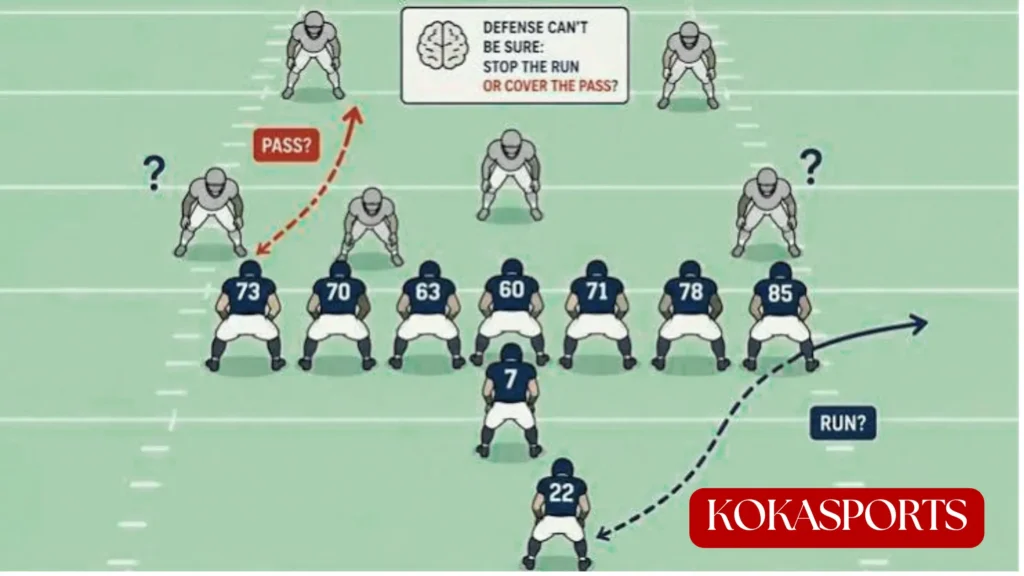
The best plays out of 13 personnel share one thing in common: they use three tight ends to make the defense wrong no matter how it lines up. With 1 running back, 3 tight ends, and 1 wide receiver, this heavy grouping looks like a run every time, which is exactly what makes both its runs and its play-action passes so effective. This guide breaks down the run concepts, play-action shots, and goal-line calls that work best from 13 personnel, and why each one gives the offense an edge.
Why 13 Personnel Works
13 personnel puts extra blockers on the field and forces the defense to respect the run. Three tight ends widen the blocking surface, add power at the point of attack, and sell a run look that sets up the pass. If you want the full background on the grouping and its roles, see our breakdown of how three tight ends work on offense. The plays below all flow from that same idea: make the defense load up to stop the run, then punish it.
The Best Run Plays Out of 13 Personnel
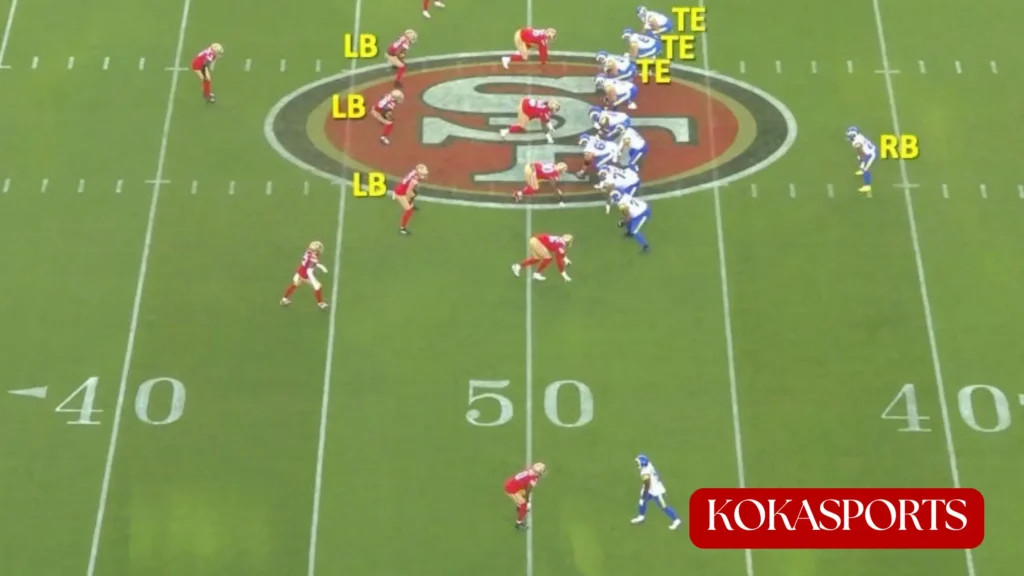
Running the ball is the foundation of 13 personnel, and a few concepts stand out.
Power
Power is the signature run of heavy personnel. It uses a double team at the point of attack, a kick-out block on the end defender, and a lead blocker coming through the hole, and in 13 personnel that lead blocker is often a tight end or H-back. The result is a numbers advantage right where the ball is going. You can read more about the concept in this power run reference. With three tight ends available to double team and kick out, few groupings run power better.
Duo
Duo is a downhill gap run that emphasizes pushing the defensive line straight back rather than pulling blockers. The running back reads the middle linebacker and cuts off the double teams. It is a clean, physical answer in short yardage, and the extra tight ends give the offense the bodies to create movement up front.
Inside and Outside Zone
Zone runs give 13 personnel a change of pace. On inside zone the line blocks an area and the back aims near the guards, while outside zone, or the stretch, attacks the edge and forces the defense to run sideways. Tight ends help seal the edge on outside zone, which is why heavy personnel can still run a wide, athletic run game rather than only pounding it inside.
The Best Play-Action Passes Out of 13 Personnel
Because the run threat is so real, play-action from 13 personnel is where big plays live.
Play-Action off the Run Look
The best play-action passes mirror the power and zone runs the offense already shows. The quarterback fakes the handoff, the linebackers step downhill to stop the run, and space opens behind them. As this play-action pass reference explains, the fake pulls defenders toward the line and frees receivers deeper. A tight end slipping into the void left by a crashing linebacker is one of the most reliable completions in football.
Boot and Naked Bootleg
Boot action pairs perfectly with heavy personnel. The quarterback fakes the run, rolls to the opposite side, and reads a short flat-to-deep progression, usually with tight ends releasing into routes. When he rolls without a lead blocker, it is a naked bootleg, or waggle, and it is especially effective in short-yardage and goal-line situations where the defense sells out to stop the run. The rollout also changes the launch point, moving the quarterback away from the pass rush.
Goal-Line and Short-Yardage Plays
Near the goal line, 13 personnel is at its best. Power and duo give the offense a downhill run with extra blockers, while a naked bootleg or play-action fade to a tight end punishes a defense that crowds the line. The lone receiver can also run a quick fade or a pick concept to create a one-on-one in the corner of the end zone. The whole package works because the defense cannot commit to stopping the run without leaving a tight end uncovered.
The Motion Wrinkle: Spreading Out of 13 Personnel
The most modern 13 personnel plays start heavy and then spread out. By motioning a tight end from an attached spot out to the slot or wide, the offense turns a power look into a spread look after the defense has already committed its personnel. That forces a defense built to stop the run into covering an athletic tight end in space, and it lets the quarterback read the reaction before the snap. This is the wrinkle that has made the grouping so dangerous in recent seasons.
Real NFL Examples
13 personnel is not just theory. Kyle Shanahan passed out of 13 personnel with great success as far back as his time with the Atlanta Falcons, proving a heavy grouping could throw the ball efficiently. More recently, the Los Angeles Rams built a large part of their offense around 13 personnel, running it more than any other team and using it as their main offensive agenda. Their approach shows the full toolkit: power runs, play-action, and spread-out looks created by motion, all from the same three tight ends.
How Defenses Try to Stop These Plays
Defenses respond in one of two ways. Some bring in heavier personnel to match the run, adding linebackers or linemen and accepting the risk of a mismatch in coverage. Others stay in a lighter two-safety look and dare the offense to run, hoping to keep enough speed to defend the play-action shots. The best 13 personnel play callers simply take what the defense gives: run against the light box, and throw against the heavy one.
Frequently Asked Questions
What plays work best out of 13 personnel?
Power and duo runs, inside and outside zone, play-action passes that mirror those runs, and boot or naked bootleg concepts. Goal-line fades and pick plays to tight ends round out the package.
Can you pass out of 13 personnel?
Yes. Because the heavy look sells the run, play-action and bootleg passes from 13 personnel are highly effective, and modern offenses throw from it with great efficiency.
What is the best run play from 13 personnel?
Power is the classic choice, since three tight ends give the offense the blockers to double team and kick out at the point of attack. Duo is a close second in short yardage.
Why is 13 personnel good near the goal line?
It puts extra blockers on the field for downhill runs while still threatening play-action to open tight ends, so the defense cannot fully commit to either the run or the pass.
Final Thoughts
The best plays out of 13 personnel all work off the same tension: the defense has to respect three tight ends and a downhill run game, which opens the door for play-action, bootlegs, and motion-based mismatches. Power and duo pound the ball, zone runs stretch the edge, and the passing game strikes when the defense overcommits. Build an offense around that balance, and 13 personnel becomes one of the hardest packages in football to defend.