

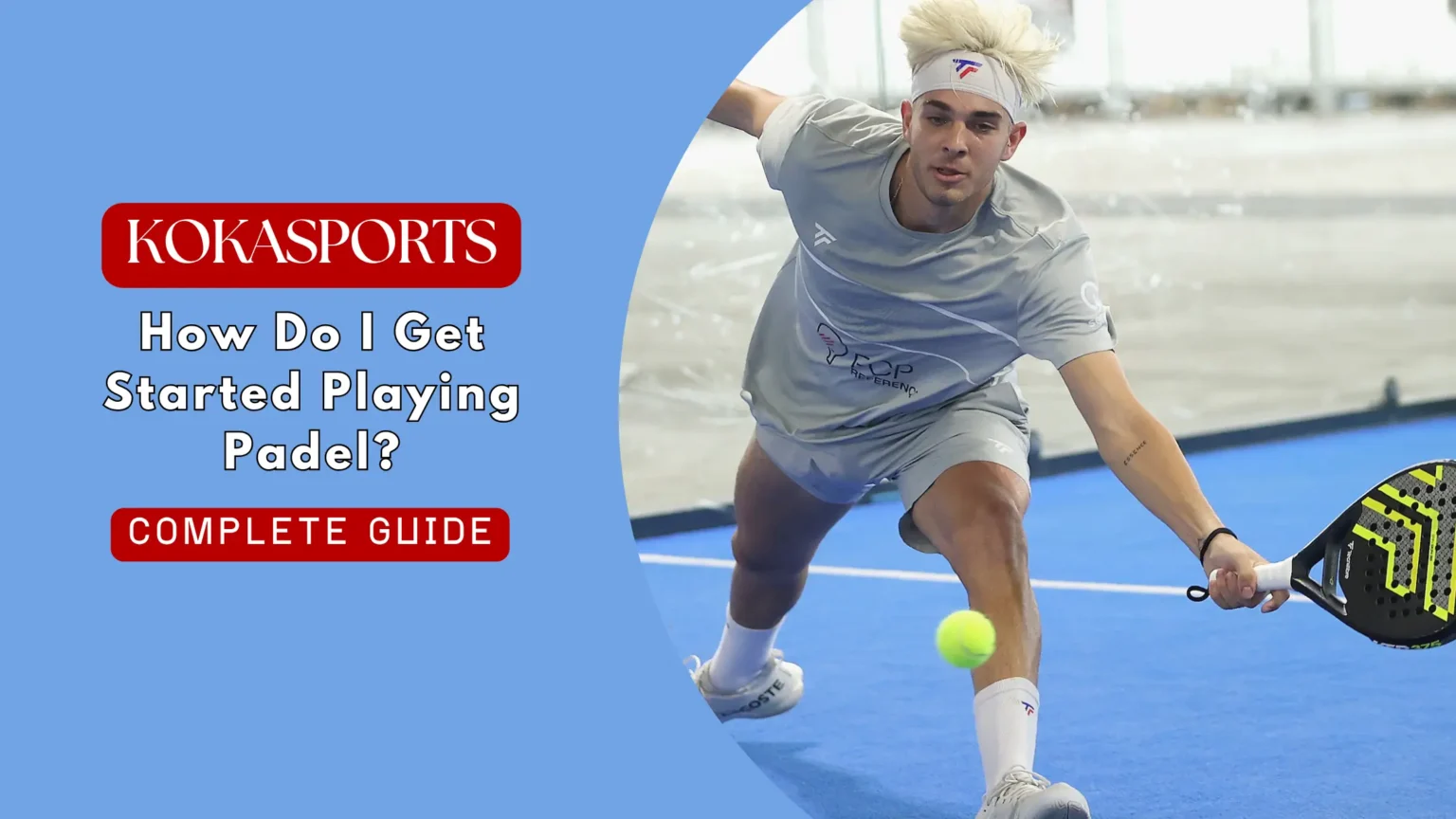
How do I get started playing padel? Book a beginner session at a local club, borrow or rent a racket, and turn up you do not need equipment, experience, or the rulebook memorised. Padel is one of the easiest racket sports to start and one of the hardest to stop playing. Most people are hitting real rallies within their first twenty minutes.
Quick answer: find a beginner-friendly court or social session, get three other players or let the club pair you up, rent a racket, learn the underarm serve and the wall rule, and play a relaxed first match. That is genuinely all there is to it.
What Do You Need to Start Playing Padel?
Less than you think.
A court. Padel is played on an enclosed court roughly 20 metres by 10 metres, surrounded by glass walls and metal mesh, with a net across the middle. You cannot play it on a tennis court the walls are the point of the game.
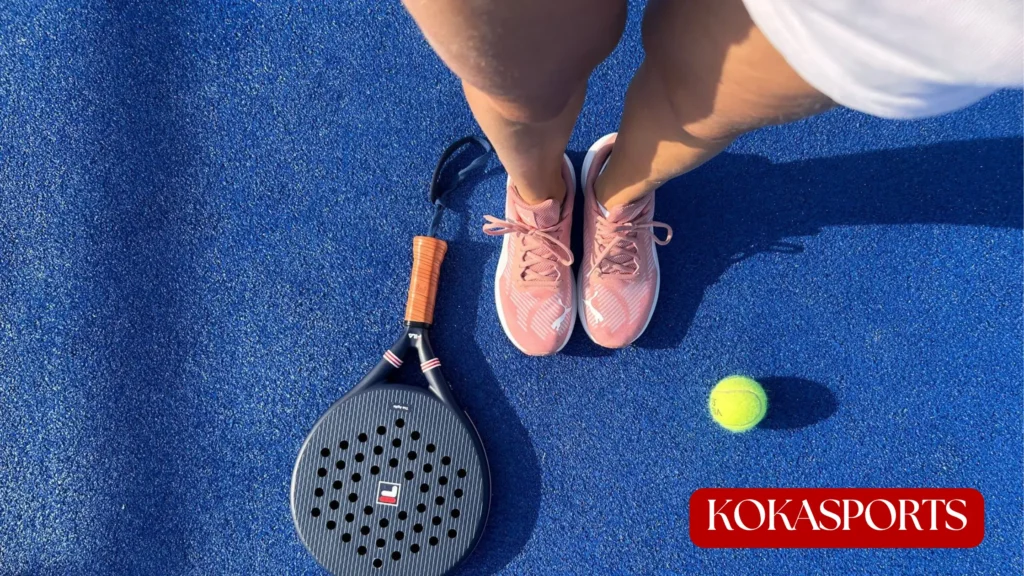
A racket and balls. Padel rackets are solid, stringless and perforated, and shorter than a tennis racket. Almost every club rents them, and you should rent for your first few sessions. Rackets vary a lot in weight and head shape, and you will have no idea what suits you until you have played. Balls look like tennis balls but are slightly lower in pressure; the club provides them.
Court shoes. This is the one thing worth getting right. Padel involves constant lateral movement on artificial grass, and running shoes have the wrong grip and no side support. Tennis or padel shoes with a herringbone sole are ideal. Trainers with flat grip will do for a first session.
Comfortable sports clothing and water. That is it. No special kit, no expensive purchase, no commitment.
How to Find Your First Padel Session
You have three realistic options, and they suit different people.
A beginner lesson. Best if you have never played a racket sport. A coach walks you through the serve, the basic strokes and the wall rules in an hour, and you skip most of the flailing. You do not need a private coach a group beginner class is cheaper and more fun.
A social or open beginner session. Clubs run these constantly because padel is fundamentally a social sport. You turn up alone, get placed with other players at your level, and rotate through games. Low pressure, and the fastest way to meet people who will invite you back.
A casual booking with friends. Best if you already have three people who want to try it. You will be terrible together, which is exactly the right way to start.
When booking, look for a session marked beginner or social, check whether racket rental is included, and confirm the court is indoor or outdoor depending on your weather. Booking apps like Playtomic list club availability, open matches and player levels in most countries where padel has taken off.
Do You Need Three Other People to Play?
No, and this is the most common reason people never start.
Padel is played as doubles, so four players are on court. But you almost never need to arrive with three friends. Clubs run open sessions specifically so solo players can join, and most booking apps have an “open match” function where you join a game that needs a fourth.
You can also simply ring the club and ask to be put with other beginners. They will say yes. Filling courts is their business, and a room full of new players who keep coming back is exactly what they want.
Basic Padel Rules to Learn Before Your First Game

You need four rules on day one. Everything else you will pick up while playing.
The serve is underarm
This is the biggest difference from tennis, and the rules are specific. As the LTA explains in its padel rules guide, you bounce the ball behind the service line, then strike it at or below waist height, with at least one foot on the ground. You serve diagonally into the opposite service box, and you get two attempts.
There is one quirk worth knowing before it confuses you. If your serve lands in the correct box and then hits the back glass, it is live your opponent plays it off the glass. If it lands in the box and then hits the metal mesh, it is a fault. Glass good, fence bad.
The walls are part of the game
Here is the rule that makes padel padel: the ball must bounce on the floor first, and after that, the walls are fair game.
So: ball → floor → glass → your racket is perfectly legal, and playing balls off the back wall is a normal part of every rally.
But if the ball flies directly into the wall or mesh without bouncing on the floor first, the point is over. Floor first, then walls. That single sentence covers most wall situations you will meet.
One more: you cannot play the ball off your own wall to send it back over the net. Your return has to travel over the net directly.
One bounce only
The ball may bounce once on the floor on your side. Twice and you have lost the point. Walls do not count as a bounce only the floor does. Beginners get this backwards constantly.
Do not touch the net
You cannot touch the net or reach over it. That is the whole rule.
That is enough. Nobody expects you to know the edge cases, and your partner will happily explain them as they come up.
How Does Padel Scoring Work?
If you know tennis scoring, you already know padel scoring.
Points run 15, 30, 40, game. Nil is called love. Win four points and you win the game unless both sides reach 40, which is deuce. From deuce, one side must win two points in a row: the first is advantage, the second wins the game.
Six games wins a set, provided you are two games clear. At 6-6 you play a tiebreak. Matches are usually best of three sets, though social games often just play one.
One thing to check before you start: some clubs and formats use a golden point, where a single point decides the game at deuce rather than playing advantage. It speeds things up. Ask which you are playing so you are not confused mid-game.
Honestly, for your first session, let someone else keep score.
The First Shots You Should Learn
Forehand and backhand. Short, controlled swings. Padel rewards placement over power almost completely, and beginners who swing hard spend the session hitting the back glass on the full.
The serve. Aim for consistency, not speed. A slow serve that lands in beats a fast one that does not. Because the serve is underarm, nobody is winning points with it its only job is to start the rally.
The return. Get it back. That is the entire objective at first. Padel points are long, and simply keeping the ball alive wins a surprising number of them.
The lob. This is the shot that separates people who improve quickly from people who plateau. Lifting the ball over opponents who have come forward pushes them back and lets your team move up. It is the most useful shot in beginner padel and almost nobody practises it.
Playing off the glass. Let the ball come to you. New players panic when the ball heads toward the back wall and try to hit it early. Turn side-on, wait, let it rebound, and hit it as it comes back. It feels wrong for about ten minutes and then feels natural.
Where Should Beginners Stand?
Move with your partner, not away from them.
Picture a piece of string joining you and your partner. You both move up together, back together, and across together. The classic beginner mistake is one player charging the net while the other stays deep, which opens an enormous gap in the middle.
Start each point in the defensive position, near the back of the court. Once your team is in control, move forward together toward the net, because the net is where padel points are won.
Call the ball out loud. “Mine.” “Yours.” “Leave.” Two players both swinging at the same ball is the most common beginner collision, and one word prevents it.
Your First Padel Session, Step by Step
First 10 minutes warm up. Gentle movement, easy swings, short rallies from the service line. Get a feel for how the ball comes off a solid racket, which is different from strings.
Next 15 minutes basic shots. Forehands, backhands, a few serves, a few returns. No power.
Next 15 minutes learn the glass. Have someone feed balls toward the back wall so you can practise letting them rebound. This is the skill that makes the game click, and it is worth dedicating time to before you play points.
Final 30 minutes play. Do not worry about the score. Focus on getting the ball back, moving with your partner, and using the walls. Rallies are the goal.
Beginner Mistakes to Avoid
Hitting everything hard. Control wins at every level of this sport, and especially at yours.
Standing still while your partner moves. Move together or leave a hole.
Attacking the ball before it reaches the glass. Let it come.
Ignoring the serve. It is free and easy to make reliable.
Buying an expensive racket immediately. Rent for a month. You will learn what you actually want.
Trying to win. Your first sessions are for learning what the ball does, not for a result.
How to Improve After Your First Few Games
In week one, focus on the rules, basic strokes and getting comfortable letting the ball hit the glass.
Over weeks two to four, work on serve consistency, the lob, and moving to the net with your partner. Play regularly twice a week for a month will do far more than one intense lesson.
Your Padel Beginner Checklist
- Find a beginner-friendly court or social session
- Get three players, or let the club pair you up
- Rent or borrow a racket for the first month
- Wear court shoes with proper grip
- Learn the underarm serve
- Remember: floor first, then walls
- One bounce only
- Move with your partner and call the ball
- Play control, not power
You do not need to be good at padel before you start playing padel. Book a beginner session, borrow a racket, and learn the rest on court.
After a month, consider a beginner coaching block or a regular social game. By then you will know what you are bad at, which makes coaching worth far more than it would have been on day one. If you are picking up a new sport and want more starting points, our sports guides cover the basics across a range of games.
FAQs For How Do I Get Started Playing Padel?
Is padel difficult to learn?
No. The court is small, the serve is underarm, the racket is short and easy to control, and the walls keep rallies alive. Most beginners are rallying within their first session. Positioning and wall play take longer to master.
Is padel beginner friendly?
Very. It is doubles, so you always have a partner, and it is genuinely social by design. The gentle underarm serve means points start slowly rather than with an unreturnable ace, which makes games competitive even between mixed abilities.
Can you learn padel by yourself?
You can practise elements alone racket control, shadow swings, footwork, serving against a wall. But padel is a doubles game, and the wall rebounds and positioning only make sense with other players on court. Get into a session early.
Can you play padel at home?
Not a real game. You need an enclosed court with glass walls, and there is no home substitute. You can practise swings, footwork and racket control at home, but the sport itself needs a proper court.
Can you play padel singles?
Rarely. Padel is played as doubles almost everywhere. Singles exists but needs a narrower specialist court, so as a beginner you can safely ignore it and learn the standard game.
Conclusion
So, how do I get started playing padel? Book a beginner session, rent a racket at the club, and turn up. That is the whole answer, and everything else in this guide is detail you can absorb once you are actually on court.
The sport is unusually forgiving of newcomers. The serve is gentle, the court is small, the walls keep rallies going long after a tennis point would have ended, and you always have a partner beside you. Very few sports let a complete beginner have a genuinely fun match on day one. This is one of them.
You do not need to be good at padel before you start playing padel. Grab a racket and learn the rest on court.