


So, what is a cutter pitch? In simple terms, a cutter is a “cut fastball,” a pitch that looks just like a normal fastball but breaks slightly to the side at the last second, moving toward the pitcher’s glove side as it reaches the hitter. It sits right between a four-seam fastball and a slider, thrown almost as hard as a fastball but with a bit of late, sideways movement. That combination makes it sneaky and effective. Hitters expect a straight fastball, swing, and then the ball darts just enough to catch the thin part of the bat. The result? Weak contact, jammed swings, and plenty of broken bats. Let’s break down exactly how this clever pitch works.
What Is a Cutter Pitch in Baseball?
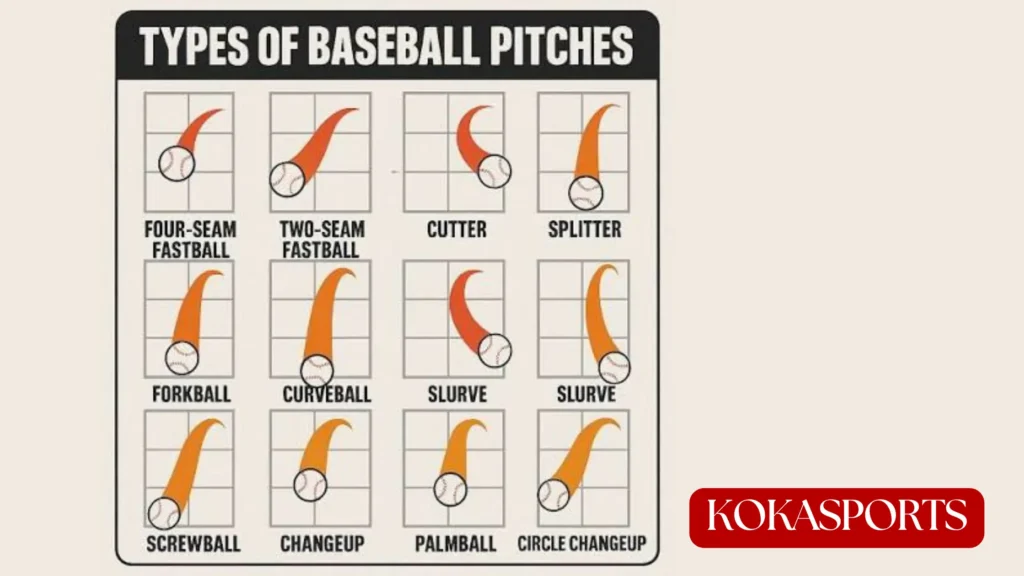
Cutter Pitch Definition
The word “cutter” is short for “cut fastball,” and that name tells you almost everything. It is part of the fastball family, not a true breaking ball. A pitcher grips and throws it much like a fastball, but a small change in grip or finger pressure makes the ball “cut” sideways in flight. Compared to a standard four-seam fastball, which travels fairly straight, a cutter adds a late, subtle sidestep. That is why it counts as a fastball variant: same speed feel, same arm action, just a little extra movement at the end. As the official MLB glossary notes, the cutter is grouped with fastballs rather than breaking balls.
How Does a Cutter Move?
A cutter’s signature is horizontal movement toward the pitcher’s glove side. For a right-handed pitcher, that means the ball drifts a few inches to his left as it nears the plate, boring in on the hands of a right-handed hitter. It also tends to have a touch of downward movement, partly from gravity and partly from how it spins. But here is the key thing: no two cutters move exactly alike. Some barely wiggle, others break sharply. Movement depends on the pitcher.
How Fast Is a Cutter Pitch?
Speed is a big part of the cutter’s identity. Most MLB cutters land somewhere between roughly 85 and 95 miles per hour, often averaging in the high 80s to low 90s. That makes it slower than a typical four-seam fastball, which usually sits in the mid-to-upper 90s, but noticeably faster than a slider, which often drops into the low-to-mid 80s. Velocity varies from pitcher to pitcher, but the cutter almost always lives close to fastball speed.
How Does a Cutter Pitch Move?
Horizontal Movement
The “cutting” action is the whole point. As the pitch travels, it slides away from the straight path a fastball would take, veering toward the pitcher’s glove side. To a hitter tracking what looks like a fastball, that unexpected sideways nudge is just enough to miss the sweet spot of the bat.
Vertical Movement
Cutters usually drop less than sliders. A slider often has sharp, tumbling break, while a cutter stays flatter and firmer. The mix of spin and gravity gives the cutter a small downward tilt, but nothing dramatic. That firmer, straighter path is exactly what keeps it looking like a fastball for so long.
Late Movement and Hitter Perception
Here is where the magic happens. A good cutter looks identical to a four-seam fastball out of the pitcher’s hand, then breaks late, right as the hitter commits to a swing. This is the “tunnel” effect, where two different pitches travel the same path before splitting apart at the last moment. Because the movement comes so late, hitters cannot adjust in time. And remember, a cutter’s power is not just about how much it moves. It is the blend of velocity, spin, location, and deception working together. A cutter with only modest movement can still be nearly unhittable if it is thrown hard and placed perfectly.
What Does a Cutter Pitch Look Like?
From the pitcher’s mound, a cutter leaves the hand looking like a routine fastball, riding toward the plate on a straight line. From the hitter’s box, that is exactly the problem. The eyes read “fastball,” the brain says “swing here,” and the body commits. Then, in the final few feet, the ball changes direction just slightly, sliding off its expected path.
This is different from a big, obvious breaking ball. A curveball or sweeping slider announces itself with a loud, looping arc. A cutter is subtle. Its movement is small and sharp, more of a quick jab than a wide swerve. That understated action is what makes it so tricky. Hitters are not fooled by huge movement; they are fooled by a fastball that moves just a couple of inches when they expected none at all.
Picture the three pitches on a scale. A four-seam fastball flies straight and fast. A slider breaks hard and wide. The cutter lives in between, faster than a slider, straighter than a slider, but with more life than a plain fastball.
How to Throw a Cutter Pitch

Cutter Grip
The cutter grip starts close to a four-seam fastball, then shifts slightly. Most pitchers hold the ball a touch off-center and apply a bit more pressure with the middle finger along a seam. This small offset is what puts cutting spin on the ball. The grip differs from a four-seam mainly in that positioning and pressure, not in any wild contortion. In fact, the seams do a lot of the work here, which is one reason it helps to understand what a baseball is made of and how those raised seams grip the air.
Arm Action
This part is crucial: a cutter is thrown with fastball-like arm speed. Pitchers do not slow down, and they do not violently twist or snap the wrist the way some imagine. The movement comes from the grip and a natural release, not from muscling the ball. That is what keeps the arm action looking like a fastball, which is the whole disguise.
Release Point
Consistency at release is everything. If a pitcher releases a cutter from the same spot as his fastball, hitters cannot tell them apart until it is too late. Tiny changes in how the ball rolls off the fingers can add or reduce the amount of cut, so command takes practice.
Spin and Seam Interaction
The grip and release together decide how the ball spins, and the seam orientation shapes how it moves through the air. Slightly different finger pressure or seam angles can turn a sharp cutter into a softer one. Because of this, the exact grip and release vary quite a bit from pitcher to pitcher. There is no single “correct” cutter, which is part of what makes the pitch so personal.
Cutter vs Fastball: What’s the Difference?
Since a cutter belongs to the fastball family, it helps to line them up directly.
| Feature | Cutter | Four-Seam Fastball |
|---|---|---|
| Velocity | Usually slightly lower | Usually higher |
| Movement | Late cutting action | Relatively straight |
| Purpose | Miss barrels, change eye level | Generate velocity and whiffs |
| Hitter perception | Fastball-like | Traditional fastball |
Compared to a two-seam fastball or a sinker, which tend to run and drop toward the pitcher’s arm side, the cutter moves the opposite way, toward the glove side. But make no mistake: the cutter is still a close cousin of the fastball, sharing its speed and its straight-looking release. It is simply a fastball with a mind of its own.
Cutter vs Slider: What’s the Difference?
This is where many fans get confused, so let’s clear it up. Cutters and sliders can look similar, but they are built for different jobs.
Cutter vs Slider Movement
A cutter generally has less break than a slider. Its movement is small, tight, and late. A slider, by contrast, usually breaks more sharply, with greater horizontal sweep or downward tumble. If the cutter is a quick sidestep, the slider is a full swerve.
Cutter vs Slider Velocity
Cutters are thrown harder. They live close to fastball speed, while sliders usually come in several miles per hour slower, creating more separation from the fastball. That speed is a defining line between the two.
Cutter vs Slider Purpose
A cutter is a weak-contact pitch. It aims to jam hitters, break bats, and produce soft grounders and pop-ups by tunneling off the fastball. A slider is more of a swing-and-miss pitch, designed to make hitters chase and whiff with its bigger, later break.
Can a Cutter Become a Slider?
Sometimes the line blurs. If a pitcher’s cutter gets slower and starts breaking more, it can begin to resemble a slider, and pitch classification can be a little subjective. Tracking systems like those featured on Baseball Reference sort pitches using measurable data like velocity, spin, and movement, but even they occasionally disagree on where a cutter ends and a slider begins.
Why Do Pitchers Throw a Cutter?
So why add a cutter to the mix? The advantages are big. It helps a pitcher avoid hard contact by shifting where the ball meets the bat, which breaks bats and produces weak grounders and fly balls. It gives a pitcher another offering that looks like a fastball, which keeps hitters guessing. And it works against both left-handed and right-handed hitters, jamming one and running away from the other.
The real secret weapon, though, is pitch tunneling. Because a cutter travels the same early path as a four-seam fastball before breaking late, the two pitches “tunnel” together and become nearly impossible to tell apart in time. This lets a pitcher gain movement and unpredictability without giving up much velocity. In short, a cutter makes a good fastball even more dangerous.
How Hitters Try to Hit a Cutter
Facing a good cutter is tough, but hitters do have strategies. The best approach is to recognize the pitch early by reading the pitcher’s release and grip rather than waiting to react to the movement, which comes too late. Smart hitters also study pitch sequencing, learning when a pitcher likes to use his cutter, and they adjust their expected contact point inward to fight off the jam. The trap to avoid is overreacting to the small movement, since the cut is subtle. Even so, cutters frequently produce jam shots, broken bats, and weak ground balls or fly balls, which is exactly why pitchers love them.
Famous MLB Pitchers Who Throw a Cutter
Plenty of great pitchers have leaned on the cutter, but a few stand out. The most famous of all is Mariano Rivera, whose cutter was so dominant it became legendary, which we will cover next. Among modern arms, Corbin Burnes is the poster child for the pitch. The 2021 National League Cy Young winner throws his cutter more than half the time, using it almost like other pitchers use a fastball, and its firm velocity and sharp late movement made him one of baseball’s best. Now with the Arizona Diamondbacks, Burnes has been working his way back from Tommy John surgery, but his cutter-first style reshaped how people think about the pitch. Elite relievers like Kenley Jansen have also built entire careers around a Rivera-style cutter, proving that one great cut fastball can be enough to dominate. Just remember, not every pitcher who shows a cutter in a database actually features it as a real weapon.
Mariano Rivera and the Famous Cutter
Why Was Mariano Rivera’s Cutter So Effective?
No discussion of the cutter is complete without Mariano Rivera, the New York Yankees closer widely called the greatest relief pitcher ever. His cutter became his signature, and hitters knew it was coming, yet still could not hit it. Why? Because it looked exactly like a fastball, arrived with pinpoint command, and broke late right into the hitter’s hands. It generated endless weak contact and shattered a famous number of bats.
Was Mariano Rivera’s Cutter a Fastball?
Yes and no. His cutter was classified as a cut fastball, so it lived in the fastball family and traveled at fastball-like speed. But it was different from a conventional four-seam fastball because of that signature late cut. It was, essentially, a fastball with a devastating little twist, and Rivera rode it all the way to the Hall of Fame.
Common Mistakes When Explaining a Cutter Pitch
A few myths tend to muddy the water, so let’s set them straight. A cutter is not just a slow slider; it is a fastball variant thrown much harder. It does not need dramatic movement to work, since a tight, late cut is often enough. Pitchers do not have to aggressively twist their wrist to throw one, because the grip does the work. Not every cutter moves the same way, as each pitcher’s version is unique. And a cutter is not automatically “better” than a slider or fastball; it is simply a different tool for a different job. Understanding these points is what separates a real grasp of the pitch from a surface-level one.
Cutter Pitch FAQs
What is a cutter pitch in baseball?
A cutter, or cut fastball, is a pitch thrown at near-fastball speed that breaks slightly toward the pitcher’s glove side late in its flight. It is designed to produce weak contact by missing the barrel of the bat.
Is a cutter a fastball or a breaking ball?
A cutter is a fastball variant, not a true breaking ball. It is called a cut fastball because it shares a fastball’s speed and arm action while adding a small, late cutting movement.
How fast is a cutter pitch?
Most MLB cutters range from about 85 to 95 miles per hour, often averaging in the high 80s to low 90s. It is slower than a four-seam fastball but faster than a slider, and speed varies by pitcher.
What is the difference between a cutter and a slider?
A cutter is thrown harder with smaller, later movement, while a slider is slower with a bigger, sharper break. A cutter aims for weak contact; a slider aims for swings and misses.
Conclusion
So, what is a cutter pitch? It is a cut fastball, a pitch thrown at nearly fastball speed that breaks late toward the pitcher’s glove side. It lives between a four-seam fastball and a slider, harder and straighter than a slider but livelier than a plain fastball. Its greatest strength is deception: it disguises itself as a fastball, then moves just enough at the last second to miss the barrel and produce weak contact. From Mariano Rivera’s legendary version to Corbin Burnes today, the cutter proves that a small, late move can be one of the most powerful weapons in baseball.