

Let’s start with the answer everyone comes here for. The pat meaning football fans hear on every broadcast is simple: PAT stands for Point After Touchdown. It is the scoring chance a team gets the instant after it scores a touchdown. Once those 6 points go up, the team lines up to add even more.
It can kick the ball through the uprights for 1 extra point, or run or pass it into the end zone for 2 points. That is the whole idea in a nutshell. Easy enough, right? Stick around and we will break down exactly how it works, how many points it is worth, and why coaches sometimes gamble on going for two.
What Is PAT Meaning Football?
So what is the full pat meaning football beginners should lock in? PAT means Point After Touchdown, and the name could not be more literal. The attempt comes right after a touchdown, so that is what they called it. Short, clear, done.
Here is a small but useful detail. You will often hear “PAT” and “extra point” used like they are the same word. Most of the time that is fine, but there is a slight difference. “Extra point” usually means the traditional 1-point kick. “PAT” is the wider term that covers the whole point-after-touchdown attempt, whether the team kicks for 1 or goes for 2. So every extra point is a PAT, but not every PAT is an extra-point kick. When do you actually hear the word? Right after any touchdown, when the announcer says the team is “lining up for the PAT.” Now you will catch it every time.
How Does a PAT Work in Football?
What Happens After a Touchdown?
First things first. A touchdown is worth 6 points. But the play is not over yet. Scoring a touchdown earns the team a bonus opportunity to pad its score, and that is where the PAT comes in. It is like a reward for reaching the end zone.
The 1-Point PAT Kick
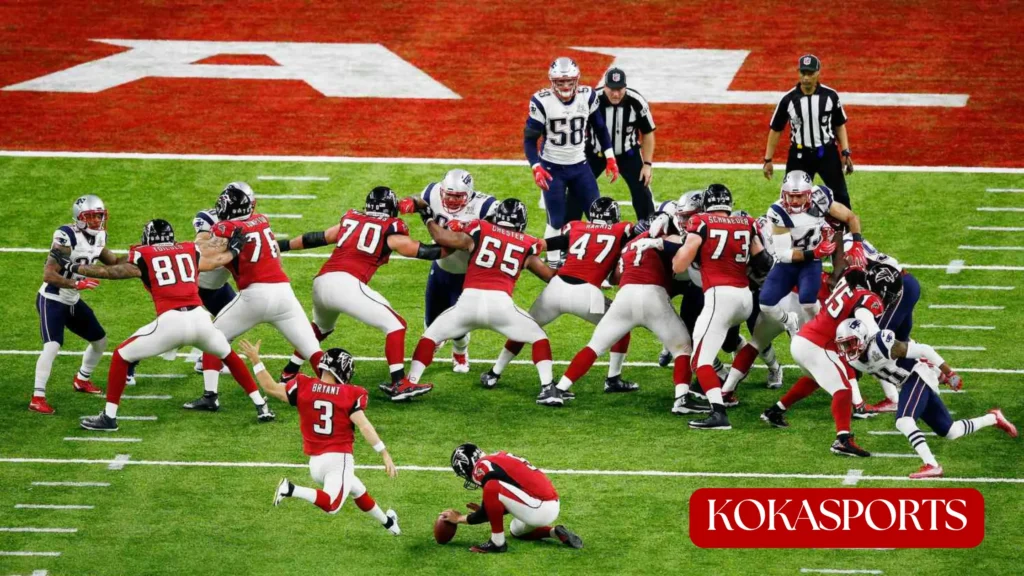
The most common choice is the kick. It looks smooth, but a lot happens in about one second. The center fires the snap back to the holder. The holder catches it and sets it upright on the ground. The kicker steps in and boots it toward the goalposts. If the ball sails through the uprights, the team gets 1 point. Simple, fast, and reliable. That is why teams pick it most of the time.
The 2-Point Conversion
Now for the bold option. Instead of kicking, a team can keep its offense on the field and try a two-point conversion. Here the team runs or passes the ball into the end zone from close range, just like a mini touchdown play. If it works, the team scores 2 points instead of 1. Teams usually save this move for moments when a single point is not enough, which we will get to shortly. Unlike the calm, routine kick, the two-point try is all-or-nothing drama.
How Many Points Is a PAT Worth?
Let’s make this crystal clear, because it shapes every football score you will ever see. A successful PAT kick is worth 1 point. A successful two-point conversion is worth 2 points. That is the ceiling. You cannot score 3 or 4 on the attempt.
This is why a touchdown plus a kick so often equals 7. Six for the touchdown, one for the kick, and there is your lucky number 7. Here is a quick scoring cheat sheet to keep it all straight.
| Play | Points |
|---|---|
| Touchdown | 6 |
| PAT kick | 1 |
| Two-point conversion | 2 |
| Field goal | 3 |
Look at those numbers and the scoreboard suddenly makes sense. Scores like 7, 14, and 21 are just touchdowns and 1-point kicks stacking up, one drive at a time.
PAT vs Two-Point Conversion
Are a PAT kick and a two-point conversion the same thing? Not quite, and this is where beginners get tangled. Both happen right after a touchdown, but they are two different roads to different rewards.
The kick is worth 1 point and is done with a foot. The two-point try is worth 2 points and is done with a run or a pass. The kick is low risk and nearly automatic. The two-point try is higher risk with a bigger payoff. Think of it as playing it safe versus swinging for the fences.
So why would a coach ever choose the riskier two points? It almost always comes down to the score and the clock. If a team is trailing by just the right margin late in the game, that second point can be the difference between winning, tying, or losing. Coaches also use scoring charts and analytics that tell them exactly when the gamble is smart. It is part cold math, part gut feeling, and it can decide the whole game.
PAT Rules in Football

Where Is a PAT Attempted?
In the NFL, the ball is snapped from the 15-yard line for the extra-point kick. Once you add the end zone and the holder’s spot, that comes out to roughly a 33-yard kick. It was not always this hard. Before 2015, the kick came from the 2-yard line and was almost a sure thing, so the league moved it back to bring some suspense to the play. The official NFL rules made the change to reward accuracy instead of handing out free points.
What Happens If the PAT Is Missed?
If the kick misses, no point is added. The score simply stays where it was for that drive, and the team kicks off to the other side as normal. A missed extra point stings, especially in a close game, because that lost point can come back to haunt a team at the final whistle.
Can a PAT Be Blocked?
Yes, it can. The defense is allowed to rush the kick and try to swat it down at the line. A blocked PAT is rare, but it keeps the play from being a total freebie. Pressure is always on.
Can the Defense Score on a PAT?
Here is the twist most casual fans miss. Since 2015, the defense can actually score during a PAT. If it blocks the kick or forces a turnover and returns the ball all the way to the opposite end zone, the defense gets 2 points. There is even an ultra-rare play called a one-point safety that can happen on a conversion. If odd scoring plays fascinate you, this breakdown of the 2-point safety and football’s rarest scores is worth a read.
PAT vs Field Goal
Because a PAT kick and a field goal fly through the same uprights, new fans often mix them up. They are related, but they are not the same play.
A PAT kick happens right after a touchdown and is worth 1 point. A field goal happens during a normal drive, does not require a touchdown at all, and is worth 3 points. One is part of the conversion after scoring; the other is its own separate scoring play. So while a PAT kick looks just like a field goal, calling it a “field goal” is not quite right. As ESPN and other outlets point out, this is one of the most common beginner mistakes, and now you can avoid it.
Why Do Football Teams Attempt a PAT?
The reason is simple: free points are good points. After all the effort it takes to score a touchdown, why leave an easy point on the table? The 1-point kick is the traditional, safe way to bump the score up and build a cushion.
But the PAT is not just habit. It carries real weight. That single point can turn a tie into a lead, or push a lead just out of reach. In a tight game, the difference between a 6-point drive and a 7-point drive can decide who wins. Small play, big consequences.
PAT Meaning Football: Real Scoring Examples
Numbers make everything click, so let’s run through a few quick scenarios.
In the first example, a team scores a touchdown for 6 and kicks the extra point for 1. Total: 7 points. This is the result you will see most often.
In the second example, a team scores a touchdown for 6 but misses the extra point. Total: 6 points. That missed kick could matter a lot if the game stays close.
In the third example, a team scores a touchdown for 6 and goes for two, punching it into the end zone for 2. Total: 8 points.
In the fourth example, picture a coach late in the fourth quarter, trailing by 2 after a fresh touchdown. Kick to tie the game, or go for 2 to win it outright? That one call can define an entire season. This is where the PAT stops being routine and becomes pure drama.
Football Terms Related to PAT
Football loves its shorthand, and the scoreboard is packed with it. Here is a quick key: TD means touchdown, PAT means point after touchdown, XP means extra point, FG means field goal, and 2PC means two-point conversion. You will also hear “conversion” and “extra point” used to describe the attempt after a touchdown. Keep these in your back pocket and the broadcast graphics will read like plain English.
FAQs About PAT Meaning Football
What does PAT stand for in football?
PAT stands for Point After Touchdown. It is the scoring attempt a team gets right after scoring a touchdown, either a 1-point kick or a 2-point conversion.
How many points is a PAT?
A successful PAT kick is worth 1 point. It is the safe, traditional choice, and NFL kickers make it well over 90 percent of the time.
Is a PAT the same as an extra point?
Mostly, yes. “Extra point” usually means the 1-point kick specifically, while “PAT” is the broader term for the whole point-after-touchdown attempt, kick or two-point try.
Can a PAT be 2 points?
Yes. Instead of kicking, a team can attempt a two-point conversion by running or passing into the end zone. If it succeeds, the team scores 2 points instead of 1.
What happens if a PAT is missed?
No point is awarded. The score stays as it was for that drive, and the team kicks off to the opponent just like normal.
Conclusion
So there you have it. The pat meaning football fans ask about is Point After Touchdown, the bonus scoring chance a team gets right after reaching the end zone. A made kick is worth 1 point, while a two-point conversion is worth 2. Which one a team picks comes down to the score, the clock, and a coach’s nerve. Just remember the kicking distance can change between the NFL, college, and high school, but the heart of the play stays the same. Next time PAT flashes on the screen, you will know exactly what it means and why it matters.