
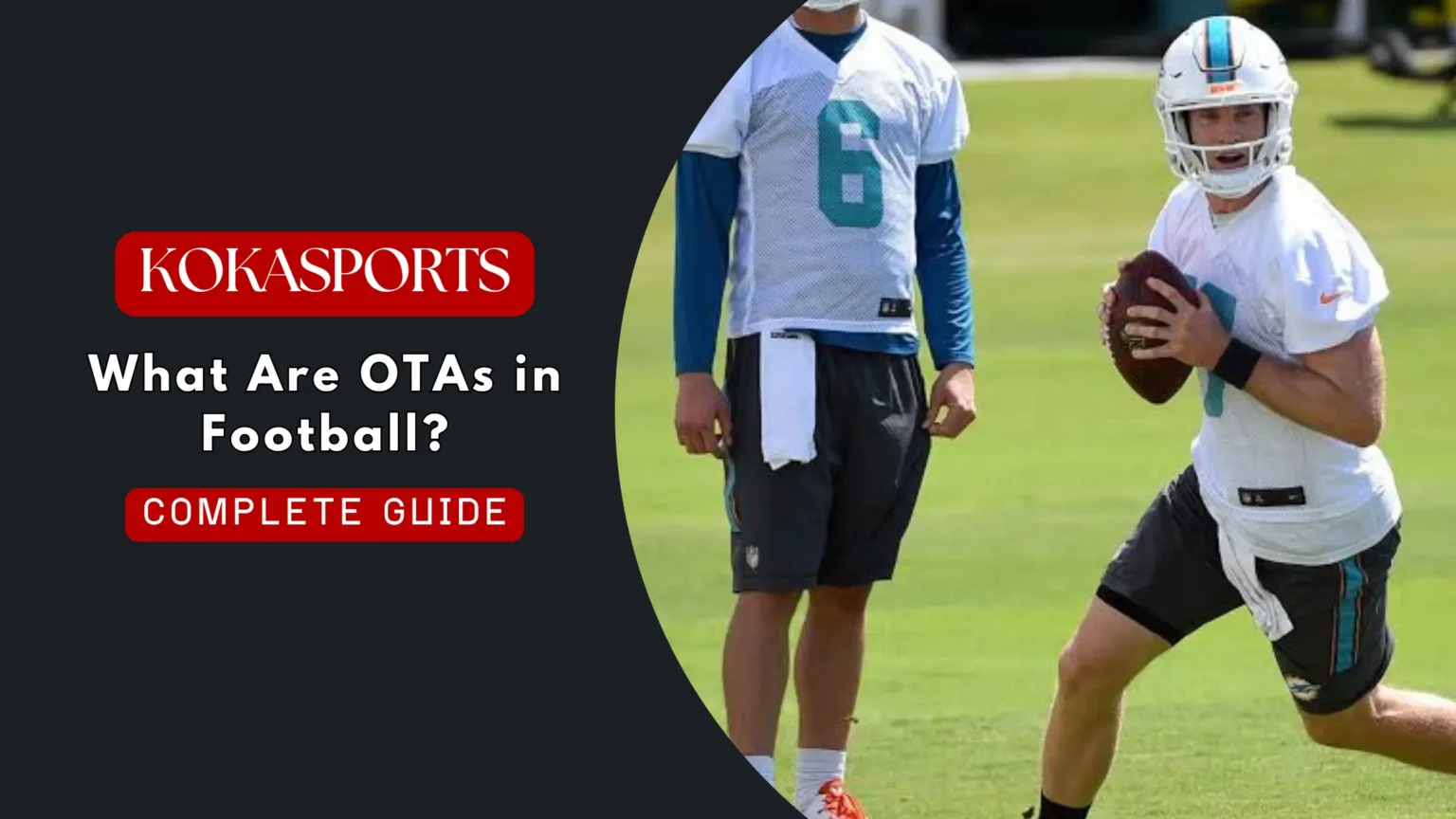
If you are wondering what are OTAs in football, here is the simple answer. OTAs are Organized Team Activities, the voluntary offseason practices NFL teams hold in late spring to prepare for the season through meetings, drills, and non-contact workouts. Fans hear about them every offseason because they are the first real glimpse of a team back on the field.
Every May, my friend texts me in a full panic of excitement. He has seen a few OTA highlight clips of our team’s newest signing catching deep balls in shorts, and just like that he is convinced we are headed to the Super Bowl. This happens every single year without fail.
His annual overreaction is what finally pushed me to learn what OTAs actually are, what they can show us, and what they cannot. The truth sits somewhere between his hype and total meaninglessness. OTAs matter a lot for building a team, but a great catch in May does not win games in January. This guide breaks down everything about OTAs, what they are, the rules, the schedule, how they compare to minicamp and training camp, and why they matter despite being optional.
OTA stands for Organized Team Activities, voluntary offseason practices that allow NFL teams to prepare players through meetings, drills, and non-contact workouts before training camp.
What Does OTA Mean in Football?
OTA stands for Organized Team Activities. The name is literal, since these are organized, structured team practices held during the offseason. They are the on-field portion of the NFL’s voluntary offseason program, designed to get players ready for the season in a controlled setting.
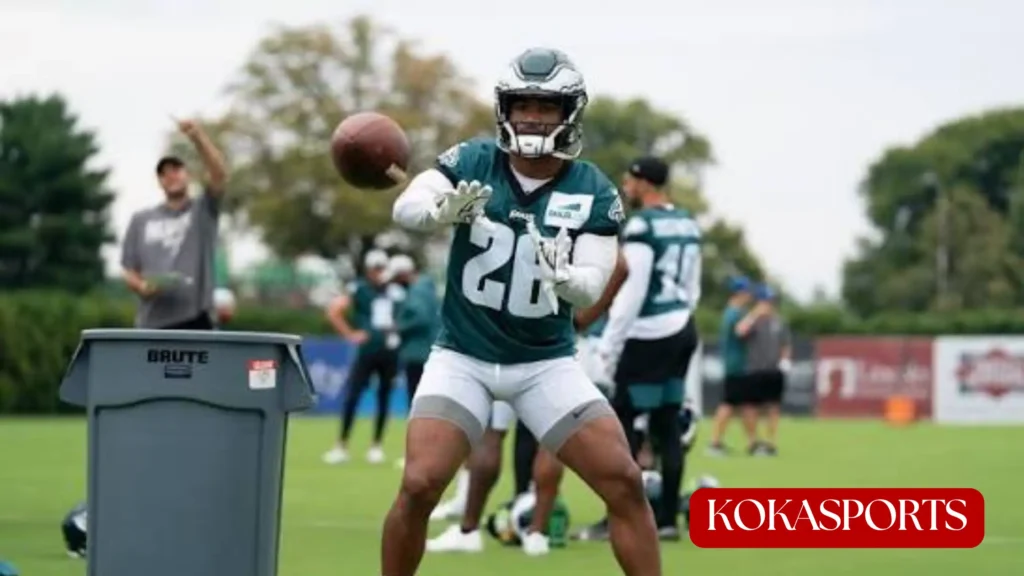
People often use the words workouts and practices interchangeably here, but there is a subtle difference. OTAs blend both, mixing strength and conditioning work with actual football drills and walkthroughs. They are more than a gym session but less intense than a full padded practice.
What Are OTAs in the NFL?
Purpose of OTAs
The main purpose of OTAs is preparation. After months away, players use this time to relearn their schemes, rebuild timing, and get back into football rhythm before camp. It is the foundation that the rest of the offseason builds on, and a team that uses this window well almost always looks sharper once camp arrives.
Why NFL Teams Hold OTAs
Teams hold OTAs to install their offensive and defensive systems, evaluate players, build conditioning, and develop team chemistry. They are also where new playbooks get taught, which is critical for a team with new coaches or new personnel trying to learn an unfamiliar system from scratch.
Goals for Coaches and Players
For coaches, OTAs are a chance to teach their systems, assess talent, and fix mistakes early. For players, the goals are learning the playbook, building chemistry with teammates, getting in shape, and earning a spot in the rotation before competition heats up.
Are OTAs Mandatory?
OTAs are voluntary, which is the single most important thing to understand about them. Players cannot be fined for skipping OTAs, and coaches cannot officially require attendance. That said, most players show up anyway, since coaches expect it and being there helps build chemistry and standing with the staff.
The dynamic differs by player. Rookies and younger players almost always attend, since they need the reps and the evaluation. Veterans sometimes skip OTAs to train on their own or to make a statement during contract negotiations, and established stars in particular may sit out the voluntary portion. The one true exception to the voluntary rule is the mandatory minicamp that follows, which carries fines for players who miss it.
What Happens During OTAs?
Individual Position Drills
Players break into position groups to sharpen fundamentals. Quarterbacks work on throwing mechanics, receivers on releases and catching, and defensive backs on footwork and coverage technique.
Team Drills
Teams come together for coordinated work like 7-on-7 passing and 11-on-11 walkthroughs. This is where the offense and defense practice operating as full units against each other.
Classroom Meetings
A large part of OTAs happens in the meeting room. Players study the playbook, review assignments, and sit through strategy sessions that lay the mental foundation for the season.
Strength and Conditioning
Conditioning runs throughout the program. Players build and maintain speed, agility, and strength so they arrive at training camp already in football shape.
Film Study
Coaches and players watch film to learn schemes, study opponents, and review their own technique. Film work is a quiet but essential piece of OTAs.
Playbook Installation
Above all, OTAs are when the playbook gets installed. Coaches teach the season’s schemes step by step so everyone knows their job before camp begins.
What Players Can and Cannot Do During OTAs
| Allowed | Not Allowed |
|---|---|
| Passing drills | Live tackling |
| Route running | Full-contact practices |
| 7-on-7 drills | Blocking with full force |
| Walkthroughs | Contact scrimmages |
| Conditioning | Padded hitting |
The guiding principle is simple. Players can do everything except hit. They run routes, throw, cover, and practice as units, but there is no live tackling or full contact of any kind. These limits exist to keep players healthy months before the games that count.
NFL OTA Rules Explained
OTA rules come straight from the Collective Bargaining Agreement between the league and the players. Under the offseason program rules, teams may hold a total of 10 OTA days, spread across several weeks in the final phase of the offseason program. No live contact is permitted, though 7-on-7, 9-on-7, and 11-on-11 drills are allowed. Coaches face limits on how long they can work players each day, and the safety rules are strict, all aimed at preventing offseason injuries while still allowing real football work.
When Do OTAs Take Place?
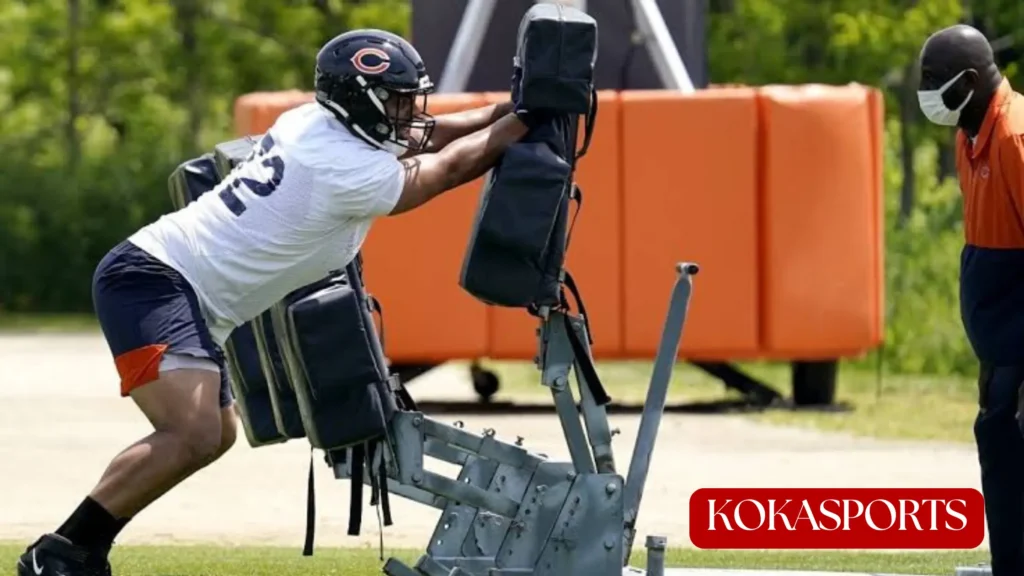
OTAs fit into a specific spot on the NFL offseason calendar. The typical order runs like this: free agency opens in March, rookie minicamp happens in May shortly after the draft, OTAs follow in late May into June, the mandatory minicamp comes next in June, training camp opens in late July, and the preseason fills August. OTAs sit right in the heart of the spring, bridging the gap between the draft and the summer grind.
How Long Do OTAs Last?
OTAs stretch over roughly three to four weeks, with teams allowed up to 10 practice days within that window. Teams usually schedule them on Tuesdays, Wednesdays, and Thursdays, giving players long weekends. Each on-field session is relatively short, often a couple of hours, though players spend additional time in meetings and conditioning. In total, a team gets up to 10 OTA sessions to install its systems before minicamp.
OTAs vs Minicamp
| Feature | OTAs | Minicamp |
|---|---|---|
| Attendance | Mostly voluntary | Required |
| Mandatory? | No | Yes |
| Contact | Limited, none live | Limited, none live |
| Purpose | Installation | Final evaluation |
| Timing | Late May into June | June, after OTAs |
| Players involved | Veterans and rookies | Full veteran roster |
The biggest difference is obligation. OTAs are voluntary and spread over weeks of teaching, while minicamp is a short, mandatory event that closes the offseason program and gives coaches one final look before the summer break.
OTAs vs Training Camp
OTAs and training camp could not be more different in intensity. OTAs happen in spring without pads, with no contact and a moderate pace, and attendance is voluntary. Training camp arrives in late July with full pads, real contact, and a much higher intensity, and it is mandatory for everyone. Camp is also where the genuine roster battles happen, where jobs are won and lost. On top of that, training camp practices are often open to fans and draw heavy media coverage, while OTAs are usually closed and lower profile. In short, OTAs are for learning, and training camp is for competing.
Why Are OTAs Important?
Rookie Players
For rookies, OTAs are a first real introduction to pro football. They learn the playbook, adjust to the speed of the game, and start proving they belong.
Quarterbacks
Quarterbacks gain enormously from OTAs, using the time to build timing and chemistry with their receivers and to master a new or evolving offense.
New Coaches
For teams with a new coach or coordinator, OTAs are vital. They are the first chance to install an entirely new system and get everyone speaking the same language.
Free Agent Signings
New signings use OTAs to learn their new team’s schemes, build relationships with teammates, and find their role before camp.
Injured Players Returning
Players coming back from injury get controlled, low-risk reps during OTAs, helping them rebuild confidence and timing without the pounding of full contact.
Can Fans Attend OTAs?
For the most part, OTAs are closed to the public. Unlike many training camp practices, which teams open to fans, OTA sessions are usually private. Teams typically share clips and updates through their own channels, and there is some media access on certain days, but fans generally cannot buy tickets or attend OTAs in person. Policies vary slightly by team, but closed practices are the norm during this part of the offseason.
Biggest Storylines That Come From OTAs
Even with no games, OTAs generate plenty of buzz. Quarterback competitions take shape, rookies flash early potential, and position battles begin to form. There are constant injury updates, glimpses of new offensive and defensive schemes, and storylines tied to coaching changes. These narratives dominate football coverage during an otherwise slow stretch, which is exactly why my friend gets so worked up over a few spring clips.
Common OTA Drills in Football
OTAs feature a mix of skill and conditioning work. Quarterbacks and receivers run passing drills and work on route running, defenders practice their coverage technique, and everyone drills footwork and agility. Special teams units get their reps too, and coaches emphasize ball security and quarterback timing throughout. None of it involves tackling, but the drills build the fundamentals and chemistry a team relies on once the real hitting starts.
Advantages and Disadvantages of OTAs
OTAs offer clear benefits. They build chemistry, teach systems, let coaches evaluate players, improve fitness, and do it all while preventing injuries through non-contact practice. That makes them a valuable launchpad for the season.
There are downsides too. Some injury risk remains even without pads, attendance is voluntary so key players can be absent, and the lack of contact means OTAs do not fully simulate real games. They are a strong foundation, but not a complete picture of how a team will actually play once the games count and the hitting becomes real.
Glossary of NFL Offseason Terms
To keep the offseason straight, here are the key terms. An OTA is an Organized Team Activity, a voluntary non-contact practice. A minicamp is a short, mandatory practice block, with most teams holding one for veterans in June. Training camp is the intense, padded summer program where rosters are decided. And the CBA, or Collective Bargaining Agreement, is the deal between the league and the players that sets all the rules governing these offseason activities.
FAQs
What are OTAs in football?
OTAs are Organized Team Activities, the voluntary offseason practices where NFL teams prepare for the season through meetings, drills, and non-contact workouts in late spring.
Are OTAs mandatory?
No. OTAs are voluntary, and players cannot be fined for skipping them. The mandatory minicamp that follows is the one required part of the offseason program.
Do NFL players get paid for OTAs?
Players receive a modest daily stipend for attending voluntary offseason workouts rather than their regular game-day salary. It is a small payment meant to cover their time during the program.
Conclusion
So, what are OTAs in football? They are Organized Team Activities, the voluntary, non-contact offseason practices where NFL teams meet, drill, and install their systems ahead of the season.
Even though they are optional, OTAs matter a great deal. They are where playbooks get taught, chemistry gets built, and rookies and new signings find their footing, all in a controlled setting that keeps players safe.
The key is to keep them in perspective, somewhere between my friend’s May Super Bowl predictions and dismissing them entirely. OTAs set the stage for training camp and the season, but the real proof comes once the pads go on. Now when those spring clips show up, you will know exactly what they mean, and what they do not.