

If you are asking what does Pick 6 mean in football, here is the quick answer. A Pick 6 is when a defensive player intercepts a pass and returns it all the way to the end zone for a touchdown. The “pick” is the interception and the “6” is the six points a touchdown is worth, which is why it is one of the most thrilling, momentum-flipping plays in the game.
I finally understood the term the night my team had a game in the bag, or so I thought. We were driving for the go-ahead score late in the fourth quarter, the crowd was buzzing, and then the quarterback forced a throw into traffic. A cornerback jumped the route, snatched the ball, and sprinted the other way untouched.
In about eight seconds, a play that should have put us ahead instead handed the other team a touchdown, and the entire stadium went silent. That single play decided the game. After that gut punch, I wanted to understand exactly what a Pick 6 is and why it carries so much weight. This guide covers the definition, how it happens, who can score one, famous examples, and the strategy on both sides of the ball.
A Pick 6 in football is when a defensive player intercepts a forward pass and returns it to the end zone for a touchdown. It is called a “Pick 6” because “pick” means interception and “6” refers to the six points awarded for a touchdown.
What Does Pick 6 Mean in Football?

A Pick 6 is an interception that a defender returns for a touchdown on the same play. Instead of just stopping the offense, the defense takes the ball away and scores with it, all in one motion. For beginners, the simplest way to picture it is an interception plus a touchdown rolled into a single play. It happens in both the NFL and college football, and it is always a huge swing.
Why Is It Called a Pick 6?
Meaning of “Pick”
In football slang, a “pick” is an interception, short for a pass that gets “picked off.” When a defender catches a pass meant for an offensive player, that is a pick. It is one of the most common pieces of football shorthand you will hear.
Meaning of “6”
The “6” stands for the six points a touchdown is worth. When that interception is run back into the end zone, the defense scores those six points, just like the offense would on any touchdown.
How the Term Became Popular
The phrase took off through NFL broadcasts and sports media, especially from the 1990s onward, as commentary grew more casual and colorful. It stuck because it captures two big things, the turnover and the score, in two short words. Fantasy football helped spread it even further, and today it is used at every level of the game.
How Does a Pick 6 Happen?
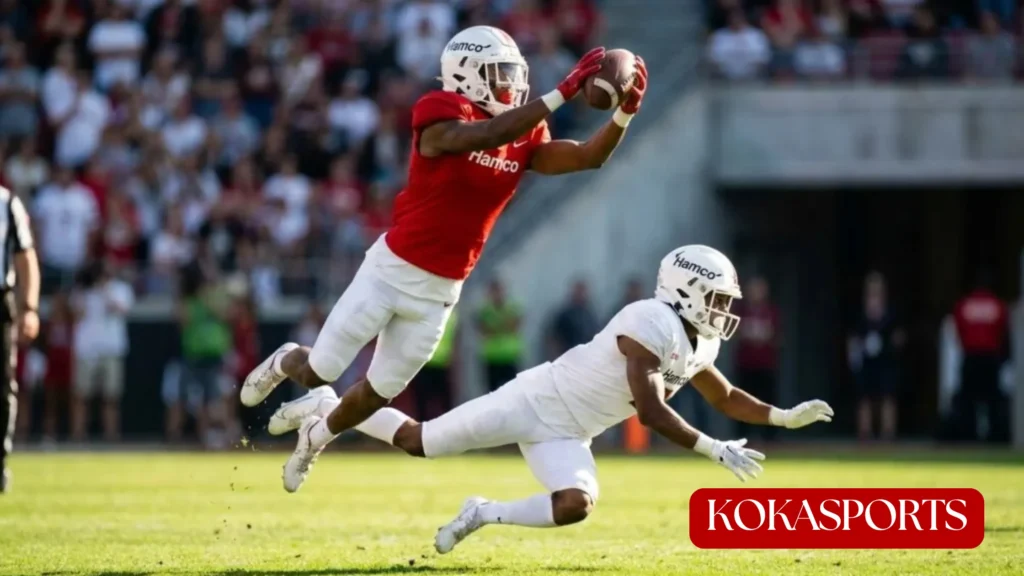
A Pick 6 unfolds in a quick sequence. First, the quarterback drops back and throws a pass. A defender reads the play and intercepts the ball before it reaches the intended receiver. With the ball secured, the defender turns upfield and begins the return, often with teammates throwing blocks. If he reaches the end zone, the play becomes a touchdown worth six points, followed by an extra-point kick or a two-point conversion attempt, exactly like any other score.
Step-by-Step Breakdown of a Pick 6
To really see how it works, it helps to walk through the play. The offense lines up and the quarterback takes the snap. He drops back and throws, while a defender reads the quarterback’s eyes and the receiver’s route. The defender breaks on the ball and makes the interception. The return begins immediately, and blocking develops as teammates clear a path. The defender races toward the end zone, crosses the goal line, and the defense is awarded six points. From start to finish, it can take just a few seconds.
What Happens After a Pick 6?
Once the defender crosses the goal line, the touchdown is awarded and the scoring team lines up for the extra point. That means a kick for one point or a two-point conversion attempt, just like after an offensive touchdown. The scoring team then kicks off to the opponent. Beyond the points, the biggest effect is the momentum shift, as the energy of the game can flip in an instant.
Who Can Score a Pick 6?
Cornerbacks
Cornerbacks score the most Pick 6s. They spend nearly every snap covering receivers and reading the quarterback, which puts them in the best position to jump a route and take it back.
Safeties
Safeties are also frequent culprits. Playing deep, they read the quarterback from the back end and break on throws, often turning interceptions into long, open-field returns.
Linebackers
Linebackers can score on Pick 6s too, usually by stepping in front of a crossing route or grabbing a pass tipped at the line. Their position in the middle of the field gives them chances on short throws.
Defensive Linemen (Rare)
It is rare, but a defensive lineman can score a Pick 6, usually off a tipped or batted pass at the line of scrimmage. Watching a 300-pound lineman rumble to the end zone is one of football’s great spectacles.
Any Eligible Defensive Player
Ultimately, any defensive player on the field can record a Pick 6 if he intercepts the ball and reaches the end zone. The opportunity is open to the entire defense.
What Makes a Pick 6 So Important?
Creates Instant Points
A Pick 6 puts points on the board without the offense ever taking the field. That instant scoring is incredibly valuable and hard to come by.
Changes Momentum
Few plays swing momentum like a Pick 6. In one snap, the team on defense suddenly leads the scoreboard and the emotional edge.
Energizes the Defense
A defensive touchdown fires up the entire unit and the home crowd, giving the defense confidence for the rest of the game.
Demoralizes the Offense
On the other side, throwing a Pick 6 is crushing. The offense not only loses the ball but watches the opponent score off its mistake.
Can Decide Close Games
Because it is effectively a multi-score swing, a single Pick 6 can be the difference in a tight game, exactly as it was in the game that turned me into a believer.
Common Situations That Lead to a Pick 6
Pick 6s usually come from offensive mistakes or pressure. Poor quarterback decisions and forced throws top the list, along with miscommunication between a quarterback and receiver. Tipped passes and underthrown balls hang in the air long enough for defenders to react. Heavy pressure from the pass rush forces hurried throws, while defenders who jump routes or read screen passes can turn a small mistake into six points. Most Pick 6s trace back to one of these moments.
Pick 6 vs Interception: What’s the Difference?
| Feature | Interception | Pick 6 |
|---|---|---|
| Changes possession | Yes | Yes |
| Scores points | Not always | Yes |
| Defensive touchdown | No | Yes |
| Ends in end zone | Sometimes | Always |
| Value | Turnover | Turnover + 6 points |
Every Pick 6 is an interception, but not every interception is a Pick 6. A standard interception simply gives the defense the ball, while a Pick 6 adds a touchdown on top of the turnover. The difference is whether the defender reaches the end zone.
Pick 6 vs Fumble Return Touchdown
| Feature | Pick 6 | Fumble Return TD |
|---|---|---|
| How possession changes | Intercepted pass | Recovered fumble |
| Type of turnover | Interception | Fumble |
| Offensive mistake | Bad throw | Lost ball |
| Scoring method | Return to end zone | Return to end zone |
| Frequency | Common | Common |
Both are defensive touchdowns, but they start differently. A Pick 6 comes from catching a thrown ball, while a fumble return touchdown comes from scooping up a ball that a runner or receiver lost. Both reward the defense with six points, just from different kinds of mistakes.
Which Defensive Positions Record the Most Pick 6s?
Cornerbacks lead the way because they are targeted constantly and cover receivers on nearly every play. Safeties come next, using their deep vantage point to read the quarterback and break on throws. Linebackers record their share from the middle of the field on short and crossing routes. Defensive ends and tackles bring up the rear, scoring only occasionally off tipped passes, which makes those returns especially memorable.
Famous Pick 6 Plays in Football History
Some Pick 6s have become legendary. The most famous may be James Harrison’s 100-yard return in Super Bowl XLIII, which he took back on the final play of the first half and which remains the longest play in Super Bowl history. Playoff and championship games have produced countless others that swung titles. College football has its own highlight reel of game-changing returns, and the longest Pick 6s, traveling the full length of the field, are among the most electrifying plays a defense can make. Game-winning Pick 6s in the final minutes are the kind of moments fans never forget.
NFL Record for Most Pick 6s
When it comes to the record books, Rod Woodson stands alone as the career leader with 12 interceptions returned for touchdowns. Behind him on the all-time list sit Darren Sharper and Charles Woodson, each with 11. Single-season totals are far smaller, since even a few Pick 6s in one year is exceptional. As for distance, the longest interception return for a touchdown in NFL history is a 107-yard sprint by Ed Reed, fittingly one of the greatest ball-hawking safeties the game has seen.
How Defenses Create Pick 6 Opportunities
Reading the Quarterback
Great defenders study the quarterback’s eyes and tendencies to anticipate where the ball is going. That anticipation is the foundation of most interceptions.
Zone Coverage
In zone coverage, defenders face the quarterback and read the play, which lets them break on throws and jump routes for picks.
Jumping Passing Routes
When a defender recognizes a route, he can drive on it early, arriving at the catch point before the receiver and stealing the ball.
Defensive Pressure
A strong pass rush forces the quarterback to throw early or off-balance, and those rushed throws are prime interception material.
Disguising Coverage
Defenses that disguise their coverage trick the quarterback into a bad read, leading him to throw the ball right to a waiting defender.
How Quarterbacks Avoid Throwing Pick 6s
Smart quarterbacks protect the ball by reading defenses correctly and making good decisions. They avoid forcing throws into tight windows and stay aware in the pocket to feel pressure. Sharp timing and accuracy keep passes away from defenders, and when nothing is open, the best quarterbacks simply throw the ball away rather than risk a disaster. Ball security is one of the clearest signs of an elite passer.
Does a Pick 6 Count Against the Quarterback?
Yes. A Pick 6 counts as an interception in the quarterback’s passing statistics, just like any other pick. It hurts his interception total and drags down his passer rating, and on top of the personal stats, it directly puts points on the board for the other team. It is one of the worst outcomes a quarterback can be responsible for.
Pick 6 in Fantasy Football
Does It Affect Fantasy Quarterbacks?
Yes, negatively. A Pick 6 hits a fantasy quarterback with the standard interception penalty, and because the play also scores for the opponent, it is one of the worst results a fantasy passer can post.
Does the Defense Get Points?
Yes. In fantasy, team defenses usually earn points for the interception and additional points for the defensive touchdown, making a Pick 6 a big boost for fantasy defenses.
League Scoring Differences
Exact values vary by league. Most formats reward the interception and the touchdown, but the specific points depend on your league’s settings, so it is worth checking your scoring rules.
Common Misconceptions About Pick 6s
Every Interception Is a Pick 6
False. Only an interception returned for a touchdown is a Pick 6. Most interceptions do not reach the end zone.
Only Cornerbacks Can Score Pick 6s
False. Safeties, linebackers, and even defensive linemen can score Pick 6s, though cornerbacks do it most often.
Pick 6 Ends the Game
False. A Pick 6 is a big swing, but it is just one score. The game continues, and teams can and do recover from one.
Pick 6 Is Worth More Than Six Points
False. A Pick 6 is worth six points like any touchdown, plus the extra point or two-point try that follows.
Advantages and Disadvantages of a Pick 6
For the defense, a Pick 6 is almost all upside. It delivers immediate points, swings momentum, creates a turnover, energizes the crowd, and gives the unit a huge confidence boost.
For the offense, it is the opposite. The offense loses possession, hands the opponent points, and damages the quarterback’s stats. It can also force a change in game strategy and deliver a real psychological blow that lingers for several drives.
FAQs
What does Pick 6 mean in football?
A Pick 6 is an interception returned for a touchdown, worth six points for the defense.
Why is it called a Pick 6?
Because “pick” means interception and “6” stands for the six points of a touchdown.
How many points is a Pick 6 worth?
Six points, plus the extra-point kick or two-point conversion that follows, just like any touchdown.
Conclusion
So, what does Pick 6 mean in football? It is an interception returned for a touchdown, the “pick” being the turnover and the “6” being the points it puts on the board.
It is one of the most exciting and demoralizing plays in the sport, capable of flipping momentum, energizing a defense, and deciding close games in a matter of seconds. From the quarterback’s nightmare to the defense’s dream, few plays carry this much weight.
The next time you watch a defender jump a route and race to the end zone, you will know exactly what you are seeing, and just how much that single play can change everything.