


What actually changes inside the body when a workout starts to come apart from too little fluid? The cause is rarely willpower. A 2% drop in body mass from sweat reaches into the blood, the cooling system, and the brain at once, and each of those systems pulls performance down in its own way. Fluid is the medium all three run on. Knowing what it does during exercise makes the case for drinking on a schedule, because by the time thirst arrives the systems have already started to slip.
Blood Volume and the Working Heart
Most of the early cost of dehydration is cardiovascular. Sweat draws fluid out of blood plasma, so even a 1 to 2% loss of body mass measurably shrinks plasma volume. With less blood returning to the heart, each beat pushes out a smaller stroke volume, and the heart compensates by beating faster to hold cardiac output steady.
This is the mechanism behind cardiovascular drift, the slow climb in heart rate during a steady-effort session even when pace has not changed. The practical effect is that the same workout costs more. Perceived effort rises, the legs fatigue sooner, and a runner holding goal pace watches their heart rate creep up mile after mile. Regular aerobic training raises resting plasma volume by 10 to 20%, which buffers some of this, but it does not remove the need to replace what sweat takes.
Cooling the Engine

The second job of fluid is temperature control. Working muscles produce far more heat than the body can hold, and sweat is the main way that heat leaves. As sweat evaporates off the skin it carries heat with it, since turning liquid water into vapor pulls a large amount of energy from the surface it sits on.
That system depends on having fluid to spare. A dehydrated body protects blood pressure first, so it cuts skin blood flow and sweat output to defend the core, which means core temperature climbs faster. Maximal sweat rates reach 1.5 to 2.5 liters per hour and can carry off more than 1,000 watts of heat when the sweat fully evaporates. On a humid day, when the air is already near saturation, that evaporation slows, the body cannot shed heat as well, and the same effort feels hotter and harder.
Delivery, Salt, and Absorption
Blood does more than carry oxygen. It moves glucose to muscle, carries away metabolic waste, and keeps the working tissue supplied. A thinner, slower-circulating blood volume does all of this less well, which is part of why a dehydrated athlete fades even with fuel in the tank.
Replacing fluid means replacing salt as well. Sweat carries sodium, and putting back the water without the salt dilutes what is left and blunts the drive to keep drinking. For sessions past an hour, a drink that carries salt alongside the fluid does more than water alone, because the sodium speeds rehydration and keeps the thirst signal alive. Many people training in heat keep an electrolyte powder for hydration in the bottle for the long sessions, where the salt does as much work as the fluid it rides in on.
The Brain Runs on Fluid Too
Performance is mental as much as physical. Mild dehydration, around 1 to 2% of body mass, measurably dulls concentration and reaction time, which matters in any activity that requires timing, decision-making, or technique. A lifter loses focus on bar path, and a team-sport player reads the field a half-step late. The effect is easy to miss because the cause does not announce itself, and most people cannot feel a 1.5% deficit directly, even as it slows their thinking.
Why One Rule Does Not Fit Everyone
Fluid need is personal, and that is the reason generic advice fails so often. The old fixed target of eight glasses per day has no evidence behind it, because sweat rate varies several-fold between people and changes with heat, intensity, and fitness. The same hour of effort can cost one person 0.5 liters and another more than 2. A plan copied from a training partner can leave a heavy sweater far behind while overloading a light one.
The signs of a developing deficit are worth knowing because thirst is a late one. The basics of preventing dehydration start with reading them early: dark urine, a faster-than-usual heart rate at a familiar pace, a headache, or a sudden sense that the effort got harder for no reason all point to fluid loss outrunning intake. Catching those early is easier than reversing a deep deficit mid-session, since the gut absorbs fluid more slowly than sweat removes it once the work is hard.
How Much, and When
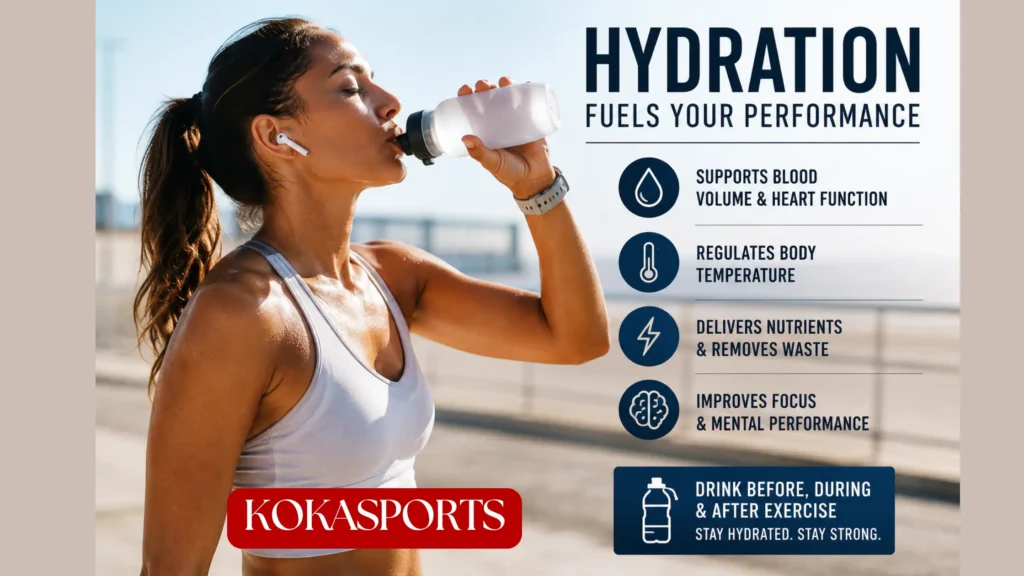
The numbers are simpler than they sound. A useful pre-exercise routine is roughly 500 ml of fluid about 2 hours before starting, which leaves time to pass what the body does not need. During exercise, 0.4 to 0.8 liters per hour suits most efforts, with the higher end for heavy sweaters and hot conditions, the same range that guides safe summer training. The goal during the session is to keep total loss under 2% of body mass, the point where the cardiovascular and cognitive costs start to bite.
After exercise, replacing 125 to 150% of the fluid lost over the following several hours restores what the session drained, since not all of the intake is retained. Adding sodium to that recovery fluid helps the body hold onto it, which matters more in the heat, where the standard warm weather exercise tips push intake higher. A scale before and after a hard session turns all of this from guesswork into a number, since each kg lost is a liter to replace.
Hydration as Upkeep
Hydration is the upkeep of the fluid that the heart pumps, the skin uses to cool, and the brain needs to stay sharp. These systems cannot be refilled once they are already failing, which is why the work happens before and during the session, not after performance has dropped. The plan is dull on purpose: a number to hit each hour, a little salt when it runs long, and a body that still answers in the final stretch. That dull routine is what lets a hard session stay hard all the way through.
FAQs
How much water should I drink before a workout?
Aim for about 500 ml (17 oz) of fluid roughly 2 hours before exercise to start well hydrated.
Is water enough f or long workouts?
For sessions lasting more than an hour, drinks containing electrolytes, especially sodium, can help replace sweat losses more effectively than water alone.
How can I tell if I’m dehydrated during exercise?
Common signs include dark urine, increased heart rate, headache, dizziness, and unusual fatigue.
Does dehydration affect mental performance?
Yes. Even mild dehydration can reduce concentration, reaction time, and decision-making ability.
How much fluid should I drink during exercise?
Most people benefit from consuming 0.4 to 0.8 liters of fluid per hour, depending on workout intensity, weather conditions, and sweat rate.
Conclusion
Hydration plays a critical role in exercise performance by supporting blood circulation, temperature regulation, nutrient delivery, and mental focus. Even mild dehydration can reduce endurance, increase fatigue, and make workouts feel harder than they should. Maintaining a consistent hydration routine before, during, and after exercise helps athletes perform at their best and recover more effectively.