

If you have ever wondered what is a checkdown in football, here is the simple answer. A checkdown in football is when a quarterback goes through his passing options downfield and, finding them all covered, throws a short safe pass to a running back or tight end near the line of scrimmage. It is the last option in the quarterback’s read progression and one of the most important decisions he makes on any given play.
I learned this sitting next to my friend during a playoff game last winter.Every time the quarterback dumped the ball off short instead of throwing it deep, my friend lost his mind. “Why does he keep doing that? Just throw it downfield.”
By the fourth quarter that same quarterback had zero interceptions, a 74 percent completion rate, and his team was up by ten. My friend went quiet.That is what a checkdown does. You do not notice it when it works. You only notice it when a quarterback refuses to use it and throws the ball into double coverage instead.
What Is a Checkdown in Football?
Definition of a Checkdown
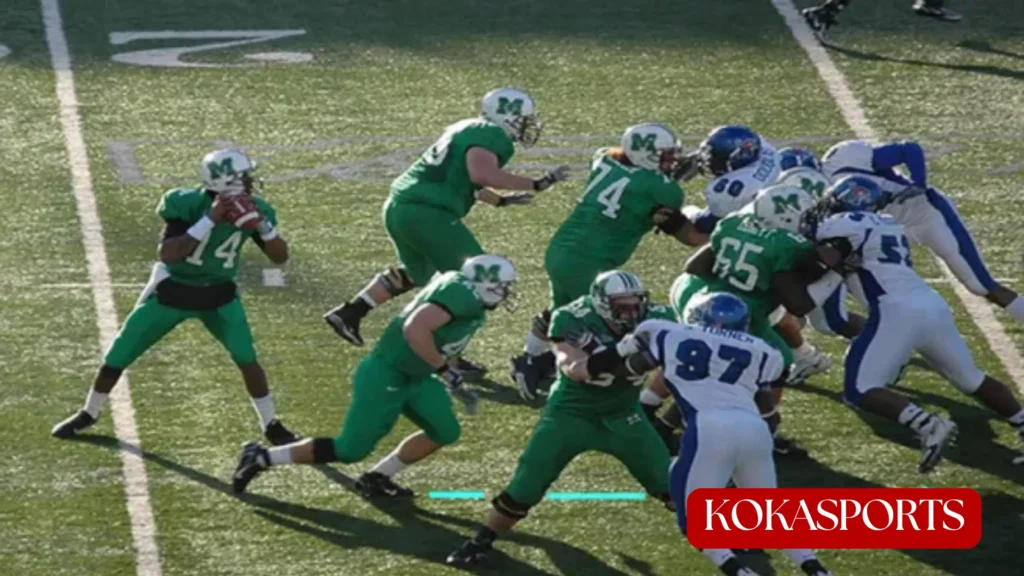
A checkdown pass is a short safe throw made by a quarterback after his primary and secondary receivers are covered downfield.
It is typically thrown to a running back in the flat, a tight end on a short middle route, or a slot receiver on a quick underneath pattern. The throw gains modest yardage but avoids a sack, an incompletion, or an interception.
The checkdown is not a failure. It is a decision. A smart one most of the time.
Why It Is Called a Checkdown
The term comes from read progression.
Before every pass play the quarterback has a mental list of receivers ranked by priority. He reads the defense, works through that list from top to bottom, and throws to the first open receiver he finds.
When nobody downfield is open, he checks down to the lowest option on that list. That option is almost always the shortest safest throw available. That process of moving down through the list is where the name comes from.
Example of a Checkdown Play
Picture a third and eight situation.
The quarterback takes the snap and looks at his wide receiver running deep on the right. Covered. He moves to the tight end crossing the middle. Covered. He looks left. His second receiver has a defender draped all over him.
The pass rush is collapsing. He has one second left.
He flips a short pass to his running back slipping into the flat. Seven yard gain. Not enough for the first down but far better than a fifteen yard sack or a turnover.
That is a checkdown in real time.
How a Checkdown Works in Football
The Quarterback’s Read Progression
Every pass play starts with a progression.
The first read is the primary receiver running the most important route in the play design. If he is open the ball goes to him immediately.
The second read is the next option at a different depth or on the opposite side of the field.
The third read fills the gaps. By the time the quarterback gets here he has already processed what the defense is doing.
The checkdown is the last option. It is built into the play specifically for situations where nothing else works.
Where the Checkdown Receiver Lines Up
Running backs are the most common checkdown targets. They release into the flat where there is open space and no defender waiting immediately.
Tight ends fill the checkdown role on short crossing routes underneath the linebackers. They are reliable targets in traffic and quarterbacks trust them to hold onto the ball after contact.
Slot receivers occasionally function as checkdown targets on quick flat routes that clear before the coverage can get there.
Timing of a Checkdown Pass
A good quarterback processes his reads in two to three seconds after the snap. By the time he reaches the checkdown the pass rush is usually arriving at the same moment.
The best quarterbacks make the checkdown decision look effortless. They are already moving to that option before most fans realize the first two reads were covered.
Why Quarterbacks Use Checkdowns
To Avoid Negative Plays
A sack costs the offense anywhere from five to fifteen yards. An interception ends the drive entirely.
A checkdown for four yards is a far better outcome than either of those. My friend did not see it that way in the first quarter. By the fourth quarter watching the opposing quarterback throw two interceptions trying to force balls downfield, he started to understand the math.
To Keep the Offense on Schedule
Football coaches talk constantly about staying on schedule. That means keeping down and distance manageable so the offense has multiple options rather than being forced into obvious passing situations.
A checkdown on first down for five yards sets up second and five. That is a much easier situation than a sack that creates second and fifteen.
To Counter Deep Coverage
Some defenses take away the deep ball entirely. They play two deep safeties, drop linebackers into coverage, and dare the quarterback to throw short all day.
When that happens the checkdown is not just acceptable. It is exactly the right answer.
Who Usually Receives a Checkdown Pass?
Running Backs
The running back is the most natural checkdown target in football.
He lines up in the backfield, releases into the flat after the snap, and gives the quarterback a simple short throw with open space to work with. Most pass plays are designed with the running back as the built-in checkdown option for exactly this reason.
Tight Ends
Tight ends fill the checkdown role when the running back is blocking or running a different route.
They run short crossing routes underneath the linebackers. Because they are larger and more physical after the catch they are reliable targets when modest yardage is the goal.
Slot Receivers
Slot receivers function as checkdown targets on quick underneath routes. They are faster than tight ends and running backs which means a completed checkdown to a slot receiver can turn into a bigger gain if the defense is caught out of position.
Benefits and Drawbacks of Checkdowns
Benefits
The most direct benefit is fewer turnovers. A quarterback who takes the checkdown when nothing is open does not force throws into coverage. Forced throws become interceptions. Interceptions lose games.
Checkdowns also sustain drives. Moving the chains consistently even without big plays keeps the opposing offense off the field and creates more scoring opportunities.
They improve completion percentage and occasionally turn into big gains when a running back catches in open space with blockers ahead of him.
Drawbacks
The obvious downside is limited yardage. On third and eight a four yard checkdown does not move the chains.
Done too frequently checkdowns can stall explosive offenses and slow the pace of play. And the phrase checkdown quarterback is not a compliment. It describes a player who checks down not because nothing is open but because he is unwilling to take a chance.
The checkdown becomes a problem when it replaces good decision-making rather than supporting it. That is the line between smart football and timid football.
Checkdown vs Other Passing Concepts
Checkdown vs Dump-Off Pass
These two terms are used almost interchangeably. The small difference is that a dump-off can refer to any short throw under pressure while a checkdown specifically refers to the last option in a read progression. Every checkdown is a dump-off but not every dump-off is technically a checkdown.
Checkdown vs Screen Pass
A screen pass is a designed play with blocking set up in advance. A checkdown is a reaction to what the defense does during the play. One is planned. The other is reactive.
Checkdown vs Hot Route
A hot route is a pre-snap adjustment made when the quarterback identifies a blitz. A checkdown happens after the snap during the read progression. The hot route is planned. The checkdown is not.
Checkdown vs Safety Valve
Safety valve and checkdown describe the same concept from different angles. The safety valve is the receiver himself. The checkdown is the quarterback’s decision to throw to him. Same play, different perspective.
Famous Quarterbacks Known for Effective Checkdowns
Tom Brady
Tom Brady built his career on making the right decision rather than the exciting one.
He used running backs and tight ends as checkdown options more effectively than almost any quarterback in NFL history. Taking four yards when four yards was the right answer and making up for it on the next play is a large part of why he won seven Super Bowls.
Drew Brees
Drew Brees was one of the most efficient short passing quarterbacks the NFL has ever seen. Fast reads, clean decisions, and complete trust in his checkdown options. He finished his career as the all-time leader in completions largely because he never forced throws when the easy option was available.
Patrick Mahomes
Mahomes is known for spectacular throws but what separates him from other gunslingers is his willingness to check down when the situation calls for it. He will attempt a no-look pass on one play and dump it off to a running back for five yards on the next without hesitation. That balance is what makes him so difficult to defend.
FAQs About Checkdowns in Football
What is a checkdown in football?
A checkdown is a short pass thrown to a running back, tight end, or slot receiver after the quarterback’s primary receivers are covered downfield. It is the last option in the read progression.
Is a checkdown the same as a dump-off pass?
Almost. A dump-off is any quick short throw under pressure. A checkdown specifically refers to the last option in a structured read progression.
Who usually catches checkdown passes?
Running backs are the most common targets. Tight ends and slot receivers also fill the role depending on the formation.
Are checkdowns good or bad?
Good when used correctly. A checkdown that avoids a sack or interception is a smart play. A checkdown that replaces an aggressive throw the quarterback should have made is a wasted opportunity.
Why do quarterbacks check down instead of throwing deep?
Because the deep receivers are covered. Throwing into coverage risks interceptions. A checkdown takes the safe option and keeps the drive alive.
Can a checkdown result in a touchdown?
Yes. Running backs catching checkdowns in open space can turn short completions into touchdowns, particularly when the defense is overcommitted downfield.
Conclusion
My friend and I watched the final two minutes of that game in silence. The quarterback he spent three quarters criticizing finished with 31 completions, zero interceptions, and a game-winning drive that included two checkdowns in the final minute to move the chains and run out the clock.
After the final whistle my friend looked at me and said, “Okay. I get it. He was just taking what they gave him.”That is the checkdown in football.It is not fear. It is not weakness. It is a quarterback reading the defense, making the right decision, and keeping his team moving forward even when nothing big is available.
The best quarterbacks were not the ones who always threw deep. They were the ones who knew when to throw deep and when to flip it to the running back for five yards and move on.
That decision, made correctly a dozen times a game, is what separates good quarterbacks from great ones.