

If you’ve ever planned to watch a volleyball match and had no idea whether to clear your schedule for 45 minutes or three hours you’re not alone. How long does a volleyball game last is one of the most common questions from new fans, parents at high school gyms, and first-time tournament attendees.
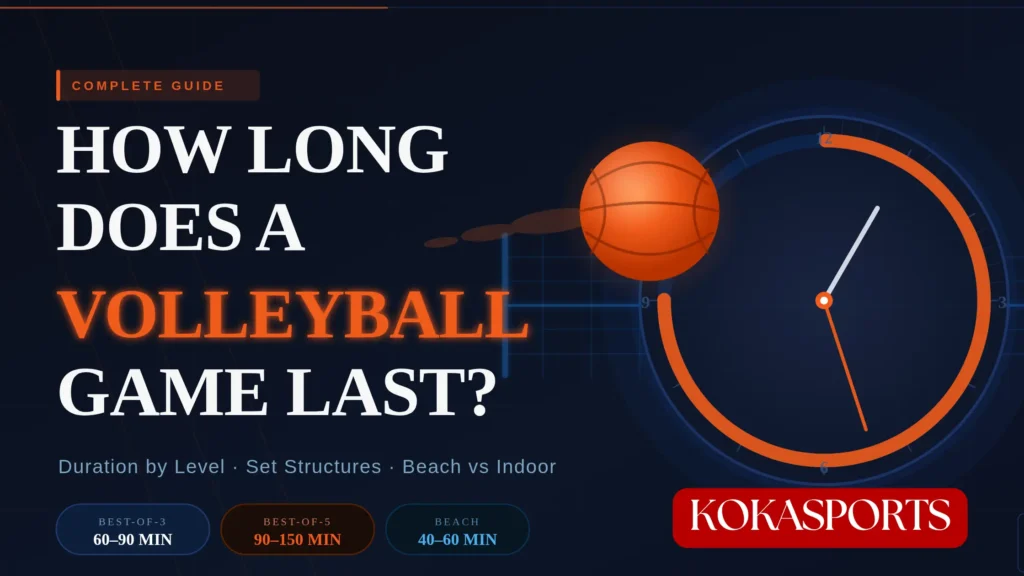
Here’s the short answer: a typical volleyball game lasts between 60 and 90 minutes for a best-of-3 format, and between 90 to 150 minutes for a best-of-5 format. Unlike football or soccer, there is no game clock. The length of a volleyball game is decided entirely by how quickly teams score points and win sets.
Below, you’ll find exact times for every level and format plus the hidden factors that can stretch or shrink a match.
Quick Answer: How Long Is a Volleyball Game by Format?
| Format | Sets Played | Typical Duration |
|---|---|---|
| Recreational / Youth | Best of 3 | 45–70 min |
| High School (JV) | Best of 3 | 50–75 min |
| High School (Varsity) | Best of 5 | 60–90 min |
| College / NCAA | Best of 5 | 90–120 min |
| Professional Volleyball | Best of 5 | 90–150 min |
| Olympic Games | Best of 5 | 60–130 min |
| Beach Volleyball | Best of 3 | 40–60 min |
💡 Pro Tip: If you’re attending a live match, always add 15–20 minutes for pre-match warmups and the time between sets when planning your schedule.
Why There Is No Volleyball Game Clock
Unlike most sports, volleyball has no official time limit. A volleyball match ends when one team reaches the required number of set wins not when a clock runs out.
This set-based structure is similar to tennis. The game of volleyball is decided by points, not minutes. A set is won when a team reaches 25 points (with a 2-point lead), and a match is won when one team takes the required number of sets.
This is why the length of a volleyball game can vary so wildly a dominant team sweeping in straight sets and a closely contested five-setter are technically the same “game” but can differ by over an hour.
The rally scoring system, introduced by the International Volleyball Federation (FIVB) in 1999, did help speed things up. Before that, only the serving team could score a point. Now, under rally scoring, every rally in volleyball produces a point regardless of who served. This made matches shorter and more predictable in length.
How Many Sets Are in a Volleyball Match?
The number of sets depends on the format of the match:
- Best 2 of 3: The first team to win 2 sets wins. Common in youth, recreational, and JV high school play.
- Best 3 of 5: The first team to win 3 sets wins. Standard in college, professional, and international play.
How Long Does Each Set Take?
A single set takes roughly 20 to 30 minutes. Here’s how that breaks down:
- Sets 1–4 (or 1–2): Played to 25 points. A team must win by at least 2. If the score reaches 24–24, play continues until one team leads by 2 which can add 5–15 extra minutes to a close set.
- The final set (5th or 3rd): The deciding set is played to 15 points (still win by 2). This set usually lasts around 15 minutes.
⚠️ Warning: Deuce situations are the biggest time wildcards. The longest set in a match can extend dramatically if teams keep trading points near the end. A set that reaches 30–28 can run nearly 40 minutes on its own.
The first four sets of a best-of-5 match account for most of the total duration. When all five sets are played, you’re almost always looking at a match that runs beyond 90 minutes.
Volleyball Game Duration by Level :From Rec to Olympic
Recreational and Youth Volleyball
Recreational and youth games are the shortest. Most use a best 2 of 3 format, often with modified rules some leagues even play sets to 21 instead of 25. Expect a game played here to wrap up in 45 to 70 minutes.
How Long Does a High School Volleyball Game Last?
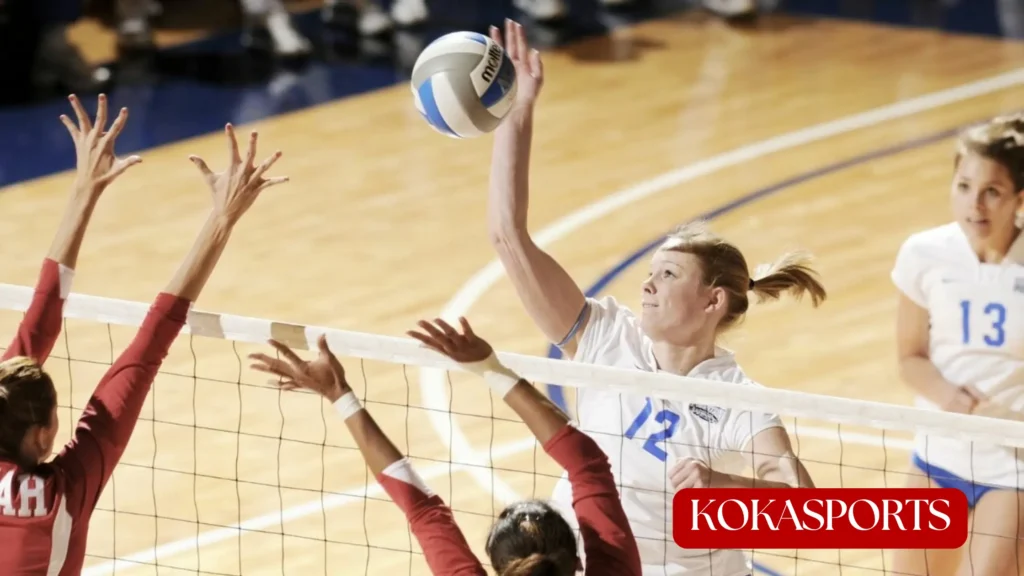
A typical high school volleyball varsity match runs 60 to 90 minutes using the best-of-5 sets format under NFHS rules. JV matches use best-of-3 and typically finish in 50–75 minutes.
The high school volleyball game schedule also depends on the venue back-to-back matches at tournaments can run tighter, with teams sometimes getting only a 10-minute gap between games.
💡 Pro Tip: For a typical high school volleyball tournament, plan for each match to take about 75 minutes including transition time. If your team plays 3 matches in a day, budget 4 to 4.5 hours at the venue.
How Long Does a College Volleyball Game Last?
College and professional volleyball matches follow the best 3 of 5 format, and college games tend to last anywhere from 90 minutes to 2 hours. NCAA matches also include timeout stoppages, substitution breaks, and for televised games technical TV timeouts at the 8th and 16th point of each set. Those alone can add 6–10 minutes to the total match time.
The number of sets played is the biggest factor. A 3–0 sweep finishes much faster than a full five-set battle where both teams are closely matched.
Professional and International Volleyball
At the professional volleyball level, matches follow the same best-of-5 rules but add more structured pauses: video challenge systems, longer timeout windows, and media requirements. A volleyball match at this level can last anywhere from 75 minutes (a dominant sweep) to over 2.5 hours (a full five-setter with deuce sets).
Olympic Volleyball Games
At the summer Olympic games, both indoor and beach volleyball are featured. Indoor Olympic matches follow standard best-of-5 rules. Pool play matches tend to be more one-sided, finishing faster. Knockout rounds where both teams are elite often go deep into four or five sets. The Olympic Games have produced some of the most dramatic five-set battles in volleyball history, with matches regularly surpassing the 2-hour mark in the medal rounds.
The 2016 Olympic Games in Rio provided some fascinating data: the FIVB recorded that removing pseudo-rallies (instant points from aces or serve errors) from calculations pushed the average rally time to 6.9 seconds for men’s matches and 8.25 seconds for women’s volleyball. That’s the real time of active, contested play per point.
How Long Does a Volleyball Game Last?(Beach Vollyball)
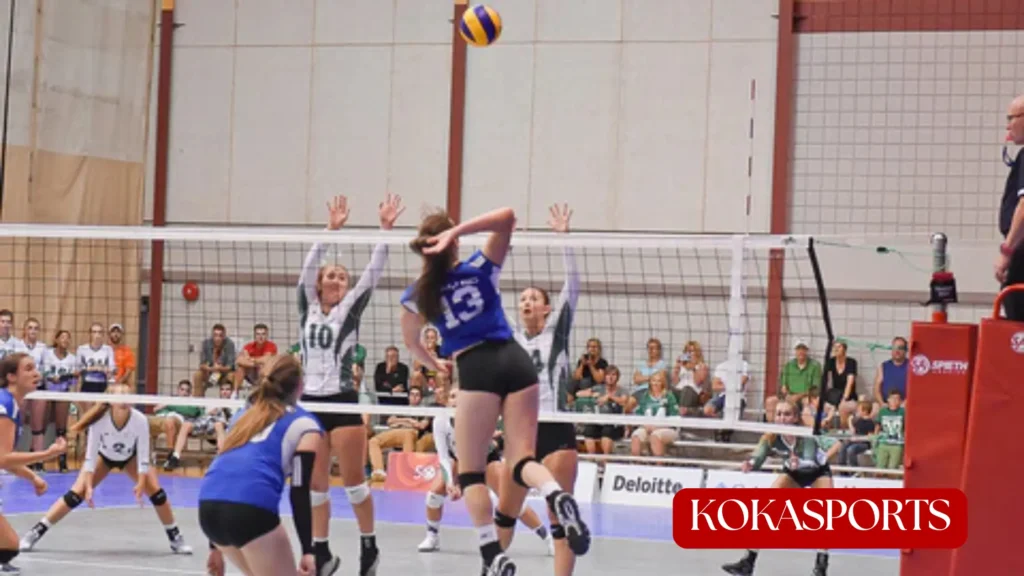
Beach volleyball moves faster. A typical beach game lasts 40 to 60 minutes, making it one of the most time-efficient formats in competitive volleyball.
Here’s why it’s quicker:
- Only 2 players per side (vs. 6 in indoor volleyball)
- Sets 1 and 2 are played to 21 points (not 25)
- The tiebreaker set is played to 15 points same as indoor
- Fewer substitutions and no libero specialist
- Faster rallies due to the smaller volleyball court and outdoor conditions
Beach vs Indoor Volleyball Duration Comparison
| Factor | Indoor Volleyball | Beach Volleyball |
|---|---|---|
| Players per side | 6 | 2 |
| Sets format | Best of 5 | Best of 3 |
| Points to win a set | 25 (15 for final) | 21 (15 for final) |
| Typical duration | 60–150 min | 40–60 min |
| Timeouts per set | 2 per team | 1 per team |
The 3 Rally Types: What’s Really Happening Between Each Point
Most people don’t realize how short individual rallies actually are. The rally duration in volleyball is measured from the moment of serve to the end of the point.
Here’s a simple framework The 3 Rally Types to understand how they affect how long a volleyball game lasts:
- Lightning Rallies (under 2 seconds): These are aces, service errors, or immediate net violations. Also called “pseudo-rallies.” They score a point almost instantly and happen frequently at all levels.
- Standard Rallies (5–9 seconds): The most common type. A serve, a pass, a set, and an attack often finishing in 3 to 5 touches. This is the backbone of volleyball scoring.
- Epic Rallies (15+ seconds): Long defensive exchanges, usually at elite levels. Women’s volleyball tends to produce more of these due to longer digs and stronger defensive play. These are crowd-pleasers but they do extend match time.
The higher the level of play, the more Standard and Epic Rallies you see which is a big reason elite matches run longer than recreational ones.
7 Factors That Affect the Length of a Volleyball Game
Understanding what drives duration helps you predict how long any match will last. Here are the key variables:
- Number of sets played The single biggest factor. A 3–0 result vs. a 3–2 result can differ by 45–60 minutes.
- Skill level and rally length Better teams produce longer rallies. The average rally at pro level is nearly double that of a youth match.
- Timeouts Each team gets 2 timeouts per set (30 seconds each). In a five-set match, that’s up to 20 timeouts adding roughly 10 minutes total.
- Substitutions Each volleyball team can make up to 6 substitutions per set. Frequent changes slow down the flow.
- Deuce scenarios Any set that reaches 24–24 (or 14–14 in the final set) can run significantly longer.
- Television timeouts In televised college and pro matches, mandatory technical timeouts at the 8th and 16th point add 6–10 minutes per match.
- Challenges and reviews Pro and Olympic matches allow video challenges. Each review can add 1–3 minutes.
💡 Pro Tip: If you’re coaching or playing volleyball and want to control pace, use your timeout strategically not just to break the opponent’s momentum, but to give your team a reset after a long, exhausting rally sequence.
How Long Does a Volleyball Tournament Last?
A tournament is a whole different time commitment. Here’s what to expect:
One-day tournament:
- Typically 3 to 5 matches per team
- Each match (with transitions) takes about 75–90 minutes
- Total on-site time: 4 to 7 hours
Weekend tournament:
- Day 1: Pool play 3–4 matches
- Day 2: Bracket/playoff 2–4 matches
- Total: 6 to 10 matches across two days
Time-saving tip for tournament organizers: Many tournaments use a shortened sets format playing sets to 25 but capping matches at best-of-3 to keep the schedule tight. Some even use a best 2 of 3 format in pool play with a best 3 of 5 only in finals.
The Longest Volleyball Games Ever Played
The longest volleyball game on record lasted an astonishing 75 hours and 30 minutes, set in the Netherlands. That’s clearly an endurance event, not a competitive match but it illustrates just how open-ended volleyball rules make the game.
In standard competitive play, the longest sets tend to occur at elite levels where teams are evenly matched and every point is contested. A set that finishes 38–36 is not unheard of in professional play and those alone can last close to an hour.
Frequently Asked Questions
Does volleyball have a time limit?
No. There is no official clock in volleyball. A volleyball match ends when one team wins the required number of sets, regardless of how long it takes.
How many sets are in a volleyball match?
Most competitive matches use a best-of-5 format (first to win 3 sets wins). Youth and recreational matches often use best-of-3 (first to win 2 sets).
How long is the time between sets?
The time between sets is typically 3 minutes at most levels. In televised professional matches, it can extend to 5–10 minutes.
What is the final set played to?
The final set the 5th set in a best-of-5 or the 3rd set in a best-of-3 is played to 15 points, with a 2-point winning margin required. This set is also called the tiebreaker set, and teams switch sides when the leading team hits 8 points.
Conclusion
The typical volleyball game lasts between 60 and 90 minutes for most formats — but that number can swing significantly based on the level, format, and flow of the match. A quick three-set sweep might wrap up in under an hour. A grinding five-set battle between two elite teams can push past two and a half hours.
Here’s the simplest way to remember it:
- Best-of-3 match: Budget 60–90 minutes
- Best-of-5 match: Budget 90–150 minutes
- Beach volleyball: Budget 40–60 minutes
- Tournament day: Budget 4–7 hours on-site
Whether you’re a fan planning your evening, a parent packing snacks, or a coach managing a volleyball federation tournament schedule knowing the length of the game before you arrive makes the whole experience better.