

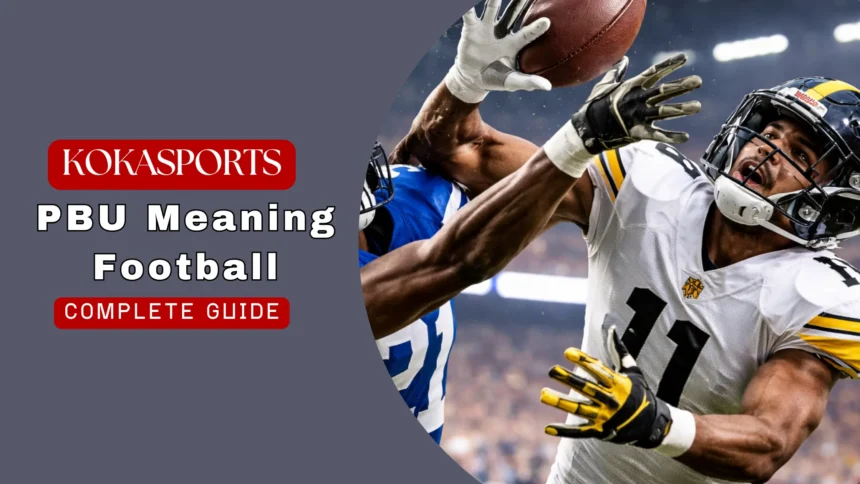
PBU meaning in football: PBU stands for Pass Break-Up, a defensive stat awarded when a player deflects or disrupts a pass without intercepting it.
That is the short answer. This article gives you everything you need to know about pbu meaning football from how it is recorded, to which positions earn the most, to how it affects NFL contracts and team strategy.
What Does PBU Mean in Football? (PBU Meaning Football Explained)
PBU stand for Pass Break-Up, also written as Pass Broken Up. The full acronym PBU stands for pass break-up is used in the NFL and college football to track how often a defensive player stops a pass from being caught without making an interception.
When a player knocks the ball away from a receiver and causes an incomplete pass, that player gets credited with a PBU. It is one of the most honest defensive stats in the sport because it directly measures a defender’s ability to win their matchup on a pass play.
According to the NFL rulebook, a defender must look back for the ball before making contact otherwise it is a penalty, not a PBU.
Here is a quick breakdown of pbu meaning football and how it connects to other terms:
| Term | Full Name | What It Means |
|---|---|---|
| PBU | Pass Break-Up | A pass disrupted by a defender without an interception |
| PD | Passes Defended | PBU + interceptions combined |
| INT | Interception | Defender catches the pass instead of knocking it away |
So when you see PD on a stat sheet, that number includes both PBUs and interceptions together. If a player has 14 passes defended and 2 interceptions, that means they have 12 PBUs. The acronym PBU is specifically for the pass disruptions where the defender did not catch the ball.
PBU stand for in football exactly what the name says a break-up of a forward pass attempt. The acronym is used at every level of the sport, from high school football all the way to the professional stage.
What is a PBU in Football? 2026 Guide
How a PBU Play Works in Football
To get a PBU, a very specific chain of events has to happen during a play. Here is how it works:

- The QB drops back and throws a forward pass
- A defensive player makes physical contact with the ball or the receiver’s hands
- The pass falls incomplete as a direct result of that contact
- The official scorer awards the defensive player with a PBU
It sounds simple, but there are strict rules around what counts and what does not. The pass must be catchable in the first place. If the QB throws the ball 10 yards out of bounds or way over the receiver’s head, there is no PBU even if a defensive player was nearby.
What Counts as a PBU Pass Play
Here are the types of plays that successfully earn a PBU in football:
- Swatting the ball away in the air before or during the catch
- Making contact with the receiver’s hands while they are trying to catch
- A player disrupts a pass by deflecting it at the line of scrimmage
- Tight coverage that forces an incompletion with clear ball contact
A big question fans often ask: if a player tries to intercept the pass but drops it, does it count as a PBU? Yes, it does. As long as the defender made contact with the ball and caused the incompletion, it is recorded as a PBU even if they failed to hold on.
What Does NOT Count as a PBU
Not every incomplete pass earns a defender a PBU. Here are the situations that do not count:
| Situation | Why No PBU Credit |
|---|---|
| QB throws it away under pressure | No defensive contact with ball |
| Receiver drops it on their own | No defender involvement |
| Pass is uncatchable to begin with | No catchable pass, no credit |
| Defensive penalty (pass interference) | Penalty cancels the stat |
| Bad weather affects the pass | Natural conditions, not defense |
The difference between a legal pass break-up and a penalty often comes down to one rule: the defensive player must turn their head to look for the ball before making contact with the receiver. If they never look back and just grab the receiver, that is a penalty, not a PBU.
PBU Meaning Football : Which Positions Get the Most PBUs?
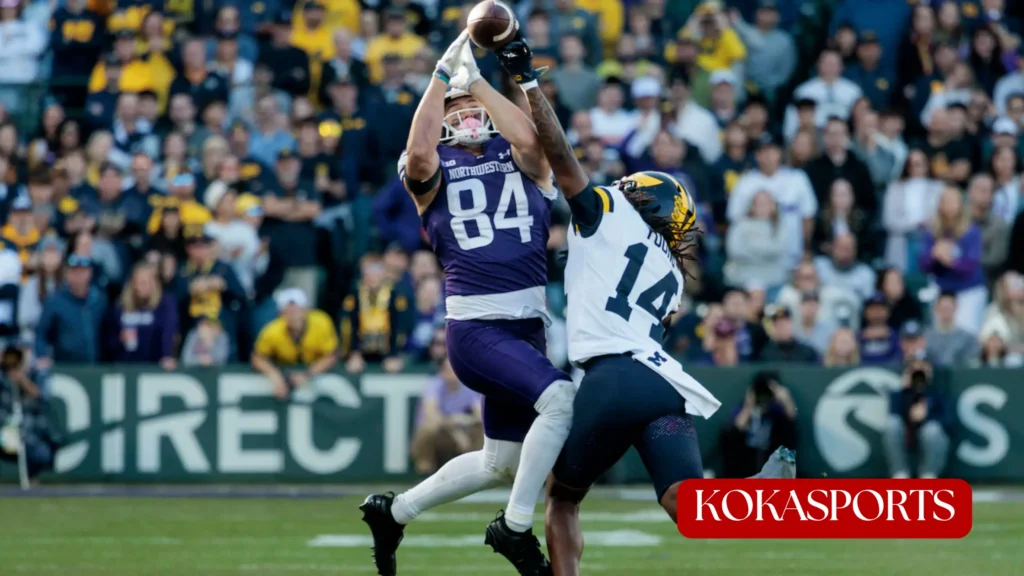
Not every position on the field gets the same number of PBUs. The position a player plays determines how many pass break-up opportunities they see in a typical game.
Cornerbacks : The Primary PBU Position
Cornerbacks are by far the most common position to record a lot of PBUs in football. They line up directly across from wide receivers on nearly every pass play, which gives them constant opportunities. The best cornerbacks in the NFL average between 12 and 20 PBUs in a single season.
Why cornerbacks get so many chances:
- They face the most pass attempt situations of any position
- Press man coverage puts them right next to WR targets
- The offensive team often attacks them repeatedly if they are seen as a weak spot
Safety and Other Defensive Positions
The safety position ranks second in PBU production. A safety who plays center field can jump route patterns and break on deep passes thrown anywhere on the field. They are especially good at preventing big plays downfield.
Linebackers in coverage also earn PBUs, typically 5–8 per season when covering tight ends or rush routes over the middle. They tend to have fewer opportunities simply because they are called on to rush the passer or stop the run game more often.
Defensive linemen earn PBUs differently. Instead of covering a receiver, they get their hands up at the line of scrimmage and block the pass before it can travel downfield. A tall defensive end who disrupts a pass at the line of scrimmage earns a PBU just the same as a cornerback in the secondary the play just happens much faster.
Here is a quick look at typical PBU ranking by position:
| Position | Good PBU Count | Elite PBU Count |
|---|---|---|
| Cornerback | 10–14 | 15–20+ |
| Safety | 6–9 | 10–13 |
| Linebacker | 3–5 | 6–8 |
| Defensive Line | 2–3 | 4–6 |
PBU Meaning Football Stats : How Coaches and Scouts Read the Numbers
Raw PBU counts are useful, but football stats experts go much deeper when evaluating defensive players. The number alone does not tell the complete story. A player with 18 PBUs might be getting targeted constantly because they are easy to beat. A player with 10 PBUs might be so dominant that QBs refuse to throw in their direction at all.

This is why analysts use the PBU-to-target ratio as an important metric. Here is how it works:
PBU Rate = (PBUs ÷ Total Targets) × 100
For example, if a player is targeted 80 times and earns 16 PBUs, their PBU rate is 20% which is considered elite territory. This stat is far more valuable than the raw number because it adjusts for opportunity.
Situational PBU Value in Football
Not all PBUs have the same value. A defensive player who earns a PBU on third-and-long has essentially done the same thing as forcing a punt. That one play can flip field position and take points off the board. Here is how different situations compare:
| Situation | PBU Impact |
|---|---|
| Third and long | Forces punt huge value |
| Red zone attempt | Prevents touchdown saves 4–7 points |
| Second and short | Keeps offense behind the chains |
| Fourth down | Ends the offensive drive completely |
2025 NFL PBU Football Stats Leaders
Based on the 2025 NFL regular season data, here are the top performers in pass break-ups:
| Player | Team | Position | PBUs | Total PD |
|---|---|---|---|---|
| Mike Jackson | Panthers | CB | 19 | 21 |
| Riley Moss | Broncos | CB | 19 | 20 |
| Tyson Campbell | Jaguars | CB | 18 | 20 |
| DJ Turner II | Bengals | CB | 18 | 19 |
| Marlon Humphrey | Ravens | CB | 17 | 20 |
Notice that the PD column is always equal to or higher than the raw PBU count. That is because PD includes interceptions as well. Marlon Humphrey’s 20 PD with 17 PBUs means he also recorded 3 interceptions during the season.
PBU vs Interception : Which Play Has More Impact?
Both a PBU and an interception stop the pass from being completed. But they have very different outcomes for the team.
An interception gives the defensive team possession of the ball. A pass breakup simply makes the pass fall incomplete the offensive team keeps the ball. So why would anyone ever choose a PBU over going for the interception?
Because interceptions are risky. A player who jumps a route to try and pick off a pass but mistimes their jump could allow the receiver to run past them for a huge gain or even a touchdown. A pass break-up, on the other hand, is the safe, guaranteed outcome. The pass falls incomplete. The offense loses a down. The defense stays in good position.
Here is a full breakdown of how the two plays compare:
| Factor | PBU | Interception |
|---|---|---|
| Ball possession after | Offense keeps it | Defense gets the ball |
| Risk level | Low | High |
| How common | Very common | Rare |
| Completion prevented | Yes | Yes |
| Turnover created | No | Yes |
| Frequency (elite CB) | 15–20 per season | 4–6 per season |
Modern defensive philosophies teach defensive backs that preventing a completion is just as important as creating a turnover. The goal is to get off the field on third down. Whether that happens through a pass break-up or a pick, the result for the defense is the same: the offense does not move the chains.
Common Misconceptions About PBU Meaning in Football
There are a few things that fans get wrong about pbu in football. Let us explain each one clearly.
Myth 1: High PBUs Always Mean Great Coverage
This is not always true. A player might have 18 PBUs because opposing QBs keep throwing at them which means they are getting targeted often. Sometimes high PBU numbers mean a team is attacking a weak spot repeatedly. The statistic needs context.
Elite cornerbacks sometimes have lower PBU numbers because QBs simply stop throwing in their direction. The best measure of covering ability is not just PBUs alone but also completion percentage allowed and yards allowed per attempt.
Myth 2: Every Incomplete Pass Is a PBU
As explained earlier, many incomplete passes have nothing to do with the defensive player. A QB who rushes a throw and overthrows their WR by 10 yards gets no PBU credited to any player. The defender must actively cause the incompletion.
Myth 3: Only Defensive Backs Earn PBUs
Any defensive player can earn a PBU. A defensive lineman who blocks a pass at the line of scrimmage gets the same credit as a safety who swats away a deep ball. Linebackers who drop into zone coverage and tip passes over the middle also earn PBUs regularly.
How PBU Stats Impact a Football Player’s Career and Contracts
The pass breakup statistic has become one of the most powerful tools in football contract negotiations. When a cornerback enters free agency, their agent will point to multi-season PBU averages as proof of consistent performance.
Here is why the numbers matter so much to franchises evaluating defensive talent:
- A player who averages 15+ PBUs per season is consistently winning their matchups
- Sack leaders on the defensive line often create more PBU opportunities for defensive backs by forcing QBs into quicker throws
- A player whose PBU rate stays above 18% across three seasons is a consistent performer not just a one-year record holder
The sack and PBU connection is also worth noting. When a pass rusher earns a sack or forces a hurried throw, the pass becomes easier for defensive backs to break up. Teams with high sack totals often also see higher PBU numbers across their secondary the two stats feed each other.
A cornerback averaging 8 PBUs per season versus one averaging 15 can see a massive difference in contract value. Teams know that consistent PBU production means the player is covering receivers tightly, reading the QB accurately, and making plays on the ball when needed.
PBU Meaning Football : Quick Reference Benchmarks by Position
Here is your complete one-stop table for PBU benchmarks across every defensive position in football:
| Position | Rotational | Solid Starter | High-End | Elite |
|---|---|---|---|---|
| Cornerback | 1–5 | 6–10 | 11–15 | 16–20+ |
| Safety | 1–3 | 4–7 | 8–11 | 12+ |
| Linebacker | 1–2 | 3–4 | 5–7 | 8+ |
| Defensive Line | 0–1 | 2–3 | 4–5 | 6+ |
Key facts to remember about PBU meaning football:
- PBU is an acronym that stands for pass break-up
- Stands for pass break-up, not pass blocked or pass defended
- PD includes both PBUs and interceptions they are not the same stat
- A pass must be catchable for a PBU to be awarded
- Any defensive player at any position can earn a PBU
- A sack is completely different it happens before the pass is thrown
- Defensive backs lead all positions in PBU production every season
FAQ PBU Meaning Football
What does PBU mean in football?
PBU meaning in football is Pass Break-Up. It is a defensive statistic awarded when a player physically disrupts a pass attempt and causes an incomplete pass without making an interception.
Is a PBU the same as a pass defended?
No. PD (Passes Defended) is a broader stat that includes both PBUs and interceptions combined. A PBU is specifically a pass disruption where the defender did not catch the ball.
How many PBUs is good for a cornerback?
Any cornerback with 10 or more PBUs in a season is performing at a solid starter level. Elite cornerbacks in the NFL typically earn 15–20 PBUs per season.
Can a defensive lineman get a PBU in football?
Yes. Any defensive player can earn a PBU. A defensive lineman who blocks or tips a pass at the line of scrimmage is awarded a PBU just like a cornerback in deep coverage.
Is PBU the same as pbus on stat sheets?
Yes pbu is simply the plural form used on stat sheets when listing multiple pass break-ups for a player across a game or season.
Conclusion
PBU meaning in football goes far beyond a simple acronym. It is an important metric that reveals how consistent a defensive player truly is when covering the pass. Raw totals, PBU-to-target rates, and situational stats all paint a picture of a player’s true skill in coverage.
With the modern NFL throwing the ball on over 60% of all plays, pass defense has never been more valuable. Every PBU is a victory for the defense a play that stops the offense from moving forward without the risk of a failed interception attempt. Whether a player earns it by jumping a route in the secondary, tipping a pass at the line of scrimmage, or staying tight through contact on a deep ball each one is proof that good football defense is alive and working.
For anyone looking to better understand football stats at a deeper level, the pass breakup is the perfect place to start. It is consistent, measurable, and tells you exactly what kind of defensive player you are watching.