

If you are new to American football, you might wonder why some players line up far away from the main action near the sideline. Those players are cornerbacks, and they play one of the most important roles on the entire football field. So, what is a cornerback in football? A cornerback is a defensive player who lines up across from a wide receiver and tries to stop them from catching the ball. They are the athletes who go one-on-one against some of the fastest and most skilled players in the sport, and they do it on almost every single play.
The cornerback position is special because it requires a rare mix of speed, strength, intelligence, and confidence. In today’s pass-heavy game, a great cornerback can completely change how the offense plans its attack. This guide will break down everything you need to know about the cornerback in football from their basic job to the skills they need, the types that exist, and who the best have ever been.
What Is a Cornerback in Football? (Complete Beginner Explanation)
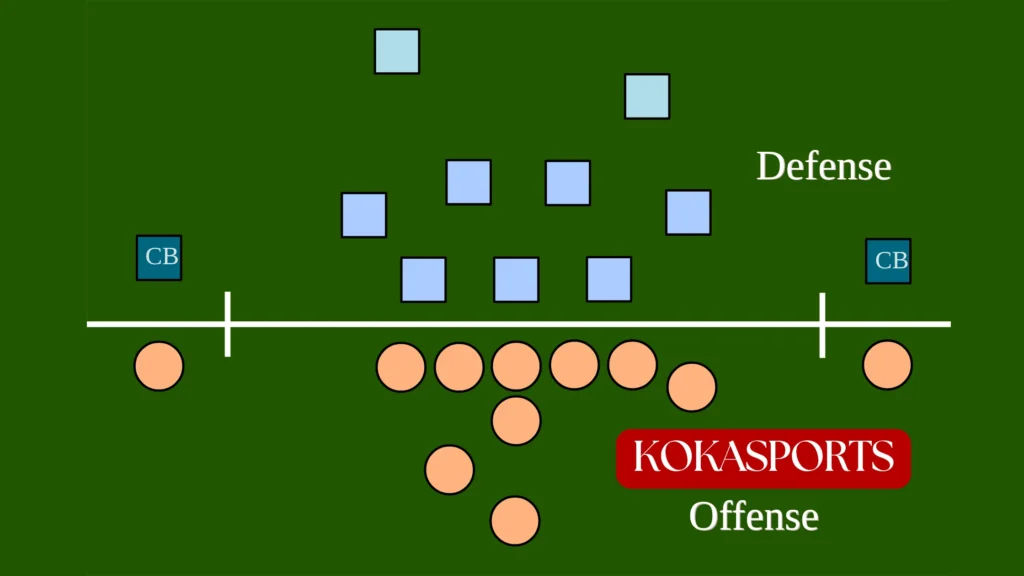
A cornerback (often called a CB) is a member of the defensive secondary the group of defenders positioned farthest from the line of scrimmage. Their main job is to cover receivers and make sure the quarterback cannot complete passes to them.
Cornerbacks line up on the outside of the field, usually right across from the opposing team’s top wide receiver. When the ball is snapped, their job begins immediately. They have to mirror every move the receiver makes, stay close enough to break up the pass, and avoid getting beaten deep.
What Does a Cornerback Do on Every Play?
On every single play, a cornerback is responsible for multiple tasks:
- Covering the receiver sticking close to the receiver so the quarterback does not have an open target
- Defending passes using their hands and timing to knock the ball away or make an interception
- Supporting run defense when the offense runs the ball, the cornerback must come up and make the tackle or push the ball carrier toward the middle
- Forcing plays inside using the sideline as a natural boundary to trap the receiver or ball carrier
Why the Cornerback Position Is So Difficult
The cornerback position requires elite physical ability and a very tough mental game. Here is why it is so hard:
- Receivers know the route before the snap. The cornerback does not.
- One small mistake can lead to a touchdown.
- Cornerbacks must react in less than a second on every pass play.
- They often face the best receivers on the other team.
A common saying in football is that a cornerback needs a “short memory.” If they get beaten on one play, they have to forget it immediately and compete on the very next play.
Cornerback Position Responsibilities in Football
The cornerback position requires players to handle both pass coverage and run defense, even though coverage is their primary focus.
Coverage Responsibilities (Man vs Zone Coverage)
There are two main types of coverage a cornerback will play:
| Coverage Type | Description | Cornerback Role |
|---|---|---|
| Man-to-man coverage | Each defender covers one specific player | Follow the receiver everywhere they go |
| Zone coverage | Each defender covers an area of the field | Stay in assigned zone, react to receiver entering it |
In man coverage, the cornerback follows the receiver’s route wherever it goes across the middle, deep, or short. This is physically demanding and requires great footwork. In zone coverage, the cornerback watches the quarterback and reacts to where the ball is going.
Reading the quarterback is a skill that separates good cornerbacks from elite ones. By watching the quarterback’s eyes and movements, a cornerback can anticipate where the throw is going before it even leaves the hand.
Run Support and Tackling
Even though coverage is their main job, cornerbacks must also play solid run defense. When the offense runs the ball toward the outside of the field, the cornerback is often the first defender in position to make the tackle. This is called run support, and it is a critical part of being a complete defensive player.
Edge containment is also important. The cornerback must prevent running backs from turning the corner and gaining big yards along the sideline.
Turnovers and Big Plays
Some of the most exciting moments in football come from cornerbacks making big plays:
- Interceptions catching a pass meant for the receiver
- Pass deflections batting the ball away to prevent a completion
- Defensive touchdowns returning an interception for a score
Types of Cornerbacks in Football (Outside, Slot, Nickel Cornerbacks)
Not all cornerbacks play the same role. There are different types, and each one has a unique set of responsibilities.
Outside Cornerback
The outside cornerback lines up on the very edge of the defensive formation. They typically cover the opposing team’s best wide receiver and are expected to win most of those battles on their own. This is usually the most high-profile role in the defensive secondary because it involves direct matchups against the best receivers in the game.
Slot Cornerback (Nickel Cornerbacks)
A nickel package is when a defense adds a fifth defensive back to the field, typically replacing a linebacker. The player who fills this fifth spot is called the nickel cornerback, and they usually line up in the slot the inside area between the outside receiver and the offensive line.
Nickel cornerbacks face quick, shifty receivers who run short and intermediate routes. They need to be very quick and smart. In today’s NFL, where offenses spread the field constantly, the nickel cornerback has become one of the most important football positions on defense.
Physical vs Ball-Hawk Cornerbacks
There are also two general styles of play among cornerbacks:
- Press coverage specialists physical corners who jam receivers at the line of scrimmage and disrupt the timing of routes
- Ball-hawk cornerbacks players who focus on creating turnovers and have a natural instinct for where the ball is going
How Cornerbacks Fit Into Football Positions and Defense
Cornerback vs Safety
Both the cornerback and safety are part of the defensive back group, but they play different roles:
| Position | Alignment | Main Job |
|---|---|---|
| Cornerback | Outside edge, near the sideline | Cover the wide receiver one-on-one |
| Free safety | Deep middle of the field | Provide help over the top, read the whole field |
| Strong safety | Near the line of scrimmage | Cover tight end or run support |
Two cornerbacks and two safeties make up the standard four defensive backs in a base defense. When a fifth back is added, it creates a nickel package.
Cornerbacks vs Linebackers
Linebackers are bigger and stronger, built for stopping the run and blitzing. Cornerbacks are faster and more agile, built for coverage. In a typical defense, linebackers handle the backfield and middle of the field while cornerbacks handle the outside passing lanes. The two positions complement each other but rarely do the same job.
Role in Defensive Schemes
In a 4-3 defense (four defensive linemen, three linebackers), cornerbacks are expected to hold their own in man coverage. In a 3-4 defense (three linemen, four linebackers), the defensive scheme may give cornerbacks more safety help over the top. In either system, the cornerback’s job is essential to stopping the passing game.
Skills Needed to Play Cornerback in Football
Speed, Agility, and Footwork
The most obvious requirement is speed. Cornerbacks must keep up with wide receivers who run routes at full speed, often running 4.3 to 4.4 seconds in the 40-yard dash. But raw speed is not enough. Backpedaling smoothly, changing direction quickly, and breaking on the ball all require elite footwork and body control. These are some of the best athletes in all of sport.
Awareness and Football IQ
A smart cornerback reads the offense before the snap. They look at formation, receiver splits, and quarterback tendencies. During the play, they track the receiver’s route while also sensing where the ball is going. This kind of awareness is what separates a good cornerback from a great cornerback.
Physical and Mental Toughness
Cornerbacks get targeted often. NFL players and coaches know that attacking a cornerback in single coverage is a smart offensive strategy. A cornerback must handle the pressure of being tested repeatedly, stay confident, and bounce back from mistakes quickly. Pro football demands mental strength just as much as physical ability.
Best Cornerbacks in NFL History and Today
Legendary NFL Players at Cornerback
Some of the most celebrated names in NFL defensive history played cornerback:
- Deion Sanders Known as “Prime Time,” he was the most electric defensive player of his era. His combination of speed and ball skills made him virtually impossible to throw against. He was both a shutdown corner and a serious interception threat.
- Darrelle Revis Famous for “Revis Island,” his ability to lock down any receiver and take them completely out of the game made him one of the best cornerbacks of the modern era.
- Rod Woodson A cornerback who could also play safety, Woodson combined physical toughness with elite coverage skills and set records that stood for years.
- Mel Blount A physical pioneer who changed how the position was played in the NFL. His style led to rule changes that limited physical contact at the line of scrimmage past five yards.
“Shutting down a receiver is not just about speed it’s about knowing what they’re going to do before they do it.” A common principle among elite NFL cornerback coaches
Modern NFL Cornerbacks to Watch
Today’s top cornerback in football plays in a league that throws the ball more than ever. Names like Jalen Ramsey, Sauce Gardner, and Marshon Lattimore have carried the tradition of elite corner play into the current era. The position continues to evolve, with corners expected to cover receivers of all sizes and speeds while also contributing in run defense.
How Cornerbacks Defend Different Types of Receivers
Defending Speed Receivers
Against fast, deep-threat receivers, the cornerback must avoid getting beaten over the top. They play with a slightly bigger cushion and focus on staying stride-for-stride down the field. Pass coverage against deep threats is all about positioning and not gambling.
Defending Big Physical Receivers
Against big, physical wide receiver targets, cornerbacks must use press coverage techniques at the line of scrimmage to disrupt timing. Getting hands on the receiver early can throw off the route and give the defender time to recover. A defender who can win these physical battles is incredibly valuable.
Defending Slot Receivers in Nickel Packages
The slot is one of the most difficult areas to cover. Inside receivers run short, quick routes that force cornerbacks to make very fast decisions. In nickel packages, the slot cornerback must cover receivers who get open quickly and in tight spaces. This job requires sharp instincts and excellent short-area quickness.
Common Strategies Used by Cornerbacks in Football
Press Coverage vs Off Coverage
- Press coverage The cornerback lines up right at the line of scrimmage and jams the receiver immediately at the snap. This disrupts timing but requires excellent technique to avoid pass interference penalties.
- Off coverage The cornerback gives the receiver a cushion, usually playing several yards back. This prevents getting beaten deep but gives up short completions.
Zone Coverage Techniques
In zone coverage, cornerbacks are responsible for a specific area of the field rather than a specific player. Common zone structures include:
- Cover 2 Two safeties split the deep field, and two cornerbacks cover the flats (short outside zones)
- Cover 3 One safety covers the deep middle of the field, and both cornerbacks take deep outside thirds
Sideline as a Defensive Tool
One of the most effective strategies for a cornerback is using the sideline as an extra defender. By funneling receivers toward the edge, the cornerback limits the space available to make a catch and makes it easier to cover receivers without giving up the middle of the field.
How to Become a Cornerback in Football
Training and Drills for Cornerbacks
Football players who want to play cornerback should focus on:
- Hip flip drills transitioning quickly from backpedaling to running forward
- Mirror drills matching a receiver’s movements in space
- Ball tracking drills locating the ball in the air while running at full speed
- Cone drills improving change of direction and short-area quickness
What Coaches Look for in Cornerbacks
From youth leagues to college football, coaches evaluate cornerback prospects on speed, discipline, and football IQ. A player who can stay calm in man coverage, tackle well in the open field, and avoid penalty flags is exactly what every team wants. American college football programs recruit heavily for players who show natural instincts and a competitive mindset at the position.
Why Cornerbacks Are Crucial in Modern NFL and American Football
The NFL is now a pass-first league. Offenses spread the field with four and five receivers, force four defensive backs onto the field almost every play, and target cornerbacks constantly. The better a team’s cornerbacks are, the more the defense can control what the offense does. A top cornerback allows the rest of the defense to play more freely because the offense cannot simply throw at him.
In American football at every level from american college football to the national football league cornerbacks are among the most impactful football players on the field. An offense that cannot pass efficiently will struggle to score, and a defense with elite corners makes that efficiency nearly impossible to achieve.
As one defensive coordinator once put it: a great cornerback does not just stop passes they change the entire game plan of the offense before the ball is even snapped.
FAQs About Cornerbacks in Football
What is a CB in football?
A CB is a cornerback a defensive back who covers wide receivers and defends the passing game.
What does a cornerback do in football?
A cornerback covers receivers, defends passes, supports run defense, and tries to create turnovers through pass deflections and interceptions.
How many cornerbacks are on the field?
In a standard base defense, two cornerbacks line up on both sides of the field. In a nickel formation, a third cornerback enters the game.
What is the difference between a cornerback and a safety?
A cornerback covers receivers on the outside. A safety plays deeper and helps protect the middle of the field. Both are part of the defensive secondary but have different primary responsibilities.
What is a nickel cornerback in football?
A nickel cornerback is a fifth defensive back who enters the game in passing situations, usually lining up in the slot to cover inside receivers.
Are cornerbacks part of defense or special teams?
Cornerbacks are primarily defensive players, though some also contribute on special teams as gunners or returners.
Who are the best cornerbacks in NFL history?
The best cornerbacks in NFL history include Deion Sanders, Darrelle Revis, Rod Woodson, Mel Blount, and Charles Woodson all players known for their ability to lock down receivers and change games with big plays.
Conclusion
A cornerback in football is one of the most demanding and exciting positions in the entire sport. They must be fast enough to run with the best receivers in the game, physical enough to jam and disrupt at the line of scrimmage, and mentally tough enough to compete one-on-one on every single play. In a sport where passing now controls everything, the cornerback position has never been more important.
Whether you are watching the NFL for the first time or studying the game at a deeper level, paying attention to cornerbacks will completely change how you see a football game. They are not just defenders they are athletes who must think, react, and compete at the highest level, often without any help, in the most difficult matchups on the field. That is why elite cornerbacks are among the most valued and celebrated players in all of American football.