
If you have ever tried to compare 11 personnel vs 13 personnel, you have run into two groupings that sit at opposite ends of the offensive spectrum. One spreads the field with receivers and leans on the pass. The other loads up on tight ends and leans on power. Both use the same simple numbering code, yet they ask very different things of an offense and force very different answers from a defense. This guide breaks down the key differences between them, from personnel and formations to when each is used and how defenses respond.
11 Personnel vs 13 Personnel: Quick Comparison
Here is the fast version before we dig into the details.
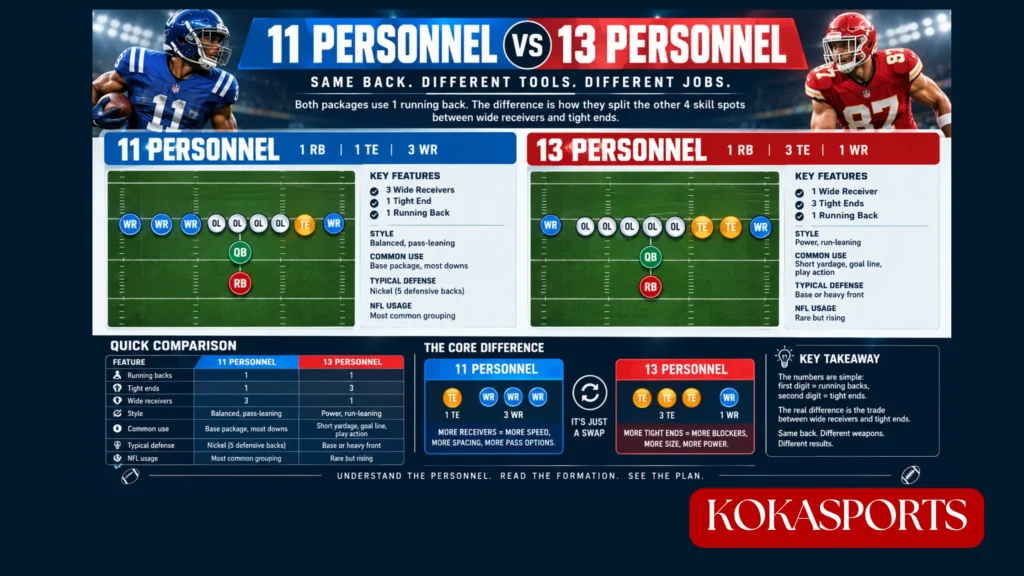
| Feature | 11 Personnel | 13 Personnel |
|---|---|---|
| Running backs | 1 | 1 |
| Tight ends | 1 | 3 |
| Wide receivers | 3 | 1 |
| Style | Balanced, pass-leaning | Power, run-leaning |
| Common use | Base package, most downs | Short yardage, goal line, play action |
| Typical defense | Nickel (5 defensive backs) | Base or heavy front |
| NFL usage | Most common grouping | Rare but rising |
Both groupings keep 1 running back, so the real difference is the trade between wide receivers and tight ends.
What Is 11 Personnel?
11 personnel is 1 running back, 1 tight end, and 3 wide receivers. The two digits tell you the count directly: the first digit is running backs and the second is tight ends, and the three receivers are whatever is left of the five skill spots. That cap of five skill players comes from the rules of the game, which require seven players on the line of scrimmage and allow only five eligible receivers, as laid out in the official NFL rulebook.
It is the workhorse of modern football. With three receivers on the field, 11 personnel spreads the defense out and gives the quarterback plenty of targets while still keeping a tight end and a back who can help in the run game. That balance is why nearly every NFL team builds its base offense around it.
What Is 13 Personnel?
13 personnel is 1 running back, 3 tight ends, and 1 wide receiver. Same single back, but the receivers are swapped out for two extra tight ends. The result is a bigger, more physical group built to block and to control the line of scrimmage.
Traditionally it shows up in short-yardage and goal-line situations, though modern offenses now use it far more creatively. For a full breakdown of the package, see our guide on what is 13 personnel in football.
The Core Difference: Receivers vs Tight Ends
Strip away the labels and the comparison comes down to one swap. Both groupings field 1 running back. 11 personnel spends its remaining four skill spots on 1 tight end and 3 receivers. 13 personnel spends them on 3 tight ends and 1 receiver.
That single trade changes everything downstream. More receivers means more speed, more spacing, and a lean toward the pass. More tight ends means more blockers, more size, and a lean toward power. Everything else that separates the two groupings flows from this one choice.
Run vs Pass Tendency
11 personnel is built for balance but tilts toward the pass. Three receivers pull defenders out of the box and open the field, which is exactly what a modern passing attack wants.
13 personnel has long been a run-first package. Three tight ends give the offense extra blockers to pound the ball in short yardage. But the modern game has added a twist worth knowing. Teams have learned they can throw efficiently out of 13 personnel, because defenses feel forced to answer three tight ends with bigger, slower personnel. That creates mismatches for pass-catching tight ends, especially on play action. In recent seasons, some offenses have generated elite passing efficiency from a grouping that used to mean run almost every time. So while 13 personnel still leans run, treating it as a pure running formation is out of date.
Common Formations for Each
11 personnel usually lines up in spread and shotgun looks, with receivers split wide and in the slot to stretch the field. It is designed to give the quarterback space and quick reads.
13 personnel lines up in tighter, heavier sets, often with tight ends stacked or in wing alignments near the line of scrimmage. These formations create a wall of blockers and are common in goal-line and short-yardage packages. The same grouping can also motion a tight end out to threaten a pass, which keeps the defense honest.
When Teams Use 11 Personnel vs 13 Personnel
11 personnel is an every-down package. Teams use it on first, second, and third down, in the open field and in the red zone, because it can do a bit of everything.
13 personnel is a situational package. It appears most in short yardage, at the goal line, when protecting a late lead by running clock, or as a play-action changeup to catch a run-committed defense. A team rarely lives in 13 personnel the way it lives in 11, though a few modern offenses have started using it far more than the old norm.
How Defenses Respond
Defenses substitute to match what the offense shows, and these two groupings pull them in opposite directions.
Against 11 personnel and its three receivers, defenses usually counter with a nickel defense, which brings a fifth defensive back onto the field to cover the extra receiver. You can read more about that alignment on the nickel defense reference.
Against 13 personnel and its three tight ends, defenses go the other way. They stay in a base defense or bring in heavier bodies, adding linebackers or defensive linemen to hold up against the run. That is the exact response modern offenses try to exploit by passing from 13 personnel, since the defense’s bigger personnel can struggle to cover athletic tight ends.
NFL Usage: How Common Is Each?
The gap in usage is large. 11 personnel is the clear league leader, with most teams using it somewhere between 60 and 80 percent of the time in neutral situations. Together with a couple of other common groupings, it makes up the vast majority of NFL plays.
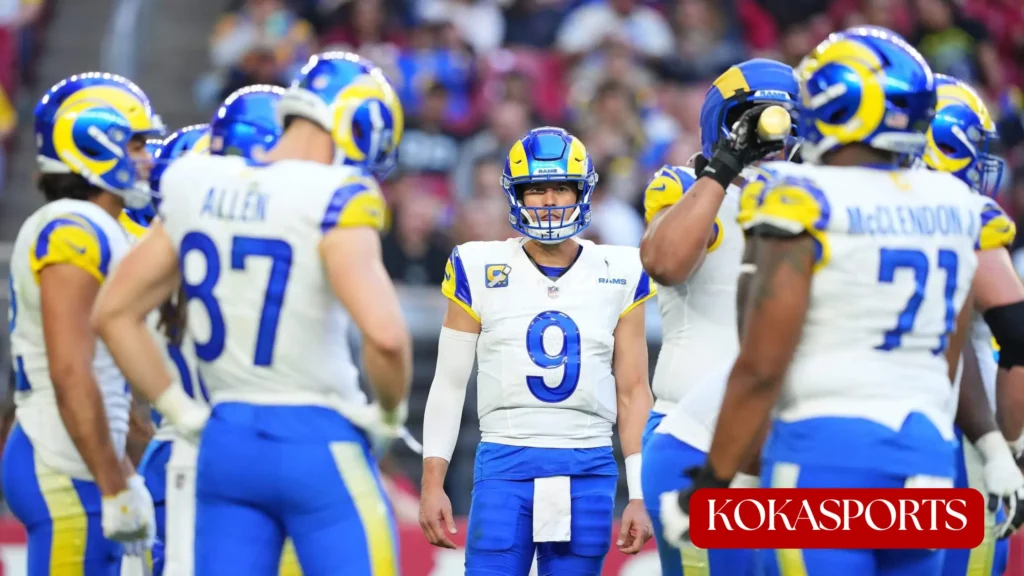
13 personnel is rare by comparison, but it is climbing fast. League-wide, three-tight-end usage jumped sharply in the 2025 season, and one team, the Los Angeles Rams, used 13 personnel on roughly 30 percent of their snaps, far above the usual rate and a modern record. The trend points to more heavy personnel, not less, as coaches chase the efficiency it can create.
Strengths and Weaknesses at a Glance
11 personnel’s strength is versatility. It can run or pass, it spaces the defense out, and it fits almost any situation. Its weakness is that it puts fewer blockers on the field, which can make short-yardage power runs harder.
13 personnel’s strength is power and deception. It overwhelms the point of attack with blockers and can spring play-action passes against a defense that sells out to stop the run. Its weakness is a lack of speed and spacing, and it tips a run tendency that disciplined defenses can key on if the offense is not careful.
Which Grouping Should a Team Use?
Neither grouping is better in a vacuum. The right choice depends on the roster and the moment. A team with three dangerous receivers will lean on 11 personnel to put its best players in space. A team with a deep, talented tight end room can lean into 13 personnel to create mismatches and control the game physically. The smartest offenses carry both and use the defense’s own adjustments against it.
Frequently Asked Questions
What is the difference between 11 and 13 personnel?
11 personnel has 1 running back, 1 tight end, and 3 wide receivers. 13 personnel has 1 running back, 3 tight ends, and 1 wide receiver. Both keep one back, so the difference is two receivers traded for two tight ends.
Is 13 personnel a running formation?
It is traditionally run-first, but not only a running formation. Modern offenses also throw from 13 personnel using play action and tight end mismatches, and some do it very efficiently.
Why is 11 personnel so common?
Because it balances the run and the pass and fits almost any down and distance. Three receivers spread the field while a tight end and back keep the run game alive, which makes it hard to defend.
Can you pass out of 13 personnel?
Yes. Although it looks like a run package, three tight ends can create favorable matchups against a defense that loads up for the run, which makes play-action passing effective.
Conclusion
11 personnel vs 13 personnel is really a story about one trade: receivers for tight ends. 11 personnel spreads the field, leans pass, and serves as the everyday base for most teams. 13 personnel loads up on tight ends, leans power, and has grown into a situational weapon that can run and, increasingly, pass. Learn how each one shifts the math for both offense and defense, and you will read the game a step ahead of the snap.