
Live sports once meant a couch, a cable box, and a kickoff time you had to plan your evening around. Now a fan watches a penalty shootout on a train, checks alternate commentary at halftime, or rewinds a missed wicket before the next ball is bowled. Online platforms did not just hand supporters a new screen. They changed match-day habits, ticket conversations, sports bars, and the way leagues sell their rights. Some fans still love the old broadcast rhythm, and fair enough.
But live sports viewing is more personal, more fragmented, and far more data hungry than it was five seasons ago. For readers comparing digital sports markets with finance-adjacent trends, money coming sits oddly close to the same behavior: people want fast access, live numbers, and control over timing. That demand now shapes match night.
The second screen is now part of the seat
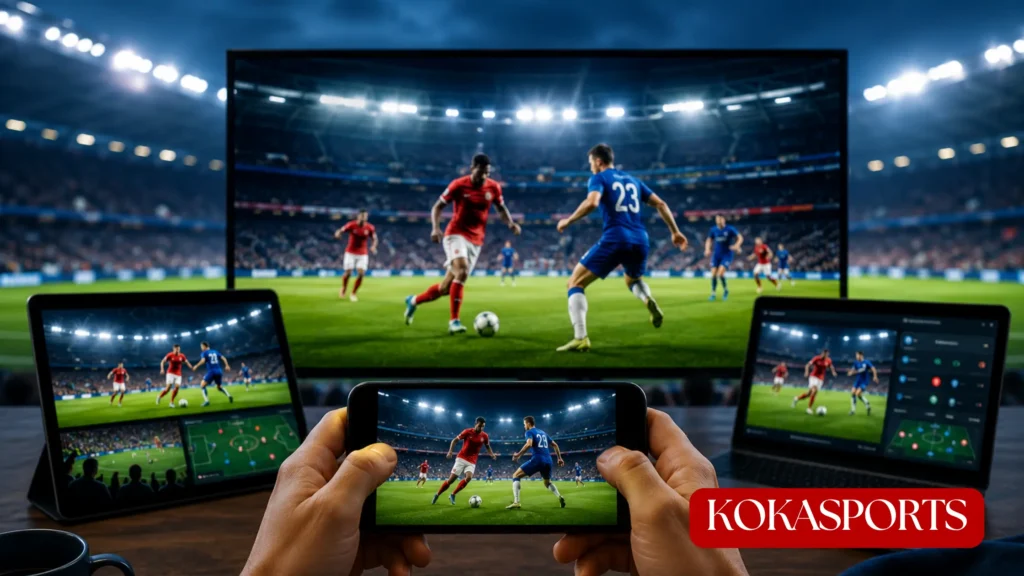
Stadium noise still matters, but the phone has become part of the live seat. A fan at home checks lineups on one app, keeps the match feed open on a tablet, and follows a group chat that explodes after a red card.
That is normal now.
The old broadcast asked everyone to accept one camera path and one commentary team. Apps break that pattern. A Champions League viewer can switch between tactical feeds, Spanish commentary, and a short-form clip channel built for goals and cards. NBA League Pass has offered condensed games for years, and F1 TV gives onboard cameras that turn a midfield fight into the main event.
This creates a strange split. Fans feel closer to the play, yet fewer people share the exact same version of the match. Two supporters can watch the same 2-1 final and remember different details because one followed referee audio while the other watched heat maps and chat reactions.
Live sports rights are turning into app choices
Broadcast rights used to sit behind a simple question: which channel has the game? The answer now depends on country, package, device, and sometimes the day of the week. Messy? Very.
In the United States, Thursday Night Football moved to Amazon Prime Video, while Major League Soccer signed a long deal with Apple. In the United Kingdom, Premier League matches still split across Sky Sports, TNT Sports, and Amazon windows. A fan may need three subscriptions to follow one club across a month.
That creates pressure. Families drop a service after a tournament. Students share logins until password checks shut them out. Pubs choose packages based on which fixtures fill tables at 7:45 p.m. A major tournament turns the same puzzle up a level, which is why a fan’s guide to following every World Cup 2026 match is worth reading before the group stage starts.
Leagues like the money because direct platforms bring names, emails, watch time, and churn rates. Traditional TV gave reach. Apps give behavior. The trade-off is simple enough: more knowledge for leagues, more decisions for fans.
Latency has become part of match tension
Nothing ruins a last-minute goal like a neighbor shouting before your picture catches up. Latency, once a technical footnote, is now a social problem inside the sport itself.
Traditional cable often runs a few seconds ahead of online feeds. Some apps sit 30 to 60 seconds behind live play during heavy traffic. For betting markets, fantasy contests, and group chats, that gap feels huge. A push notification can spoil a penalty before the taker starts his run on screen.
Platforms are working on it. Low-latency HLS, WebRTC tests, and better edge servers cut delays, but quality drops if the connection is weak. Fans notice freezes more than they notice engineering wins. One frozen frame during a Super Bowl drive gets remembered longer than three smooth quarters.
The fix is partly technical and partly human. Muting alerts helps. So does delaying group chats by house rule. Some bars even sync screens manually, because one room cheering in waves makes the whole place feel broken.
Live sports fans are becoming their own producers

Watching online gives viewers more control, but it also gives them work. They choose the feed, dodge spoilers, manage logins, test Wi-Fi, and decide which alerts deserve attention. Tiny chores stack up before a ball is kicked.
Younger fans seem comfortable with that trade. A 19-year-old watching the NBA may keep TikTok open for reactions, Discord for friends, and the official app for stats. An older fan may just want the main broadcast to start without another password reset. Both views make sense.
Creators add another layer. Watch-along shows on YouTube and Twitch turn one match into a shared living room, even when the actual game footage stays behind rights walls. The appeal is emotion. A funny host, a sharp analyst, or a former player can make a dull 0-0 feel alive.
Teams should study this without copying every meme. The best next step is small: make official feeds easier to start, label alternate angles clearly, and show delay settings before kickoff. Fans will handle the rest, one screen at a time.
What clubs should fix before the next kickoff
Clubs rarely control every platform, yet they control enough details to reduce friction. Simple match pages help: one legal viewing link per country, kickoff time shown in local time, and a plain note about blackout rules. No mystery.
Support teams should watch social feeds during the first 15 minutes, because login trouble peaks right before play starts. If a club sees the same complaint 500 times, it has a product problem, not a fan problem.
A practical test fits on one sticky note: can a first-time subscriber find the live button in under ten seconds without asking staff for help?
FAQs About Live Sports Viewing
Why is my picture behind the live match?
Video is encoded, packaged, and delivered in small chunks, which adds delay. Depending on traffic and your connection, that gap runs from a few seconds to about a minute behind cable.
Do I really need several subscriptions to follow one club?
Often yes. Rights for a single league are split by window, competition, and country, so a full season can sit across two or three services.
Is watching at home better than being in the stadium?
Different, not better. The ground gives atmosphere; watching online gives replays, stats, alternate camera angles, and the freedom to follow a match from anywhere.
Conclusion
Live sports have not lost their pull. The game has simply moved into a format where the fan makes more choices, from the feed and the language to the delay setting and the group chat rules. That freedom comes with clutter: extra logins, split rights, and the odd spoiler shouted through a wall. Leagues and clubs that cut the friction, one clear link and one honest kickoff time at a time, will keep supporters watching. The whistle still starts the match. Everything around it is now up for negotiation.