
Football’s personnel grouping system is elegantly simple once you understand its logic. Every grouping gets expressed as a two-digit number, where the first digit tells you how many running backs are on the field and the second digit tells you how many tight ends. The remaining skill positions, out of the five total allowed alongside the quarterback and five offensive linemen, are assumed to be wide receivers. No announcement needed. Coaches, coordinators, and db in football coverage assignments all adjust the moment that second digit changes.
So when you see “12 personnel football” written in a game preview or hear it called out during a broadcast, the translation is straightforward: one running back, two tight ends, and two wide receivers. That’s your five skill players accounted for. ESPN confirmed exactly this breakdown, and it’s become one of the most consistently defined terms across coaching clinics, film study channels, and broadcast analysis alike.
What 12 Personnel Actually Looks Like on the Field
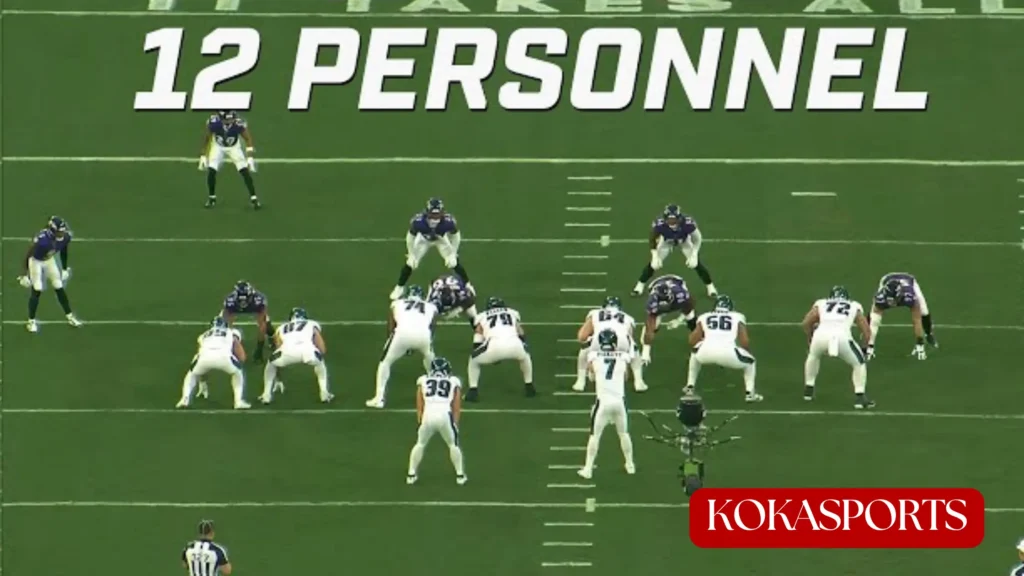
The two tight ends in this grouping don’t have to line up in any single prescribed way, and that’s a significant part of the appeal. One tight end typically aligns inline on the line of scrimmage, functioning as a traditional blocking presence. The second, sometimes called a “move” tight end or H-back, can flex into the slot, align in the backfield, or split out wide entirely. Offenses can flex to three-wide sets from this same grouping, or keep both tight ends bunched to one side to create an obvious but still difficult edge-setting problem for the defense.
One specific formation coaches use out of 12 personnel is called Deuce, a 2×2 set where the H-back aligns off the ball with his inside foot stacked behind the weak-side tackle’s outside foot. It’s a small alignment detail that creates enormous run-blocking leverage. When both tight ends stack toward the same side of the formation, as The Athletic once detailed in a breakdown of a Cowboys game plan, the defense is essentially forced to acknowledge the run threat or absorb punishment for ignoring it.
Eight Gaps and Four Vertical Threats
The run game arithmetic here is genuinely compelling. With two tight ends extending the line of scrimmage on either side, an offense operating out of 12 personnel presents eight total gaps the defense must account for. That’s a serious assignment problem for any front. Football gaps, the spaces between and outside offensive linemen, multiply when tight ends attach to the formation, and a defense trying to plug all eight while respecting the passing game is being asked to do two contradictory things simultaneously.
Some coaching analysts have argued that 12 personnel might be the single hardest grouping to defend in football, pointing to exactly that combination: eight immediate gaps and four vertical threats. That’s a coaching opinion, not a statistical law, but it captures something real about the structural pressure this grouping creates. Defenses often respond with Cover 3 and an extra safety walked down near the line of scrimmage, trying to add a run-force body without fully surrendering coverage depth. The problem is that move gives the offense a predictable alignment to read, especially against even defensive fronts where gap assignments become schematically transparent.
Strategic Balance as the Core Selling Point
At its core, coaches lean on 12 personnel to run the ball. The blocking surface is wider, the run fits are more complex for the defense, and the physicality of two tight ends at the point of attack creates genuine advantages in short-yardage situations. Compared to heavier groupings like the 13 personnel package, 21, or 22 personnel, this package is more pass-friendly while still retaining the bulk for power running. That balance is the whole point.
PFF Film School has noted that the run-pass split in 12 personnel tends to hover around 50-50 across many offenses, which is a generalization but an instructive one. No other common grouping sits quite so evenly on that dividing line. The ath football position concept, which describes athletes deployed in hybrid roles, finds a natural home here too, since a versatile second tight end functioning as an in-line blocker on one snap and a seam-route runner on the next is essentially that hybrid idea made concrete.
How It Stresses Defensive Alignments
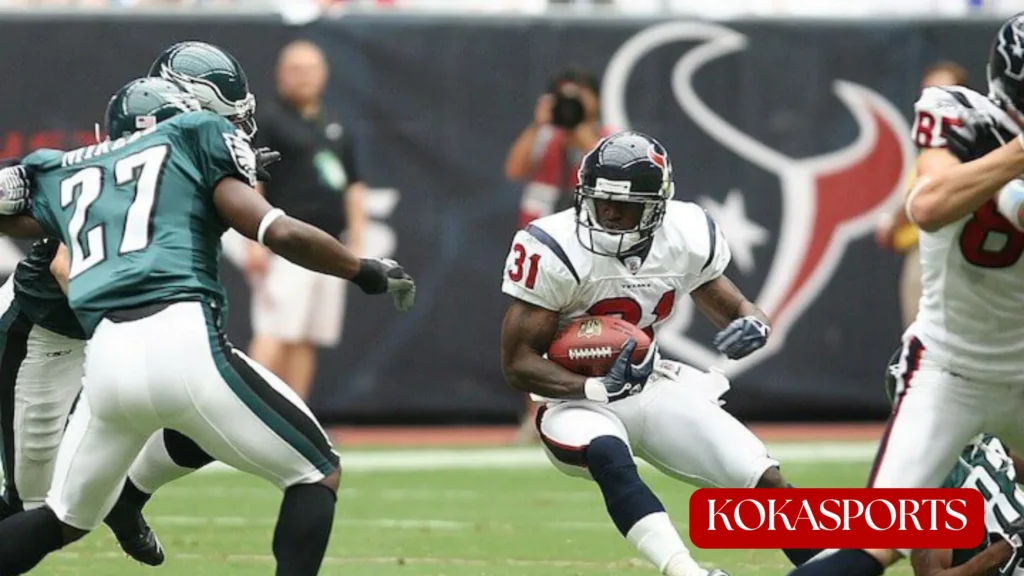
The real tactical power of 12 personnel is what it does to defensive decision-making before the snap. Moving two tight ends around the formation through shifts and motions forces the defense to declare its strength, rotate its safeties, and sometimes tip its coverage before the ball is even snapped. Overloading one side of the field becomes straightforward, and the offense can read the defensive response to determine its best available play.
The ath position football concept applies to defenders too. A db in football asked to cover an inline tight end physically, then rotate to a deep zone, is being stretched beyond a single skill set. Defenses that commit extra bodies to the box become vulnerable to play-action passing. Defenses that prioritize coverage leave themselves short against the run. The strength of 12 personnel is precisely this: it makes the defense more predictable, not the offense.
Formation Deception and Matchup Creation
One of the subtler advantages is how similar 12 personnel looks to 11 personnel at a glance. The added bulk of the second tight end isn’t always obvious pre-snap, particularly when that tight end flexes wide or into the slot. Defensive backs expecting a spread concept suddenly face a physical mismatch at a skill position. A linebacker asked to cover a receiving tight end in space is a problem the offense designed deliberately.
The grouping allows offenses to dictate matchups based on whether the defense responds with its base package or a sub package. Bringing in extra defensive backs to match the receiving threat opens the run game. Keeping linebackers on the field to stop the run creates passing mismatches. Neither answer is clean, which is why this grouping has remained one of the most popular in football across multiple eras of the game.
FAQs
What is 12 personnel in football?
12 personnel is an offensive grouping featuring one running back, two tight ends, and two wide receivers. The quarterback and five offensive linemen complete the 11-player offense.
Why do NFL teams use 12 personnel?
Teams use 12 personnel because it offers excellent balance between the run and pass. It creates strong blocking opportunities while still providing multiple receiving threats.
How is 12 personnel different from 11 personnel?
The main difference is that 11 personnel uses one tight end and three wide receivers, while 12 personnel replaces one wide receiver with a second tight end, making the offense more physical without sacrificing passing versatility.
Conclusion
12 personnel football remains one of the most versatile formations in the modern game because it gives offenses the ability to run or pass effectively without changing personnel. With one running back, two tight ends, and two wide receivers, offenses can create favorable matchups, widen the blocking surface, and force defenses to reveal their intentions before the snap. Whether used for power running, play-action passing, or creating mismatches against linebackers and defensive backs, 12 personnel continues to be a valuable package for teams looking to keep defenses off balance.