

The DB position in football refers to the defensive back, a player who lines up in the secondary behind the linebackers and whose primary job is to defend against the pass. Defensive backs cover wide receivers, prevent deep completions, create turnovers through interceptions and forced fumbles, and serve as the last line of defense between the offense and the end zone. The DB group includes cornerbacks, free safeties, strong safeties, nickelbacks, and dime backs. In this article I am going to explain what the DB position is, what each type of defensive back does, the skills required, how DBs line up and operate in different schemes, famous players at the position, and why the role has become more important than ever in modern football.
Now here is why this topic is personal for me.
I coached a youth football team last fall and one of my players, a quick kid with decent hands, kept asking me to play wide receiver. I told him I wanted to try him at cornerback first. He looked at me like I had insulted him. In his mind playing DB meant standing around in the backfield while the real action happened up front.
First game of the season he jumped a slant route, picked off the pass, and ran it back forty yards for a touchdown. He came off the field grinning and said “okay I get it now.”
That moment reminded me that most people do not understand what the DB position actually involves until they see it up close. From the outside it looks passive. From the inside it is one of the most demanding and impactful positions on the entire field.
This is the complete breakdown I wish I had when I first started coaching defensive backs.
What Does DB Mean in Football?
DB stands for defensive back. It is the general term for any defensive player who lines up in the secondary, which is the area of the field behind the linebackers.
Defensive backs are positioned farthest from the line of scrimmage on the defensive side. Their primary responsibility is defending the passing game but they also contribute to run defense when ball carriers break through the front seven.
The DB position is critical because of how much modern offenses rely on the pass. If your defensive backs cannot cover, it does not matter how good your pass rush or run defense is. The quarterback will find the open receiver and move the ball at will.
What Positions Are Included in the DB Position in Football?
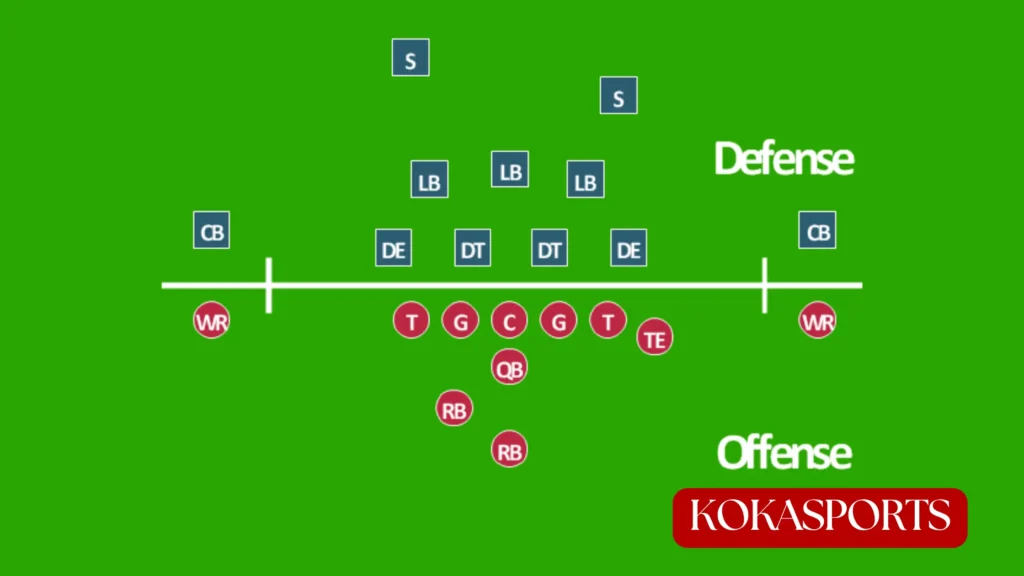
Cornerback
The cornerback lines up across from the wide receiver and his job is to prevent that receiver from catching the ball. He plays man coverage where he shadows one specific receiver or zone coverage where he protects an area of the field.
Speed is the most important trait at cornerback. You are matching up against the fastest players on the offense every snap. One slow step and the quarterback targets you all game.
Free Safety
The free safety lines up deep in the middle of the field, typically twelve to fifteen yards from the line of scrimmage. His job is to read the quarterback, patrol the back end of the defense, and prevent big plays over the top.
Free safeties are the best ball hawks in the secondary. They have the freedom to roam and react rather than locking onto one specific player. When you see a defender make a diving interception from across the field that is usually the free safety.
Strong Safety
The strong safety plays closer to the line of scrimmage on the strong side of the formation. He is more physical than the free safety and his responsibilities include stopping the run, covering tight ends, and occasionally blitzing the quarterback.
Strong safeties need size and toughness because they deal with bigger players near the line on a regular basis. They function almost like an extra linebacker at times.
Nickelback and Dime Back
When the offense adds extra receivers the defense responds by adding extra defensive backs. The fifth DB on the field is the nickelback. The sixth is the dime back.
These players replace a linebacker to give the defense more speed in passing situations. In today’s NFL nickel defense is not a specialty package anymore. Most teams run it on the majority of snaps which makes the nickelback a full time starter in everything but title.
What Does a DB Do in Football?
Pass coverage is the foundation. In man coverage the DB follows one specific receiver everywhere on the field. In zone coverage he drops into an assigned area and breaks on the ball when it enters his zone. Both require discipline, awareness, and quick reactions.
Tackling ball carriers is a major part of the job. When a receiver catches a short pass the nearest DB has to bring him down immediately to prevent yards after catch. Open field tackling is one of the hardest skills in football because there is no help and no pile to fall into.
Defending against deep passes requires the ability to read routes, track the football in the air, and make a play on the ball at the highest point. This is especially important for safeties who are responsible for preventing explosive plays.
Creating turnovers is what makes great DBs special. Interceptions give the offense extra possessions. Forced fumbles create chaos. Pass breakups kill drives on third down. The best defensive backs are not just preventing catches. They are hunting the football.
Skills Needed to Play the DB Position in Football
Speed and quickness are non negotiable. You are covering receivers who run in the low 4.3s and 4.4s. If you cannot stay with them nothing else matters.
Agility and footwork allow you to backpedal smoothly, flip your hips, and change direction without losing speed. A DB with stiff feet will get burned on every route that involves a cut or a break.
Ball skills separate average DBs from playmakers. Catching an interception while running full speed and tracking the ball over your shoulder takes coordination that only comes through repetition.
Football IQ is where the real advantage lives. The best DBs study film, recognize formations, and understand route combinations before the snap. That knowledge gives them a head start on every play.
Physical toughness rounds it out. You are among the smallest defenders on the field but you still have to tackle ball carriers who are bigger and running with momentum.
How Defensive Backs Line Up on the Field
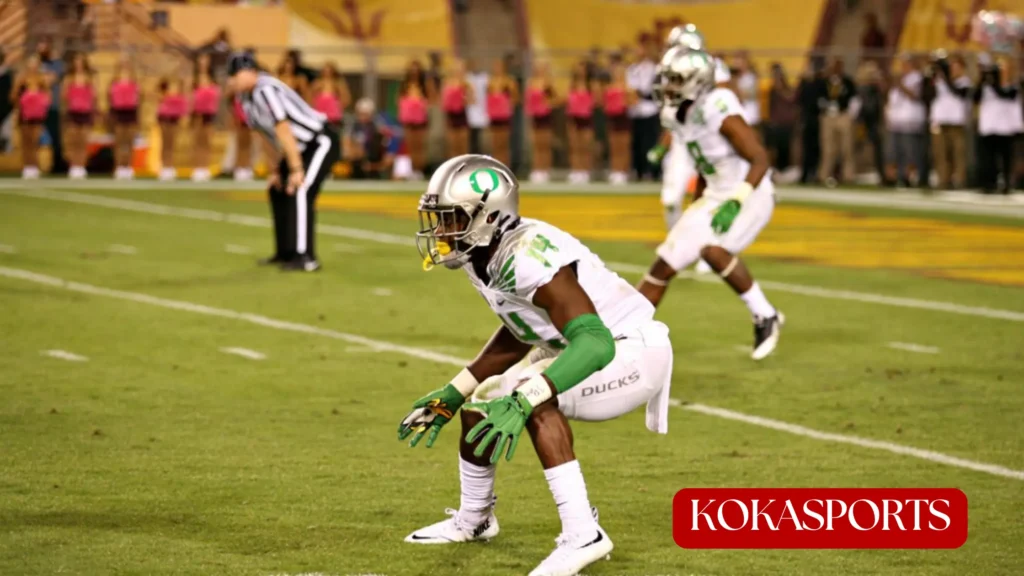
Cornerbacks line up on the outside across from wide receivers. Their depth varies depending on whether they are in press coverage at the line or off coverage five to ten yards back.
Safeties line up deeper. The free safety sits in the deep middle twelve to fifteen yards back. The strong safety is closer at seven to ten yards on the strong side.
In zone defense DBs drop into assigned areas and read the quarterback. In man defense they follow their receiver wherever he goes. In blitz packages one or more DBs rush the quarterback instead of covering which creates pressure but leaves fewer defenders back.
DB Position in Football Rules and Responsibilities
Pass interference is the penalty DBs deal with most. You cannot make significant contact with a receiver after five yards or while the ball is in the air. Grabbing, pushing, or running through a receiver results in a penalty that can be devastating.
Holding and illegal contact are other common issues. DBs who get beat sometimes grab the receiver’s jersey to slow them down and officials watch for it constantly.
Communication holds the secondary together. DBs call out coverage adjustments, alert teammates to motion, and make sure everyone knows their assignment. One miscommunication can leave a receiver wide open.
How to Play the DB Position in Football
The basic stance is a slight crouch with knees bent and weight on the balls of your feet. You need to be ready to move in any direction the moment the ball is snapped.
The backpedal is the most fundamental technique. You move backward while watching the receiver and quarterback. When the receiver makes his break you flip your hips and drive toward the ball.
Press coverage means jamming the receiver at the line before he can run his route. It disrupts timing but if the receiver beats the jam he has open space. Off coverage gives a cushion and focuses on not getting beat deep.
Tackling technique for DBs focuses on breaking down in space, staying low, and wrapping up. It is usually one on one in the open field with no help nearby.
Key drills include ladder footwork for agility, ball drop reactions for quick responses, and over the shoulder tracking for catching interceptions at speed.
Famous DB Players in Football History
Deion Sanders is the most electric cornerback ever. He shut down entire sides of the field and was a threat to score every time he touched the ball.
Ed Reed redefined the free safety role. He read quarterbacks better than anyone and turned interceptions into long returns unlike anything the game had seen.
Troy Polamalu played safety with instincts that could not be taught. His aggression and timing made him one of the most feared defenders of his era.
In the modern game Sauce Gardner has established himself as one of the best young cornerbacks with his length and coverage ability. Minkah Fitzpatrick has become one of the most versatile safeties in football playing both free and strong safety at an elite level.
Difference Between DBs and Other Football Positions
DBs and linebackers serve different roles. Linebackers are bigger and focused on run defense. DBs are faster and built for pass coverage. The athletic profiles are very different.
DBs and wide receivers are mirror images. Receivers run routes to get open. DBs read those routes and try to prevent the catch. Both need speed and ball skills but use them on opposite sides.
The common confusion is between DBs and safeties. A safety is a type of DB. All safeties are defensive backs but not all defensive backs are safeties.
Why the DB Position Has Become More Important in Modern Football
The NFL is a passing league now. Teams throw more than ever and the players defending those passes are more critical than they have ever been.
Hybrid safeties who play multiple roles are increasingly valuable. A player who can line up deep, cover a slot receiver, and blitz on the next snap gives the coordinator options a one dimensional player cannot.
Slot defenders have become essential as offenses move receivers inside. The nickelback position barely existed twenty years ago. Now it is one of the most important roles on defense.
Common Challenges Defensive Backs Face
Covering elite receivers is the hardest part. Guys who run precise routes at full speed with instant change of direction are nearly impossible to stay with every snap.
Avoiding penalties is a constant battle. The rules favor offense and one hand check at the wrong moment gives the other team a first down.
The mental pressure is real. One blown coverage means six points and everyone sees it. You need a short memory and unshakeable confidence to play DB at any level.
Frequently Asked Questions About the DB Position in Football
Is a DB the same as a cornerback?
No. Cornerback is one position within the DB group. The DB position includes cornerbacks, free safeties, strong safeties, nickelbacks, and dime backs.
What is the hardest DB position to play?
Cornerback is generally considered the hardest because you are isolated against receivers with no help on many plays.
Are DBs important in run defense?
Yes. Safeties especially contribute to run defense by filling gaps and making tackles when ball carriers get past the front seven.
What size are most football DBs?
Cornerbacks typically range from 5 foot 9 to 6 foot 1 and 180 to 200 pounds. Safeties are usually slightly bigger at 6 foot to 6 foot 2 and 200 to 215 pounds.
Can a DB score touchdowns?
Absolutely. DBs score on interception returns called pick sixes, fumble recoveries, and occasionally on punt or kick returns.
Conclusion
That kid on my youth team who did not want to play DB ended up being the best defender on the roster by the end of the season. He finished with six interceptions and two pick sixes. By the last game he was asking to stay at cornerback permanently.
The DB position in football is one of the most demanding roles in the sport. It requires speed, intelligence, toughness, and a mental resilience that most people do not appreciate until they see it firsthand. Without strong defensive backs no defense works regardless of how talented the front seven is.
If you are a player trying to figure out where you fit on defense, do not overlook the secondary. It might not get the same attention as rushing the quarterback or stuffing the run but the DB position is where games are won and lost in modern football.