

The difference between a strong safety vs free safety comes down to what each player is asked to do on the field. A strong safety plays closer to the line of scrimmage, focuses on stopping the run, covers tight ends, and brings physicality to the secondary. A free safety lines up deeper, reads the quarterback, patrols the back end of the defense, and prevents big plays over the top. Both are safeties. Both play in the secondary. But their jobs are very different.
I did not fully understand this until I got into a debate with a buddy of mine during a playoff game last winter.
We were watching a safety come downhill and lay a huge hit on a running back at the line of scrimmage. My buddy said “that is what safeties do.” A few plays later a different safety on the same team read the quarterback from twenty yards deep, jumped a route, and picked off the pass. He looked confused and said “wait, that is also a safety?”
That one sequence showed the entire difference between the two positions in about thirty seconds. The first guy was the strong safety. The second was the free safety. Same position group, completely different assignments. This is everything I learned when I started digging into the two roles.
What Is a Safety in Football?
A safety is a defensive back who lines up in the deepest part of the secondary. He is the last line of defense between the offense and the end zone.
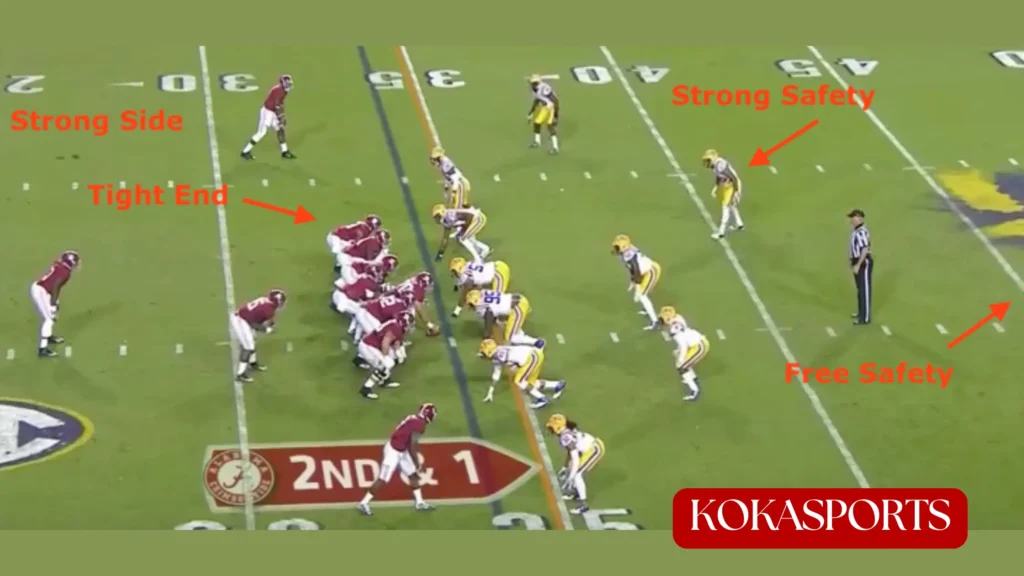
Football defenses use two safeties because the job is too big for one player. One safety cannot cover the deep middle and also come up to stop the run at the same time. So defenses split the work. The strong safety handles the physical stuff near the line. The free safety handles the deep coverage. Together they cover both threats without leaving anything exposed.
Against the pass, safeties provide help over the top for cornerbacks and read the quarterback to jump routes. Against the run, they fill gaps when ball carriers get past the linebackers and make tackles in open space.
What Is a Strong Safety?
A strong safety is the safety who plays closer to the line of scrimmage on the strong side of the offensive formation, which is the side with the tight end. The name comes from that alignment, not from being physically stronger than the free safety.
He typically lines up seven to ten yards deep. That puts him in position to read the run quickly, come downhill to make tackles, and cover tight ends on short and intermediate routes.
Run defense is the primary job. When the offense runs, the strong safety fills the gap and makes the tackle, almost like an extra linebacker. Covering tight ends is the next priority. These are big, fast targets and the strong safety needs enough athleticism to stay with them and enough size to match up physically. He also blitzes more often than the free safety because his alignment gives him a shorter path to the quarterback.
Physicality is the foundation skill. You collide with tight ends, running backs, and fullbacks regularly. Tackling ability, football IQ, and versatility round out the skill set. A strong safety who can only stop the run is limited. The best ones cover, blitz, and tackle at a high level.
Troy Polamalu played the position like nobody else. His instincts and timing on blitzes made him one of the most feared defenders ever. Kam Chancellor was pure physicality and a cornerstone of the Seahawks Legion of Boom. Jamal Adams brought the position into the modern era by blitzing, covering, and stopping the run all at an elite level.
What Is a Free Safety?
A free safety lines up deepest in the secondary, typically twelve to fifteen yards from the line of scrimmage, in the deep middle of the field. The name “free” comes from the fact that this player is often free from man coverage assignments. Instead of locking onto one player, he roams and reacts.
Deep pass coverage is the primary job. The free safety makes sure nobody gets behind the defense for an easy touchdown. If a receiver beats a cornerback deep, the free safety is the last player who can prevent the score.
Reading the quarterback is what makes great free safeties special. They watch the quarterback’s eyes, anticipate where the throw is going, and break on the ball before it arrives. This is how interceptions happen. Helping cornerbacks is a constant responsibility too. That safety net allows corners to play more aggressively knowing someone is behind them.
Speed is essential because the free safety covers the most ground of any defender. Awareness, ball skills, range, and agility complete the profile. A free safety with limited range leaves gaps that quarterbacks will exploit all game.
Ed Reed is the greatest free safety ever in my opinion. He read quarterbacks better than anyone and made entire defenses better just by being on the field. Earl Thomas had incredible range as the centerfield anchor of the Seahawks defense. Brian Dawkins brought an intensity to the position that was unmatched, covering like a cornerback and hitting like a linebacker.
Strong Safety vs Free Safety: Main Differences
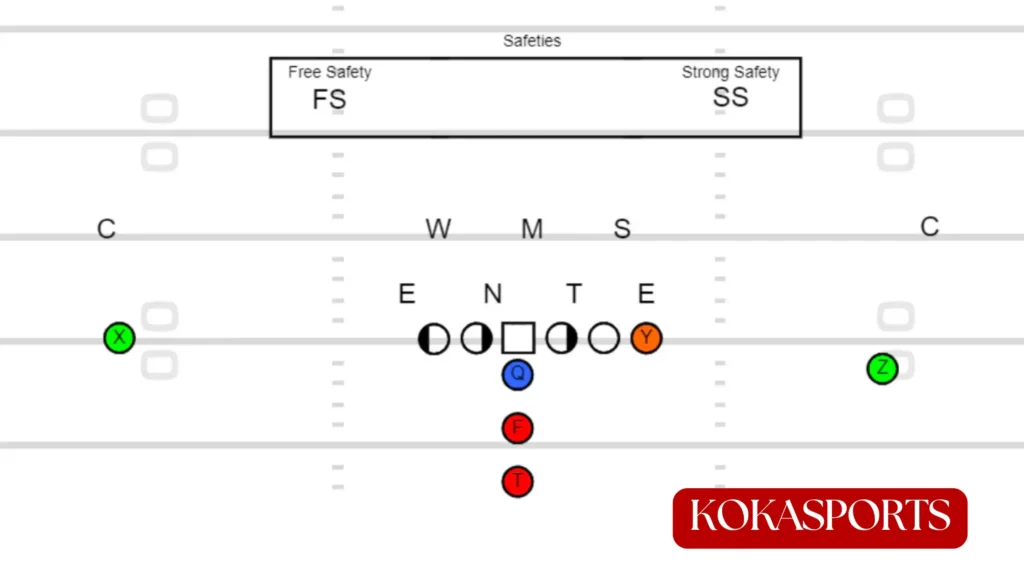
The strong safety lines up seven to ten yards deep. The free safety lines up twelve to fifteen yards deep. This difference in depth dictates everything else about how the two positions operate.
The strong safety is the primary run defender between the two. He fills gaps and tackles near the line of scrimmage. The free safety only helps against the run after the ball carrier gets past the front seven. On most running plays the free safety is a last resort tackler, not a first responder.
In coverage the free safety handles the deep part of the field and reads the quarterback from the back end. The strong safety covers tight ends and slot receivers in shorter areas. Both cover but at different depths and against different types of receivers.
Strong safeties tackle more often. Free safeties cover more ground. Strong safeties tend to be bigger and more physical. Free safeties tend to be faster and more agile. There are always exceptions but this general trend holds across most NFL rosters.
I think free safety is harder mentally because you are reading the entire offense from twenty yards deep with no margin for error. One wrong read and the receiver is behind you with nobody left to help. Strong safety is harder physically because you are colliding with bigger players near the line on almost every snap. Both positions are demanding in completely different ways.
How Defensive Schemes Change Safety Roles
In Cover 1 the free safety plays a deep middle zone while the strong safety either covers in man or blitzes. This is the most traditional split between the two.
In Cover 2 both safeties split the deep field in half. Each covers one side. This changes the strong safety’s role because now he has deep coverage duties instead of just playing near the line.
In Cover 3 one safety drops deep while the other plays in the box. Which one does which depends on the coordinator and the formation.
Modern hybrid defenses blur the lines constantly. A safety might play deep on one snap and blitz from the edge on the next. The traditional strong and free labels do not apply as cleanly as they used to.
Can a Player Play Both Strong Safety and Free Safety?
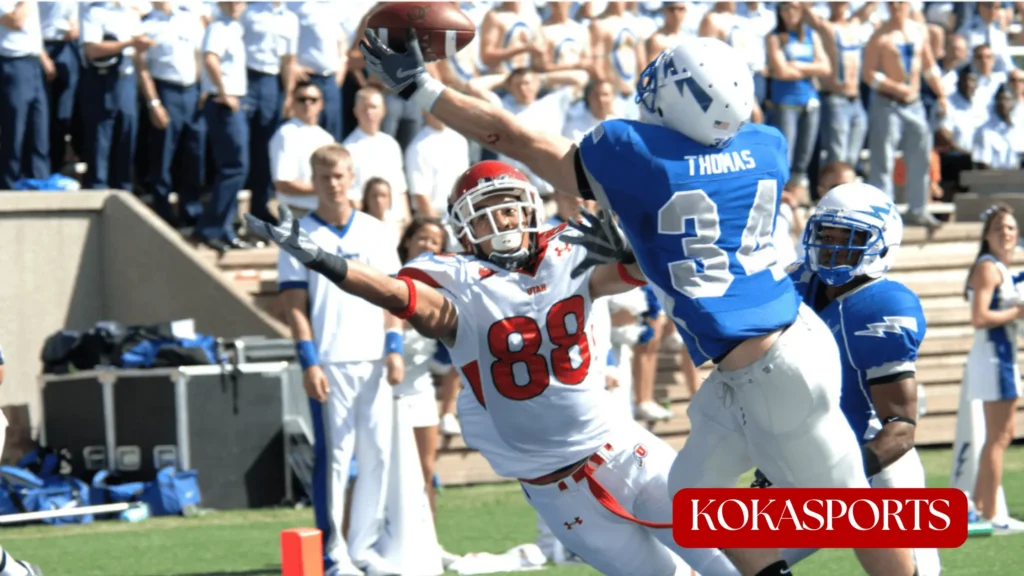
A hybrid safety is a player who handles both roles depending on what the defense needs. He has the size for strong safety and the speed for free safety. These players are incredibly valuable because they give the coordinator flexibility without changing personnel.
Troy Polamalu moved between both spots throughout his career. Brian Dawkins did the same. More recently Derwin James and Tyrann Mathieu have shown that the hybrid model is becoming the standard.
Offenses get more creative every season. Defenses need players who adapt on the fly. A safety locked into one role limits the defense. A safety who plays both positions opens up the entire playbook.
Strong Safety vs Free Safety in Youth and High School Football
I would put a beginner at free safety first. The deep alignment gives you more time to read plays and react before making a decision. You are not asked to make as many physical plays near the line which lets you learn the mental side of the position without getting overwhelmed by contact.
Teach young safeties to read the quarterback’s eyes before anything else. A young safety who follows the quarterback’s vision will be in the right place more often than a faster player who guesses and hopes for the best. Communication is the other priority. Get them talking before every snap because a safety who communicates makes the entire defense better even if his physical skills are still catching up.
The biggest mistake young safeties make is biting on play action. They see the fake handoff and charge up toward the line, leaving the deep field completely exposed behind them. The other common mistake is watching the ball instead of the player they are supposed to cover. Eyes on your assignment first, then find the ball when it is in the air.
How Coaches Decide Between Strong Safety and Free Safety
Coaches look at size first. A bigger, more physical player usually goes to strong safety. A lighter, faster player goes to free safety.
Speed and range matter for the free safety spot. If a player can cover sideline to sideline and track the ball in the air, he is probably a free safety.
The free safety often acts as the quarterback of the defense because he sees the whole field. A player with strong communication skills and the ability to read offenses fits that role well.
Tackling ability versus coverage skills is the final factor. Better tackler goes to strong safety. Better cover man goes to free safety.
Frequently Asked Questions About Strong Safety vs Free Safety
Is strong safety more physical than free safety?
Yes. Strong safeties play closer to the line and deal with bigger players regularly. The position demands more physicality and tackling.
Which safety position gets more interceptions?
Free safety. Because the free safety reads the quarterback from deep and has freedom to roam, he is in a better position to jump routes and create turnovers.
Can free safeties play cornerback?
Some can. Free safeties with elite speed and coverage ability could transition but most lack the press coverage technique cornerbacks need at the line.
Which safety position is more important?
Both are essential. Without a good strong safety you get exploited in the run game. Without a good free safety you give up big plays over the top.
What is a hybrid safety?
A hybrid safety can play both strong and free safety depending on the scheme. These players are increasingly valuable in modern football.
Conclusion
That playoff game debate with my buddy ended with us watching the same defense use both safeties in completely different ways on back to back plays. One was hitting. The other was intercepting. Both were essential.
The difference between strong safety vs free safety is not complicated once you see it. The strong safety is the enforcer near the line. The free safety is the ball hawk in the deep middle. One is built for contact. The other is built for coverage. Together they make the secondary work.
Modern football is blurring these roles every season. Hybrid safeties who can do both are becoming the most valuable defenders on the field. But the core distinction still holds. If you are bigger and more physical, strong safety is your spot. If you are faster with better ball skills, free safety is where you belong.
Either way, the safety position does not get the credit it deserves. These guys are the last line of defense on every play and when they do their job right nobody notices. When they make a mistake everybody sees it. That is the reality of playing safety in football.