
So whats a DB in football? DB stands for defensive back. A defensive back is a player who lines up in the secondary behind the linebackers and whose primary job is to defend against the pass. DBs cover wide receivers, prevent big plays down the field, and create turnovers that swing games. The position group includes cornerbacks, free safeties, strong safeties, and nickel defenders. In today’s pass heavy league, defensive backs are arguably the most important players on the defensive side of the ball.
That covers the definition. But the moment I truly understood what a DB does happened on a random Sunday afternoon a couple of years ago.
I was watching a game with my younger brother who had just started getting into football. A cornerback jumped a route, picked off the pass, and returned it for a touchdown. My brother looked at me and said “that guy just stole the ball and scored. How is that not the best position in football?”
He was not wrong. But then he asked what position that player actually was and I realized I could not give a clean answer without explaining five different things first. The DB position is not complicated once someone breaks it down properly. The problem is nobody ever does.
This is a complete beginner’s guide to what a DB in football actually is, what these players do, and why they matter more now than ever.
Whats a DB in Football?
DB stands for defensive back and it is a general term for any defender who plays in the secondary. The secondary is the back layer of the defense behind the linemen and linebackers.
A defensive back’s main job is stopping the passing game. While the big guys up front are fighting offensive linemen and plugging run gaps, the DBs are out in open space matching up against receivers and reading the quarterback.
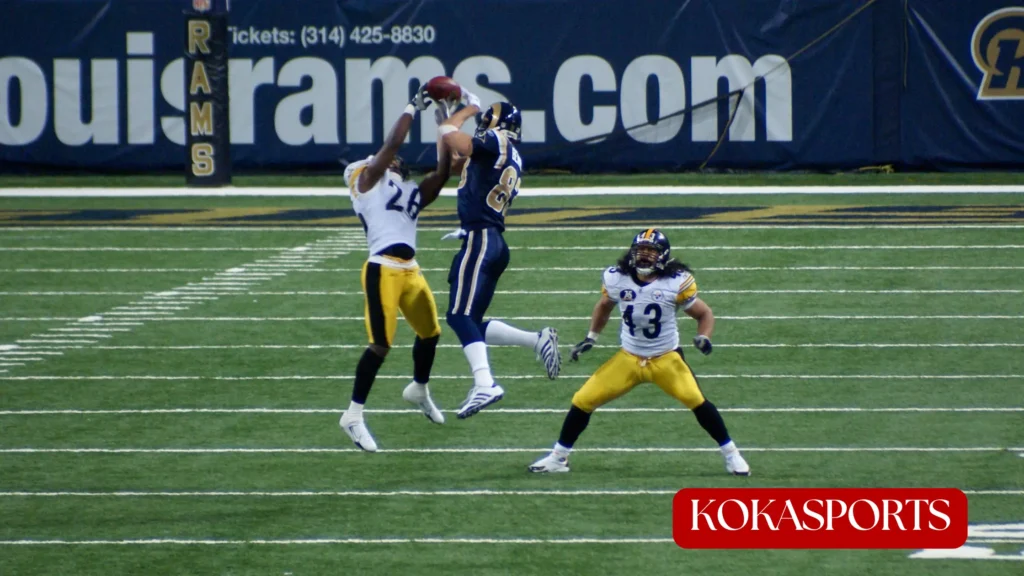
DBs line up at different depths depending on the play call. Some are right at the line of scrimmage pressed against a receiver. Others are fifteen yards deep waiting to react. Their alignment changes snap to snap but the job stays the same. Stop the pass and do not give up big plays.
Every football team needs strong defensive backs because every team faces a passing attack. If your DBs cannot cover, the quarterback will find the open man and move the ball at will.
What Does a DB Do in Football?
Cover Wide Receivers
This is the foundation of the entire position. Defensive backs are responsible for staying close to receivers, reading their routes, and preventing completions.
It sounds straightforward until you realize how fast NFL receivers are. These guys run exact routes at full speed and the DB has to mirror every move while keeping his eyes on the ball. If he watches the receiver too closely he loses track of the throw. If he watches the quarterback too long the receiver runs past him.
Stop Big Passing Plays
A five yard completion is not a problem. A sixty yard touchdown is a catastrophe. Defensive backs are responsible for making sure the second one does not happen.
This means constant communication. Before every snap the DBs talk to each other about who they are covering, what routes they expect, and where the help is coming from. One missed call between a cornerback and a safety can leave a receiver wide open behind the entire defense.
Create Turnovers
This is where defensive backs change games. Interceptions, forced fumbles, and pass deflections all fall on the shoulders of the DB group.
A single interception gives your offense an extra possession. A pick six puts points on the board without your offense touching the field. The best defensive backs are not just preventing catches. They are hunting the football on every play.
Make Tackles
Defensive backs tackle in the open field which is one of the toughest jobs in football. No help nearby. No pile to fall into. Just you and a ball carrier with space and momentum.
DBs also help against the run when ball carriers break through the front seven. The safety is often the last defender between the runner and the end zone.
Types of DBs in Football
Cornerbacks
Cornerbacks line up directly across from wide receivers and their job is to prevent those receivers from catching the ball. They play man coverage where they shadow one receiver or zone coverage where they protect an area of the field.
Speed is non negotiable at cornerback. You are matching up against the fastest players on the field every single snap. If you cannot stay with them the quarterback will target you all game.
Safeties
Safeties play deeper than cornerbacks and provide help over the top. They are the last line of defense against deep passes and they also come up to support against the run.
Safeties are often the leaders of the secondary. They see the entire field from deep and communicate pre snap adjustments to the rest of the DBs.
Free Safety
The free safety lines up deep and reads the quarterback before reacting. His job is to roam the back end, break on the ball, and create interceptions. Free safeties are usually the best ball hawks on the team because they have the freedom to read and react rather than lock onto one player.
Strong Safety
The strong safety plays closer to the line of scrimmage and handles the physical responsibilities. He covers tight ends, supports against the run, and occasionally blitzes. Strong safeties need both coverage skill and toughness because the matchups they face are bigger and more physical.
Nickel and Dime DBs
When the offense adds extra receivers the defense responds by adding extra defensive backs. The fifth DB on the field is the nickelback. The sixth is the dimeback.
These players replace a linebacker to give the defense more speed in obvious passing situations. In modern football nickel defense is not a specialty package anymore. Most teams run it more than half their snaps which makes the nickelback a starter in everything but name.
Skills Needed to Be a Great DB
Speed is the most obvious requirement. You are covering receivers who run in the low 4.3s and 4.4s. If you cannot stay with them nothing else matters.
Agility and footwork separate average from elite. The ability to backpedal smoothly, flip your hips, and change direction without losing speed is what keeps a DB in phase with receivers through their cuts.
Football IQ is where the real advantage lives. The best DBs recognize formations before the snap and know what route is coming based on alignment and down and distance.
Ball skills take dedicated practice. Tracking the football over your shoulder at full speed and catching it at the highest point takes years of repetition.
Physical toughness rounds it out. DBs are among the smallest defenders but they still tackle ball carriers who are bigger and running downhill with momentum.
How DBs Cover Receivers
Man coverage means you are assigned one receiver and you follow him everywhere on the field. No safety net. If your guy gets open it is on you. The advantage is that every receiver is accounted for.
Zone coverage means you protect an area rather than a specific player. You drop into your zone, read the quarterback, and break on the ball when it enters your area. It requires everyone to be disciplined because receivers can sit in the gaps between zones.
Press coverage is when the cornerback lines up at the line of scrimmage and jams the receiver before he can run his route. It disrupts timing but it is risky because if the receiver beats the jam he has open space ahead.
Off coverage is the opposite. The cornerback gives a cushion of several yards and focuses on not getting beat deep. You surrender the short throws to protect against the big play.
Why DBs Are Important in Modern Football
The NFL is a passing league now. Teams throw more than ever which means the players defending those passes are more critical than ever.
Elite quarterbacks pick apart weak secondaries regardless of how good the pass rush is. If DBs cannot cover the ball comes out fast and the rush never arrives. Everything on defense starts with the secondary holding up.
Turnovers from the DB group change games. A single interception flips momentum and a pick six can decide the outcome entirely. That is why shutdown corners and ball hawking safeties are among the highest paid defenders in football.
Common Challenges DBs Face
Guarding elite receivers is the hardest part of the job. These guys run perfect routes at full speed with the ability to change direction instantly. Even the best cornerbacks get beat sometimes. The key is winning more reps than you lose.
Modern passing rules make it tougher. Pass interference penalties and restrictions on contact after five yards tilt the field toward the offense. DBs have to be aggressive while staying within tight boundaries.
The mental pressure is constant. One blown coverage means six points and everyone sees it. You need a short memory and unshakeable confidence to survive at the position.
Famous DBs in Football History
Deion Sanders was the most electric cornerback ever. He erased entire sides of the field and was a threat to score every time he touched the ball.
Ed Reed redefined the free safety position. He read quarterbacks better than anyone, anticipated throws before they happened, and turned interceptions into long returns nobody else could pull off.
Troy Polamalu played strong safety with reckless instinct. He showed up in places no safety should be and his ability to time blitzes made him one of the most feared defenders of his era.
Darrelle Revis earned the name Revis Island because receivers who matched up against him were stranded. Quarterbacks learned to avoid his side entirely which is the ultimate compliment for a cornerback.
Difference Between a DB and Other Football Positions
DBs and linebackers serve different purposes. Linebackers are bigger and focused on stopping the run. DBs are faster and built for pass coverage while an edge defender focuses on rushing the quarterback from the outside” and link “edge defender” to the EDGE article.There is overlap in zone responsibilities but the athletic profiles are very different.
Defensive linemen and DBs could not be more different. Linemen fight in the trenches. DBs work in open space. Same side of the ball but completely different jobs.
The most common confusion is between a DB and a safety. A safety is a type of DB. All safeties are defensive backs but not all defensive backs are safeties. The DB group includes cornerbacks, safeties, nickelbacks, and any other defender in the secondary.
How to Become a Better DB in Football
Footwork comes first. Ladder drills, backpedal work, and hip turn exercises should be part of every training session. If your feet are slow your coverage will be slow no matter how fast you sprint.
Film study gives you an edge before the snap. Learning what route combinations offenses run in specific situations means you anticipate instead of guess.
Speed training and explosive movement drills keep you competitive against fast receivers. Ball skill practice is what turns a good DB into a playmaker. Tracking the football over your shoulder and catching at the highest point require dedicated repetition.
Frequently Asked Questions About DBs in Football
What does DB stand for in football?
DB stands for defensive back. It refers to any player who lines up in the secondary on defense.
Is a safety considered a DB?
Yes. Safety is one of the positions within the defensive back group alongside cornerbacks and nickelbacks.
What is the main job of a DB?
The main job is defending against the pass by covering receivers, preventing completions, and creating turnovers.
Are DBs important in football?
Very. In today’s pass heavy game, defensive backs are one of the most critical position groups on defense.
Who is the best DB in NFL history?
That is always debated but Deion Sanders, Ed Reed, and Ronnie Lott are names that come up in every conversation.
Conclusion
My brother still brings up that pick six we watched together. Every time a DB makes a big play he texts me “best position in football.”
So whats a DB in football at the end of the day? He is the player standing between the offense and the end zone. He might be a cornerback locked onto the best receiver on the field, a free safety reading the quarterback from twenty yards deep, or a nickelback quietly playing more snaps than anyone notices.
The position demands speed, intelligence, toughness, and mental resilience that most people do not appreciate until they understand what these players face on every snap. Without strong defensive backs no defense functions no matter how talented the front seven is.
If you are just getting into football, start paying attention to the guys in the secondary. They do not get the spotlight as often as the quarterback or the pass rusher but they are just as important to the outcome of every game.