
If you have ever watched an NFL game and noticed a player with a small towel tucked into the front of his pants, you are not alone in wondering why it is there. It looks simple. It looks almost casual. But that little piece of fabric is one of the most practical tools in all of American football. From the quarterback lining up under center to the wide receiver running a route, the towel plays a quiet but important role in how the game is played.
In this article, we break down exactly why football players wear towels, how they use them, which positions rely on them the most, and what to look for if you want to pick up the best football towel for yourself.
Why Do Football Players Wear Towels? The Core Reason
The single biggest reason football players keep a towel on them during a game comes down to one word: grip.
Football is a sport where ball control is everything. A fumble can change the outcome of an entire game. A slipped snap between the center and the quarterback can erase a perfectly drawn-up play in an instant. The difference between a clean throw and an incomplete pass can come down to whether a player’s hands were dry or covered in sweat.
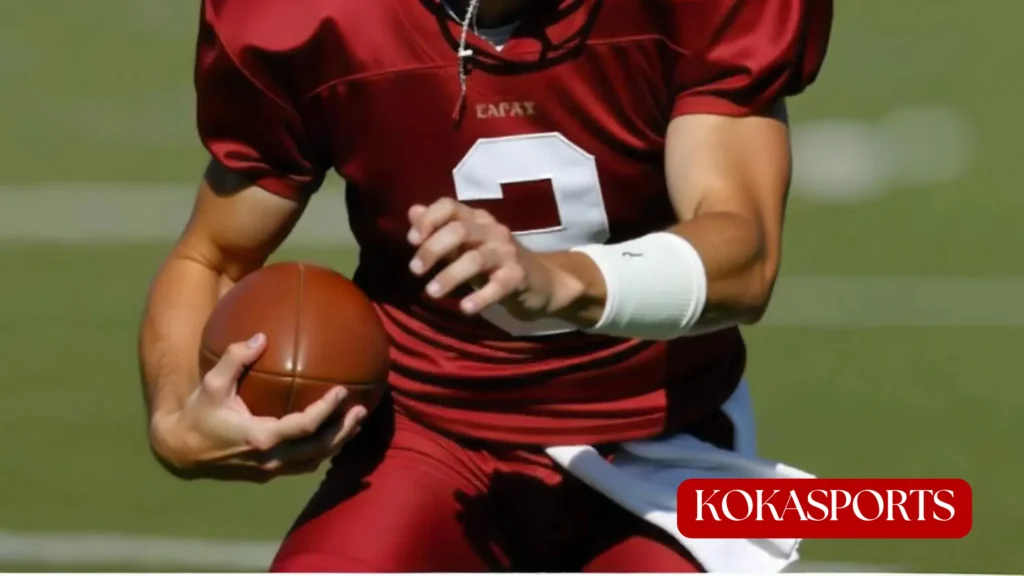
Sweat is a constant in football. Even on cold days, players are running, blocking, and tackling at full speed. Their hands and forearms get wet fast. The jersey is made of slick synthetic material that does not absorb moisture. The padded pants are not easy to wipe on. So players use towels to keep their hands dry between plays and it works.
“Every quarterback has a routine before each snap. For most of us, that includes wiping your hands. It’s not optional. It’s automatic.” Former NFL quarterback
Here is a quick look at why dry hands matter so much in football:
| Situation | Risk Without Dry Hands |
|---|---|
| Snap from center | Ball slips on exchange |
| Throwing a pass | Reduced spin and accuracy |
| Receiving a handoff | Higher chance of fumble |
| Catching the ball | Ball bounces off wet fingers |
| Kicking or punting | Mishandle on hold or snap |
Where Do the Towels Hang? The Waistband Placement Explained
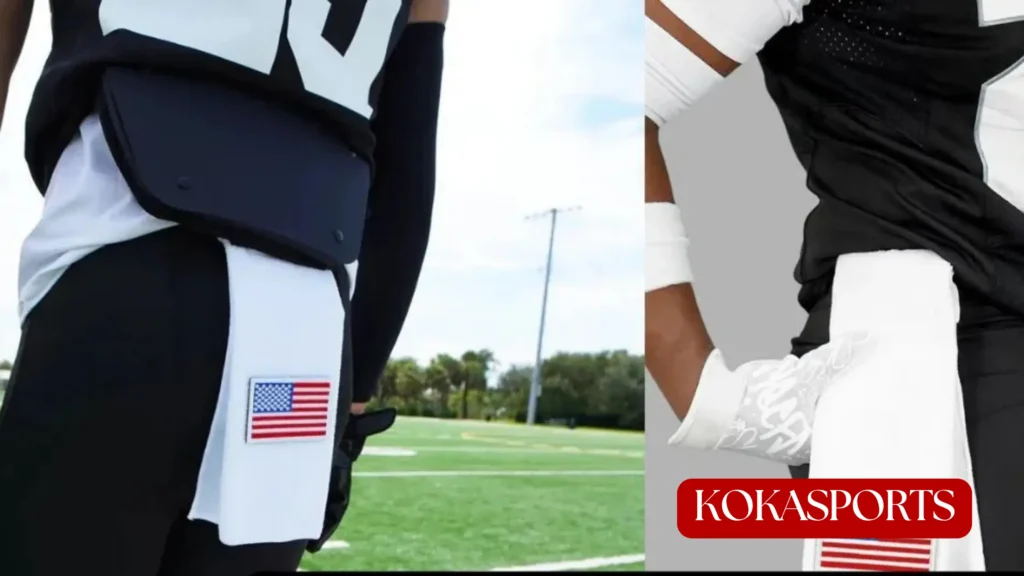
Most people notice the towels hanging from the front of a player’s pants. That placement is not random it is very intentional.
The towel is tucked into the waistband at the front, usually centered or slightly to one side. This position allows a player to grab it with one hand in under a second, wipe quickly, and get back into position all without breaking focus or wasting time. It is always within reach, never in the way of running or throwing, and does not need to be clipped or strapped on.
Some players use a Velcro attachment on the inside of the waistband to keep the towel from sliding out during contact plays. This is especially common among linemen and linebackers who are in the middle of physical collisions on every play.
The quick wipe motion before a snap is one of the most common things you will see from a quarterback or center on film. Watch closely next time it happens on nearly every play.
Which NFL Players Wear Towels? A Position-by-Position Look
Not every position uses a towel the same way. Here is how different positions on the field rely on the towel during a football game:
Quarterbacks
The quarterback is the player most associated with the towel, and for good reason. A quarterback towels off before nearly every snap. The exchange with the center is the first critical moment if the quarterback’s hands are sweaty, the snap can go sideways immediately.
Many legendary quarterbacks have been known for their pre-snap hand-wiping ritual. It is part habit, part necessity. Quarterback towels are often slightly longer and more absorbent than what other positions use, since they need to be quick and effective on every single play.
Running Backs
Receivers and running backs deal with direct handoffs in heavy traffic. The ball is pressed right into their body at speed, and they need a firm grip from the first moment of contact. Running backs who let their hands get sweaty are putting themselves at much higher risk of a costly turnover.
Wide Receivers
A wide receiver typically wears gloves during games, which helps with catching. But gloves get wet too. Sweat builds up underneath them, and the outer grip surface degrades over time during a game. Many receivers still use towels to wipe off the glove surface and keep things as dry as possible, especially during the second half.
Centers and Offensive Linemen
The center is the one handing the ball to the quarterback on every play. Centers often keep a towel nearby either on themselves or handed off by a ball boy specifically used to wipe the ball before the snap in wet conditions. Wet conditions like rain or mud can make the ball feel completely different, and even a clean snap becomes a challenge.
Defensive Backs
Defensive backs are less commonly seen with towels, but it does happen. Pass rushers and linebackers who are handling or stripping the ball benefit from dry hands just as much as anyone. Any player whose job involves getting their hands on the football has a reason to use towels to keep themselves ready.
How Football Players Use Towels in Different Weather Conditions
Weather conditions have a massive impact on the game. Rain, snow, cold, and humidity all affect how well a player can handle the ball. The towel becomes even more important when the weather turns bad.
Rain or Snow Games
When it rains or snows, the challenge of keeping hands dry gets much harder. The towel gets soaked faster, and wet conditions mean players go through several towels in a single game. This is why sideline staff often called ball boys or equipment managers have stacks of fresh, dry towels ready on the sidelines throughout the game.
Towels to keep their hands dry in rainy games are swapped out regularly. A soaked towel is almost useless, so teams prepare accordingly.
Cold Weather
Cold weather brings a different problem. Players need to keep their hands warm as well as dry. In winter games, players often combine a small towel with a hand warmer, rotating between the two throughout the game. The towel removes surface moisture while the hand warmer keeps circulation going.
Hot and Humid Games
Even in indoor stadiums, sweaty hands are a serious problem. Dome games in summer months can feel humid and warm, and players sweat heavily from the first quarter. A towel on the waistband is the easiest and fastest way to wipe off sweat without slowing down or losing focus.
Beyond Grip: Other Reasons Players Wear Towels You May Not Know
The towel is not just about keeping hands dry. Here are a few other reasons players keep one close:
- Wiping away blood or mud Cuts happen in football. A quick wipe with a towel can clear a player’s vision or clean a wound enough to keep playing.
- Pre-snap rituals For many quarterbacks, wiping the hands before a play is part of a mental routine. It signals readiness, marks the start of focus, and keeps the player locked in.
- Ball maintenance Centers and quarterbacks sometimes wipe away debris or moisture from the ball itself before a snap to make the ball easier to grip.
- Superstition Some players usually wear a towel because they have always done so. Sports psychology is real consistency in routine can reduce anxiety and improve performance.
- Personal expression The white towel is the classic, but many players now use custom towels with graphics, names, or messages. Some players wear tribute towels for family members or charitable causes.
What Kind of Towel Do Football Players Actually Use?
Not all towels are created equal. Athletic towels designed for sports use are very different from the ones you have at home.
Here is what separates a performance football towel from a regular bath towel:
| Feature | Regular Towel | Athletic Football Towel |
|---|---|---|
| Size | Large and bulky | Compact, fits waistband |
| Material | Heavy cotton | Microfiber or cotton blend |
| Drying speed | Slow | Fast moisture-wicking |
| Durability | Fades after washing | Designed for heavy use |
| Weight | Heavy when wet | Stays light even when damp |
One popular option among players at multiple levels is the Texon athletic towel, which is known for its quick-dry performance and compact size. It is easy to tuck in, light enough not to slow anyone down, and tough enough to last an entire season of regular washing.
The NFL does have guidelines around towel use. Teams generally issue towels in team colors, but players have some flexibility. Towels that feature logos or messages outside of team branding may be reviewed by the league, and players have occasionally been fined for non-compliant uniform accessories.
How Towels Help Players Stay at Their Best: The Science of Grip
It is worth taking a moment to look at exactly how a towel helps players maintain performance. Grip on the football is not just a comfort thing it is directly tied to the outcome of plays.
Research in sports science shows that even a small amount of moisture on the hands can reduce grip strength by a noticeable margin. Allowing players to quickly dry off between plays restores grip close to its peak level. That is the entire function of the towel it is a reset tool between plays.
- A dry hand can apply more friction to the ball surface
- More friction means better spin on a throw
- Better spin means more accuracy and distance
- A better grip on a handoff means backs and wide receivers catch and secure the ball more reliably
Towels also serve as a psychological anchor. Players who feel prepared who have clean, dry hands going into a snap play with more confidence. That confidence has a real impact on the game even if it cannot be measured directly on a stat sheet.
The Best Football Towels: What to Look For
If you players need a towel for practice or game day, here is what to look for:
Size: A good hand towels size for football is roughly 6 x 12 inches to 8 x 14 inches small enough to tuck cleanly into a waistband, large enough to actually do the job.
Material: Microfiber is generally the best football towel material. It absorbs moisture fast, dries quickly between wipes, and is lightweight even when damp.
Attachment method: Look for towels with a loop or clip at the top. This makes it easy to secure in the waistband without needing tape or a safety pin.
Durability: A football towel goes through a lot sweat, turf, mud, and weekly washing. Choose something rated for at least 50+ wash cycles without losing its absorbency.
Players often end up with several towels in their bag so they can swap out a soaked one at halftime. Having two or three on hand is a smart move for game day.
Conclusion
The towel that hangs from a football player’s waistband is easy to overlook. It is not flashy. It does not show up in highlight reels. But it is one of the most consistently used tools in the sport. It is there on every play, in every weather condition, in every stadium across the country.
Football players wear towels because the game demands it. Ball control, dry hands, confident grip these things are not optional at the highest level of play. The towel is how players keep their hands clean and dry, make the ball easier to control, and stay sharp from the first snap to the last.
Whether you are watching on Sunday or suiting up yourself, now you know exactly why that little towel matters so much.
FAQs
Do all NFL players wear towels?
No they are most common among quarterbacks, running backs, wide receivers, and centers.
Is wearing a towel required in football?
No, it is completely optional, but most skill players wear one for the grip benefit.
Why do the towels hang from the front?
Front waistband placement gives the fastest access for a quick hand wipe between plays.
Can youth players wear towels too?
Yes, players at any level youth, high school, or pro can and do wear towels.
What does a towel help with most?
Maintaining a dry, firm grip on the ball during wet or sweaty conditions.