
The Z receiver in football, or flanker, is a wide receiver who lines up off the line of scrimmage, allowing pre-snap motion, clean releases, and versatile route running. This makes them a key offensive weapon in modern football.
Imagine a player who can sprint 40 yards downfield, motion across the formation before the snap, and catch a quick screen all in the same drive. That versatility defines the Z receiver, one of the most dynamic positions in modern football.
Unlike other receivers who must stay planted on the line, the Z can move freely before the snap, creating matchup nightmares for defensive coordinators.
This position matters more than most fans realize. When you watch a receiver go in motion before the ball is snapped, that’s usually the Z receiver at work. This movement helps quarterbacks identify defensive coverages and creates opportunities for explosive plays.
In this guide, we’ll break down exactly what makes the Z receiver special, how it differs from the X receiver (split end), what skills elite flankers possess, and which legendary players made this position famous.
What Is the Z Receiver in Football?
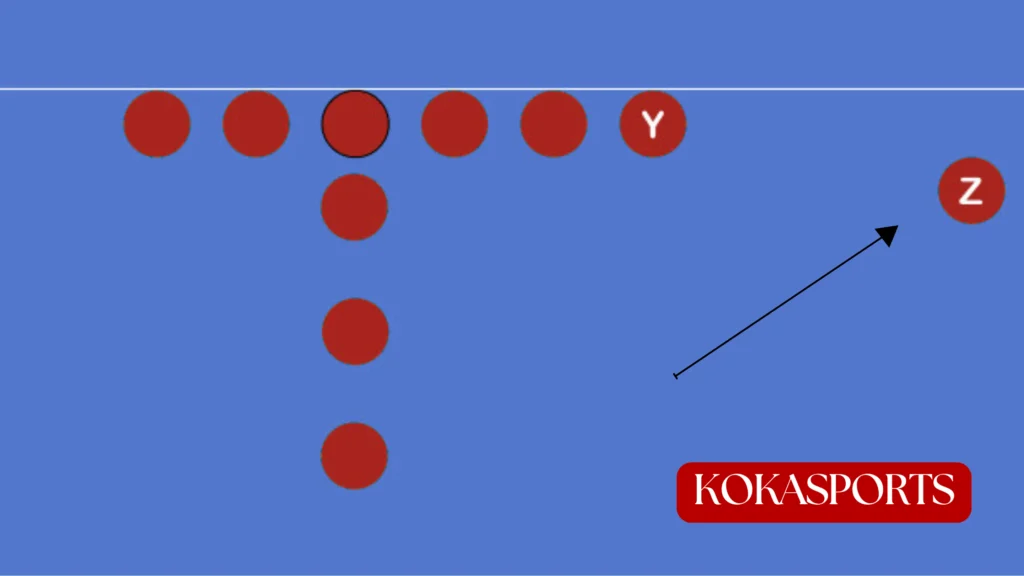
The Z receiver, or flanker, is a wide receiver who lines up off the line of scrimmage. This allows pre-snap motion, a clean release, and versatile route running, making them a key weapon in modern football offenses.
The Definition of the Z Receiver (Flanker)
The Z receiver carries the traditional label of “flanker” in football terminology. The flanker “flanks” the formation, positioning themselves to the side but crucially off the line of scrimmage. This isn’t just a random detail it’s what makes the entire position work.
While the X receiver (split end) must line up directly on the line of scrimmage, the Z receiver stands one yard back. That yard of separation means the Z receiver can move laterally before the snap, avoid getting jammed by defenders, and time their routes with precision.
Alignment and Formation Placement
The Z receiver typically lines up on the strong side of the offense the side where the tight end aligns. You’ll find them positioned about one yard behind the line of scrimmage, which keeps them “off the line” according to NFL rules.
Common formations featuring the Z receiver:
- Spread formations where the Z can motion into the slot
- Pro-style sets with the Z flanking the tight end
- Bunch formations where the Z motions into receiver clusters
- Empty backfield sets that maximize receiver versatility
The “Off the Line” Rule
Football has a critical rule: seven players must line up on the line of scrimmage on every play. The Z receiver almost always gets the freedom to line up off the line, which creates two massive advantages:
1. Legal pre-snap motion – The Z can move laterally before the snap, forcing defenders to reveal whether they’re playing man or zone coverage. This gives quarterbacks crucial information.
2. Avoiding press coverage – Defenders can physically jam receivers on the line for the first five yards. The Z receiver, standing a yard back, avoids this contact and gets a cleaner start into routes.
Read Also: What Is the X Receiver in Football? The Ultimate Guide
Z Receiver vs X Receiver: Key Differences
The X Receiver (Split End)
The X receiver operates as the offense’s boundary receiver with these characteristics:
- Lines up on the line of scrimmage (cannot go in motion)
- Faces press coverage regularly from physical cornerbacks
- Bigger and stronger to win contested catches
- Runs power routes like slants, fades, and back-shoulder throws
The Z Receiver (Flanker)
The Z receiver operates with different strengths:
- Lines up off the line (can motion before the snap)
- Gets cleaner releases without contact at the line
- Uses speed and timing rather than pure physicality
- Runs versatile routes including posts, crossers, and clears
Position Comparison Table
| Position | Alignment | Coverage Faced | Physical Traits | Common Routes |
|---|---|---|---|---|
| X (Split End) | On LOS | Press / Man | Bigger, Physical | Slants, fades, back-shoulder |
| Z (Flanker) | Off LOS | Off / Zone | Speed, Agility | Posts, crossers, clears |
| Y (Tight End) | On/Off LOS | LB / Safety | Size, Strength | Seams, outs, play-action |
Role and Responsibilities of the Z Receiver
Pre-Snap Motion
One of the Z receiver’s most valuable contributions happens before the ball is snapped. When the Z goes in motion, the quarterback watches how defenders react:
- Man coverage – A defender follows the Z across the formation
- Zone coverage – Defenders stay in their area and pass off the Z
This simple read tells the quarterback which plays will work best.
Route Running
The Z receiver runs the most diverse route tree on the field:
- Deep routes – Posts (12-15 yards), clear-outs (20+ yards)
- Intermediate routes – Digs (10-12 yards), overs (15 yards)
- Short routes – Crossers, slants, bubble screens
- Timing routes – Require precise breaks and quarterback anticipation
Blocking
Elite Z receivers take blocking seriously on:
- Outside run plays (blocking cornerbacks)
- Bubble screens (lead blocking for slot receivers)
- Play-action passes (selling the run fake)
Coaches trust blockers with more playing time, keeping defenses guessing about run or pass.
What Makes a Great Z Receiver?
Speed
Speed stretches defenses horizontally and vertically. A fast Z receiver forces safeties to respect deep routes, opening up everything underneath. When the Z goes in motion, that speed travels across the formation, creating coverage problems for linebackers and safeties.
Football IQ
The Z receiver must process information rapidly:
- Motion timing – Moving at the exact right moment
- Reading defensive leverage – Knowing how defenders are positioned
- Route adjustments – Converting routes based on coverage (post to wheel, dig to fade)
Great Z receivers and their quarterbacks develop trust through these adjustments.
Quickness and Agility
The Z receiver wins with quickness in space. Making a defender miss by a half-step creates catching windows. After the catch, this quickness turns 5-yard receptions into 15-yard gains.
Modern offenses design plays specifically to get the ball to the Z receiver in space:
- Bubble screens
- Quick slants
- Shallow crosses
- Jet sweeps
Versatility
The best Z receivers line up in multiple spots:
- Outside wide
- In pre-snap motion
- In the slot
- Occasionally in the backfield
This versatility makes them true chess pieces that coordinators move around to create mismatches.
Famous Z Receivers in Football History
Legendary Players
Jerry Rice mastered the flanker position like no one before or since. His precise route running combined with clean releases made him nearly unguardable. Rice’s timing with Joe Montana and Steve Young became legendary, resulting in 197 career touchdowns and 22,895 receiving yards records that may never be broken.
Tim Brown brought consistency to the Z receiver position over 17 seasons with the Oakland Raiders. His 1,094 career receptions proved that versatile flankers who master every aspect routes, blocking, returns enjoy long, productive careers.
Isaac Bruce combined elite speed with deep-route excellence for the Rams’ “Greatest Show on Turf” offense. His ability to get behind defenses from the flanker position produced 15,208 receiving yards and 91 touchdowns.
Modern Examples
Tyreek Hill represents everything modern offenses want from the Z receiver position. His world-class speed (Olympic Trials track athlete) forces defenses to respect deep routes on every snap. The Chiefs and Dolphins constantly move him in motion before the snap, creating impossible matchups.
Cooper Kupp proves Z receivers don’t need to be the fastest if they’re the smartest. His route intelligence and alignment versatility earned him 2021 NFL Offensive Player of the Year honors, showing the modern trend toward versatile receivers who can do everything.
Conclusion
The Z receiver in football also known as the flanker is a versatile wide receiver who lines up off the line of scrimmage, thrives on motion, and creates mismatches through speed and intelligence. In today’s pass-heavy NFL, this position has become one of the offense’s most critical weapons.
The beauty of the Z receiver lies in its flexibility. Need someone to stretch the defense deep? The Z can do that. Need motion to diagnose coverage? The Z handles it. Need a quick screen? The Z excels there too. This versatility makes the Z receiver the offense’s ultimate chess piece constantly moving, adjusting, and forcing defenses to reveal their coverage before the snap.
Now that you know the difference between the X vs Z receiver, watch the next game with fresh eyes. Notice which receiver goes in motion before the snap that’s usually your Z receiver creating advantages before the play even starts. Which role do you think is harder to play the physical X receiver or the versatile Z receiver? Share your thoughts in the comments below!
FAQs
Can a Z Receiver Line Up in the Slot?
Yes. When the Z receiver moves to the slot, they may be called an S or H receiver, but the role and skills remain the same. Modern offenses often have receivers motion and line up in multiple spots.
Why Is It Called the “Z” Receiver?
The X, Y, Z system is simple playbook shorthand:
- X = Split end
- Y = Tight end
- Z = Flanker
It’s just a positional label, not a ranking.
Does Every Team Use a Z Receiver?
Most do, but schemes vary:
Air raid offenses use interchangeable receiver roles.
Spread offenses often have multiple versatile receivers.
West Coast offenses keep a traditional Z for timing-based passes.