

What Is a Hitch Route? Understanding the Hitch Route in Football
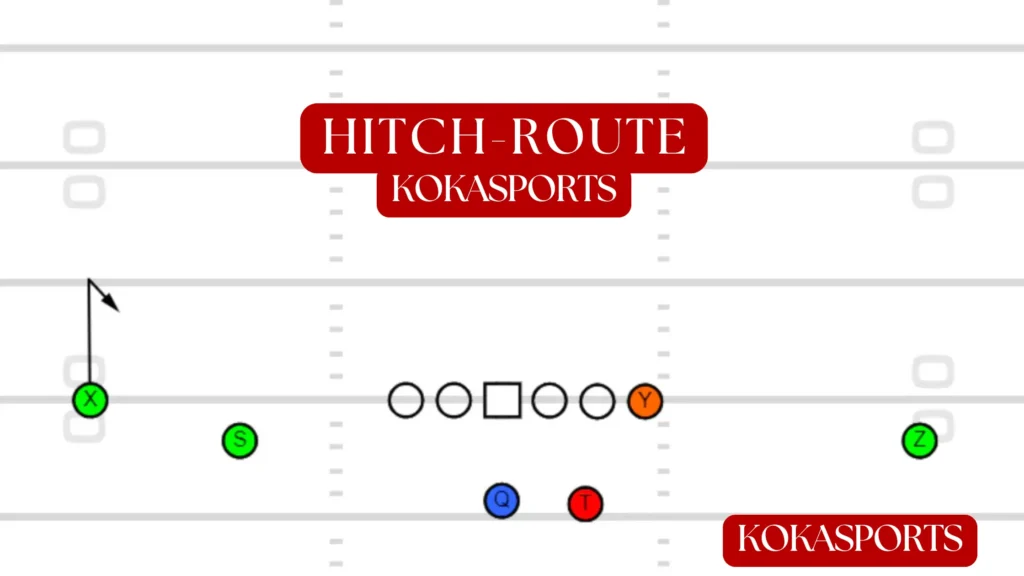
What Is a Hitch Route in Football? (Beginner-Friendly Explanation)
The hitch route is one of the most basic and important patterns that a receiver can learn in football. When you run a hitch, you sprint straight ahead for a short distance, then quickly stop and turn back toward the quarterback. This simple movement creates space between you and the defender, giving the quarterback an easy target to throw to. The hitch is perfect for beginners because it does not require complicated footwork or deep knowledge of the playbook.
What’s a Hitch Route? The Simple Definition for New Players
So what’s a hitch route in the simplest terms? Think of it as a “stop and turn” pattern. The receiver runs straight ahead for about 5 yards or a little more, plants their outside foot, and turns back toward the quarterback. The goal is to create separation from the defensive back by stopping before they expect it. Many young players learn to run a hitch before they learn any other route because it teaches them how to control their speed, stop quickly, and catch the ball.
Key Features That Make the Hitch Route Easy for Players to Learn
There are several reasons why the hitch route is so easy to teach. First, it is short. The receiver does not need to run far, so they do not get tired quickly. Second, the pattern is simple. There are no curves, no diagonal cuts, and no complicated angles. Third, the timing between the quarterback and receiver is easy to learn. Fourth, the hitch does not require a lot of space. Finally, the hitch is safe because the throw is short and quick.
Why Coaches Love the Hitch Route for Quick-Hitting Offensive Plays
Every coach loves the hitch route in football because it gives the offense a reliable way to move the ball without taking big risks. When the defense is playing soft coverage or giving the receiver a cushion, the hitch is a great route to call. It allows the quarterback to get the ball out quickly, which protects them from getting sacked. Coaches also use the hitch to build confidence in young quarterbacks and receivers.
Read More: Ultimate Guide to Running Back Drills for All Ages
How the Hitch Route Works in Football (Football Hitch Route Basics)
Typical Yardage Depths for a Hitch
The depth of a hitch route can vary depending on the play call and the formation. Most of the time, a receiver will run 10 yards or less. The most common depths are 5 yards, 7 yards, and 10 yards. Some coaches like to call a “quick hitch” that is only 3-4 yards deep. On the other hand, some teams call a deeper hitch at 10-12 yards, especially when they want to attack the soft spot in a zone defense.
Timing Between Quarterback and Receiver
Timing is everything when it comes to the hitch route. The quarterback must know when the receiver will plant their foot and turn around. This is usually based on the number of steps the quarterback takes in their drop. For example, on a quick hitch, the quarterback might take a three-step drop and release the ball as soon as their back foot hits the ground. The receiver must run their route at full speed so they reach the break point at the exact moment the quarterback is ready to throw.
Footwork Breakdown: How to Stop and Come Back to the Ball
Good footwork is the secret to running a successful hitch route. When the receiver reaches the break point, they need to plant their outside foot hard into the ground. This allows them to stop their forward movement and push back toward the quarterback. After the plant, the receiver should take one or two quick steps back toward the line of scrimmage and get their hands up to catch the ball. Coming back to the ball is very important because it closes the distance between the receiver and the quarterback.
How the Hitch Takes Advantage of Defensive Cushion
The hitch route is most effective when the defensive back is giving the receiver a cushion, which means the defender is playing several yards off the line of scrimmage. This is common in soft coverage or when the defense wants to prevent deep passes. When the defender is playing off, the receiver can run a hitch route and catch the ball in front of them before they can close the gap. This is why the hitch is so popular against zone coverage.
The Hitch Route in the Route Tree
Understanding the Full Route Tree in Football
The route tree is a diagram that shows all the different patterns a receiver can run. Each route is numbered, and the number tells the receiver which direction to go and how deep to run. The route tree is the foundation of every passing offense, and every receiver must memorize it. The route tree typically includes basic routes like the hitch, slant, curl, go route, post route, dig route, and many others.
Where the Hitch Fits Within the Route Tree
In most route tree systems, the hitch is listed as the number 6 route. This means that when a coach calls “6,” the receiver knows to run a hitch. The hitch is often paired with other routes in combination patterns. For example, a coach might call a “6-3” concept, where one receiver runs a hitch and another runs a slant. These combinations force the defense to make quick decisions.
How the Hitch Route Builds Into Other Concepts
The hitch route is similar to several other routes. The slant route starts just like a hitch, with the receiver running straight ahead. But instead of stopping and coming back, the receiver cuts at a 45 degree angle toward the middle of the field. The curl route is another route that is very similar. On a curl, the receiver runs straight ahead for 10-12 yards, then turns back toward the quarterback. The comeback route is also similar, but it is usually run at 12 yards or more and the receiver turns back toward the sideline. The go route is the opposite the receiver runs straight down the field as fast as possible. The dig route is a crosser that goes about 12 yards deep and cuts across the middle of the field, while the post route angles toward the goal post.
Hitch Route Footwork and Technique for Players
Receiver Technique: Stance, Release, Acceleration, and Break
To run a hitch route correctly, a receiver must start with a good stance. When the ball is snapped, you explode off the line with a hard release. Once you are clear, accelerate straight ahead at full speed. When you plant your outside foot, make sure you stop with control and balance. Then, take one or two quick steps back toward the quarterback and get your hands up. Keep your eyes on the ball and catch it with your hands.
QB Technique: Drop, Timing, Ball Placement
The quarterback has a big responsibility on the hitch route. After the snap, the quarterback takes a quick drop usually three or five steps. As the back foot hits the ground, the quarterback should already be looking at the receiver. The throw must be made quickly and with good ball placement. The best place to throw the ball is low and in front of the receiver.
Reading the Defensive Back Before Running the Hitch
Before the snap, the receiver should look at the defensive back and figure out how they are playing. If the defender is giving a big cushion, the hitch will be wide open. If the defender is playing tight coverage, the receiver might need to use a quick move to get separation. Some receivers like to give a small “head fake” to make the defender think they are running a slant route or a go route.
Hitch Route vs Curl Route (Key Differences)
Hitch Route vs Curl Route: Movement at the Break Point
The hitch and the curl are often confused because they look similar, but there are important differences. The hitch is shorter and sharper. When you run a hitch, you stop quickly and come straight back toward the quarterback. The curl is deeper and smoother. On a curl route, you run to about 10 yards or more, then make a rounded turn back.
When to Call a Hitch vs a Curl in Offensive Play-Calling
Coaches choose between the hitch and the curl based on the defense and the situation. If the defense is playing soft and giving a lot of cushion, the hitch is better because it is quicker and safer. If the defense needs more yards or tighter coverage, the curl is a better choice.
Hitch Route vs Slant Route
Breaking Down the Slant Route
The slant is another quick route that looks like the hitch at the start. On a slant route, the receiver takes one or two hard steps straight ahead, then cuts at a 45 degree angle toward the middle of the field. The slant is designed to attack the inside leverage of the defender and is very effective against man coverage.
Slant Route vs Hitch Route: When and Why Coaches Choose Each
Coaches choose between the slant and the hitch based on coverage. If the defense is playing outside leverage, the slant is a great choice. If the defense is giving a cushion and playing soft, the hitch is better. Some coaches like to pair the slant and the hitch together in a combination route.
Offensive Strategy: When Coaches Call the Hitch Route
Using the Hitch Route Against Zone Coverage
The hitch is one of the best routes to call against zone coverage. In zone, defenders are responsible for areas of the field, not individual receivers. This means there are natural gaps that the receiver can sit in. The hitch is especially effective against Cover 2 and Cover 3 defenses.
Beating Off-Coverage and Soft Press With the Hitch
When the defense is playing off-coverage, the hitch is a perfect route to run. The hitch allows the offense to take advantage of this cushion and pick up easy yards.
Hitch Route in High-School, College, and Pro Football Offenses
The hitch route is used at every level of football, from youth leagues to the NFL. In high school, the hitch is often one of the first routes taught. In college, the hitch is a key part of spread offenses. In the NFL, elite receivers use the hitch to create separation.
Common Hitch Route Mistakes (And How Players Can Fix Them)
Rounding the Break
One of the most common mistakes is rounding the break instead of making a sharp stop. To fix this, receivers need to work on planting their outside foot hard.
Not Coming Back to the Ball
Another mistake is not coming back to the ball after the break. The receiver should always take steps back toward the quarterback.
Variations of the Hitch Route
Speed Hitch
The speed hitch is a very short, quick version of the hitch. The receiver only runs about 3-4 yards before stopping.
Quick Hitch / Now Route
The quick hitch is similar to the speed hitch. It is a very short route designed to beat press coverage.
Conclusion:
The hitch route is one of the most important routes in football. It teaches receivers how to create separation, improves timing between the quarterback and receiver, and gives the offense a safe, reliable way to move the ball. Whether you are a player, coach, or fan, the hitch is a fundamental part of the game. By mastering this route, you will become a better player and help your team succeed. The hitch route can also be used to set up bigger plays, making it a valuable tool in any offensive playbook. Every slot receiver, wide receiver, and even slot tight end should practice this route is run correctly to gain yards after the catch and move the chains downfield.
FAQs
What is a hitch route?
A hitch route is a quick passing route where the receiver runs a set number of yards upfield, stops abruptly, and turns back toward the quarterback to catch the ball.
What is the difference between a hitch and a curl route?
A hitch stops and comes straight back to the quarterback, while a curl route continues past the defender before turning inside toward the middle of the field.
How many steps is a hitch route?
Most hitch routes are 3–6 steps depending on depth, commonly run at 5 yards or 7 yards.
What is the hardest route in football?
Many coaches say the post-corner, out route, or comeback route are the hardest because they require sharp breaks, precise timing, and advanced footwork.