

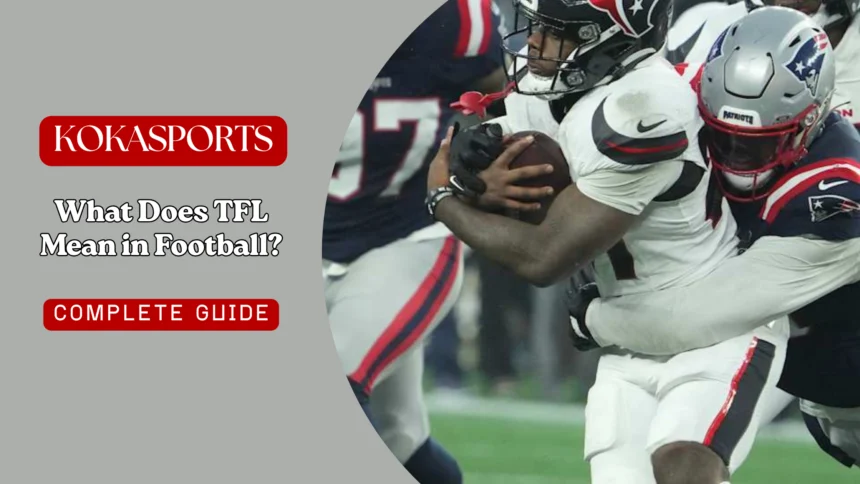
In football, TFL stands for tackle for loss, which occurs when a defensive player tackles the ball carrier behind the line of scrimmage, resulting in negative yardage for the offense.
Picture this: it’s third down with five yards to go, and the running back takes the handoff. Before he can even reach the line of scrimmage, a linebacker bursts through and brings him down three yards behind where the play started. The crowd erupts, and the announcer shouts about a huge TFL. If you’ve ever wondered what that acronym means and why it gets fans so excited, you’re in the right place.
TFL in football stands for tackle for loss, and it’s one of the most impactful defensive plays in the game. This statistic shows when a defender stops an offensive player behind the line of scrimmage, creating negative yardage that can completely shift the momentum of a drive.
In this article, we’ll break down everything you need to know about TFLs what they mean, how they’re recorded, which players make them happen, and why they matter so much in the world of football. Whether you’re new to American football or just want to deepen your knowledge of football statistics, this guide will help you see the game through a sharper lens.
What Does TFL Mean in Football?

TFL Meaning and Basic Definition
TFL stands for tackle for loss, and it’s exactly what it sounds like. When a defensive play results in the ball carrier being brought down behind the line of scrimmage, that’s a TFL. The line of scrimmage is the invisible line where the ball sits at the start of each play, and any tackle that happens on the wrong side of that line for the offense counts as a loss of yards.
Here’s a simple example: the offense lines up on their own 30-yard line. The quarterback hands the ball to the running back, who tries to find a hole in the offensive line. But a defensive lineman pushes through and wraps him up at the 27-yard line. That’s a three-yard loss, and the defender gets credited with a TFL. The significance here is clear instead of gaining yards, the offense just lost ground.
When you look at a score sheet or box score after a game, you’ll see TFL listed among other defensive stats. It appears right alongside tackles, sacks, and other key metrics that show how effectively a defense performed. The stat might look something like “8 tackles, 2 TFL” for a standout player, showing they not only made stops but made them count by pushing the ball carrier backward.
Read More: What is a TFL in Football? Understanding Tackles for Loss
How a Tackle for Loss Impacts a Football Game
Offensive Consequences of a TFL
The ripple effect of a TFL goes far beyond just losing a few yards. When a tackle for loss happens on first down, it creates an immediate problem for the offensive team. Instead of facing a manageable second-and-five or second-and-six, they might now be looking at second-and-twelve. That completely changes what plays the coach can call and makes it much harder to keep the drive alive.
TFLs disrupt offensive drives in several ways:
- Down and distance complications: A three-yard loss on first down creates second-and-thirteen, limiting play options
- Predictable play calling: Long yardage situations force teams into obvious passing situations
- Pressure on the quarterback: The QB must make harder throws with defenders expecting pass
- Field position battles: Multiple TFLs can push teams out of field goal range
The morale impact shouldn’t be overlooked either. When a defensive unit consistently makes plays in the backfield, it can rattle an offensive player and make the offensive line second-guess their blocking assignments. This psychological edge is something coaches and players talk about all the time achieving a TFL isn’t just about the yards, it’s about making the other team uncomfortable.
Third-down TFLs are especially crucial. Imagine facing third-and-seven, a very manageable distance in today’s league. But if the defense records a TFL on that play, suddenly the offense is punting or attempting a desperate fourth down conversion. One defensive play completely changed the entire drive’s outcome.
TFL vs Sack: What’s the Difference?
This is where many fans get confused, but the answer is actually straightforward. A sack is when a defensive player tackles the quarterback behind the line of scrimmage while he still has the ball. Since the QB is being tackled for negative yardage behind the line of scrimmage, every sack is also a TFL. However, not every TFL is a sack.
Here’s the key difference: sacks only count when the quarterback gets tackled. If a linebacker stops a running back for a two-yard loss, that’s a TFL but not a sack. If an edge rusher brings down the quarterback for a seven-yard loss, that counts as both a sack and a TFL in the statistics.
| Play Type | TFL? | Sack? |
|---|---|---|
| Running back tackled 3 yards behind line | Yes | No |
| Quarterback tackled 5 yards behind line | Yes | Yes |
| Wide receiver caught pass, tackled for 2-yard loss | Yes | No |
| Quarterback scrambles, tackled for 1-yard loss | Yes | Yes |
In player evaluations, sacks often get more attention because they’re seen as premium plays. The NFL even tracks sack leaders separately from TFL leaders. However, smart teams and analytics departments know that high TFL numbers across the entire defensive unit show a team that can disrupt plays at every level, not just when rushing the passer. Both stats matter, but they tell slightly different stories about defensive prowess and player performance.
How TFLs Are Recorded in Football Statistics
Official Scoring Rules for TFLs
The rule for recording a TFL is simple in theory but can get tricky in practice. The official scorer must determine whether the tackle happened behind where the ball was spotted at the snap. If the offensive player is brought down even one yard behind that spot, it’s a TFL.
Solo TFLs go to one player who makes the tackle by himself. Assisted TFLs happen when two defenders bring down the ball carrier together both players get credit for the tackle, and both get credit for a TFL. This is why you might see a team with eight total TFLs in a game but ten individual TFL credits when you add up all the players’ stats.
Some gray areas that scorers must navigate:
- Tackles exactly at the line of scrimmage: These don’t count as TFLs, just regular tackles for no gain
- Fumbles: If a player forces a fumble behind the line, they get a TFL even if the ball bounces forward
- Lateral movements: A runner moving sideways who gets tackled behind the original line still counts
- Screen passes: If a receiver catches behind the line and gets tackled there, it’s a TFL
The context matters too. Different leagues might have slightly different ways of tracking these plays, but the core concept stays the same across football at every level.
Which Players Record TFLs?
Positions Most Likely to Generate TFLs
While any defensive player can technically record a TFL, certain positions rack them up much more frequently. Defensive linemen lead the way because they’re fighting right at the line on every play, trying to penetrate the backfield and blow up runs before they develop.
Linebackers are close behind, especially outside linebackers who have the speed to chase down running backs from the side or blitz through gaps. Middle linebackers use their ability to read plays quickly and flow to the ball carrier before he gains positive yards.
Edge rushers combine the best of both worlds they can generate sacks when rushing the passer and TFLs when they read run plays and crash down. These players are gold in modern defensive strategies because they’re versatile weapons who can affect the game in multiple ways.
Even defensive backs can get in on the action. When a safety blitzes and meets the running back in the hole, or when a cornerback rushes up from the edge on a sweep and makes a stop for negative yards, that’s a TFL. It’s rarer, but it happens and shows how complete a defender’s game can be.
Position-Based TFL Expectations (Per Season):
- Elite defensive lineman: 15-20+ TFLs
- Top edge rusher: 12-18 TFLs
- Starting linebacker: 8-12 TFLs
- Blitzing safety: 3-6 TFLs
- Cornerback: 1-3 TFLs
Why TFLs Matter More Than Total Tackles
Total tackles can be misleading. A linebacker might have 120 tackles in a season, but if they’re all happening five yards downfield after the runner already gained positive yardage, those tackles aren’t stopping the offense from moving the chains. TFLs, on the other hand, show quality over quantity.
Here’s what makes TFLs so valuable:
- They create negative plays that hurt the offense
- They force obvious passing situations where the defense can anticipate and react
- They swing momentum to the defensive side
- They show a player’s ability to disrupt rather than just react
- They correlate closely with winning teams and championship defenses
TFL Statistics and Player Performance
What’s a Good TFL Number?
This depends entirely on position and role. For a defensive tackle who primarily stuffs the run up the middle, six to eight TFLs might be excellent. For an edge rusher whose main aim is getting to the quarterback, twelve to fifteen TFLs alongside their sack totals would be outstanding.
Looking at the broader picture, any defensive player who can consistently generate TFLs is valuable. In the modern NFL, where offenses are so explosive, having multiple players who can create negative plays is essential. Teams that lead the league in TFLs almost always field top-ten defenses overall.
Per-game numbers matter too. A player with ten TFLs spread across seventeen games is solid but not spectacular. A player with ten TFLs in just twelve games (due to injury or rotation) is showing elite production when on the field. This is why analytics departments look at TFLs per snap played to get the truest picture.
TFLs and Winning Football Games
The correlation between TFLs and winning is strong. When a team dominates in tackle for loss production, they’re usually controlling the game. Early-down TFLs set up third-and-long, which leads to punts, which leads to better field position and more scoring opportunities.
Red zone TFLs are game-changers. When a team drives down to the twenty-yard line, a TFL can push them out of touchdown range and force a field goal attempt instead. That four-point swing might not seem huge at the moment, but it often decides close games.
Third-down TFLs are drive killers. The offense converts about 40% of third downs on average in the NFL, but when a TFL creates third-and-very-long, that percentage drops dramatically. It’s one of the most crucial statistics for defensive success.
Common Misconceptions About TFLs
Plays That Don’t Count as TFLs
Not every negative play is a TFL. When the quarterback takes a knee to run out the clock, that’s technically negative yardage but doesn’t count as a TFL in official scoring. Penalties that oppose the offense and create lost yardage also don’t count a holding penalty might create a ten-yard loss, but it’s not a TFL.
Tackles exactly at the line of scrimmage are another gray area. Zero yards gained means no TFL, even though the defense made a good stop. The ball carrier has to be brought down behind where the play started.
Not All TFLs Are Equal
A one-yard TFL on first-and-ten is nice but not devastating. A seven-yard TFL on second-and-five is catastrophic for the offense. Context matters enormously when evaluating the true impact of these plays.
The game situation matters too. A TFL when your team is up by three touchdowns in the fourth quarter is fine, but a TFL on the opponent’s potential game-winning drive is legendary. This is why simply counting TFLs doesn’t highlight the full story you need to watch when and how they happen.
Conclusion
Now you know exactly what TFL means in football it’s a tackle for loss, one of the most important defensive stats in the game. These plays represent more than just lost yards; they represent momentum shifts, drive-killing negative plays, and the kind of defensive disruption that wins championships.
From defensive linemen crashing through gaps to linebackers meeting runners in the hole, TFLs show which players can truly disrupt an offense at the point of attack. The next time you’re watching a game and see a running back get swallowed up in the backfield, you’ll recognize it for what it is a game-changing TFL that just made the offense’s job much harder. Pay attention to these plays, watch which players consistently make them happen, and you’ll start seeing the strategy and chess match that makes football so compelling.
Every tackle for loss tells a story of preparation, execution, and the relentless pursuit of stopping the offense before they can even get started.
FAQs
Does a sack count as a TFL?
Yes. Every sack is a TFL because the quarterback is tackled behind the line of scrimmage, but sacks are tracked separately.
What’s a good TFL number for a defensive player?
It depends on position. Elite linemen and edge rushers often record 10–15 TFLs per season, while linebackers average 6–10.
How impactful is a TFL?
Very. TFLs create long-yardage situations, disrupt offensive rhythm, and frequently lead to punts.
What’s the record for most TFLs in a season?
Elite NFL defenders have recorded 20+ TFLs in standout seasons, which places them among the league’s best.
How do TFLs affect defensive rankings?
Teams with high TFL totals usually rank higher defensively because negative plays limit scoring opportunities.