

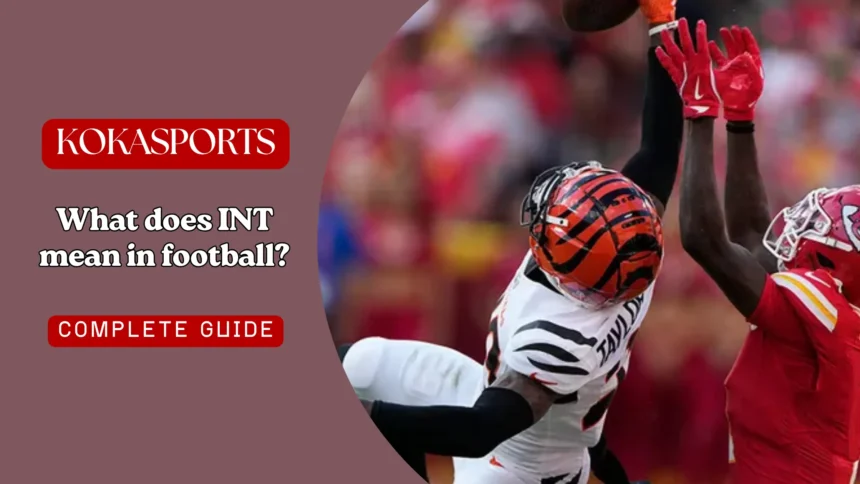
What does INT mean in football? INT stands for interception, which occurs when a defensive player catches a pass intended for an offensive receiver. This critical defensive statistic immediately shifts possession from offense to defense and represents one of the most impactful plays in American football. This guide explains how interceptions work, why they matter, and how INT statistics affect both quarterback and defensive player evaluations.
What Does INT Mean in Football? (INT Stands for Interception)
INT is the official abbreviation for interception in football statistics. This defensive statistic appears on stat sheets, scoreboards, and player profiles throughout professional and amateur football. When you see “INT” next to a player’s name, it indicates how many passes that player has intercepted.
The term “interception” perfectly describes what happens during this play a defensive player literally intercepts a forward pass before it reaches the intended offensive receiver. This action not only prevents the offense from completing their pass but also transfers possession to the defending team.
In football terminology, INT serves multiple purposes:
- As a defensive statistic: Defensive backs and linebackers accumulate INTs throughout their careers
- As a quarterback statistic: QBs are penalized for throwing INTs, which count against their performance
- As a game-changing event: Each INT represents a turnover that can dramatically alter game outcomes
The standardization of INT as the abbreviation for interception makes it universally recognizable across all levels of American football, from high school games to the NFL.
INT in Football Explained – How an Interception Happens
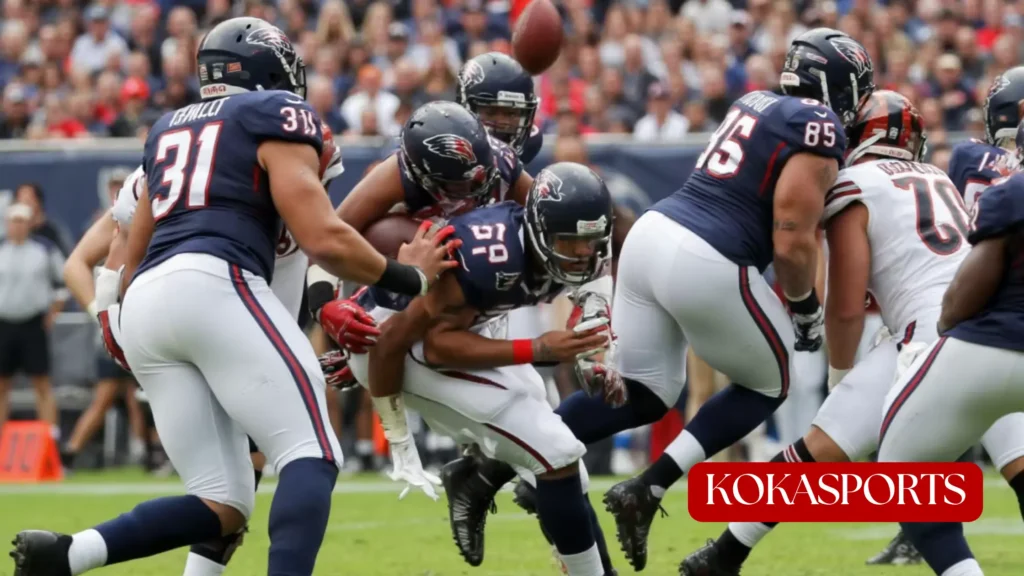
An interception occurs through a specific sequence of events during a passing play. The quarterback throws a forward pass that a defensive player catches before any offensive player can secure it. The moment the defender establishes possession with control of the football, the play is ruled an interception.
Once a defensive player intercepts the pass, they become a ball carrier and can attempt to advance the football toward the opponent’s end zone. These return yards are tracked separately from the interception statistic itself. Some of the most memorable plays in football history are “pick-sixes” interceptions returned for touchdowns.
The defensive player who catches the INT is credited with the statistic, while the quarterback who threw the pass receives a negative mark on their passing statistics. This dual impact makes interceptions uniquely consequential in football record-keeping.
Why Quarterbacks Throw INTs
Quarterbacks throw interceptions for various reasons, and understanding these causes helps explain why INT statistics matter so much in evaluating QB performance.
Poor reads and decision-making represent the most common cause of interceptions. When a quarterback misreads the defensive coverage or fails to see a defender in their throwing lane, they may throw directly to a defensive player. These mental errors often occur when QBs force passes into tight coverage or fail to progress through their receiver options properly.
Defensive pressure significantly increases interception risk. When pass rushers force the quarterback to throw quickly or while off-balance, accuracy suffers and decision-making becomes rushed. Quarterbacks under duress may not see defenders clearly or may simply throw the ball away desperately to avoid a sack, resulting in poorly placed passes that defensive players can intercept.
Miscommunication between quarterbacks and receivers causes many INTs. When a receiver runs the wrong route or breaks off their pattern unexpectedly, the quarterback’s pass arrives where they expected the receiver to be directly into the hands of a waiting defender. These “route-running errors” can be the receiver’s fault, though the INT statistic always goes against the quarterback.
Other factors contributing to interceptions include:
- Tipped passes at the line of scrimmage that float into defensive players’ hands
- Receivers failing to fight for contested balls
- Weather conditions affecting ball trajectory
- Quarterback fatigue late in games
- Attempting high-risk, high-reward throws in desperation situations
Read More: What Is an Interception in Football? Complete Guide to NFL Interceptions
INT Statistic in American Football and the NFL
The NFL maintains meticulous records of interception statistics for both offensive and defensive players.In the NFL, interceptions are one of the most closely tracked defensive statistics, with comprehensive recording systems that capture every detail of these game-changing plays.
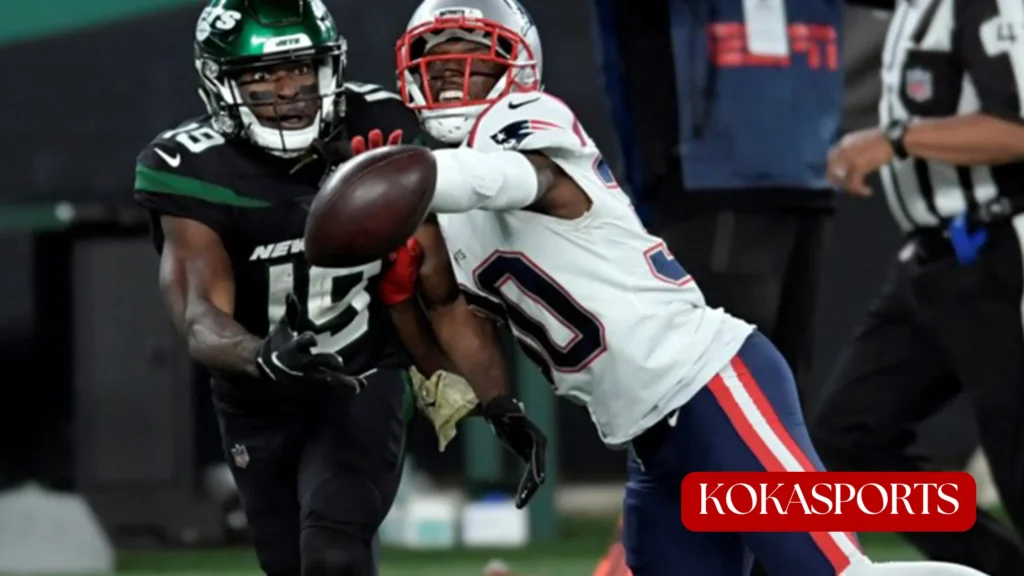
For defensive players, interceptions are counted as a positive statistic. Defensive backs (cornerbacks and safeties) typically lead in INT totals, though linebackers and occasionally defensive linemen also record interceptions. Career interception leaders are celebrated as some of the greatest defensive players in NFL history. For example, Paul Krause holds the all-time NFL record with 81 career interceptions.
For quarterbacks, interceptions represent a critical negative statistic. NFL record-keepers track total INTs thrown per season and per career, and these numbers heavily influence how QBs are evaluated. Throwing too many interceptions can end careers or result in quarterbacks losing their starting positions.
The official scoring of an INT in NFL statistics requires several specific conditions:
- The pass must be a legal forward pass (not a lateral or handoff)
- The defensive player must gain possession by catching the ball in-bounds
- The defender must maintain control through the catch
- The ball cannot touch the ground during the catch attempt
The official recording of an INT involves:
- Recording the INT on the defensive player’s stat line
- Adding one to the quarterback’s INT total
- Tracking any return yards separately
- Noting if the INT resulted in a touchdown (pick-six)
- Documenting the game situation (quarter, down, distance)
Teams also track additional interception-related metrics like:
- Interception rate (INT percentage per pass attempt)
- Red zone interceptions
- Interceptions in opponent’s territory
- Game-losing interceptions
How INTs Affect Quarterback Stats
Interceptions dramatically impact the most important quarterback statistics and evaluation metrics used throughout football.
Passer rating, the traditional quarterback evaluation formula, heavily penalizes interceptions. The NFL passer rating calculation includes INT percentage as one of four key components, and throwing interceptions significantly lowers a quarterback’s overall rating. A passer rating of 100+ is considered excellent, while ratings below 80 suggest poor performance often due to excessive interceptions.
The touchdown-to-interception ratio (TD:INT ratio) has become one of the most widely cited quarterback metrics. This simple comparison divides total touchdown passes by total interceptions to show how often a QB produces positive outcomes versus negative ones. Elite quarterbacks maintain ratios above 3:1, meaning they throw at least three touchdowns for every interception. Ratio examples:
| QB Performance Level | Typical TD:INT Ratio |
|---|---|
| Elite | 4:1 or better |
| Above Average | 3:1 to 4:1 |
| Average | 2:1 to 3:1 |
| Below Average | Below 2:1 |
Additional statistics affected by INT totals include:
- Completion percentage: INTs count as incomplete passes
- Yards per attempt: Interceptions usually occur on longer attempts, lowering YPA
- QBR (Total Quarterback Rating): ESPN’s metric heavily factors in interceptions
- Win-loss record: QBs with high INT totals typically have worse team records
Why INTs Matter in Football (Tactical Impact)
Beyond individual statistics, interceptions create enormous tactical and strategic consequences that can determine game outcomes.
Momentum swings generated by interceptions are among the most powerful in football. When a defense intercepts a pass, it energizes the defensive unit, sideline, and crowd while deflating the opposing offense. Teams that force interceptions often experience immediate positive effects in terms of player confidence and aggressive play-calling. The psychological impact can extend beyond single plays, affecting entire quarters or games.
Field position changes dramatically when an INT occurs. Unlike a punt, which typically pins the offense deep in their own territory, an interception often gives the defense excellent field position sometimes in opponent territory. These shortened fields make scoring significantly easier, as the offense needs fewer plays to reach the end zone. Statistics show that teams are far more likely to score when starting drives inside the opponent’s 40-yard line.
The strategic value of preventing interceptions shapes offensive game planning:
- Conservative play-calling when protecting leads
- Avoiding deep throws in dangerous field positions
- Running the ball more frequently to minimize INT risk
- Designing safer, shorter passing routes
Defensively, teams build entire game plans around creating interceptions:
- Disguising coverages to confuse quarterbacks
- Timing blitzes to force rushed decisions
- Playing zone coverage to keep defenders in throwing lanes
- Film study to recognize opponent tendencies
INT vs Other Football Stats
Understanding how INT compares to related defensive statistics clarifies its unique importance.
INT vs pass breakups: A pass breakup (PBU) or pass defended (PD) occurs when a defensive player deflects or knocks down a pass without catching it. While pass breakups prevent completions, they don’t create turnovers or shift possession. Interceptions are far more valuable because they:
- Give possession to the defense
- Often provide better field position than a punt
- Can be returned for touchdowns
- Create major momentum shifts
INT vs turnovers: Turnovers include both interceptions and fumbles. While both change possession, interceptions happen exclusively on passing plays and are credited to the defensive player who makes the catch. Fumble recoveries can occur on running or passing plays and sometimes involve multiple players. INT statistics are tracked separately because they specifically measure pass defense effectiveness.
Why INT is one of the most important defensive stats: Among all defensive statistics, interceptions rank near the top for several reasons:
- They directly create offensive opportunities
- They prevent potential scoring drives
- They demonstrate playmaking ability rather than just assignment completion
- They correlate strongly with team success and winning percentages
- They result in game-changing plays more frequently than most other stats
Teams with positive turnover margins (more INTs gained than thrown) win approximately 75% of NFL games, demonstrating the critical impact of this statistic.
What Does INT Mean in Football Manager?
In Football Manager, INT has a different meaning than in American football. In the popular Football Manager video game series, INT represents the interceptions attribute, which measures a player’s ability to read the game and intercept passes. This tactical attribute applies to defenders and defensive midfielders, determining how effectively they anticipate opponent passes and position themselves to cut out passing lanes.
The INT attribute in Football Manager differs from the physical INT statistic in American football:
- It’s a rated ability (1-20 scale) rather than a counted occurrence
- It affects player AI decision-making during matches
- Higher INT ratings lead to more successful interceptions during simulated games
- It combines positioning awareness with anticipation skills
Players with high INT attributes in Football Manager:
- Read opponent build-up play more effectively
- Position themselves better to intercept passes
- Disrupt opponent passing sequences more frequently
- Excel in defensive midfield and center-back roles
Understanding this distinction is important for gamers who play both American football games and soccer/football management simulations, as INT carries different meanings in each context.
Conclusion – What INT Means in Football
INT stands for interception in football a critical statistic that occurs when a defensive player catches a pass intended for an offensive receiver. This comprehensive guide has explored every aspect of what INT means in football, from basic definitions to tactical implications.
Key takeaways about INT in football:
- Interceptions create immediate possession changes and momentum swings
- Quarterbacks are penalized with INT statistics that hurt their passer ratings and TD:INT ratios
- Defensive players earn credit for INTs, building reputations as playmakers
- The tactical impact of interceptions extends beyond statistics to affect field position and game outcomes
- Understanding INT statistics helps fans better analyze game performance and player evaluation
Whether you’re watching NFL games, analyzing quarterback performance, or discussing defensive excellence, knowing what INT means in football enhances your appreciation for this game-changing statistic. Interceptions remain one of the most exciting and consequential plays in American football.
FAQs
What does INT mean in NFL stats?
INT means interception and shows how many passes a defender caught or a quarterback threw to the opposing team in the NFL.
Can linebackers get INT stats?
Yes, linebackers can record INTs by intercepting passes, especially in zone coverage over the middle.
How do pick-sixes relate to INT stats?
A pick-six is an interception returned for a touchdown and counts as both an INT and a defensive score.
What’s considered a high INT total for a QB in one season?
Throwing 15 or more interceptions in a season is generally considered high for an NFL quarterback.
Do tipped passes count as INTs against the QB?
Yes, all interceptions count against the quarterback, even if the pass is tipped or deflected.