
The tight end football position is one of the most exciting and unique positions in all of American football. It sits right at the crossroads between power and speed. No other spot on the field asks a player to be both a bruising lineman and a skilled receiver at the same time. Whether you are a casual fan watching your first football game or a die-hard fantasy player building your roster, knowing what the tight end position in football means will completely change how you watch the sport.
This guide breaks everything down in plain, simple language from the basic role of a tight end to the 2026 NFL Draft class and fantasy football value.
What Is the Tight End Football Position?
The tight end in football is an offensive football position that lines up right next to the offensive tackle on the line of scrimmage. In simple terms, the TE is a big, athletic player who can do two very different jobs on the same play block like a lineman or go out and catch passes like a wide receiver.
This dual role is what makes the position so special. A wide receiver is built purely for speed and catching. An offensive lineman is built purely for blocking. But the tight end must be able to do both sometimes in the same game, sometimes on the same drive.
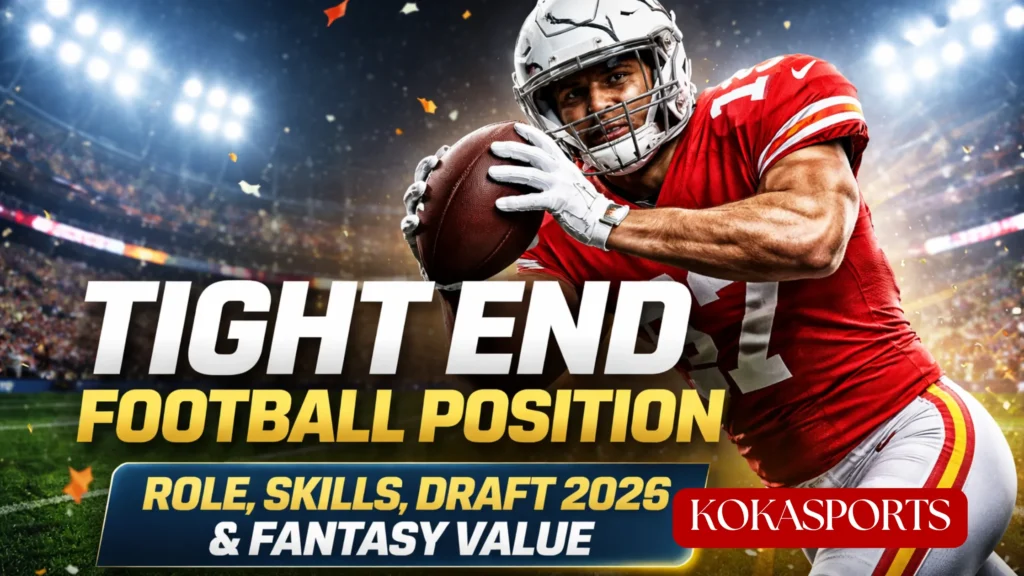
Here is a quick look at the basic profile of an NFL tight end:
- Height: 6’3″ – 6’6″
- Weight: 240 – 265 lbs
- Key Skills: Blocking, route running, catching
- Lines Up: Right next to the offensive tackle on the line of scrimmage
- Main Role: Hybrid blocker + receiver
The Role of the Tight End Football Position — Blocker, Receiver, and Everything In Between
The primary role of a tight end changes depending on the play call. On running plays, the tight end steps up and works alongside the offensive line to open holes for the running back. On pass plays, the tight end releases off the line and becomes an eligible receiver for the quarterback.
Blocking Duties
When it comes to run blocking, the tight end acts almost like a sixth lineman. He sets the edge of the offensive formation, which means he stops defensive ends and defensive linemen from blowing up the play before it starts. A great blocking tight end can make a huge difference in how well a team runs the ball.
Good blocking tight ends in the NFL must have:
- Size and strength to hold their ground against powerful defenders
- Proper hand placement and footwork
- The ability to read what the defensive player across from them is going to do
- Willingness to do the dirty work even when they do not touch the ball
Receiving Duties
On passing plays, the tight end becomes one of the most dangerous weapons in the entire offense. He can run routes like a wide receiver but with a much bigger body. This creates a nightmare matchup problem for defenses. If a team uses a linebacker to cover the tight end, the tight end is usually too fast. If they use a safety, the tight end is usually too big and physical.
The ability to catch passes from the quarterback in traffic, make defenders miss after the reception, and fight for yards after the catch is what separates good tight ends from great ones.
The Role of a Tight End With the Quarterback and Offense
The relationship between the quarterback and tight end is one of the most important connections in all of American football. Great quarterbacks lean heavily on their tight end because he is always open in short and medium areas of the field.
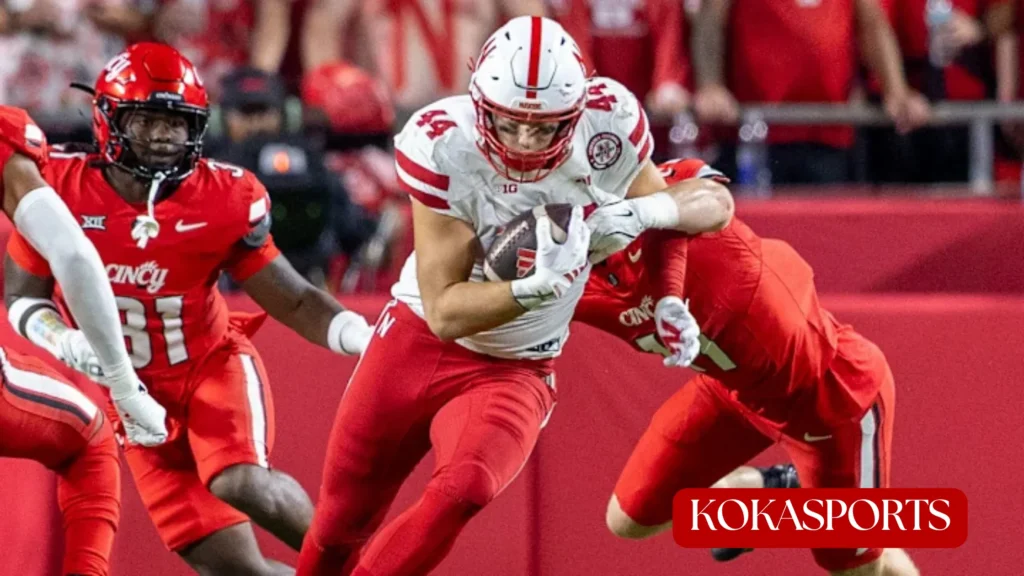
“A great tight end is the most valuable weapon a quarterback can have. He solves problems that no other position can solve.” Common saying among NFL offensive coordinators
The tight end creates easy completions over the middle of the field. He also gives the quarterback a massive target in the end zone, which is why tight ends so often lead teams in touchdown catches. The chemistry between a quarterback and his tight end often defines how good an offense truly is.
Famous quarterback–tight end connections in NFL history include:
- Tom Brady (seven-time Super Bowl champion) & Rob Gronkowski Perhaps the most dominant pair ever. Rob Gronkowski was so unstoppable that defenses had no real answer for him.
- Patrick Mahomes (Kansas City Chiefs) & Travis Kelce Still active and still setting records in the NFL
- Philip Rivers & Antonio Gates Antonio Gates, an undrafted player out of basketball, became one of the best to ever play the NFL tight end role
Why the Tight End Football Position Is Important in Modern NFL Offenses
One of the biggest shifts in pro football over the last 15 years has been the rise of the tight end as a centerpiece of the passing game. In the past, most teams used tight ends mainly to block. Today, the football tight end role has completely changed and for good reason.
Here is why the tight end football position matters more than ever in today’s NFL:
- Defenses cannot match up with them. A tight end is too big for most cornerbacks and too fast for most linebackers. This creates a built-in advantage every single play.
- They are the most reliable target in the red zone. When a team needs a touchdown near the goal line, the tight end is almost always the first read.
- They make the run game better. A tight end who can block at the line of scrimmage opens running lanes that would not exist otherwise.
- They help the quarterback manage games. The tight end is the safest, most dependable check-down option on the field. He gives the quarterback a short, easy throw that still gains positive yards.
- Two tight end sets stress every defense. When a team puts two tight ends on the field at the same time, it forces defensive coordinators to make very difficult personnel decisions.
Travis Kelce (Kansas City Chiefs) is the perfect modern example of why this TE position has taken over the NFL. He has shattered receiving yards records for the position and made the Kansas City Chiefs offense nearly impossible to stop. The NFL tight end role is now so important that teams willingly spend first-round draft picks on it something that was rare just two decades ago in the National Football League.
Types of Players in the Tight End Football Position
Not every tight end is the same. NFL coaches use different types of tight ends based on what their offense needs most.
1. The Blocking Tight End
This type of TE is used mostly in run-heavy offenses. He is big, strong, and loves physical play. He works closely with the offensive line to spring the running back through gaps. Teams that run the ball a lot almost always keep at least one blocking-first tight end on the roster. Think of him as a blocker first and a receiver second.
2. The Pass-Catching Tight End
This is the modern star of the tight end role. The pass-catching tight end is fast, has great hands, and runs crisp routes. He is the type of player who lines up in the slot, splits out wide, or motions around the formation to create confusion. He is the NFL tight end that every fantasy manager dreams about.
3. The Hybrid / Flex Tight End
This player does both jobs well. He is the most valuable type because he keeps defenses guessing. A pass-catching tight end who can also reliably block is worth his weight in gold to any offensive coordinator in the NFL. This is the modern ideal a complete player who gives the offense unlimited options on every single snap.
The Greatest Tight Ends in NFL History
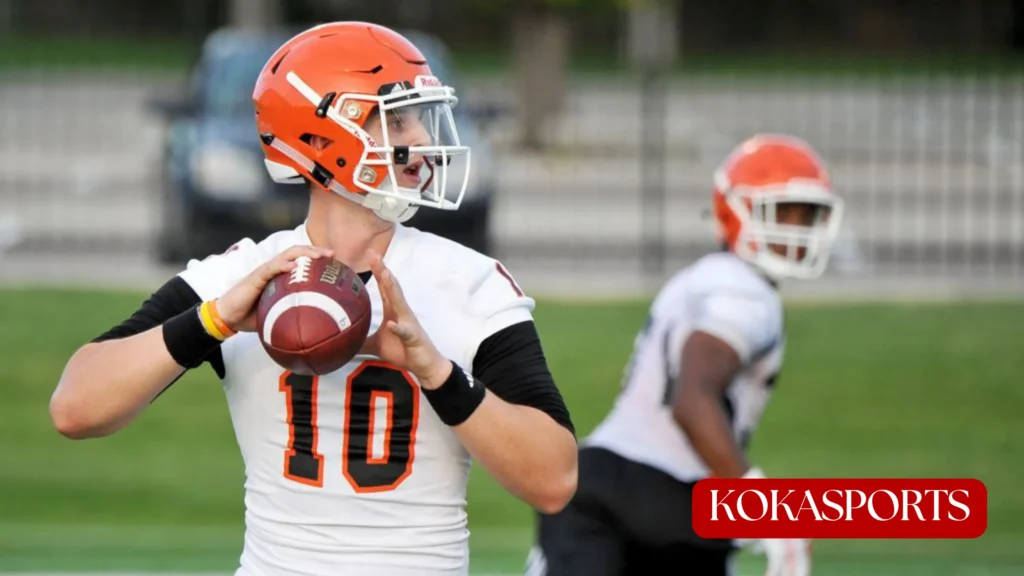
The top tight end performances in league history have come from players who combined rare athleticism with elite football sense. Here are some of the legends who shaped the tight end football position in American football:
- Rob Gronkowski (New England Patriots / Tampa Bay Buccaneers, 2010–2022) Widely considered the greatest ever. Unstoppable as both a blocker and a receiver, he redefined what the position could look like at the highest level.
- Tony Gonzalez (Kansas City Chiefs / Atlanta Falcons, 1997–2013) A Hall of Famer who completely redefined pass-catching at the position. He proved a tight end could be a team’s number one receiver.
- Shannon Sharpe (Denver Broncos / Baltimore Ravens, 1990–2003) Known for blazing speed and delivering in huge moments on the biggest stages.
- Antonio Gates (Los Angeles Chargers, 2003–2018) Antonio Gates came from a basketball background and used those instincts to become one of the most instinctive pass-catchers at the position in NFL history.
- Travis Kelce (Kansas City Chiefs, 2013–Present) The all-time leader in receiving yards by a tight end, still playing at an elite level today.
Rob Gronkowski and Tony Gonzalez in particular changed the way people think about what a tight end can be. No defensive ends or linebackers could reliably stop Gronkowski in his prime. Gonzalez and Antonio Gates proved that the NFL tight end role could carry an entire passing offense.
The Tight End Football Position in the 2026 NFL Draft
The 2026 NFL Draft is shaping up to have a solid group of tight end draft prospects. Teams across the league are always searching for the next elite tight end because finding a great one can transform an entire offense.
This draft preview of the tight end class is worth paying close attention to, especially if you follow both pro football and college football.
What Scouts Look For in TE Draft Prospects
When evaluating tight ends before the draft, NFL scouts focus on several key areas:
- Size and athleticism Can he handle NFL-level physicality?
- Blocking technique Does he play hard and physical at the line of scrimmage?
- Route running Can he run routes against complex defensive coverages?
- Hands Does he catch the ball cleanly throughout his college career?
- Production Did he consistently make plays in every big college football game?
Based on early mock draft analysis, teams picking in the first round of the 2026 draft should strongly consider taking a tight end prospect if one is available. The round of the 2026 NFL draft where a tight end gets selected often depends on whether scouts see him as a complete player or a developmental project. Complete, two-way tight ends almost always go in the first two rounds. One-dimensional players tend to slide to Day 3.
In fantasy football, the TE position is one of the hardest spots to get right at the draft table. There is a massive gap between the elite options and everyone else. Top tight ends players like Travis Kelce score points at a rate much closer to a wide receiver than a typical tight end. That gap is called positional scarcity, and it is one of the most important concepts in all of fantasy drafting.
Tight End Football Position in Fantasy Football
Here are the key stats fantasy managers should track when evaluating the tight end role:
- Target share How often does the quarterback throw to him?
- Red zone looks Does he get chances to score near the goal line?
- Receiving yards per game Is he getting meaningful, consistent volume?
- Snap count Is he on the field for the majority of offensive plays?
The smartest fantasy managers either invest very early in an elite tight end or wait until the very late rounds and stream options based on weekly matchups. Trying to find a mid-round bargain at the TE spot is almost always the worst strategy at the draft table.
Key Differences Between the Tight End and Other Offensive Positions
One of the most common questions fans ask is how a tight end is different from other offensive positions in American football. Here is a simple breakdown comparing the key positions in football:
- Tight End Blocks and catches. Very large body. Medium to high speed. The only position that must do both jobs at an elite level.
- Wide Receiver Catches only. Smaller frame. Very fast. Lined up away from the offensive line on most plays.
- Running Back Runs the ball and catches short passes. Medium build. Does some blocking but far less than a tight end.
- Fullback Blocks and runs short yardage. Large frame. Rarely used as a primary receiver in modern NFL offenses.
- Offensive Lineman Blocks only. Largest players on the field. Never runs routes or catches passes.
The tight end is the only one of all offensive players that truly operates across both the running game and the passing game with equal responsibility every single week. Every other position leans heavily one way. The tight end must be excellent at both or he simply will not last at the NFL level.
Frequently Asked Questions
What is the role of a tight end in football?
A tight end blocks defenders on running plays and catches passes on passing plays. They line up next to the offensive tackle and must do both jobs well to be effective in the NFL.
What is the hardest position in football?
Most football experts consider quarterback the hardest position because they must read defenses, make split-second decisions, and lead the entire offense on every single play.
Why do they call it tight end?
The name comes from where the player lines up. They line up “tight” to the offensive line — right next to the tackle compared to a wide receiver who lines up far away from it. The “end” part refers to the end of the offensive line.
Is a tight end a good position?
Yes, it is one of the most valuable positions in modern football. A great tight end creates mismatches that defenses simply cannot solve. They are also among the most sought-after players in fantasy football because elite ones score touchdowns consistently and rack up big receiving numbers every season.
Conclusion
The tight end role is the most complex and fascinating spot in all of American football. It takes rare athleticism, football intelligence, physical toughness, and a willingness to do the unglamorous work of blocking just as often as making highlight-reel catches.
From the legendary careers of Rob Gronkowski and Antonio Gates to the rising stars set to enter the 2026 NFL Draft, the tight end football position continues to grow in importance with every passing season. For fans, it is one of the most exciting spots to watch on the entire field. For fantasy managers, landing the right one can win you a championship. And for the quarterback lining up under center, a great NFL tight end is simply the most valuable weapon he can have.