
Somewhere in Kansas City right now, Patrick Mahomes is rehabbing a torn ACL on a training table while his team’s wide receiver depth chart sits on a whiteboard with names nobody’s afraid of. Xavier Worthy 532 yards. Hollywood Brown free agent. JuJu Smith-Schuster gone. And that’s without even mentioning the disaster of a ground game, which ranked down in 25th in the NFL in 2025.
The dynasty isn’t dead. But it’s in a pool doing knee flexion drills, and the men tasked with rebuilding around it have exactly two months before the free agency window cracks open, and their rivals start poaching.
Chiefs’ Early Super Bowl LXI Odds
One only needs to look at the early betting odds for next season for confirmation of just how far the mighty have fallen. KC is a huge +1500 outsider for the Lombardi next season, a far cry from the +350 tag they had heading into their failed three-peat attempt of 2024. In fact, they’re considered barely half as likely to be crowned champions as the early +850 favorite Seattle Seahawks, the team that just suffocated the life out of the New England Patriots at Super Bowl LX. Just take a look at the betting calculator below for proof of that.
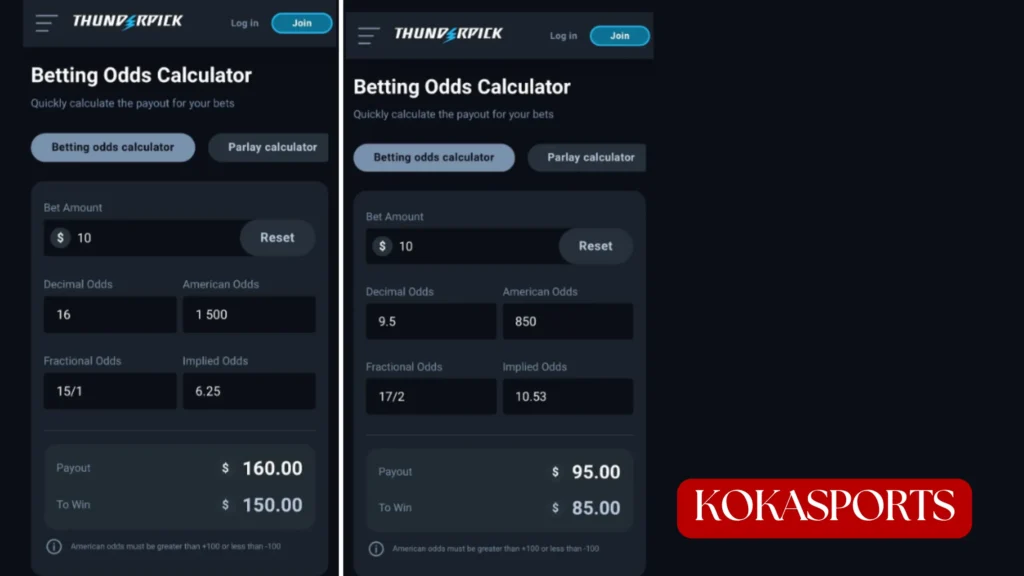
Examples illustrated through this widely-used betting calculator: https://thunderpick.io/betting-calculators/betting-odds-calculator
But here’s the thing: the Chiefs’ offense, for all its 2025 woes, isn’t even the worst in the NFL heading into the 2026 offseason. Not by a long shot. Let’s take a look at some that are even worse, and how they can address their monumental issues in the coming weeks and months.
Raiders
The numbers are almost comical. Fourteen-point-two points per game. Shut out twice. Maxwell Award winner Ashton Jeanty generational college back, legitimate NFL talent facing contact within a yard of the line of scrimmage on 54% of his carries. Veteran head coach Pete Carroll is gone, and his chosen QB Geno Smith is set to join him. That’s a damning indictment of 2025 in Sin City.
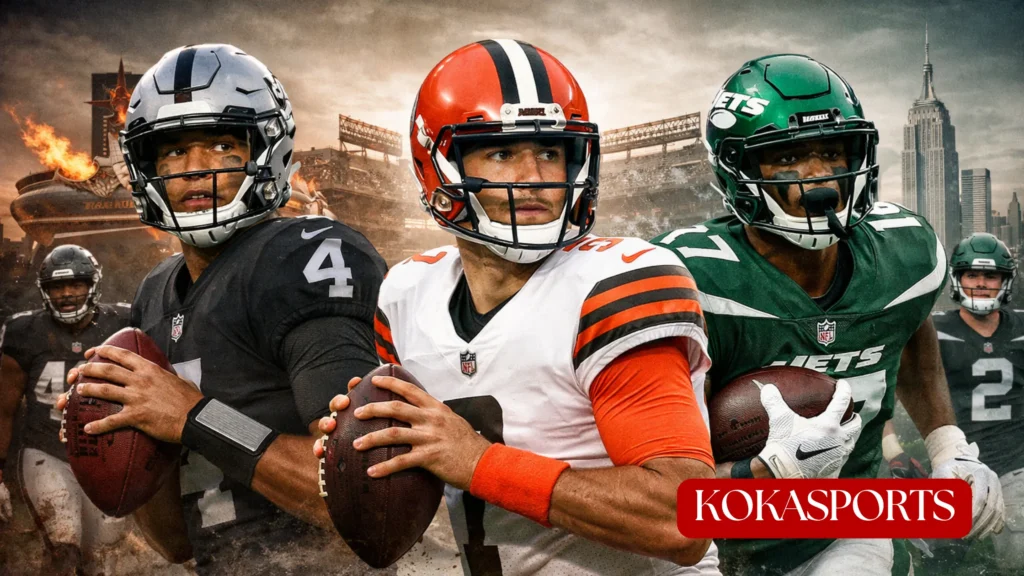
Fernando Mendoza changes nothing and everything simultaneously. Indiana’s Heisman winner 71.5% completion rate, 33 touchdowns goes No. 1 overall, and suddenly Las Vegas has its first real franchise quarterback since the Derek Carr era ended in acrimony. And with $87.8 million in cap space, they have the financial firepower to build something real.
But here’s where GMs earn their money. Cap space isn’t talent. It’s the promise of talent.
The Raiders don’t have a proven offensive lineman worth keeping, don’t have a legitimate WR1, and don’t have a culture that makes free agents enthusiastic about signing there. Mendoza needs protection he doesn’t have and weapons he hasn’t met yet. Tyler Linderbaum solves the interior; Alec Pierce adds a vertical dimension; a bold swoop for George Pickens hands a rookie a WR1 who already understands how to separate. Brock Bowers and Jeanty are legitimate cornerstones.
The bones exist. But $87.8 million spent on the wrong players just accelerates the timeline to the next rebuild.
Browns
GM Andrew Berry sat in front of reporters in January and said, with a remarkably straight face, that the Browns would “do their homework on the quarterback market.” He didn’t confirm Shedeur Sanders. Didn’t deny him. Didn’t rule anything in or out. It was the kind of answer that tells you everything about a franchise that has burned through signal-callers with the systematic thoroughness of a shredder.
Fifty-one sacks. The worst offensive line grade in the league at 49.9. A 5-12 record. They saw the wall coming and drove straight into it anyway.
The saving grace and it’s a genuine one is draft capital. Three first-round picks give Cleveland rare leverage to attack multiple problems at once. But the hierarchy matters enormously here. Don’t tell yourself a receiver fixes this before protection does; the Browns’ quarterback problem is inseparable from the fact that whoever plays the position spends the entire game running for his life.
Jonah Williams at tackle, a WR like Luther Burden III or Jordyn Tyson at No. 6, and a bridge QB like Malik Willis under Todd Monken is a rational stack. The A.J. Brown trade idea No. 6 plus a mid-rounder to Philadelphia is the kind of swing that makes front offices famous or fired. If Sanders develops behind it, Cleveland might have something by 2028.
That’s not a headline. That’s a timeline. And this franchise has earned distrust of its own timelines.
Jets
Garrett Wilson is one of the best young receivers in football. He caught passes from a 36-year-old journeyman in 2025. Let that sentence breathe for a second.
Justin Fields got benched by November. Tyrod Taylor took over and steadied a ship that had no destination. Beyond Wilson, the receiver room was so thin, it was transparent; the tight end group might as well have been invisible. And yet structurally, financially the Jets have real ammunition. Two first-round picks. Cap space in the $79 million range. The question is whether they spend it wisely or panic-spend it, which is historically the Jets’ specialty.
The Kyler Murray trade target is the story within the story. A proposed package of a fourth, a fifth, and a conditional third for a former Heisman winner and number one overall pick is almost insultingly cheap and the fact that it might be enough tells you exactly how the league views Murray’s injury history and limitations right now. But here’s the thing: the Jets don’t have a better option.
Garrett Nussmeier from LSU is the legitimate alternative if that deal collapses; Romeo Doubs alongside Wilson in free agency adds credibility to a passing offense that desperately needs it. Without a franchise quarterback locked in before training camp opens, none of the rest of it matters.
Conclusion
The 2026 offseason represents a crossroads for several struggling NFL offenses. Teams like the Raiders, Browns, and Jets have resources 4 draft picks, cap space, and young talent but resources don’t guarantee success. The difference between a fast turnaround and another failed rebuild comes down to discipline, patience, and prioritizing fundamentals. Get the quarterback protected, establish a functional supporting cast, and build with purpose. Miss on those steps, and the cycle simply starts again.
FAQs
Why do these offenses need full rebuilds?
Because their problems are foundational weak protection, unstable quarterbacks, and limited weapons.
Does having cap space fix everything?
No. Smart decisions matter more than fast spending.
How long does a rebuild usually take?
Around 2–3 seasons if done correctly.